Target Account Selling Opportunity Assessment Framework
Try Before you Buy Download Free Sample Product
Audience
Editable
of Time
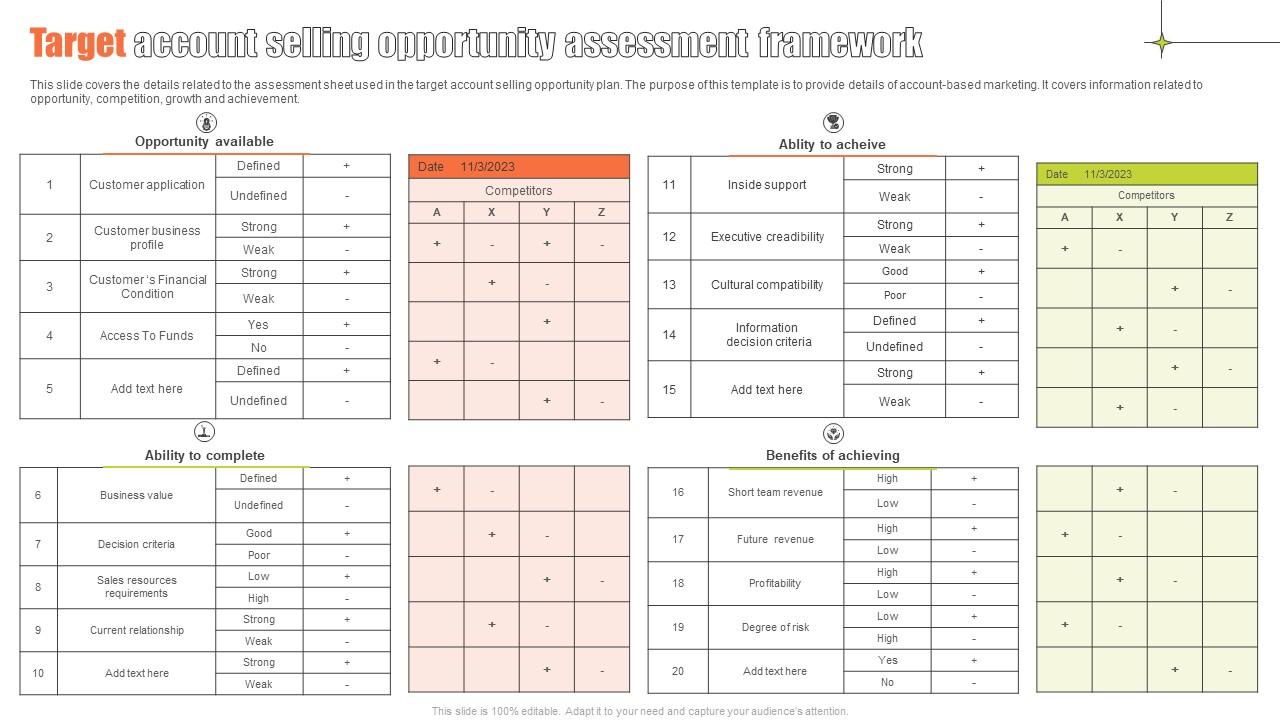
This slide covers the details related to the assessment sheet used in the target account selling opportunity plan. The purpose of this template is to provide details of account based marketing. It covers information related to opportunity, competition, growth and achievement.
People who downloaded this PowerPoint presentation also viewed the following :
Target Account Selling Opportunity Assessment Framework with all 6 slides:
Use our Target Account Selling Opportunity Assessment Framework to effectively help you save your valuable time. They are readymade to fit into any presentation structure.
FAQs for Target Account Selling
So basically you need three things: research your target accounts like crazy, map out ALL the decision makers (not just the CEO), and personalize everything. Sales and marketing absolutely have to be on the same page or you're screwed - I've seen this fail so many times because of that. Quality beats quantity here. Track stuff that actually matters like how deep you're getting into accounts and deal speed. My advice? Start small with maybe 15-20 high-value accounts first. Test it out before going bigger.
Start with your best customers - what do they actually have in common? Company size, industry, revenue, that kind of stuff. That's your blueprint right there. Then look for buying signals like new funding, leadership changes, or tech upgrades. Honestly, most people mess up by going too broad at first. Way better to have 50 solid prospects than 500 random ones. Build some kind of scoring system (doesn't have to be fancy) and just focus on your top 20%. I learned this the hard way - chasing mediocre leads is exhausting.
Honestly, I'd focus on account penetration rate and deal velocity first - those tell you the real story. Average contract value matters too, obviously. Revenue growth within your target accounts is where you'll see if this whole thing is actually paying off. The relationship stuff is huge though. Track how many stakeholders you're talking to and meeting frequency. Win rates for target accounts vs regular prospects will show if being selective is worth it. Pipeline quality too, but don't go crazy measuring everything day one. Pick maybe 3-4 metrics that make sense for what you're trying to do.
So Target Account Selling is basically the opposite of throwing spaghetti at the wall. You pick maybe 10-20 companies that are perfect fits for what you're selling. Then you actually do your homework - like really dig into their business, figure out their pain points, who the decision makers are. It's way more relationship-focused than just blasting out cold emails to everyone. The sales process gets longer but honestly, it's so much better than chasing random leads. You're basically becoming a consultant instead of just another salesperson bothering them. Quality beats quantity every time with this approach.
Look, account research is make-or-break for target selling. You've gotta know their pain points, who makes decisions, recent news, competitive stuff - basically everything before you even pick up the phone. Yeah, it's tedious as hell, but 2-3 hours per account upfront saves you from looking like every other salesperson who clearly didn't do their homework. The payoff? Your outreach actually sounds like you understand their world instead of some generic pitch. I learned this the hard way after bombing a few calls early on. Trust me, do the research first or you're just wasting everyone's time.
Honestly, start with Salesforce or HubSpot - they're clutch for mapping out who talks to who in your target accounts. ZoomInfo's great for finding the actual decision makers (saves you from pitching to some random coordinator). The tools I really love though? Website visitor tracking. You can literally see when companies are poking around your site researching solutions. LinkedIn tools help with the social selling piece, and automated email sequences work if you're not sending generic garbage. Oh, and don't go crazy buying every shiny tool - pick two max or you'll just confuse yourself.
Honestly, skip the pitch entirely at first. Do your homework on their actual problems and share stuff that genuinely helps - like industry data or insights they haven't seen. Comment on their LinkedIn posts (but make it meaningful, not generic BS). Events are where it's at though. Way better than sliding into DMs. Get warm intros through people you both know if possible - referrals just hit different. The whole thing's a marathon, not a sprint. Build real relationships over months and always talk about what they're trying to achieve, not what you're selling.
Start with just 5-10 accounts - don't try to boil the ocean right away. Both teams need the same target list and constant communication about what's happening. Sales should share the real dirt on pain points and who makes decisions, while marketing creates content that actually speaks to those specifics. When marketing can drop actual names and reference genuine challenges instead of generic stuff, response rates go way up. Weekly sync meetings are clutch - sales reports what they're hearing, marketing shares engagement data. Oh and make sure you're measuring the same things or you'll be arguing over different scorecards forever. The personalization thing really works though, I've seen it make a huge difference.
Honestly, the hardest part is convincing your sales team to focus on fewer accounts - they'll think you're crazy for shrinking their pipeline. Resource allocation gets messy fast too. Then there's all the extra research you need for each account, which is honestly a pain but necessary. Oh, and good luck coordinating between sales, marketing, and customer success without things falling through the cracks. My advice? Start with maybe 10-15 accounts tops. Let your team figure out the process first before you scale up, otherwise everyone just gets frustrated and nothing works right.
Okay so first thing - figure out what each person actually cares about. Your CFO? ROI and budget stuff. IT director is gonna worry about security and whether this thing will even work. Honestly, procurement people are the worst because they just want price comparisons all day. But end-users? They want to know if it'll make their job suck less. Create different pitches for each one - it's basically like you're talking to completely different companies. Do some digging on what each person's role is and what projects they're working on, then hit their specific pain points.
Honestly, start with really digging into that account - their business model, recent news, who makes decisions. I used to rush this part and always kicked myself later! You'll want to map out all the influencers, not just the obvious buyers. Build relationships across different departments too. Set measurable goals for each touchpoint and check your progress regularly. Get your whole team aligned on the strategy - nothing worse than everyone pulling in different directions. Oh, and focus on nailing one solid account plan first rather than half-assing multiple ones. Trust me on that.
Honestly, customer feedback is like having a cheat sheet for your whole Target Account Selling game. It shows you what problems you're actually fixing (not what you think they need), helps you talk their language when describing challenges, and reveals stakeholders you totally missed. The best part? Happy customers become your secret weapon with similar accounts - peer recommendations are pure gold. I always collect feedback after every interaction, then update my account plans based on what I learn. Sounds obvious but most people skip this step and wonder why their outreach feels off.
Dude, personalization is everything in account selling. Generic emails? They're going straight to trash - I've watched it happen too many times. You've gotta research their actual pain points first. Look up recent acquisitions, check what competitors are doing, figure out their quarterly priorities. Then weave that stuff into your outreach. When someone sees you actually know their business, they'll respond. I usually aim for 2-3 specific challenges per account. Reference their industry trends, mention something from their latest earnings call - whatever shows you did your homework. Honestly, most salespeople are too lazy to do this research, so it really makes you stand out.
Stop being just another salesperson trying to push stuff. Check in when you actually have something useful to share - market insights, solutions to problems they mentioned months ago, whatever. Meet their whole team too, not just your buddy in procurement. People quit all the time and suddenly you're back to square one. Honestly, most reps are terrible at this part. Show up consistently with real value, figure out how their challenges are shifting, then adjust what you're doing. Oh and start doing quarterly business reviews if you aren't already.
Dude, the numbers don't lie - target account selling pulls 20-30% better revenue than regular sales tactics. Makes total sense though. You're putting your A-team on the accounts that actually matter instead of spraying and praying everywhere. Retention gets way better too since you're not just some random vendor anymore. You actually get their business inside and out. Honestly, most sales teams are terrible at the research part, but that's where you find those expansion deals nobody else sees. Oh, and you catch problems early before they tank everything. It's all about committing to that relationship stuff.
-
The quality of PowerPoint templates I found here is unique and unbeatable. Keep up the good work and continue providing us with the best slides!
-
I discovered this website through a google search, the services matched my needs perfectly and the pricing was very reasonable. I was thrilled with the product and the customer service. I will definitely use their slides again for my presentations and recommend them to other colleagues.