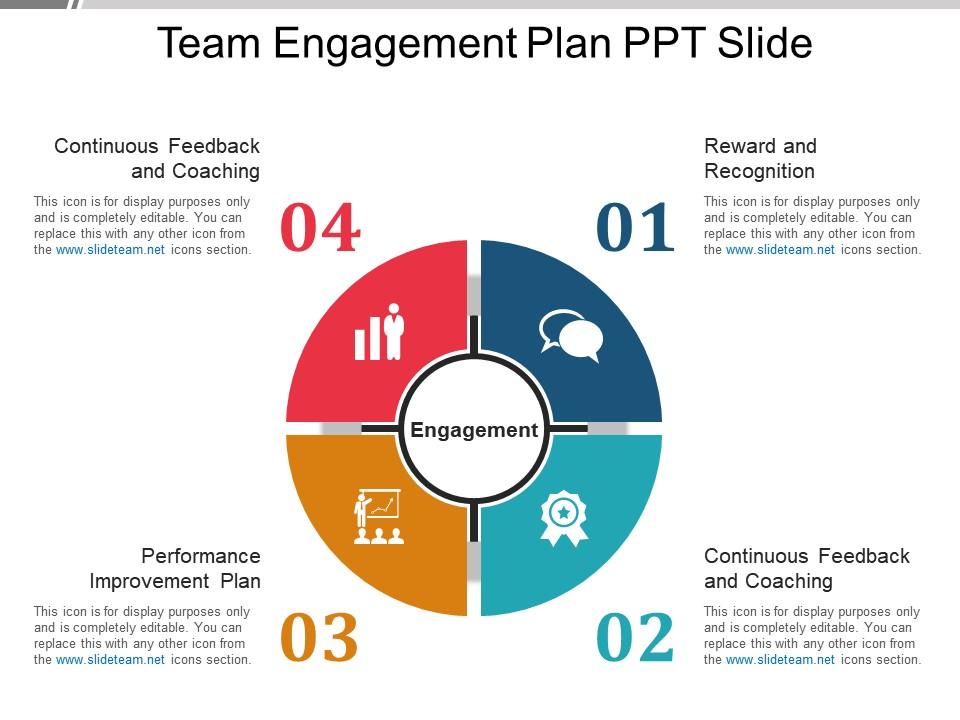
Team engagement plan ppt slide

Rating:
90%
Team engagement plan ppt slide
Slide 1 of 5
Favourites Favourites

Try Before you Buy Download Free Sample Product

Audience Impress Your
Audience
Editable 100%
Editable
Time Save Hours
of Time
The Biggest Sale is ending soon in
0
0
:
0
0
:
0
0
Rating:
90%
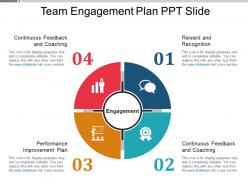
PPT has an impressive picture quality which does not deter in quality when projected on widescreen. High resolution visuals and use of bright colors makes the slide eye catchy. PPT is compatible with multiple software options available both online and offline. PPT is compatible with numerous format options like JPEG, JPG and PNG. PPT is easy to download. Pre designed set of slides. This is thoroughly editable slide design template. Used by business professionals, students and teachers.

FAQs for Team engagement

Clear communication and autonomy are the big ones - like, just tell people what you need and why it matters, then get out of their way. Don't micromanage every little thing. Recognition helps a ton too, even for small wins. Your team needs to feel like you've got their back when they take risks (otherwise they'll just play it safe forever). Regular feedback beats those awful annual reviews any day. Oh, and here's what actually works - just ask them directly what they need to do good work. Most managers never even think to do that, but it's pretty obvious when you think about it.

Oh totally! Templates are actually amazing for team stuff. Everyone stays on the same page visually, which is huge when you're building off each other's work. No more starting from scratch every single time - I swear it cuts prep time in half. You can set up shared libraries where people add their best layouts. Then the whole team gets to use everyone's design ideas (honestly some people are just naturally better at making things look good). I'd start with whatever presentation types you do most. Like if you're always doing project updates or client pitches, make templates for those first.

Honestly? Your leadership style makes or breaks team engagement. I've watched entire teams flip around just because their manager started doing regular check-ins and actually being present. Transparency about goals is huge. So is recognizing good work when you see it. Give people autonomy too - trust them to handle their stuff without micromanaging every little thing. The listening part is probably the hardest though, really hearing what your team's saying about their concerns and ideas. Just be consistent with it all, not just when you remember or when everything's falling apart.

Honestly, feedback loops work because people just want to know they're not being ignored. When you check in regularly, your team actually feels like their work means something instead of disappearing into a black hole. It builds trust too - they'll bring up problems or ideas without waiting for some formal meeting. I've seen way too many situations where tiny issues snowball because nobody was talking. The trick is making it actually conversational, not you lecturing them. Weekly check-ins work great, or those quick anonymous surveys if you want honest opinions. Just keep the dialogue going somehow.

Honestly, bad slides kill engagement faster than anything. When someone throws up a wall of bullet points, I literally watch people's eyes glaze over - it's painful. Clean visuals and clear hierarchy keep everyone locked in. Break your content into bite-sized pieces. Use color or bold text to highlight what matters. I learned this the hard way after bombing a few presentations myself. People will actually participate in discussions instead of checking their phones when they can easily follow along. Good design basically shows you're not trying to waste their time.

Honestly, I'd start with quick pulse surveys - anonymous ones so people don't sugarcoat everything. One-on-ones are where you'll get the real tea though. Also worth tracking stuff like who's actually participating in meetings and volunteering for projects. Oh, and turnover rates obviously. Exit interviews help too, even though by then it's kinda late to fix anything. I always think mixing hard data with actual conversations works best. Don't go crazy trying every method - pick maybe 2 or 3 that fit your team and stick with them. Otherwise you'll just overwhelm yourself.

Dude, visuals are a game-changer for presentations. People actually *get* what you're saying when they can see it instead of just hearing a bunch of words. Charts and diagrams help your team understand complex stuff way faster - plus nobody wants to stare at endless bullet points (seriously, that's just cruel). Visual learners especially love this approach. Oh, and it keeps everyone's attention longer too. Try replacing half your text with images or graphs next time. Trust me, your team will be way more engaged. Even simple screenshots work better than walls of text.

Honestly, video calls are huge for remote teams - but mix in some casual coffee chats too. Those random conversations can be way more valuable than formal meetings sometimes. Give everyone shared goals to work toward together instead of just solo tasks. Slack channels keep the conversation going between meetings, which helps. Oh, and throw in virtual team activities once in a while (even if they feel cheesy at first). You really need multiple ways for people to connect throughout the week. Short version: they've gotta feel connected to the work AND each other, not just one or the other.

Honestly, having a shared vision makes such a huge difference for team engagement. People actually care when they can see how their work fits into the bigger picture - it's not just another task to check off. Without it, you're basically asking people to show up and hope for the best, which... yeah, doesn't work great. Teams with clear vision tend to help each other out more too since everyone knows where they're headed. Oh, and if you don't have one yet? Get everyone in a room and hash out what success actually looks like together. Way better than trying to guess what motivates people.

Honestly, recognizing your team's work is like magic for morale. People genuinely want to feel like what they're doing matters, you know? Whether it's a shout-out in meetings, bonuses, or just a quick "hey, that was awesome" - it all counts. Your retention will improve too, which saves you from constantly training new people (ugh, the worst). The trick is being specific about what they did well instead of generic praise. Catch them in the moment when possible. I swear people light up when you notice the little things they're crushing at work.

Oh, this is actually pretty easy! Make the presentation practice BE the team building thing. Like have people "sell" totally ridiculous products to each other or pitch their dream vacation spots. Way more fun than boring formal training, and nobody feels weird about it. Storytelling circles work great too - everyone shares work wins or whatever. Honestly, pairing people up is probably the best move since they're less nervous together. The whole point is just getting them comfortable with a mic in their hands without making it feel like school, you know?

Honestly, it usually comes down to fuzzy goals and crappy communication. People get lost when they can't see how their work matters in the bigger picture. Remote work definitely made this harder - you miss all those random desk conversations that actually keep everyone connected. Recognition is huge too. When someone does good work and nobody notices? Motivation tanks fast. I'd start with weekly check-ins, nothing fancy. Just "how do you feel about what we're working on?" You'd be surprised what people will tell you. Oh, and celebrate the small wins! Sounds cheesy but it works.

Honestly, just weave your team values right into the stories you tell. Innovation matters? Tell them about Sarah's crazy idea that actually worked. Stories hit different than boring bullet points - I mean, we've all zoned out during those presentations, right? When people hear real examples of your values in action, it sticks. Plus it's way more engaging than reading off a list. Try opening your next meeting with a quick story that shows one of your values playing out. The response will surprise you - people actually listen when you give them something to connect with.

Oh man, I've tried a bunch of these! Mentimeter is honestly my go-to - super easy and turns boring meetings into actual discussions. Slido's similar for polls and Q&A stuff. Kahoot works if you want quiz vibes. For collaboration, Miro and Mural are solid - everyone can jump on the same whiteboard. Prezi's pretty cool too with those zoom-in presentations, way better than regular slides. I'd start with Mentimeter though. It's foolproof and people actually engage instead of just sitting there checking their phones (which let's be real, happens way too often). Makes everyone feel like their input matters.

Do your homework on everyone's cultural backgrounds first. Some cultures are super direct, others beat around the bush. I found this out the embarrassing way when I kept asking "any questions?" and got total silence! Mix things up with small group chats, anonymous polls, written feedback - basically give people options. Time zones are a pain if you're remote, and don't forget about religious holidays when you're scheduling. Short sentences work. So do longer ones that actually flow naturally when you read them out loud. The whole point is letting everyone participate how they're comfortable.

Ratings and Reviews

90% of 100
Review Form
Write a review
Most Relevant Reviews
  1. 100%

    by Chris Watson

    Awesomely designed templates, Easy to understand.
  2. 80%

    by Smith Flores

    Thanks for all your great templates they have saved me lots of time and accelerate my presentations. Great product, keep them up!

2 Item(s)

per page: