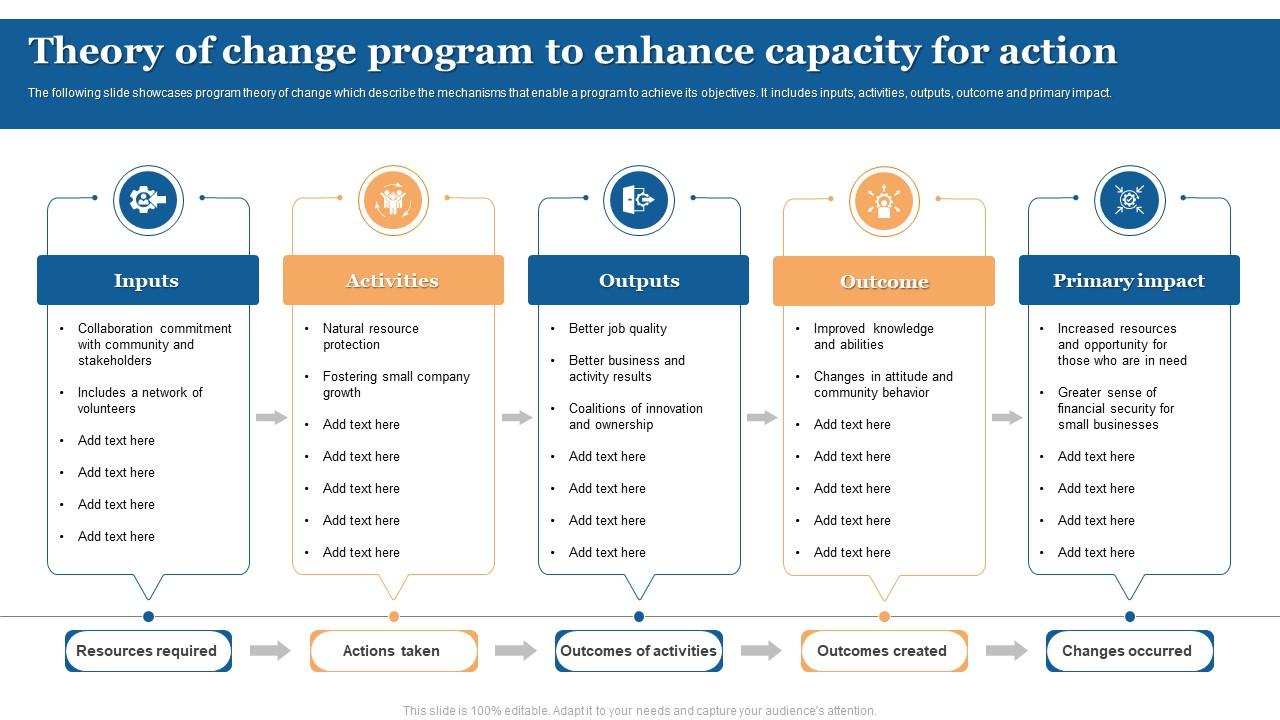
Theory Of Change Program To Enhance Capacity For Action
Try Before you Buy Download Free Sample Product
Audience
Editable
of Time
The following slide showcases program theory of change which describe the mechanisms that enable a program to achieve its objectives. It includes inputs, activities, outputs, outcome and primary impact.
People who downloaded this PowerPoint presentation also viewed the following :
Theory Of Change Program To Enhance Capacity For Action with all 6 slides:
Use our Theory Of Change Program To Enhance Capacity For Action to effectively help you save your valuable time. They are readymade to fit into any presentation structure.
FAQs for Theory Of Change Program To Enhance
So you'll need skills development, knowledge transfer, systems strengthening, and leadership development. Don't just focus on training people though - you've gotta fix the underlying systems too. I've watched so many programs crash and burn because they did workshops but ignored the broken processes underneath. Super frustrating to see that happen repeatedly. Start with a solid assessment of your current gaps first. Then design stuff that actually targets those specific needs. Oh, and make sure you build in mentoring, resource allocation, and ways to measure performance. Otherwise you'll never know if any of it worked.
Honestly? You gotta be brutal with yourself first. Survey your team, look at what projects actually worked vs the disasters, and figure out where your skills/resources are lacking. The feedback part sucks but it's so necessary - ask your stakeholders and the people you serve because they'll call out blind spots you're totally missing. Once you map out your big goals, you can see which capability gaps will actually move the needle on your mission. Oh and prioritize ruthlessly - you can't fix everything at once, trust me on that one.
Honestly, stakeholder engagement can make or break your whole project. I've seen too many training programs just collect dust because nobody bothered asking what people actually needed. Get your stakeholders involved from day one - they'll tell you what skills really matter versus what looks good on paper. People buy into stuff way more when they feel like they helped create it, you know? The trick is figuring out who your real stakeholders are early on. Don't just design everything first and then ask for feedback. That's basically asking them to nod along with your already-made decisions.
Honestly, tech is a total game-changer for training people at scale. Online platforms let you run workshops from anywhere - no more cramming everyone into conference rooms. Mobile apps work great for bite-sized learning when people actually have time. I'd start with just one tool though, maybe test it with a few people first before rolling it out everywhere. Video calls obviously break down the whole geography problem, which is huge for remote teams. The analytics side is pretty cool too - you can actually see what's working instead of just guessing. Just pick something your team won't hate using.
Honestly, engagement's your biggest headache - people hate change and don't get why they should care. Plus everyone's swamped already. You'll run into money/time issues constantly (there's never enough of either, obviously). What kills me is how training knowledge just... vanishes when people go back to their desks. Leadership says they're all-in until suddenly they're not. My advice? Start stupid small, track stuff that actually matters to participants, and - this is crucial - bake in ongoing support from the start. Otherwise you're just throwing money at a problem.
Honestly, measurement is huge because it shows you what's actually moving the needle vs. what just sounds good on paper. I'd start simple though - pick 2-3 things you can easily track, like before/after assessments or how people perform on real projects afterward. Different training methods work for different people, so you'll catch those patterns. Short punchy evaluations work better than trying to bolt on measurement later (learned that one the hard way). The bonus? You'll have solid data when your boss asks if this stuff is worth the budget. Just don't overthink it at first.
Oh man, culture stuff will totally sink your project if you're not careful. I've watched so many programs crash and burn because they just copied some Western template without thinking. People learn differently everywhere - communication styles, power structures, all that matters. Your training might come off as irrelevant or worse, actually offensive. You've got to adapt everything to fit the local context. Maybe tweak how you facilitate sessions, use examples people actually relate to, respect who's supposed to speak first (hierarchy things). Do cultural assessments super early and get local partners involved in designing the whole approach.
Okay so here's the thing - you can't just slap sustainability on at the end and hope it sticks. Start by training people from inside the organization to become trainers themselves. That way the knowledge doesn't walk out the door when you do. Document everything (and I mean everything) in formats people will actually use. Set up mentoring between the old guard and new folks. Most programs totally bomb this part because everyone's in such a rush to wrap up. Plan for regular check-ins and maybe some refresher sessions for like 6 months after. Oh, and make sure leadership actually gives a damn about supporting this stuff long-term, otherwise you're wasting your time.
Dude, partnerships are seriously worth it for building capacity. You're basically pooling resources and expertise with people who know stuff you don't. I've watched projects go from meh to amazing once they found the right collaborators. Cost-sharing is huge too - makes everything more sustainable. Different perspectives help you catch things you'd totally miss on your own. Oh, and you'll reach audiences that would never hear about you otherwise. My take? Figure out which orgs have strengths where you're weak, then just start talking to them early. Don't wait until you "need" them.
Honestly, there's a big difference between the two. Individual capacity building is just working on your own skills - like taking workshops, getting certified, or finding a mentor. Pretty straightforward stuff. Organizational capacity building though? That's about making your whole company or team function better as a unit. You're looking at systems, processes, how people communicate - the bigger picture stuff that affects everyone. I mean, both matter for sure, but you gotta figure out what's actually holding you back first. Is it that people need better skills, or is it that your organization's structure is kind of a mess? Start there and you'll know which direction to go.
Look, capacity building is basically giving people the actual skills to fight for themselves instead of just handing out checks. Training, education, organizing help - that stuff levels things out so marginalized communities can influence policy and create their own solutions. Way better than the old "we know what's best for you" approach, honestly. The trick is letting communities lead the whole thing. Ask them what they actually need first - might surprise you. It breaks those dependency cycles and gives people real power to change their situations long-term.
Start with government grants - USAID and local community development funds love organizational strengthening stuff. Private foundations are honestly where the real money is, especially if they focus on your sector. Corporate CSR programs sometimes fund this too, though they can be weirdly picky about it. Local funders are worth checking out since they're way more flexible than the big guys. I'd probably just google "[your sector] capacity building grants" first, then dig into GrantSpace's database. Oh, and don't sleep on those smaller foundations - they're often less competitive than you'd think.
Look, ongoing training is what stops your team from hitting a wall after that first skills bump. People plateau hard without it - or worse, they backslide when everything around them keeps changing. It's like the gym thing, right? One session won't do much. Regular sessions keep everyone sharp and introduce new methods as stuff evolves. Honestly, I think every 6 months for refreshers works well. Build in peer learning too - makes growth feel natural instead of this big forced thing. Creates that culture where people actually want to keep improving.
Keep remote training sessions under 90 minutes - people's attention just dies after that. Every 10-15 minutes, throw in polls, breakout rooms, or something on Miro to get them participating. Virtual engagement is honestly such a pain compared to in-person stuff. Send materials ahead of time and definitely record everything. Oh, and test your audio setup first because tech fails will completely derail your session. Instead of just talking at everyone, create tons of ways for people to jump in. Try starting your next one by having everyone share what they'll actually use right away.
Honestly, most places suck at this but you've got to actually follow up on your projects. Check if people retained the skills months later - not just right after training. Participant feedback is crucial too. I'd create some basic database (doesn't have to be fancy) where you track what bombed vs what worked. Before launching anything new, spend like an hour reviewing similar stuff you did before. You'll spot patterns - maybe your workshop format consistently fails, or certain groups need totally different approaches. Saves you from making the same expensive mistakes twice.
-
Superb! The innovative and inspiring template designs provide an edge to the presentation.
-
SlideTeam is the best in the business. Their templates are engaging and customizable. You can rely on them.