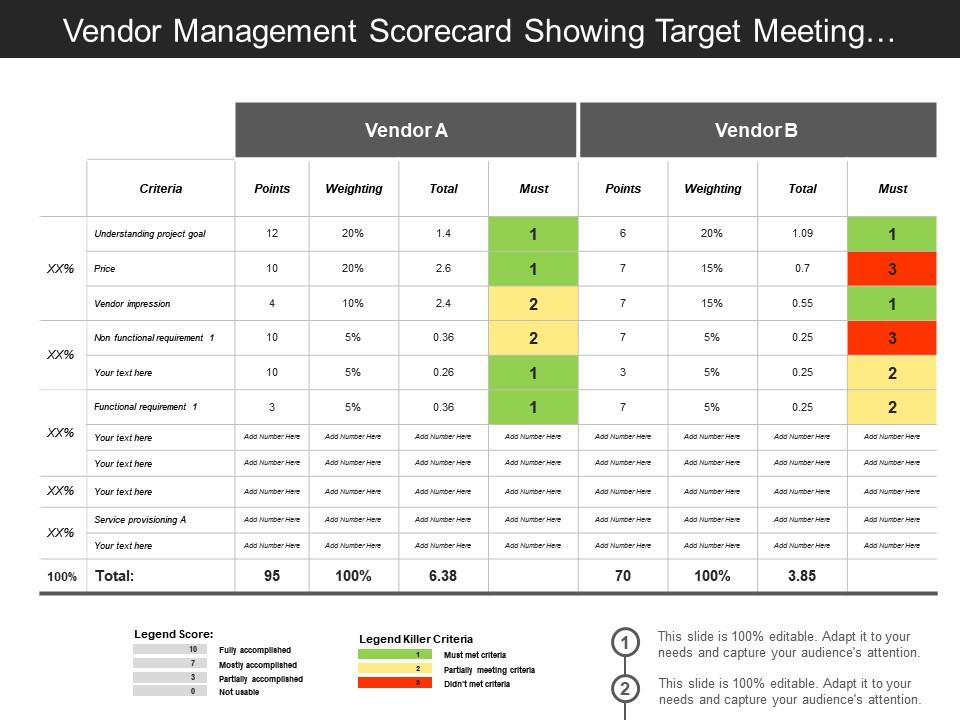
Vendor management scorecard showing target meeting criteria covering weightage and points in percent

Rating:
80%
Vendor management scorecard showing target meeting criteria covering weightage and points in percent
Slide 1 of 5

or

Favourites Favourites

Try Before you Buy Download Free Sample Product

Audience Impress Your
Audience
Editable 100%
Editable
Time Save Hours
of Time
The Biggest Sale is ending soon in
0
0
:
0
0
:
0
0
Rating:
80%
Presenting Vendor Management Scorecard Showing Target Meeting Criteria Covering Weightage And Points In Percent PPT template. The slide is aesthetically designed. This editable presentation allows you to change the font type, size, diagram color, etc. The slide is having compatibility with Google Slides and can be easily converted to image formats document formats such as JPEG or PDF. High-quality graphics and icons ensure that original quality does not decrease.

People who downloaded this PowerPoint presentation also viewed the following :

FAQs for Vendor management scorecard showing target meeting criteria covering weightage and

So I'd start with the big four: quality stuff like defect rates, delivery metrics (on-time performance), cost competitiveness, and service responsiveness. Honestly though, don't sleep on adding a communication/relationship score because working with jerks is miserable no matter how good their numbers look. Industry-specific things matter too - like if you're dealing with IT vendors, security compliance is huge. Maybe sustainability scores if your company cares about that. Keep it to 5-7 metrics tops or you'll drown in data. Then just see what actually moves the needle and adjust from there.

So vendor scorecards are basically report cards for your suppliers - shows them exactly how they're doing on stuff like delivery times and quality. Honestly, it's pretty smart because vendors hate looking bad on paper, so they'll actually try harder. You can even tie their scores to contract renewals, which gives them real motivation. I'd probably start with like 3-5 metrics that actually matter to you (don't go overboard) and share the results every quarter. Works way better than just complaining when things go wrong, trust me.

So data analytics is what makes vendor scorecards actually useful instead of just spreadsheets collecting dust. You can spot performance trends and figure out which metrics really matter vs the noise. Weight your KPIs properly too - minor delivery hiccups shouldn't carry the same weight as major quality disasters, obviously. The predictive stuff is pretty neat - it'll forecast future performance based on past patterns. Oh, and definitely clean up your existing vendor data first. You know how it is, messy data just gives you messy results.

Honestly? Monthly is ideal but quarterly works if you're swamped. Critical vendors definitely need monthly check-ins - especially if they've been screwing up lately. Low-risk ones can wait three months. Here's the thing though - stale data won't help you when shit hits the fan. I've seen too many teams create these gorgeous scorecards then never actually look at them. What's the point? Fresh insights beat busywork, but you've gotta find that balance. Maybe start quarterly and see how it feels. Just don't let it become another useless report sitting in someone's inbox.

Honestly, getting everyone on board is the hardest part - your team AND vendors will resist at first. Data's always a mess too. Different systems, outdated spreadsheets, vendors reporting completely different ways. It's annoying but expected. Focus on metrics that actually move the needle for your business, not just stuff that looks good in reports. Vendors hate transparency so they'll push back hard. Oh, and don't try to boil the ocean right away. Pick 2-3 vendors for a pilot program first. Way easier to manage and you'll learn what works before scaling up.

Map your business goals straight to vendor KPIs first - that's the foundation. Customer satisfaction matters? Track response times and quality scores, not just costs. Honestly, most scorecards I've seen measure random stuff that doesn't move the needle. Do quarterly reviews to check if your metrics still match what you actually care about. Business priorities change (they always do), so your vendor measurements need to flex too. Don't set it once and walk away - treat it like something that evolves with your needs.

Start with Excel or Google Sheets - seriously, don't overthink it. They're flexible and everyone already knows how to use them. You can customize whatever metrics you need without any headaches. Power BI or Tableau are solid if you want fancy visual dashboards, but honestly? The learning curve's pretty steep. My old company used Ariba for procurement stuff, which was nice but total overkill unless you're juggling like 50+ vendors. Just build a simple spreadsheet template first. Track your main KPIs, figure out your scoring system. Then you can get fancy with specialized tools later once you've got the process down.

Just add risk metrics right into your scorecard next to the regular performance stuff. Financial health, compliance track record, cybersecurity - basically anything that'd screw you over if it went wrong. Weight them based on how critical each vendor is. Your top suppliers should get the toughest review, obviously. Score both where they are now AND how they're trending - honestly, the trend part is almost more telling than a snapshot. That way you're not just seeing if they deliver on time, but if they're actually gonna be solid partners down the road.

Add relationship quality, communication, and cultural fit to your scorecard for sure. The soft stuff matters way more than people think. Track how fast they respond to problems and whether they actually bring you new ideas without being asked. Misaligned values? Total nightmare down the road - learned that one the hard way. Their team's professionalism counts too, plus how flexible they are when you need changes. Innovation mindset is huge. Just be consistent tracking this stuff so you'll catch issues early instead of dealing with bigger headaches later.

Just add sections for stakeholder feedback right into your scorecard. Survey the teams actually working with each vendor - they'll tell you what's really going on with responsiveness and quality. I do quarterly surveys instead of annual ones because honestly, too much changes in a year. Make it systematic though, not just random complaints floating around. Have stakeholders rate vendors on key stuff, then weight that feedback maybe 20-30% of the total score depending on how relationship-heavy the work is. Short surveys work better anyway. Roll those scores into your main scorecard and you'll get the full picture instead of just the numbers side of things.

Honestly, keep it simple - pick metrics that actually connect to business results. Nobody wants to track 20 random KPIs. Get feedback from everyone who deals with these vendors, not just the procurement team. That's where you'll find the real issues. Also, whatever criteria you set up now? Plan to change it. What matters today probably won't next year. Oh and seriously, automate the data stuff if you can - I've seen people spend hours updating spreadsheets manually and it's painful. The whole point is using this info to have better conversations with vendors, not creating busy work.

So basically, industry standards are your cheat sheet for building scorecards. Look at whatever frameworks your industry uses - ISO standards, SOC compliance, whatever regulations apply to your vendors. Honestly, it's way easier than starting from scratch. These standards show you which performance areas actually matter and what good thresholds look like. Start by figuring out what standards everyone else follows in your space. Then just map those requirements into scorecard categories - stuff like quality, compliance, risk management. It's pretty straightforward once you know what to look for.

Put them on a formal improvement plan first - write down exactly what's wrong and give them deadlines. Check in weekly (or every two weeks if it's not too dire). Money talks with these people, so if they're still screwing up after the timeframe, hit them with contract penalties or hold back payments. That usually gets their attention real quick. Document everything though - you'll need that paper trail when procurement starts asking questions later. Worst case? Start looking for their replacement, but honestly most vendors shape up once their paycheck's at risk.

Build in flexibility from day one - weight your metrics so you can adjust them quarterly. Those rigid categories that worked two years ago? They're probably useless now. I've watched so many scorecards turn into dusty documents nobody touches. Get regular feedback from your vendors to catch trends early. Keep a couple "wildcard" slots for new priorities like sustainability or cybersecurity stuff. Honestly, the biggest mistake is treating scorecards like they're carved in stone. They should evolve with your business, not collect digital dust.

Honestly, communication makes or breaks the whole thing. Walk your vendors through the scoring criteria upfront - like, actually explain what you're looking for and why. Otherwise they'll think it's just more corporate BS. Schedule those quarterly check-ins too because people need to know not just their scores but how to actually get better. I've seen this go sideways when vendors get blindsided by bad ratings they didn't see coming. Super awkward. Start with a kickoff meeting to cover everything, then keep the conversation going. Without that transparency, the scorecard becomes pretty useless.

Ratings and Reviews

80% of 100
Review Form
Write a review
Most Relevant Reviews
  1. 80%

    by Chung Bennett

    It saves your time and decrease your efforts in half.
  2. 80%

    by Dusty Hoffman

    Enough space for editing and adding your own content.

2 Item(s)

per page: