

Vendor management strategies to increase procurement efficiency powerpoint presentation slides




Try Before you Buy Download Free Sample Product
 Impress Your
 Audience
 100%
100% Editable
 Save Hours
 of Time


Our Vendor Management Strategies To Increase Procurement Efficiency Powerpoint Presentation Slides are topically designed to provide an attractive backdrop to any subject. Use them to look like a presentation pro.
People who downloaded this PowerPoint presentation also viewed the following :
Content of this Powerpoint Presentation
Slide 1: This template illustrates the topic Vendor Management Strategies to Increase Procurement Efficiency.
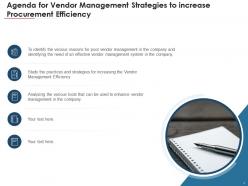
Slide 2: This is an Agenda slide illustrating the Vendor Management Strategies to increase Procurement Efficiency, the various reasons for poor vendor management in the company, and the need for an effective vendor management system.
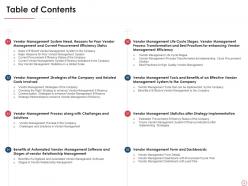
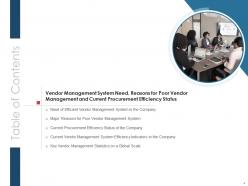
Slide 3: This is a Table of Contents slide illustrating the Vendor Management System Need, Reasons for Poor Vendor Management, Current Procurement Efficiency Status, Need of Efficient Vendor Management System in the Company, Major Reasons for Poor Vendor Management System, and more.
Slide 4: This is a Table of Contents slide that illustrates Vendor Management System Need, Reasons for Poor Vendor Management, and Current Procurement Efficiency Status.
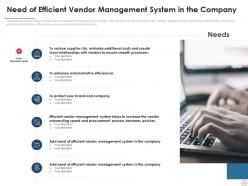
Slide 5: This slide shows the need for an efficient vendor management system in the company. The needs are to reduce supplier risk, minimize additional costs, build strong relationships with vendors, enhance administrative efficiencies, enhance procurement processes, etc.
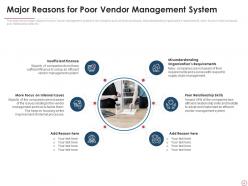
Slide 6: This slide shows major reasons for the poor vendor management system in the company, such as financial issues, misunderstanding organization’s requirements, more focus on internal issues, poor relationship skills, etc.
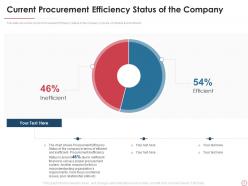
Slide 7: This slide shows the current Procurement Efficiency Status of the company’s efficiency and inefficiency.
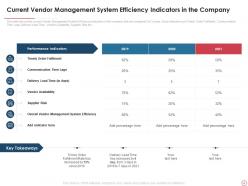
Slide 8: This slide shows the current Vendor Management System Efficiency Indicators of the company that is compared for 3 years.
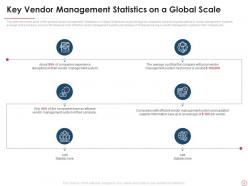
Slide 9: This slide shows the general Vendor Management Statistics on a global scale, such as the percentage of companies experiencing disruptions in vendor management systems, average cost a company incurs, percentage of companies having vendor management systems, etc.
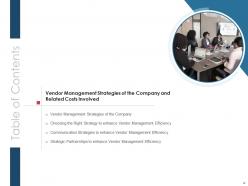
Slide 10: This is a Table of Contents slide illustrating the Vendor Management Strategies of the Company and Related Costs Involved.
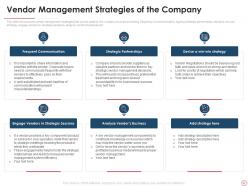
Slide 11: This slide shows some vendor management strategies that can be used by the company, such as increasing frequency of communication, signing strategic partnerships, devising a win-win strategy, engaging vendors in strategic sessions, analyzing vendors’ business, etc.
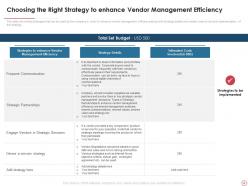
Slide 12: This slide shows the strategies that can be used by the company to enhance vendor management efficiency along with strategy details and related costs involved in the implementation of the strategy.
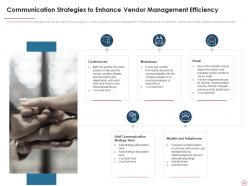
Slide 13: This slide shows the strategies that can be used by the company to enhance vendor management efficiencies, such as conferences, workshops, emails, mobiles, and telephones.
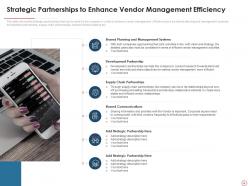
Slide 14: This slide shows the strategic partnerships that can be used by the company to enhance vendor management efficiency, such as shared planning and management systems, development partnerships, supply chain partnerships, shared communications, etc.
Slide 15: This is a Table of Contents slide that illustrates the Vendor Management Process along with Challenges and Solutions.
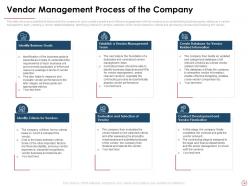
Slide 16: This slide shows the process that is followed by the company to create a positive and effective engagement with the vendors, such as identifying business goals, setting up a vendor management team, creating a vendor-related database, identifying criteria for vendors, selection of the vendor based on criteria, and developing contract and finalizing the vendor.
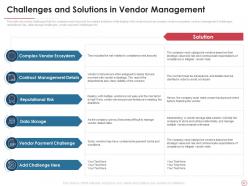
Slide 17: This slide shows the challenges that the company must face and the related solutions while dealing with vendors, such as complex vendor ecosystem, contract management challenges, reputational risk, data storage challenges, vendor payment challenges, etc.
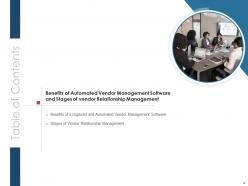
Slide 18: This is a Table of Contents slide illustrating the Benefits of Automated Vendor Management Software and Stages of Vendor Relationship Management.
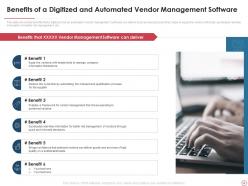
Slide 19: This slide shows the benefits that digitized and automated vendor management software can deliver, such as reduced cycle time, helping to equip the vendor with tools, syndicating real-time information for better risk management, etc.
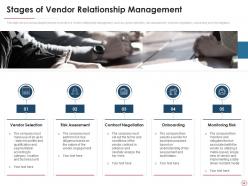
Slide 20: This slide shows various stages that are involved in vendor relationship management, such as vendor selection, risk assessment, contract negotiation, onboarding, and risk mitigation.
Slide 21: This is a Table of Contents slide illustrating the Vendor Management Life Cycle Stages, Vendor Management Process Transformation, and Best Practices for enhancing Vendor Management Efficiency.
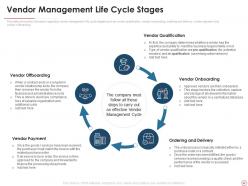
Slide 22: This slide shows the information regarding vendor management life cycle stages such as vendor qualification, vendor onboarding, ordering and delivery, vendor payment, and vendor offboarding.
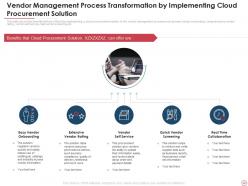
Slide 23: This slide shows the benefits that are offered by implementing a cloud procurement solution to the vendor management process, such as easy vendor onboarding, comprehensive vendor rating, vendor self-service, fast vendor screening, etc.
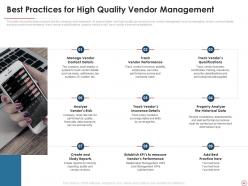
Slide 24: This slide shows the best practices that the company must implement to ensure better- and high-quality governance over vendor management, such as managing vendor contract details, tracking vendor’s performance, tracking vendor’s qualifications, analyzing vendor’s risk, tracking vendor’s insurance details, etc.
Slide 25: This is a Table of Contents slide that illustrates the Vendor Management Tools and Benefits of an Effective Vendor Management System to the Company.
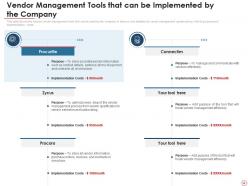
Slide 26: This slide shows the various vendor management tools that can be used by the company to improve and stabilize its vendor management system along with its purpose and implementation costs.
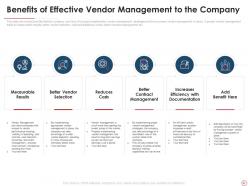
Slide 27: This slide shows the benefits that the company can have if it properly implements vendor management strategies in place.
Slide 28: This is a Table of Contents slide that illustrates the Vendor Management Statistics after Strategy Implementation.
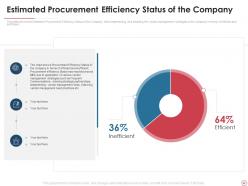
Slide 29: This slide shows the Estimated Procurement Efficiency Status of the Company after implementing and adopting the vendor management strategies.
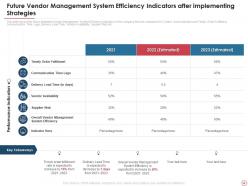
Slide 30: This slide shows the future estimated Vendor Management System Efficiency Indicators of the company compared for 3 years.
Slide 31: This is a Table of Contents slide that illustrates the Vendor Management Form and Dashboards.
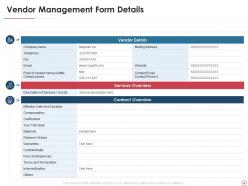
Slide 32: This slide illustrates the Vendor Management Form Details.
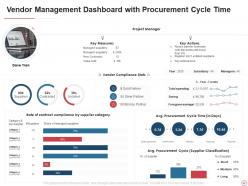
Slide 33: This slide illustrates the Vendor Management Dashboard with Procurement Cycle Time.
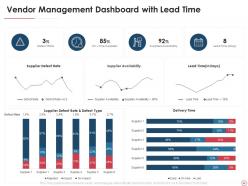
Slide 34: This slide illustrates the Vendor Management Dashboard with Lead Time.
Slide 35: This is an icon slide that illustrates the Vendor Management Strategies to increase Procurement Efficiency.
Slide 36: This template illustrates the Additional Slides.
Slide 37: This is an About Us slide that illustrates the Target Audience, Valued Clients, and more.
Slide 38: This is a Team Introduction slide that includes employee names and designation.
Slide 39: This is a slide that can be used to represent the company's Mission, Vision, and Goal.
Slide 40: This is a Puzzle slide that can be used to illustrate various topics.
Slide 41: This slide contains Post-It Notes that can be used to express any brief thoughts or ideas.
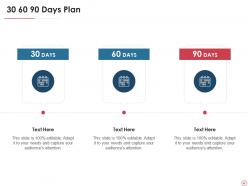
Slide 42: This is a slide with a 30 60 90 Days Plan to set goals for these important intervals.
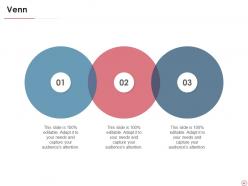
Slide 43: This slide provides a Venn diagram that can be used to show interconnectedness and overlap between various departments, projects, etc.
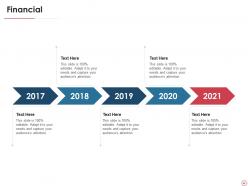
Slide 44: This slide presents the financial data numbers at minimum, medium, and maximum percentages.
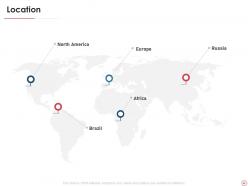
Slide 45: This is a 100% editable location template that can be used to highlight the geographical presence.
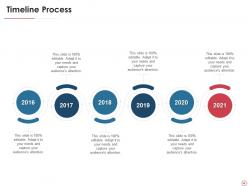
Slide 46: This is a 100% Timeline Process slide that can be used to illustrate direction.
Slide 47: This is a Thank you slide that illustrates the Company address, contact details, email, and more.
Vendor management strategies to increase procurement efficiency powerpoint presentation slides with all 47 slides:
Use our Vendor Management Strategies To Increase Procurement Efficiency Powerpoint Presentation Slides to effectively help you save your valuable time. They are readymade to fit into any presentation structure.


FAQs for Vendor management strategies to increase procurement efficiency
Key factors include vendor reliability, cost-effectiveness, quality standards, scalability potential, and compliance capabilities. These considerations enable businesses to streamline operations, minimize risks, and enhance service delivery, with many organizations finding that strategic vendor partnerships ultimately deliver competitive advantages and sustainable growth in increasingly complex market environments.
Effective communication improves vendor relationships by establishing clear expectations, providing regular performance feedback, and creating transparent channels for issue resolution and collaboration. Through structured communication protocols, organizations streamline project coordination, minimize misunderstandings, and enhance service delivery, with many companies finding that consistent dialogue ultimately delivers stronger partnerships and improved operational efficiency.
Technology serves as the backbone of modern vendor management strategies through automated procurement systems, AI-driven vendor assessment tools, cloud-based contract management platforms, real-time performance analytics, and integrated supply chain visibility solutions. These technologies streamline vendor onboarding, enhance compliance monitoring, and enable data-driven decision-making, with many organizations finding that digital transformation ultimately delivers faster procurement cycles, reduced costs, and stronger strategic partnerships.
Businesses assess vendor risk through financial stability reviews, compliance audits, security evaluations, performance history analysis, and operational dependency assessments. These evaluations enable organizations to create comprehensive mitigation plans including diversified supplier portfolios, contractual safeguards, and regular monitoring protocols, ultimately delivering enhanced supply chain resilience and reduced operational vulnerabilities.
Organizations should evaluate vendor performance using metrics including service level adherence, cost efficiency ratios, delivery timeliness, quality scores, and compliance ratings. These comprehensive measurement frameworks enable businesses to streamline procurement decisions, enhance operational efficiency, and maintain strategic partnerships, with many enterprises finding that consistent vendor scorecards ultimately deliver improved service quality and competitive advantage.
A collaborative approach with vendors enhances supply chain efficiency by fostering shared planning, real-time information exchange, and joint problem-solving across operations. Through strategic partnerships, organizations streamline procurement processes, reduce lead times, and improve quality control, with many manufacturing and retail companies finding that collaborative vendor relationships ultimately deliver lower costs, faster innovation, and stronger competitive positioning.
Long-term vendor partnerships deliver reduced costs through bulk pricing, improved service quality via deeper collaboration, enhanced innovation through shared development, streamlined operations, and greater supply chain stability. These strategic relationships enable organizations to negotiate better terms, access priority support, and develop customized solutions, with many companies finding that established partnerships ultimately provide competitive advantages and operational efficiency that shorter-term arrangements cannot match.
Businesses align vendor management strategies with corporate goals by establishing clear performance metrics, conducting strategic vendor assessments, and implementing regular governance reviews that evaluate cost efficiency, quality standards, and innovation contributions. Through strategic partnerships with key suppliers, organizations streamline procurement processes, reduce operational risks, and enhance service delivery, with many companies finding that aligned vendor relationships ultimately deliver competitive advantages and support long-term growth objectives.
Effective vendor negotiation strategies include conducting thorough market research, leveraging competitive bidding, bundling requirements for volume discounts, establishing long-term partnerships, and demonstrating mutual value creation. These approaches enable organizations to secure favorable pricing, improved service levels, and flexible contract terms, with many companies finding that strategic vendor relationships ultimately deliver cost savings and enhanced operational efficiency.
Cultural differences significantly impact vendor management through varying communication styles, decision-making processes, negotiation approaches, relationship expectations, and business etiquette across global partnerships. Organizations increasingly find that successful international vendor relationships require cultural sensitivity training, flexible management approaches, and localized communication strategies, with many multinational companies discovering that culturally-aware vendor management ultimately delivers stronger partnerships and enhanced operational efficiency.
**INPUT**: What are the best practices for onboarding new vendors to ensure smooth integration? **OUTPUT**: Best practices for vendor onboarding include comprehensive documentation requirements, clear communication protocols, performance benchmarking, compliance verification, and structured integration timelines. These approaches streamline partnerships by establishing expectations upfront, minimizing operational disruptions, and accelerating time-to-value, with many organizations finding that systematic onboarding reduces vendor-related issues by significantly improving accountability and collaboration.
Feedback loops contribute to vendor improvement by enabling continuous performance monitoring, identifying service gaps, facilitating knowledge sharing, and creating collaborative problem-solving channels. Through structured feedback mechanisms, organizations can help vendors optimize delivery processes, develop innovative solutions, and align services with evolving business needs, ultimately strengthening partnerships while driving mutual growth and competitive advantage.
Managing multiple vendors simultaneously presents coordination complexity, contract inconsistencies, performance monitoring difficulties, communication fragmentation, and resource allocation challenges across different partnerships. Organizations often struggle with maintaining service quality standards, ensuring data security compliance, and managing cost escalation, while juggling competing priorities and timelines, ultimately requiring strategic vendor portfolio management to streamline operations.
Data analytics enhances vendor selection by analyzing performance metrics, financial stability, risk assessments, compliance records, and market positioning to identify optimal partners. Through predictive modeling and comprehensive data evaluation, organizations streamline procurement decisions, minimize supply chain risks, and negotiate better contracts, with many companies finding that analytics-driven vendor selection delivers significant cost savings and operational efficiency.
Common vendor management pitfalls include inadequate due diligence, unclear contract terms, poor communication protocols, insufficient performance monitoring, and lack of contingency planning. These challenges can be avoided by implementing comprehensive vendor assessment frameworks, establishing clear SLAs and communication channels, conducting regular performance reviews, and developing backup vendor relationships, ultimately delivering reduced risks, improved service quality, and stronger operational resilience across organizations.
-
Appreciate the research and its presentable format.
-
Editable templates with innovative design and color combination.
-
Great product with effective design. Helped a lot in our corporate presentations. Easy to edit and stunning visuals.
-
Informative design.
-
I discovered this website through a google search, the services matched my needs perfectly and the pricing was very reasonable. I was thrilled with the product and the customer service. I will definitely use their slides again for my presentations and recommend them to other colleagues.