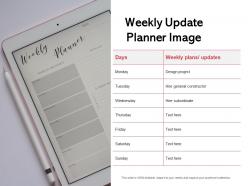
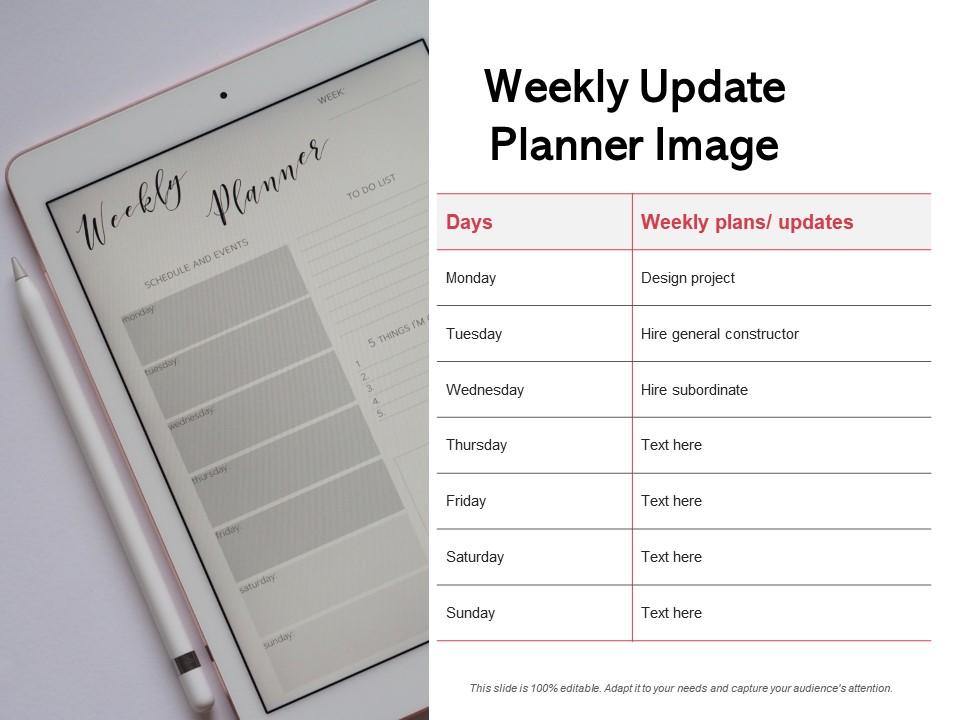
Weekly update planner image
Try Before you Buy Download Free Sample Product
Audience
Editable
of Time
Get cutting edge assistance with our Weekly Update Planner Image. Their exceptional designs are state of the art.
People who downloaded this PowerPoint presentation also viewed the following :
Weekly update planner image with all 6 slides:
Get dealt a good hand by our Weekly Update Planner Image. Get all the aces that you desire.
FAQs for Weekly
Weekly update planners deliver enhanced time management, improved goal tracking, better task prioritization, increased accountability, and clearer progress visualization for both personal and professional objectives. These organizational tools streamline workflow efficiency by consolidating weekly achievements, identifying upcoming priorities, and maintaining momentum across projects, with many professionals finding that regular weekly reviews ultimately boost productivity and reduce stress while ensuring strategic alignment.
A weekly update planner enhances team communication by centralizing project progress, milestone tracking, resource allocation updates, and cross-departmental dependencies in one accessible format. Through structured reporting schedules, teams streamline information sharing, reduce meeting redundancies, and maintain transparency across workflows, with many organizations finding that consistent weekly updates ultimately deliver improved accountability and faster decision-making processes.
Common templates for weekly update planners include goal-tracking frameworks, project milestone trackers, team performance dashboards, priority matrix layouts, and progress visualization charts. These structured approaches streamline communication by organizing accomplishments, upcoming deadlines, and resource needs into digestible formats, with many organizations finding that consistent template usage enhances transparency and accelerates decision-making across departments.
A weekly update planner's structure significantly enhances productivity by organizing tasks chronologically, prioritizing objectives, establishing clear deadlines, and creating accountability checkpoints throughout each week. This systematic approach enables professionals to track progress systematically, identify bottlenecks early, and maintain strategic focus, with many organizations finding that structured planning reduces task overlap and ultimately delivers improved goal achievement rates.
Essential features include task prioritization systems, progress tracking dashboards, deadline notifications, team collaboration tools, and integration capabilities with existing project management platforms. These functionalities streamline workflow management by enabling real-time status updates, automated progress reporting, and seamless communication across departments, with many organizations finding that comprehensive digital planners reduce meeting time while enhancing project visibility and accountability.
Visual elements in weekly update planners improve engagement through color-coded priority systems, progress bars, infographics, and interactive charts that transform data into easily digestible formats. These design features enhance information retention by appealing to visual learners, reducing cognitive load, and creating memorable associations, with many organizations finding that teams respond more positively to visually structured updates than text-heavy reports.
Weekly update planners can be customized through industry-specific metrics, tailored reporting categories, flexible timeline structures, and sector-relevant KPI tracking frameworks. Healthcare organizations might emphasize patient outcomes and compliance milestones, while manufacturing teams focus on production targets and quality metrics, with many companies finding that customized templates streamline communication and enhance project visibility across diverse stakeholder groups.
Effective strategies include prioritizing high-impact deliverables, using bullet-point formats for clarity, setting specific deadlines, and focusing on measurable outcomes rather than activities. These approaches streamline communication by eliminating unnecessary details, highlighting critical dependencies, and establishing clear accountability, with many project teams finding that structured weekly updates enhance team alignment and accelerate decision-making processes.
A weekly update planner helps track progress by creating consistent documentation of completed tasks, milestone achievements, resource allocation, and timeline adherence across projects. This systematic approach enables teams to identify recurring bottlenecks, resource constraints, and workflow inefficiencies, with many organizations finding that regular progress snapshots ultimately enhance project visibility and accelerate decision-making processes.
A weekly update planner serves as a strategic bridge connecting individual tasks to organizational goals by tracking progress, identifying priorities, and ensuring resource alignment across teams. Through regular status reviews and goal mapping, organizations can streamline communication, enhance accountability, and maintain strategic focus, with many companies finding that structured weekly planning ultimately delivers improved productivity and stronger organizational cohesion.
Incorporating feedback loops in weekly planners improves team performance by enabling continuous course corrections, identifying bottlenecks early, and fostering transparent communication across projects. Through regular check-ins and progress reviews, teams can adjust priorities, reallocate resources, and address challenges proactively, ultimately delivering enhanced productivity and stronger collaborative outcomes.
Best practices for reviewing weekly plans include conducting mid-week priority assessments, maintaining flexible time blocks for unexpected tasks, documenting completed versus planned activities, and establishing clear criteria for task reprioritization. These approaches streamline workflow management by enabling rapid response to changing demands, preserving focus on high-impact deliverables, and maintaining momentum toward strategic objectives, with many organizations finding that structured flexibility ultimately delivers greater productivity and stakeholder satisfaction.
Integrating a weekly update planner with productivity tools like project management software, calendar applications, and communication platforms streamlines workflow by centralizing task tracking, automating deadline reminders, and synchronizing team communications. This strategic combination enables organizations to minimize manual data entry, enhance cross-departmental visibility, and deliver faster project completion, with many teams finding significantly improved accountability and operational efficiency.
Common pitfalls include overwhelming teams with excessive detail, creating rigid formats that stifle communication, inconsistent participation from team members, and focusing solely on task completion rather than strategic progress. These challenges can be minimized by establishing clear expectations, maintaining flexible structures, and emphasizing outcomes over activities, with many organizations finding that balanced approaches ultimately enhance team alignment and accountability.
A weekly update planner fosters accountability by creating structured reporting cycles, establishing clear progress metrics, and ensuring regular visibility into individual contributions and project milestones. Through consistent documentation and shared updates, team members become more responsible for their deliverables, while stakeholders maintain oversight of project trajectories, ultimately strengthening communication and performance across organizations.
No Reviews