

Workforce planning proposal powerpoint presentation slides




Try Before you Buy Download Free Sample Product
 Impress Your
 Audience
 100%
100% Editable
 Save Hours
 of Time


There are various positions and functions in an organization that are required to be filled and performed by an individual with a suitable set of skills. It is important to analyze, strategize, and plan regarding the manpower in a company. Employees, who are in sync with their job roles, as well as their personal goals, tend to be more productive for the company. Therefore, employ this Workforce Planning Proposal PowerPoint Presentation Slides to discuss in detail the role of efficient human resources in an organization. By implementing this professionally designed PPT template, you can elaborate on the services you offer like integrated HR information systems, benefits administration, and payroll services. Utilize this personnel management PPT layout to highlight the pragmatic solutions you provide to your clients for the smooth functioning in the business like policies development, recruitment, contract staffing, training, performance evaluation, grievance management, and payroll management. By incorporating this human resource planning PowerPoint slide, you can illustrate the need for proper strategizing, leadership, management, and a proper chain of command in the company. Identify the wide range of issues that hinders the development of an enterprise as a whole by taking the aid of this PPT visual. Each client has different demands that require different investment; therefore, create an outlay structure for different packages by taking the assistance of this workforce administration PPT design. Allow your viewers to choose wisely from the wide range of services offered through this PowerPoint presentation. With the aid of this human capital planning PPT slideshow, present an attractive business overview of the organization and assure your audience about your company by displaying your strengths, achievements, vision, mission, and goals. Disclose the statement of work and contract precisely to maintain the credibility of your company with the help of our PPT theme. Download this ready-to-use PowerPoint template and grab the attention of your viewers.
People who downloaded this PowerPoint presentation also viewed the following :
Content of this Powerpoint Presentation
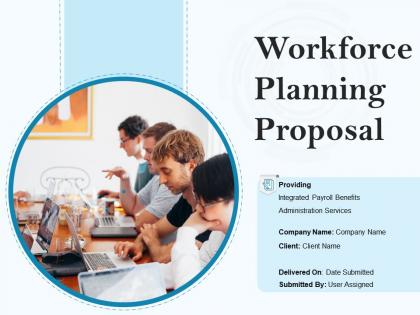
Slide 1: This slide introduces Workforce Planning Proposal. State Client name, Submission date, User assigned and begin.
Slide 2: This slide displays Cover Letter for Workforce Planning Proposal.
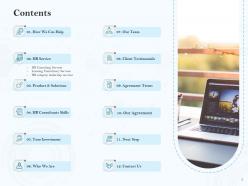
Slide 3: This slide displays Contents of the presentation.
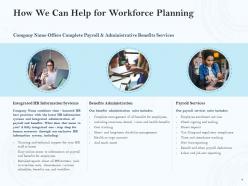
Slide 4: This slide describes How We Can Help for Workforce Planning with related information.
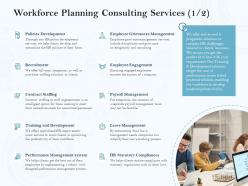
Slide 5: This slide showcases Workforce Planning Consulting Services.
Slide 6: This slide showcases Liaoning Consultancy Services for Workforce Planning.
Slide 7: This slide talks about Workforce Planning for Company Leadership. Here are three major ways that HR serves a vital purpose to company leadership.
Slide 8: This slide represents Product & Solutions for Workforce Planning.
Slide 9: This slide showcases Workforce Planning Consultants Skills.
Slide 10: This slide showcases Investment details Packages for Workforce Planning. Our services can be fully customized. Simply start with your choice package and add hourly consultation as necessary
Slide 11: This slide shows Investment Packages for Workforce Planning.
Slide 12: This is About us slide to showcase Company specifications.
Slide 13: This is Our Team slide with Names and Designations of team member.
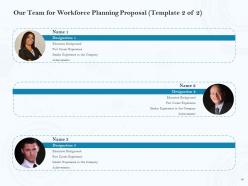
Slide 14: This is Our Team slide with Names and Designations of team member.
Slide 15: This slide displays Client Testimonials for Workforce Planning Proposal.
Slide 16: This slide displays Client Testimonials for Workforce Planning Proposal.
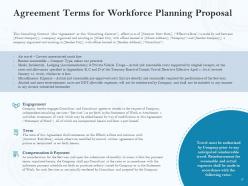
Slide 17: This slide shows Agreement Terms for Workforce Planning Proposal
Slide 18: This slide depicts Our Agreement for Workforce Planning Proposal.
Slide 19: This slide shows Next Steps for Workforce Planning Proposal.
Slide 20: This is Contact Us slide with Address, Email address and Contact number.
Slide 21: This is Icons Slide for Workforce Planning Proposal.
Slide 22: This slide is titled as Additional Slides for moving forward.
Slide 23: This is About Us slide to showcase Company specifications.
Slide 24: This is Our Mission slide with Goal, Vision and Mission.
Slide 25: This is 30 60 90 Days Plan slide.
Slide 26: This slide displays Timeline process.
Slide 27: This slide depicts Gantt Chart for Workforce Planning Proposal.
Slide 28: This slide displays Roadmap process.
Workforce planning proposal powerpoint presentation slides with all 28 slides:
Use our Workforce Planning Proposal Powerpoint Presentation Slides to effectively help you save your valuable time. They are readymade to fit into any presentation structure.
-

Workforce Planning Proposal
-

Cover Letter for Workforce Planning Proposal
-
Contents
-
How We Can Help for Workforce Planning
-
Workforce Planning Consulting Services 1 2
-
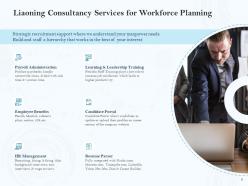
Liaoning Consultancy Services for Workforce Planning
-
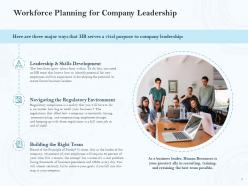
Workforce Planning for Company Leadership
-
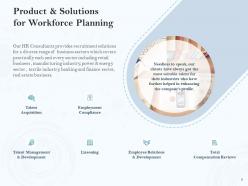
Product Solutions for Workforce Planning
-
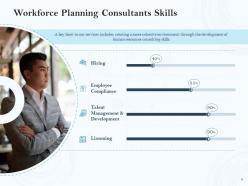
Workforce Planning Consultants Skills
-
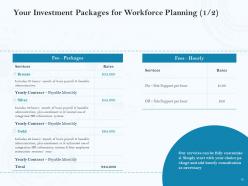
Your Investment Packages for Workforce Planning 1 2
-
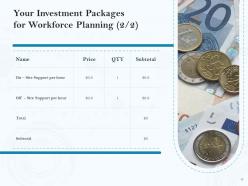
Your Investment Packages for Workforce Planning 2 2
-
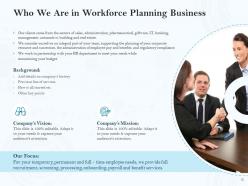
Who We Are in Workforce Planning Business
-
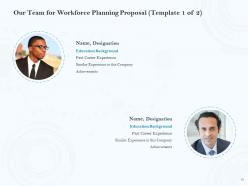
Our Team for Workforce Planning Proposal Template 1 of 2
-
Our Team for Workforce Planning Proposal Template 2 of 2
-
Client Testimonials for Workforce Planning Proposal 1 2
-
Client Testimonials for Workforce Planning Proposal 2 2
-
Agreement Terms for Workforce Planning Proposal
-
Our Agreement for Workforce Planning Proposal
-
Next Steps for Workforce Planning Proposal
-
Contact Us for Workforce Planning Proposal
-
Icons Slide for Workforce Planning Proposal
-
Additional Slides
-
About Us for Workforce Planning Proposal
-
Our Mission for Workforce Planning Proposal
-
30 60 90 Days Plan for Workforce Planning Proposal
-
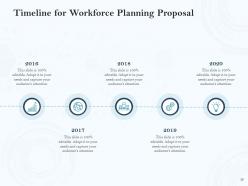
Timeline for Workforce Planning Proposal
-
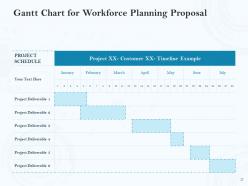
Gantt Chart for Workforce Planning Proposal
-
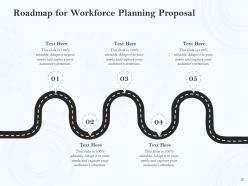
Roadmap for Workforce Planning Proposal
FAQs for Workforce planning proposal
So you'll want to start with demand forecasting - basically predicting what talent you'll need based on your business goals. Then do a supply analysis of your current workforce. Most people totally crash and burn at this step because the data gets messy fast, but push through it. Look for skill gaps, who you need to hire, and retention risks. Create action plans for hiring, training, succession stuff. Oh, and don't treat this like some annual thing you check off a list. Update it quarterly or it becomes useless when your business inevitably shifts direction.
Workforce planning has gotten crazy good with all this new tech. AI can actually predict when people might quit - which honestly blew my mind when I first saw it work. You can spot skill gaps way earlier now instead of scrambling later. All the data from HR systems and employee surveys gives you real insights, not just spreadsheet guesswork like we used to do. Automation handles most of the boring number stuff too. I'd start by figuring out what planning tasks currently eat up most of your time. There's probably some tool that'll cut that down by like half.
Honestly, you don't need to overcomplicate this. Track how long it takes to fill open roles and your turnover by department - that'll tell you a lot. Internal promotions are huge too since promoting from within usually means you're doing something right. Employee engagement scores are worth watching because miserable people bail fast, obviously. Oh, and if diversity matters to your company, measure that progress. Revenue per employee shows if your workforce is actually productive. Pick maybe 3 or 4 metrics that match your biggest headaches and check them quarterly. Trust me, tracking everything just creates noise.
Look at your past hiring patterns and turnover rates first - that's your foundation. Seasonal stuff matters too. Then think about where the business is actually heading and what roles you'll need. Industry changes can totally mess with your plans though, especially tech disruptions. Quarterly updates are crucial because things shift fast. Honestly, half the time you're just making educated guesses no matter how much data you have! The trick is layering your business strategy on top of historical trends. Don't get stuck using last year's assumptions when everything's changed.
Think of skill development as connecting where your team is now to where you'll need them later. First step? Figure out what gaps you've got. Then decide - hire new people or train who you already have. Training internally almost always wins on cost, trust me. Map out some career paths and build programs around future roles. My old boss waited too long on this stuff and it was a nightmare trying to catch up. Start early - like, way before you're scrambling for those skills.
Ugh, demographic shifts are such a headache but you really can't ignore them. Baby boomers retiring means you'll lose tons of institutional knowledge overnight. Meanwhile, Gen Z wants flexible work and totally different career paths than what we're used to. It's wild how much expectations have changed. Plus your talent pools are shifting geographically too - you might need to recruit in places you never considered before. Honestly, I'd start tracking these trends against your current workforce now so you can see the gaps coming instead of scrambling later when half your team retires.
Ugh, the worst part is how fast leadership changes their mind vs how slow hiring actually works. You're trying to hit this moving target while dealing with tight budgets and skill shortages. Good people take forever to find and train, but execs pivot strategy every few months - it's maddening honestly. Then you're competing for talent while somehow predicting what you'll need years from now. Oh and don't get me started on the current job market. My take? Build flexibility into your plans instead of just filling specific boxes. Focus on people who can adapt rather than super narrow specialists.
Dude, data analytics is a game changer for workforce planning. Instead of just guessing, you'll actually know what's happening. Track turnover patterns and spot skill gaps early - way before they bite you. The predictive stuff lets you forecast hiring needs based on growth and seasonal trends, which honestly saves so much scrambling later. Also analyze your comp data so you don't lose people to better offers. I'd start simple though - just track basic metrics like turnover and how long it takes to fill roles. That foundation makes the fancier analytics actually useful.
So you want flexible workforce planning, not some rigid forecast that'll bite you later. Multiple "what if" scenarios are your friend here - market goes up, down, sideways, whatever. Cross-training is clutch because people can jump between roles when things shift unexpectedly. I've watched too many companies get totally screwed by sticking to headcount plans like they're written in stone. Stay tight with your business leaders so you'll catch trends early instead of panicking later. Oh, and track those industry leading indicators - they're basically your crystal ball for getting ahead of changes.
Honestly, the biggest thing is giving people clear paths to grow - that's what really keeps talent around. Yeah, pay matters, but most folks quit their boss, not the job. Have those regular check-ins about where they want to go and actually deliver on what you promise. Flexible schedules help a ton too. Give them interesting work and recognize good performance when you see it. Here's the thing though - be proactive about this stuff. Don't wait until someone's mentally halfway out the door already. These conversations should happen way before people start job hunting, like during your planning cycles.
Dude, labor laws are gonna dictate pretty much every workforce decision you make. Minimum wage, overtime rules, anti-discrimination stuff - it all factors into your headcount and budgets. FMLA means planning for people taking leave (which honestly always happens at the worst times), and ADA requirements can totally change your hiring timelines. Each state has its own weird quirks too, so if you're dealing with multiple locations... good luck with that mess. My advice? Get HR or legal involved from day one. Trust me, fixing compliance issues after the fact is way more expensive than doing it right upfront.
Look, diverse teams just perform better - that's not me being preachy, it's literally what the data shows. You want people who actually get your customers, right? So audit your hiring process first and see where you're accidentally filtering out good candidates. Different perspectives solve problems faster, plus your retention will improve when people feel like they belong. I mean, nobody wants to be the only [whatever] in the room all the time. It's smart business too, not just checking boxes. Start small - maybe look at where you're posting jobs or how you're screening resumes.
So here's what I'd do - figure out what roles you'll need down the road, then see who internally could fill them. Map out your skill gaps first. Don't just clone your current people though, that's honestly where most places screw up. Your business is changing, so the next VP of whatever probably needs different skills than today's VP, you know? Focus development programs on high-potential folks who can actually bridge those gaps. I'd prioritize the critical positions first - you can't develop everyone at once anyway. Use your workforce data to get ahead of this stuff instead of scrambling when Bob from accounting suddenly quits.
Honestly, it depends on your company size. Workday and BambooHR are solid for comprehensive stuff - headcount forecasting, skills gaps, the whole deal. Excel's still king for smaller teams though (seriously, pivot tables are your friend). Don't let anyone make you feel bad about spreadsheets! For fancier predictive modeling, check out Visier or ADP DataCloud. But here's the thing - I'd start by seeing what your current HRIS can already do before dropping cash on new tools. You might be surprised what's already sitting there unused.
Dude, remote work totally flipped the script on hiring. Now you can snag talent from anywhere, which is amazing but also means everyone else is hunting in the same pool. Competition's brutal. You'll have to figure out different pay scales for different cities - kinda messy honestly. Plus all the usual stuff like making sure your tech stack doesn't suck and managers know how to lead distributed teams. I'd definitely lean into hybrid models and contract work too. Skills matter more than location now, which is probably how it should've always been anyway.
-
Very well designed and informative templates.
-
Commendable slides with attractive designs. Extremely pleased with the fact that they are easy to modify. Great work!
-
Helpful product design for delivering presentation.