


0314 presentation of financial statements




Try Before you Buy Download Free Sample Product
 Impress Your
 Audience
 100%
100% Editable
 Save Hours
 of Time


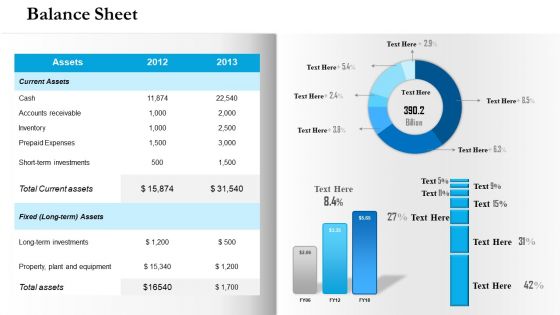
A company's financial statements provide vital information about its financial health. To fulfill this purpose for you, our team of creative designers have designed this presentation of financial statements PowerPoint template. Our PPT visual highlights a balance sheet which comprises of the various assets and liabilities of your company in the current year and the previous year. Various other charts and graphs are also there which can help you to calculate other financial ratios and percentages which are important for your firm. The slide is wholly amendable so you can change the colors, text, layout, figures, etc. as per your financial records and suitability. The information these statements provide offers benchmarks and feedback that help the company make minor adjustments and also determine its overall direction. Financial statements are useful for making decisions regarding expansion and financing. They also figure into marketing decisions, providing data indicating which aspects of company operations provide the best return on investment. Grab the slide now. Our 0314 Presentation Of Financial Statements can be used with ease. Just jot down your points and project it for all.
People who downloaded this PowerPoint presentation also viewed the following :
0314 presentation of financial statements with all 8 slides:
Cover all factors with our 0314 Presentation Of Financial Statements. Give due consideration to different aspects.
FAQs for 0314 presentation
So there's three main ones you gotta know. Income statement shows your revenue, expenses, and what's left over (net income) for a time period. Balance sheet is like a snapshot - what you own vs what you owe at one moment. Then there's cash flow, which honestly trips everyone up but tracks money moving in and out through operations, investing, and financing stuff. I'd read them together since you get the full picture that way. The cash one seems obvious but it's weirdly the hardest to wrap your head around at first.
Think of financial statements like someone's financial diary - they show money coming in, going out, and what's sitting in the bank. The income statement tells you if they're actually profitable. Balance sheets? That's assets vs debts (huge red flag territory if it's bad). Cash flow shows whether they can cover their bills without scrambling. Honestly feels like snooping through someone's entire financial life. Don't just look at one year though - check 3-5 years of trends. That's where you'll catch if they're actually growing or just putting on a good show for investors.
So basically, it's all about timing. Cash accounting means you record stuff only when money actually moves - like if you bill someone today but they don't pay until next month, you wait to record it. Accrual is the opposite - you record things when they happen, not when you get paid. Honestly, accrual makes way more sense for most businesses because you get a real picture of what's going on. With cash accounting, your December could look terrible just because invoices haven't been paid yet, even though you crushed it that month. Figure out which one your company uses though - it'll change how you read everything.
Look, financial statement trends are basically showing you where a company's headed over time. You want to see stuff like revenue growing consistently, profit margins getting better, cash flow strengthening - that's the good stuff. But if things are declining? Major red flags. Don't get stuck analyzing just one quarter though. I always look at 3-5 key metrics across at least three years to see what's really happening. The direction matters way more than individual numbers, honestly. Oh and consistency is huge - you'll spot the real patterns that way instead of getting fooled by random good or bad quarters.
So basically those notes are where all the juicy details live that don't fit in the main financial tables. They'll break down how they calculated stuff, explain their accounting methods, and reveal any sketchy contingencies or commitments. It's like the fine print but actually worth reading - honestly, most people skip them but that's a mistake. The main numbers are pretty useless without context. You'll find changes from last year, assumptions they made, all that stuff. When you're looking at any company's financials, definitely check the notes first. That's where companies sometimes bury the real story.
So balance sheets are pretty straightforward once you get it - Assets = Liabilities + Equity. Current assets like cash and inventory go up top, then long-term stuff like buildings and equipment below that. Flip side shows current liabilities (bills due soon) and long-term debt, with shareholders' equity at the bottom. Think of it like calculating your own net worth but with way more categories and decimal places lol. The layout tells you tons about liquidity and how much debt they're carrying. I always look at current ratio and debt-to-equity first - gives you the clearest picture of their financial health.
Think of your cash flow statement as the brutal truth about your money situation. Your P&L might show tons of revenue, but if customers aren't actually paying you yet, you're still broke. Cash flow breaks everything down into three buckets: operations, investing, and financing. Operations is the big one though - that's your day-to-day money coming in and going out. Without positive operating cash flow, you're basically just shuffling money around from loans and investors. It's honestly the best way to see if your business actually works or if you're just fooling yourself with accounting tricks.
So basically when accounting rules change, you gotta update how you record and show everything in your financial statements. New standards come out (those lease changes were brutal btw) and suddenly you're retraining everyone, updating policies, maybe even restating old numbers. Your ratios can look totally different even though business is exactly the same - which is super confusing for everyone. Get ahead of these changes early though. That way you can prep your transition and give stakeholders a heads up before they panic about the weird-looking numbers.
Honestly, there's a bunch of ratios you can pull from financial statements. ROE is my go-to since it shows how well they're using investor money - way more telling than people think. Current and quick ratios tell you if they can pay bills short-term. Then you've got the profit margins (gross and net) for the obvious stuff. Debt-to-equity shows their borrowing situation. Oh, and don't sleep on turnover ratios like inventory and receivables - they reveal if operations are actually running smooth. Pick maybe 3-4 that matter for whatever industry you're looking at instead of going crazy with calculations.
Look, financial statements are basically a company's report card - you get to see if they're actually making money or just burning through cash. Revenue, profits, debt levels, cash flow... it's all there. The balance sheet tells you what they own vs what they owe, which honestly matters more than people think. I always compare numbers across a few quarters and check how they stack up against competitors. Sounds boring but it beats throwing money at a company that's secretly falling apart. You'll spot the red flags way before your wallet does.
Honestly, forensic accounting is like having a financial detective on your team. Regular audits catch some stuff, but these guys go way deeper - they're looking for the sketchy transactions and weird money trails that scream fraud. Short version: your financial statements become way more accurate because nothing gets past them. Investors trust you more when the numbers are rock solid. I'd definitely get a forensic review if anything seems fishy before your next audit. It's kinda expensive but worth it if you suspect someone's been creative with the books.
Ugh, seasonal trends mess with retail financials so badly. Revenue jumps crazy high during peak times (Q4 is nuts for most stores) then tanks in slow months. Inventory gets weird too - you're stocking up months ahead, then praying it all sells. The cash flow thing is brutal because you're dropping tons of money on stock way before customers actually buy it. I learned this the hard way honestly. Don't compare month to month or you'll go insane. Year-over-year is the only way to see if you're actually doing better.
Look, audits are basically your lifeline for credibility. They prove your financials aren't total BS and actually follow the rules. Investors won't trust you to self-report (honestly, would you?). Your auditors catch the big errors and fraud before they blow up into scandals that destroy your stock price. SOX makes them mandatory anyway, so you don't really have a choice. My advice? Don't fight the process. Give your auditors whatever they need and build a solid relationship with them. Trust me, you'll want them on your side when things get messy.
Honestly, think of your financial statements like a GPS for your business decisions. Cash flow tells you when to make big moves - don't buy equipment when you're about to hit a dry spell. Your P&L is brutal but necessary - it'll show you which parts of your business actually make money vs. which ones just keep you busy (spoiler: they're often different). Balance sheet? That's your reality check on whether you can afford to expand or need to tackle debt first. The income statement is basically your report card, but the real trick is reading all three together to see what's coming around the corner.
Honestly? Most people just stare at one number and call it a day. Big mistake. You gotta compare stuff - like, how did they do last quarter or versus their competitors? Cash flow matters way more than profit anyway, trust me on that. Oh and actually read those tiny footnotes because that's where all the sketchy stuff gets buried. Seasonal companies will mess with your head too - retail always looks weird in January. Pull three years minimum and look for patterns. Makes such a difference when you see the whole picture instead of just one snapshot.
-
Best Representation of topics, really appreciable.
-
Informative presentations that are easily editable.