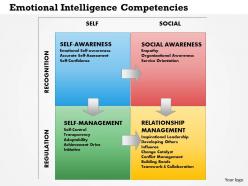
0514 emotional intelligence competencies powerpoint presentation

Rating:
80%
0514 emotional intelligence competencies powerpoint presentation
Slide 1 of 5
Favourites Favourites

Try Before you Buy Download Free Sample Product

Audience Impress Your
Audience
Editable 100%
Editable
Time Save Hours
of Time
The Biggest Sale is ending soon in
0
0
:
0
0
:
0
0
Rating:
80%
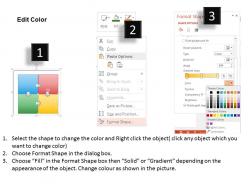
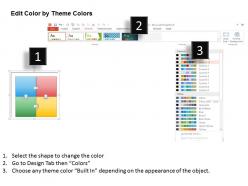
Handy presentation graphic saves you valuable time. Well Assorted with online software programs such as JPG and PDF. Astounding picture quality as pixels don’t break when viewed in widescreen view. Alike designs obtainable with different nodes and stages. Noteworthy quality presentation visual design. PowerPoint background can be adjusted easily as changes permissible with color and text. Engrave the PPT design with your association sign and title.

People who downloaded this PowerPoint presentation also viewed the following :

FAQs for 0514 emotional intelligence

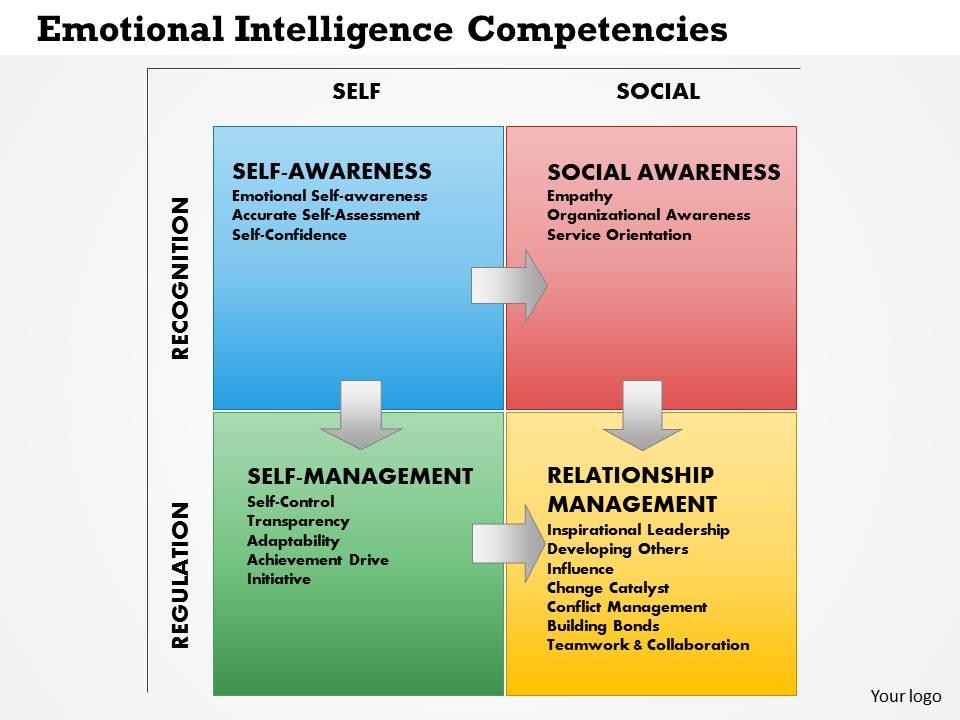
Emotional intelligence comprises self-awareness, self-regulation, motivation, empathy, and social skills, which work synergistically to enhance interpersonal effectiveness and decision-making capabilities. These components interrelate by building upon each other, with self-awareness enabling better regulation, which enhances empathy and social interactions, ultimately delivering improved leadership performance and workplace collaboration across organizations.

Self-awareness significantly enhances decision-making by enabling individuals to recognize their emotional triggers, biases, and behavioral patterns before they influence choices. In professional settings like leadership roles and client negotiations, self-aware individuals make more objective decisions, while personally, they navigate relationships and career transitions more effectively, ultimately delivering better outcomes and strategic advantage.

Empathy enhances communication by enabling deeper understanding of colleagues' perspectives, emotions, and motivations, while fostering trust and reducing workplace conflicts. In team dynamics, empathetic leaders and members create more collaborative environments, with many organizations finding that empathy-driven approaches improve employee engagement, decision-making processes, and ultimately deliver stronger team performance and organizational outcomes.

Yes, emotional intelligence can be measured through various scientifically validated assessment tools, including the Mayer-Salovitz Emotional Intelligence Test (MSCEIT), Emotional Quotient Inventory (EQ-i 2.0), and Genos Emotional Intelligence Inventory. These assessments enable organizations across healthcare, finance, and leadership development to identify high-potential candidates, enhance team dynamics, and improve customer service capabilities, ultimately delivering stronger workplace performance and competitive advantage.

Leaders leverage emotional intelligence to foster positive workplace culture through self-awareness, empathy, active listening, and emotional regulation, creating environments where team members feel valued and understood. By demonstrating authentic communication, recognizing individual contributions, and managing stress constructively, emotionally intelligent leaders build trust and psychological safety, ultimately delivering higher employee engagement, reduced turnover, and enhanced collaborative performance across organizations.

Emotional intelligence enhances conflict resolution by enabling better emotion recognition, active listening, empathy development, and strategic communication approaches. Through self-awareness and social skills, negotiators can read underlying concerns, manage tensions effectively, and find mutually beneficial solutions, with many organizations finding that emotionally intelligent leaders resolve disputes faster while maintaining stronger professional relationships and achieving more sustainable agreements.

Individuals can enhance emotional regulation through mindfulness practices, cognitive reframing techniques, stress management strategies, self-awareness exercises, and developing healthy coping mechanisms. These approaches enable professionals to maintain composure during high-pressure situations, make more objective decisions, and build stronger workplace relationships, with many organizations finding that emotionally regulated employees deliver better customer experiences and drive improved team performance.

Emotional intelligence competencies vary significantly across cultures, with collectivist societies emphasizing social awareness and relationship management, while individualist cultures prioritize self-awareness and self-regulation. These cultural differences impact workplace dynamics, leadership styles, and team collaboration approaches, with many multinational organizations finding that culturally-adapted emotional intelligence training enhances cross-cultural communication and ultimately delivers stronger global business performance.

Emotional intelligence significantly enhances mental health by enabling better stress management, emotional regulation, and resilient coping mechanisms during challenging situations. Individuals with higher emotional intelligence competencies demonstrate improved self-awareness and interpersonal skills, ultimately reducing anxiety and depression while fostering healthier relationships and workplace satisfaction across various professional environments.

Emotional intelligence can absolutely be developed through targeted training approaches including self-awareness coaching, empathy-building exercises, active listening workshops, mindfulness practices, and 360-degree feedback programs. These methodologies enhance leadership effectiveness by improving communication skills, conflict resolution abilities, and team collaboration, with many organizations finding that emotionally intelligent leaders drive higher employee engagement and ultimately deliver superior business performance.

Emotional intelligence enhances customer service by enabling representatives to recognize client emotions, respond empathetically, and adapt communication styles accordingly. Through improved emotional awareness and regulation, service teams deliver more personalized experiences, resolve conflicts effectively, and build stronger trust, with many organizations finding that emotionally intelligent staff significantly increase customer satisfaction and loyalty rates.

Emotional intelligence significantly enhances employee engagement and retention by fostering stronger workplace relationships, improving communication, and creating more supportive team environments. Organizations with emotionally intelligent leaders and cultures experience reduced turnover rates, higher job satisfaction, and increased productivity, with many companies in healthcare, technology, and financial services finding that emotionally aware managers retain top talent more effectively.

Common workplace misconceptions about emotional intelligence include believing it's only about being nice, that it's a soft skill without measurable impact, or that it's innate and can't be developed. These misunderstandings overlook how emotional intelligence drives tangible business outcomes through enhanced leadership effectiveness, improved team collaboration, and stronger client relationships, with many organizations finding that structured EI development significantly improves performance metrics and reduces turnover costs.

Emotional intelligence training enhances remote teams by improving virtual communication clarity, building trust across digital platforms, and fostering empathy despite physical distance. Through enhanced self-awareness and social skills development, remote workers navigate cultural differences more effectively, resolve conflicts constructively, and maintain stronger collaborative relationships, ultimately delivering improved team cohesion and productivity in distributed work environments.

Social skills enable effective communication, conflict resolution, and relationship building, serving as the bridge between personal emotional awareness and successful interpersonal interactions. Through strong social competencies, leaders and teams enhance collaboration, influence outcomes more effectively, and create positive work environments, with many organizations finding that employees with developed social skills drive better customer relationships, team performance, and ultimately deliver sustainable competitive advantage in increasingly collaborative business landscapes.

Ratings and Reviews

80% of 100
Write a review
Most Relevant Reviews
  1. 80%

    by John Walker

    I discovered this website through a google search, the services matched my needs perfectly and the pricing was very reasonable. I was thrilled with the product and the customer service. I will definitely use their slides again for my presentations and recommend them to other colleagues.
  2. 80%

    by Claud Hughes

    Great product with effective design. Helped a lot in our corporate presentations. Easy to edit and stunning visuals.

2 Item(s)

per page: