


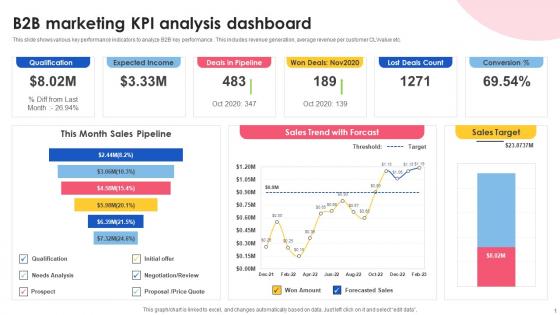
B2B Marketing Kpi Analysis Dashboard




Try Before you Buy Download Free Sample Product
 Impress Your
 Audience
 100%
100% Editable
 Save Hours
 of Time


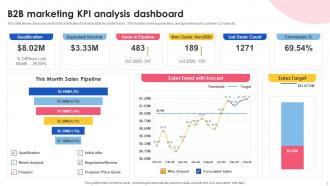
This slide shows various key performance indicators to analyze B2B key performance. This includes revenue generation, average revenue per customer CLVvalue etc.
People who downloaded this PowerPoint presentation also viewed the following :
B2B Marketing Kpi Analysis Dashboard with all 10 slides:
Use our B2B Marketing Kpi Analysis Dashboard to effectively help you save your valuable time. They are readymade to fit into any presentation structure.








FAQs for B2B Marketing
Focus on lead quality first - how many MQLs actually turn into SQLs. Customer acquisition cost is critical too. Then track how fast deals move through your pipeline and which channels drive real closed deals, not just clicks. LTV to CAC ratio should hit at least 3:1. Sales cycle length matters more than most people think. Website traffic looks pretty in dashboards but honestly? It won't matter if you're missing revenue targets. I'd nail down these basics before getting fancy with channel-specific stuff - you'll thank yourself later.
Honestly, forget about vanity metrics like email opens - they're basically useless. Map your lead gen straight to actual revenue instead. Track conversion rates from lead to customer, lifetime value by source, and how long deals take to close. I learned this the hard way when I was obsessing over download numbers that meant nothing for our bottom line. Work backwards from your revenue targets to figure out how many qualified leads you actually need. Then optimize everything around pipeline velocity and lead progression. Those are the numbers that'll actually help you hit your quarterly goals.
CLV is your best bet for measuring long-term marketing success in B2B. Other KPIs show you what's happening now, but CLV reveals the real value of relationships you're building. Way better than vanity metrics like lead volume - seriously, so many teams get obsessed with lead count when quality is what actually matters. Use it to justify marketing spend and figure out which accounts deserve your attention. Also helps you calculate how much you can spend acquiring new customers without going broke. Track it with acquisition costs to see if your efforts are actually profitable. Makes way more sense than chasing random metrics that look good in reports.
Honestly, conversion rates are your best friend for finding where you're losing people. Map out each step - email opens, demo requests, when leads become real opps, actual closes. Then see where the biggest drops happen. If your email-to-demo numbers look great but demos aren't closing? Your sales team probably needs help, not more marketing budget. I'd test different messaging or timing on whatever stage is performing worst. Don't just stare at one overall number - that won't tell you anything useful. Break it down by stage first, then you'll actually know what to fix.
Track metrics for each channel separately, then look at the big picture too. Attribution modeling shows which touchpoints actually drive conversions. Also measure engagement rates, lead quality, and how fast deals move through your pipeline. Honestly, getting clean data is where most people mess up - it's like 50% of the work. UTM parameters need to be consistent (so boring but crucial), and you'll want everything flowing into one CRM system. Map out the whole journey from first contact to closed deal. Oh, and figure out what "effective" actually means for your goals before you start tracking random stuff. Otherwise you'll drown in metrics that don't matter.
Yeah, sales cycle length totally flips which metrics actually matter. Long cycles (6+ months) mean you gotta focus on leading stuff - MQLs, how people engage with content, pipeline velocity. Short cycles? You can track conversions and revenue directly since things happen fast. I made this mistake hardcore when I kept stressing about monthly revenue in a business with 12-month cycles - drove myself crazy! Map out your average cycle first, then pick KPIs that'll give you useful feedback within that window. For longer ones, track time-to-opportunity and nurturing metrics instead of just obsessing over closed deals.
B2B traffic metrics matter way more than you'd think. Your buyers aren't impulse purchasing - they're basically camping on your site doing research for weeks before deciding anything. Track organic growth and time on page, but honestly? Focus on which content actually brings in qualified visitors, not just random clicks. Bounce rates on landing pages tell you everything. Oh, and set up conversion goals in Analytics - pageviews don't pay the bills, leads do. It's all about seeing how well you're attracting the right people who'll actually convert.
Start with revenue attribution - link your campaigns directly to actual deals closed. UTM parameters are your friend here, plus use your CRM to see what's really driving conversions. Most teams honestly just skip this part (weird, right?). Calculate CAC by dividing marketing spend by new customers, then stack it against CLV. Pipeline velocity matters too - track how marketing affects deal speed and size. I'd focus on these fundamentals first since they're pretty much the backbone of any decent ROI measurement. Get these down and you're golden.
So for tracking B2B marketing stuff, I'd start with your CRM (whatever you're already using) plus Google Analytics - that combo handles like 80% of what you actually need. HubSpot and Salesforce are solid for following leads through your whole pipeline. Social media tracking? Honestly the built-in analytics usually work fine, though Hootsuite's nice if you want everything centralized. Here's the thing though - don't go crazy with too many tools. I've seen people drown in dashboards they never check. Pick maybe 2-3 max and stick with them. Better to use fewer tools consistently than juggle a million different metrics.
Stop throwing money at new channels and fix your funnel instead. Figure out which lead sources actually convert - boring email campaigns often crush paid ads, weirdly enough. Shorten your sales cycle by qualifying leads better and creating content that tackles buyer objections head-on. Break down CAC by channel and segment so you'll spot what's working. Most people obsess over cheap acquisition, but you need customers who stick around and spend. Track lifetime value too or you're flying blind.
Low churn is huge for B2B - customers stick around, revenue becomes predictable. Your CFO will love you for it. Customer lifetime value goes up, making those acquisition costs actually worth it. Plus existing customers are way easier to upsell since they already trust you. One downside though? Sometimes really low churn makes teams lazy about innovating - I've seen it happen. The smart move is shifting budget from constantly hunting new customers to growing your existing accounts. Oh, and definitely track net revenue retention with your churn numbers. That'll show you if you're actually expanding those relationships or just treading water.
Honestly, engagement metrics are like a reality check for your B2B content. They show you what actually works versus what you think should work. Look at comment quality and how social clicks turn into website visits - that's where the real insights are. High engagement usually means you're hitting actual pain points people care about. Those posts that get people talking? Double down on that format and topic. I always tell clients to ignore vanity metrics (sorry, but likes from random followers don't pay the bills). Take whatever's performing well and remix it for other channels.
Look, open rates are kinda useless now with all the iOS privacy stuff, so don't stress about those too much. Click-through and conversion rates are what actually matter. Also watch your unsubscribe rate - high numbers will tank your deliverability fast. The real money move is connecting your email platform to your CRM so you can track which emails actually create pipeline. UTM codes are your friend here - they'll show you the whole journey from email click to closed deal. Oh, and quality leads beat high volume every time. I learned that the hard way last year.
Honestly, ABM KPIs are way better than regular lead tracking because they focus on whole accounts instead of random individual leads. Track stuff like account engagement scores, how fast your target accounts move through the pipeline, and revenue growth per account. The real magic is watching multi-touch attribution across all the different people at each company - it's so much more accurate than old-school lead scoring. Also keep an eye on account reach (how many contacts you're hitting) and how accounts progress through sales stages. Oh, and start small - pick your top 20 target accounts first and build dashboards around their journey.
Honestly, you gotta lower your expectations when going into new markets. Your conversion rates will tank at first - that's just reality. We learned this the brutal way expanding into APAC last year, our benchmarks were completely useless! Sales cycles get longer, cost per lead shoots up. Focus on the top-funnel stuff instead - brand awareness, regional traffic, engagement rates. Don't chase immediate pipeline numbers yet. Give yourself like 6-12 months to figure out what normal looks like before you start pushing hard for conversions. Set totally separate KPI targets for new regions.
-
This PowerPoint layout is very helpful from a business point of view, and it's visually stunning too! I'm so happy with this product because it has helped me understand and deliver great presentations.
-
Thank you SlideTeam for such an excellent service.