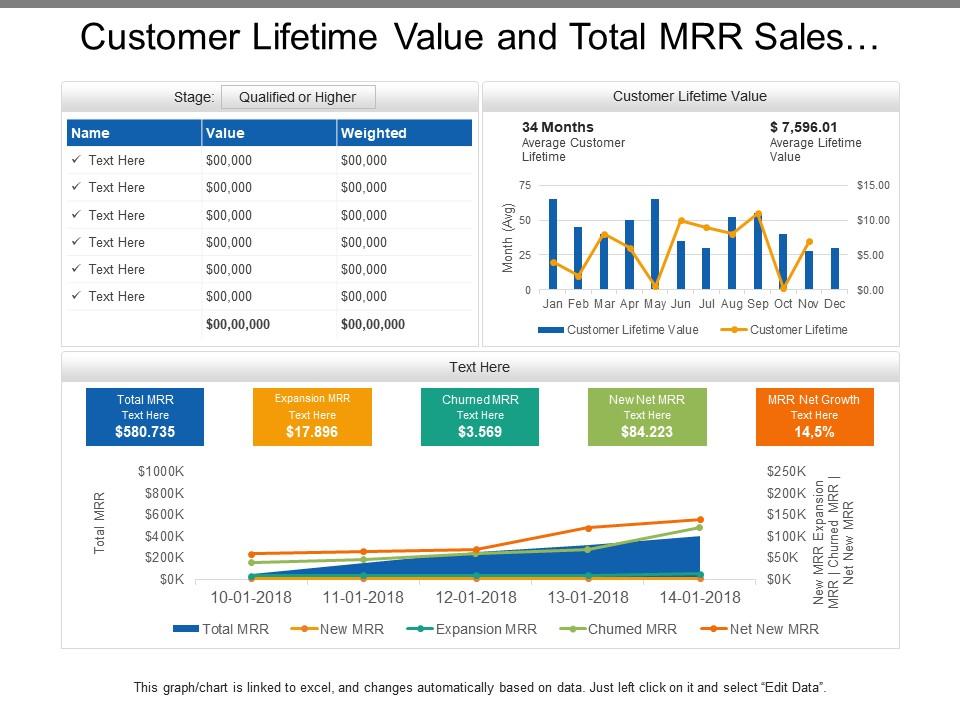
Customer lifetime value and total mrr sales dashboards
Try Before you Buy Download Free Sample Product
Audience
Editable
of Time
Gains escalate with our Customer Lifetime Value And Total Mrr Sales Dashboards. They flow in at a faster pace.
People who downloaded this PowerPoint presentation also viewed the following :
Customer lifetime value and total mrr sales dashboards with all 6 slides:
Our Customer Lifetime Value And Total Mrr Sales Dashboards can be gainfully employed. They ensure a fruitful event.
FAQs for Customer lifetime value and total
So your CLV basically comes down to how often people buy, what they spend, and how long they hang around. Acquisition costs matter too, obviously. But here's the thing - most companies totally blow it on retention and that's honestly where the money is. Like, why spend tons getting new customers when you could just keep the ones you have? Profit margins per sale are huge too since volume doesn't mean much if you're barely making anything. Customer happiness drives all this stuff. Start with retention first - it's way cheaper and moves the needle more than anything else.
So for CLV, grab your transaction data first and find the average order value. Then figure out purchase frequency per year. Customer lifespan is honestly the hardest part - most people get stuck here. Use historical churn rates or just look up industry averages if you're starting from scratch. The key thing? Do separate calculations for each customer segment because they act totally different. A premium customer might buy twice a year for $500 vs. budget shoppers who buy monthly for $50. Once you've got these numbers, you'll actually know where to throw your marketing budget and which groups need retention work.
Dude, retention is huge for CLV - way cheaper than chasing new customers all the time. Think about it: longer customer relationships mean more chances for repeat purchases. That math adds up fast. If you bump average lifespan from 2 to 3 years, you're looking at maybe 50% more CLV. Here's the thing though - loyal customers don't just stick around, they actually spend more per order as time goes on. They'll refer friends too, which is basically free marketing. Honestly, I'd obsess over retention metrics first. Everything else kinda follows from there.
Yeah, so it really depends on what kind of business you're dealing with. SaaS companies are obsessed with monthly recurring revenue and churn rates - makes sense since that's their bread and butter. Retail focuses more on how often people buy and their average order size. Banks? They've got the most ridiculously complex formulas, factoring in account profitability and cross-selling opportunities. E-commerce looks at purchase patterns and seasonal stuff, while subscription services care most about keeping people around and getting them to upgrade. The trick is figuring out what actually matters for how your customers behave, not just copying someone else's formula.
So here's the thing - CLV totally flips how you should think about your marketing spend. Why treat a $500 lifetime value customer the same as a $50 one? That's just leaving money on the table. You can blow way more on Facebook ads for those high-value segments and it'll still pay off. I'd honestly focus more budget on keeping your best customers happy instead of always hunting for new ones. Quick start: figure out CLV for your top 3 segments, then move like 20% of your acquisition budget toward retention stuff for the winners.
So here's the thing - CLV basically shows you how much you can blow on getting different customers without totally screwing yourself over. Say you've got a segment worth $500 predicted CLV? You can spend up to that amount (well, minus whatever profit you want) on acquisition. Pretty straightforward math. Also helps you figure out which channels actually bring in customers who stick around vs just cheap leads that bail quickly. I'd start by crunching CLV numbers for your current segments first, then build your acquisition budgets from there.
So there's basically three ways to tackle CLV forecasting. Historical method is pretty straightforward - you look at past customer patterns and assume they'll keep doing the same thing. Predictive modeling gets fancier with machine learning, analyzing stuff like purchase frequency and demographics. Cohort analysis groups customers by when they signed up, then tracks how their value changes. I'm kind of biased toward cohort analysis tbh - it's way easier to show your boss what's happening with those visual charts. Start there for quick wins, then add the predictive stuff once you've got more data to work with.
Dude, the difference is crazy. Machine learning picks up patterns you'd totally miss doing it by hand. Your old spreadsheet method just looks at basic averages, but now you can actually predict what customers will do next based on their real-time behavior and purchase history. The segmentation gets way more precise too - you can break down different customer groups and see what's really driving value. I mean, we're talking night and day here compared to manual calculations. Oh and definitely connect your CRM to some analytics tools first - clean data makes everything else actually work.
Honestly, the worst mistake is feeding your model garbage data - you'll get garbage results. People overestimate revenue because they ignore churn, or they forget about all those hidden costs like customer support. Don't lump all your customers together either - averages hide the fact that some segments are way more valuable than others. Plus customer behavior shifts constantly, so relying on old data is risky. Oh, and definitely stress-test different scenarios before you go spending based on your CLV numbers. Start simple though, then back everything up with actual cohort analysis.
Honestly, your customer journey is basically what determines how much money each person will spend with you long-term. Bad onboarding? They're gone before you even get started. But nail those touchpoints - from first click to support calls - and they'll keep coming back. I always think of it like... you know how some stores just feel *off* somehow? Same deal here. Smooth experiences = more purchases + better retention. The trick is figuring out where people usually bail first, then fixing those spots one by one. Map out the pain points and you'll see CLV jump pretty quickly.
Honestly, start with churn - acquiring new customers costs way more than keeping the ones you have. Your onboarding needs to be bulletproof, and when you see usage dropping, jump in with proactive support. Exit surveys suck to read but they're goldmines for feedback. After that, focus on expansion revenue. Get your power users on higher-tier plans before they bump up against limits - that's where the real money is. Usage-based pricing or add-ons work great here. Track cohort retention like crazy and test different renewal emails. But seriously, tackle churn first. It's your biggest win for lifetime value.
So basically you'll want to calculate CLV for different customer groups - age, location, buying habits, all that stuff. Then see which segments are actually worth your time. I was shocked when I first did this analysis - turns out those suburban customers in their late 30s who shop quarterly? Way more valuable than people buying random sale items every week. Focus your marketing budget on the high-CLV groups instead of spreading it thin. Don't waste premium service on bargain hunters when you could be keeping your real money-makers happy.
Track CAC, churn rate, and average order value with your CLV - those give you the real story. Purchase frequency matters too, especially when you break it down by customer segments. Honestly, the CAC-to-CLV ratio is what I'd watch most closely since it shows if your acquisition spend actually makes sense. Email opens and app usage are solid early warning signs for value shifts. Oh, and retention rates by segment - super telling. Set up a basic dashboard so you can see everything together. Makes it way easier to figure out where to throw your marketing budget next.
So customer feedback is basically your crystal ball for CLV predictions. When someone's ranting about a bug or gushing over a new feature, that tells you way more than just looking at their purchase history. Happy customers stick around longer and buy more stuff - pretty obvious but true. If you're seeing negative feedback, that's your red flag for potential churn. You'll want to lower their projected value. Instead of just tracking dollars spent, start mixing in sentiment scores from their feedback. It's honestly one of the best ways to actually predict what someone's worth long-term. Way better than guessing based on past purchases alone.
Honestly, CLV is where it's at if you want real growth. Those quick wins? They burn through customers like crazy. But when you focus on lifetime value, customers stick around way longer and spend more. Plus they actually tell their friends about you - which is huge for cutting down acquisition costs. The whole thing just makes more sense financially, you know? I'd start by figuring out which customers are worth the most and really focus on keeping them happy first. Higher retention, bigger orders, the works. It's like... why chase new people constantly when you could build something that lasts?
No Reviews