

Cyber security risk management incident reporting dashboard




Try Before you Buy Download Free Sample Product
 Impress Your
 Audience
 100%
100% Editable
 Save Hours
 of Time


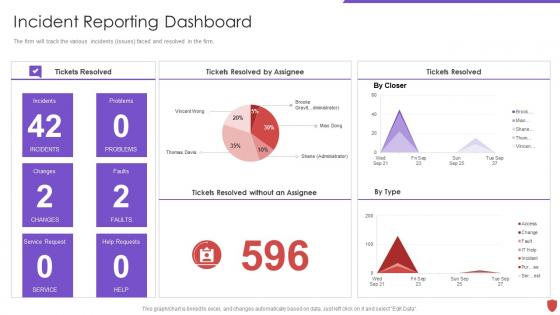
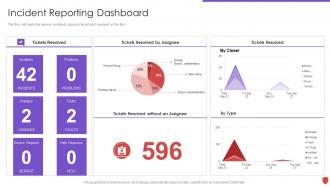
The firm will track the various incidents issues faced and resolved in the firm.
People who downloaded this PowerPoint presentation also viewed the following :
Cyber security risk management incident reporting dashboard with all 7 slides:
Use our Cyber Security Risk Management Incident Reporting Dashboard to effectively help you save your valuable time. They are readymade to fit into any presentation structure.





FAQs for Cyber security risk management
Phishing emails are still the worst - people click stuff when they're swamped at work, even the careful ones. Ransomware can totally wreck your business overnight. Weak passwords are basically handing hackers your data, especially if you reuse them everywhere (guilty as charged). Social engineering is getting crazy sophisticated too - they'll call pretending to be IT and trick your employees directly. Oh, and unpatched software is like leaving your front door unlocked. Get your team trained regularly and set up automatic updates. Most attacks happen through vulnerabilities that companies knew about but just didn't fix fast enough.
Ditch those awful annual slideshows everyone just clicks through mindlessly. Phishing simulations work way better - people actually learn when they're doing something. Do short monthly sessions instead, maybe cover stuff like sketchy emails or those random USB drives people find (seriously, who still falls for that?). Keep it relevant to what they actually deal with at work so it doesn't feel like busy work. When someone reports a potential threat, praise them instead of making people feel dumb for mistakes. Set up an easy reporting system and send quick security reminders every few months to keep it fresh in their minds.
Dude, AI in cybersecurity is honestly insane right now. It catches threats faster than any human team could - we're talking real-time analysis of crazy amounts of data. Phishing emails, malware, weird network stuff? Gets flagged immediately. What's really cool is how it learns from each attack, so your security literally improves itself over time. I saw this demo last week where it predicted an attack pattern before it even fully developed. You should definitely check out some AI security tools for your company - the ROI is pretty solid and cybercriminals are getting way too sophisticated these days.
Honestly? Just focus on the basics first - they'll protect you from like 90% of attacks. Get multi-factor auth set up everywhere and train your people not to click sketchy links. Most breaches happen because someone falls for phishing, which is kinda wild when you think about it. Keep your software updated automatically if you can. Don't go crazy buying expensive security tools right away either. Use whatever's already built into your current systems, set up cloud backups, and write down what everyone should do if shit hits the fan. Stack a bunch of cheap protections instead of relying on one fancy solution.
So you need six main things: prep work (policies, tools, who does what), spotting incidents when they happen, containing the mess before it spreads everywhere, actually getting rid of the threat, bringing systems back online safely, and - this is where everyone screws up - doing a proper post-mortem afterward. Communication plans are huge too. Document whatever process you have now, even if it's total chaos. At least you'll see what needs fixing. Most places get the setup right but completely ignore that final review step, which is honestly the most valuable part.
Yeah, remote work totally opens up more security holes. People are logging in from coffee shops with sketchy WiFi, using their own laptops that probably haven't been updated in months. Home networks aren't exactly Fort Knox either. Phishing emails are getting crazy sophisticated too - I've seen some that look legit even to me. Your IT team can't exactly rush over when someone accidentally downloads malware. Get everyone on a VPN, make sure their security software isn't from 2019, and honestly? Train them to be paranoid about weird emails.
Oof, cyber breaches are expensive nightmares. GDPR fines can hit 4% of your whole revenue - that's brutal. Then there's the customer lawsuits, SEC reporting if you're public, plus all those state notification laws. Shareholders will definitely sue when your stock tanks (because it will). Different industries have different rules, but honestly? The penalties just keep getting worse. My cousin's company went through this last year and their legal bills were insane. Get your lawyers involved in planning your response strategy now, not when you're panicking at 2am during an actual breach.
So you'll want to hack yourself before someone else does it for you - run vulnerability scans and get some ethical hackers to really dig deep. Automated tools catch the obvious stuff first. Your employees are honestly probably your biggest risk though, so audit who has access to what. Don't skip checking your security policies and any third-party vendors you work with either. The trick is doing this regularly - I'd say quarterly at minimum, and definitely after any big system updates. One-and-done assessments are pretty much useless in my experience.
Dude, definitely turn on auto-updates and use a decent lock screen - biometrics or at least 6 digits. Only grab apps from official stores, obviously. Two-factor authentication is honestly a game-changer, so flip that on for anything important. When apps ask for permissions, actually look at what they want. Why does a calculator need location access? Sketchy. Skip public WiFi for banking and stuff, or just use a VPN if you're stuck. Oh and treat your phone like the tiny computer it basically is now - lock that thing down properly.
So encryption basically scrambles your data into gibberish. Hackers might steal it, but they can't actually read anything useful - it's like stealing a locked safe without the combination. Honestly, I think it's probably your best bet for protection these days. You'll want to encrypt stuff both when it's just sitting on your servers and when it's moving around between systems. Even when those massive data breaches hit the news, the damage is way smaller if everything's encrypted. Makes the stolen data pretty much worthless.
Dude, those annoying update notifications? Don't ignore them. Hackers literally scan for systems running outdated software - it's like leaving your front door unlocked. Most big data breaches happen because someone skipped patching a known security hole. Yeah, updates always pop up when you're busy doing something else, but that's just Murphy's law I guess. Set automatic updates if you can. If not, at least prioritize the security ones over the flashy new features. Trust me, dealing with a hack is way worse than waiting five minutes for an update.
Track your incident rates and breach costs before you start training - that's your baseline. After implementation, see how those numbers change. Response times matter too. The soft stuff is harder to measure but equally important - like how many employees actually report sketchy emails now. I run phishing sims quarterly and honestly, the improvement can be pretty dramatic. Basic ROI formula: take your security savings plus any productivity gains, subtract training costs, then divide by training costs. Yeah, it gets messy with variables, but that'll give you a ballpark. Compare quarterly and you'll start seeing real patterns emerge.
Honestly, the cybersecurity world is moving fast right now. AI and machine learning are probably the biggest game-changers - they catch threats way quicker than we can and find stuff humans would totally miss. Zero-trust is everywhere now too, which basically means "trust nobody until they prove themselves" (sounds harsh but it works). Quantum computing's wild because it'll completely destroy today's encryption while creating new unbreakable versions. XDR platforms and behavioral analytics are blowing up too. If I were you, I'd start small - maybe look into adding some AI threat detection to whatever you're already using. That's like the lowest-hanging fruit that'll actually make a difference.
Dude, GDPR is no joke - it literally makes security and privacy mandatory for anything touching personal data. You've got to have proper encryption, access controls, the whole nine yards. And those breach notification rules? 72 hours or you're screwed. The fines are insane too, like up to 4% of your company's total revenue. I swear compliance teams have turned into privacy hawks because of it. CCPA's doing similar stuff now. Honestly, just build everything with privacy-by-design from day one and have your incident response ready to go.
Multi-factor auth is huge - turn that on everywhere you can. Encrypt your data whether it's sitting around or moving between services. Network segmentation helps too, basically don't let everything talk to everything else. Honestly, most breaches I've seen happen because someone screwed up permissions settings. So annoying but super common. Check those regularly and use zero-trust stuff where possible. Oh, and logging - turn on CloudTrail or whatever monitoring your provider offers. Those security tools don't set themselves up, which is kind of dumb if you ask me. Monitor for weird activity patterns too.
-
Awesome presentation, really professional and easy to edit.
-
Unique and attractive product design.