

Cybersecurity Risk Management Framework Information Security Risk Management Dashboard




Try Before you Buy Download Free Sample Product
 Impress Your
 Audience
 100%
100% Editable
 Save Hours
 of Time


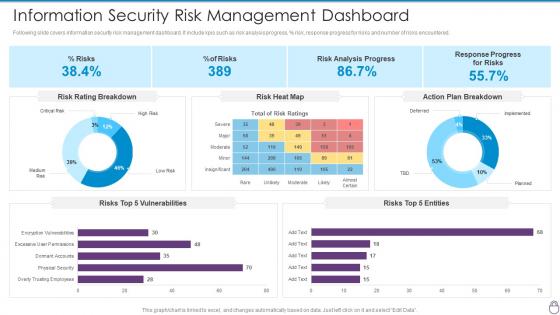
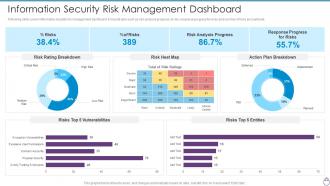
Following slide covers information security risk management dashboard. It include kpis such as risk analysis progress, percent risk, response progress for risks and number of risks encountered.
People who downloaded this PowerPoint presentation also viewed the following :
Cybersecurity Risk Management Framework Information Security Risk Management Dashboard with all 7 slides:
Use our Cybersecurity Risk Management Framework Information Security Risk Management Dashboard to effectively help you save your valuable time. They are readymade to fit into any presentation structure.





FAQs for Cybersecurity Risk Management Framework Information Security
So you'll want to start by figuring out what could actually go wrong - phishing, insider threats, all that fun stuff. Map out your assets first, then assess how likely each threat is and what damage it'd cause. I won't lie, it feels like a lot at first but you get the hang of it. Build your defenses around access controls, training people not to click sketchy links, and having a solid incident response plan. Oh and don't make monitoring a one-and-done thing. Regular reviews are clutch because new threats pop up constantly.
Start by mapping out what you actually have - all your systems, data, the works. Different industries face totally different threats, so figure out what's gunning for your specific setup. NIST and ISO frameworks help, but honestly don't get buried in all that corporate jargon. Find your most critical stuff first, then work backwards from there. Vulnerability scans and pen testing will catch the technical gaps you missed. Oh, and definitely loop in people from every department - they always know about weird risks that never show up on any official assessment. Your accounting team might spot something IT completely overlooked.
Dude, training your employees is seriously the best thing you can do. Most data breaches? They happen because someone clicks a sketchy link or gets fooled by fake emails. Your tech can only do so much - people will always be the biggest risk. But here's the thing: well-trained staff actually catch stuff that security software misses sometimes. Run those fake phishing tests on your team (they hate it but it works). Keep updating the training too since hackers get craftier every year. Turn your people into your best defense instead of your weakness.
So there's STRIDE, PASTA, VAST, and OWASP's thing. STRIDE breaks threats into categories like Spoofing and Tampering - most teams go with this one first since it's pretty straightforward. PASTA cares more about business risk, which is smart but harder to wrap your head around initially. VAST works better for big companies with tons of moving parts. Oh, and OWASP's solid if you're doing web apps specifically. Honestly? Just pick whichever one clicks with your team and actually use it consistently. I've seen too many places try to wing threat modeling and it's a mess every time.
Look, regulations are basically your cybersecurity floor - you've gotta hit those minimums or you're screwed with fines. Figure out which ones apply first (SOX, GDPR, HIPAA, whatever fits your industry). Then map those requirements to your actual security controls. Honestly, it gets messy fast with all the overlapping rules - I've seen teams spend weeks just sorting through it all. Smart move though? Don't stop there. Use compliance as your foundation, then build something way stronger on top. Most companies that only do the bare minimum get burned eventually. Your risk framework should start with regulatory mandates but add your own protections too.
First thing - make a list of everything you've got digitally. Servers, databases, apps, all of it. Figure out what could realistically go wrong with each one (ransomware's the big scary one right now, but don't forget about employees going rogue or regular old data breaches). Yeah, it's boring as hell, but you gotta put numbers on the risk and impact. High/medium/low works fine if you're not into complicated scoring. Write it all down because you'll be updating this every few months. Focus on the stuff that's both likely to happen AND would really mess you up. Those get mitigation plans first.
Okay so basically you want a risk matrix - just plot likelihood vs impact. First, figure out what would absolutely destroy you if it got hit: customer data, financials, your secret sauce, whatever. Score each threat on money lost, regulatory fines, plus how badly it'd wreck your reputation. Anything high-impact AND likely? That's where your budget goes immediately. Medium stuff gets planned for later. Low-impact things can sit there unless they're dirt cheap to knock out. Throw it all in a spreadsheet ranked by priority. Oh and your board will actually understand why you're asking for security money this way.
Start with a vulnerability scanner - Nessus or OpenVAS work great for finding weak spots. For monitoring, you'll want SIEM tools like Splunk or the ELK stack to catch security events. RiskLens and Resolver are solid for risk assessment, though honestly I've seen teams get bogged down in too much analysis there. Grab some threat intelligence feeds too. The biggest thing? Make sure everything actually integrates - I can't tell you how many setups I've seen where nothing talks to each other and it's basically useless. Oh, and get an incident response platform while you're at it.
You'll want to track both technical stuff and business metrics to see the whole picture. Start with mean time to detect incidents, patch compliance rates, and training completion percentages. Vulnerability counts by severity are super useful too. Business-wise, look at security budget as percentage of IT spend and cost per incident - honestly these are what executives actually care about. Mix in some leading indicators like phishing sim click rates since the other stuff is mostly backwards-looking. Pro tip: pick maybe 5-6 metrics you can consistently measure rather than going crazy with everything. I learned that the hard way.
Your incident response plan feeds directly into risk assessment - it's where you see what actually happens versus what you thought might happen. Document everything when stuff goes wrong because that's real data about which threats hit you and how well your defenses worked. Those post-incident reviews are honestly some of the most valuable intel you'll get for updating your risk register. Weird thing is, planning for incidents often uncovers risks you totally missed before. Map your incident types to whatever risk categories you're already using, then let those lessons drive where you spend money next.
Honestly, the worst thing companies do is treat cybersecurity like a one-and-done checklist instead of something that needs constant attention. They get so caught up in compliance boxes that they forget about actual threats. Your employees will always be the biggest risk - doesn't matter how fancy your firewall is if Bob from accounting clicks every suspicious link. Most places don't even have an incident response plan ready, which is wild to me. Security teams get stuck in their own bubble too when really everyone should feel responsible. Start with regular risk assessments, but make sure your whole team gets why security matters.
Honestly, once a year is the bare minimum but don't just stick to that. Big changes should trigger updates immediately - new systems, breaches, major business shifts. I've watched too many companies get burned by rigid yearly schedules. Really it's more like car maintenance than a one-time thing. Quarterly check-ins work way better for reviewing your threat landscape and tech stack changes. Major incidents always seem to hit right after someone says "we just did our assessment." Schedule those quarterly reviews now while you're thinking about it - trust me on this one.
So threat intel is basically your security weather forecast - shows you what hackers are actually doing right now instead of just guessing. You'll see which vulnerabilities they're hitting, what industries they're going after, all that good stuff. Way better than flying blind, honestly. It lets you spend your security budget on real threats instead of theoretical maybes. When new attack patterns pop up, you can adjust defenses quickly. My advice? Find intel sources that match your industry first, then work those insights into your regular risk reviews. Makes such a difference.
So basically, your attack surface gets way bigger when you work with vendors and third parties. Their security problems become your problems - attackers love using them as backdoors. Remember the SolarWinds thing? That was brutal, hit like thousands of companies through one compromised supplier. The annoying part is you can't see what their security actually looks like most of the time. You're kinda flying blind with some of these partnerships. I'd start by figuring out which suppliers are actually critical, then make them prove they're not gonna be your weak link with proper security assessments.
Dude, the speed of AI integration in cybersecurity is honestly insane right now. Zero-trust is basically the gold standard now - you can't just trust your network perimeter anymore, gotta verify everything. Most infrastructure is moving to cloud so that's where the action is. Ransomware-as-a-service makes me nervous because it's letting way more people launch sophisticated attacks. Oh, and supply chain security is finally getting serious attention after those massive breaches we saw. I'd start by checking how ready you are for zero-trust and see what AI tools you can actually integrate.
-
The team is highly dedicated and professional. They deliver their work on time and with perfection.
-
Huge collection of high-quality templates. Worth each penny.