Dashboard customer insight for banking challenges and opportunities ppt summary

Rating:
92%
Dashboard customer insight for banking challenges and opportunities ppt summary
Slide 1 of 2
Favourites Favourites

Try Before you Buy Download Free Sample Product

Audience Impress Your
Audience
Editable 100%
Editable
Time Save Hours
of Time
The Biggest Sale is ending soon in
0
0
:
0
0
:
0
0
Rating:
92%
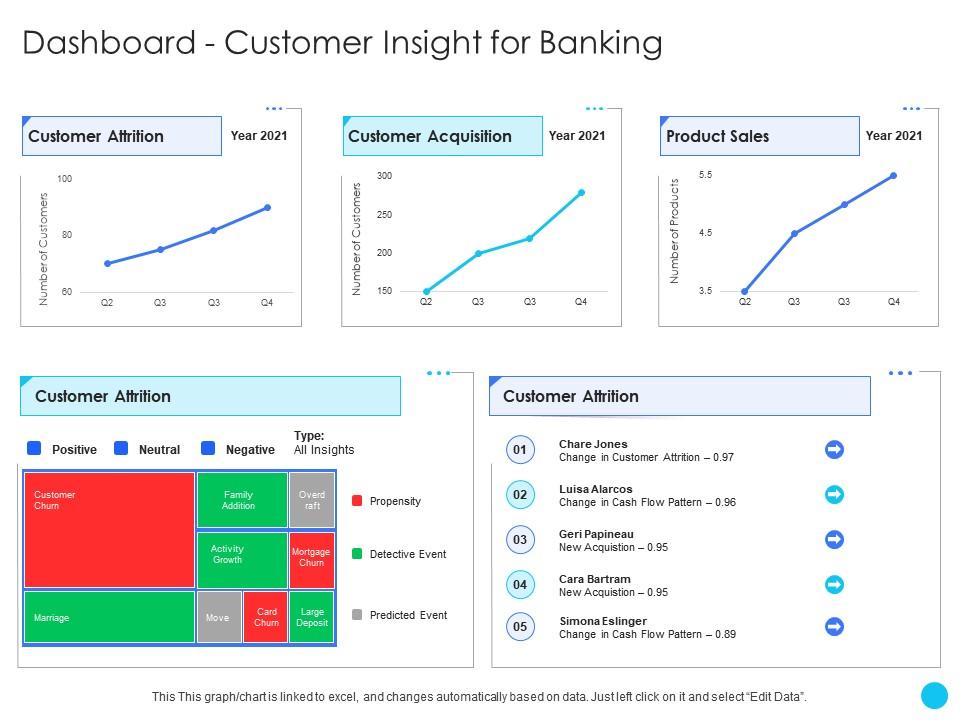
Deliver an outstanding presentation on the topic using this Dashboard Customer Insight For Banking Challenges And Opportunities Ppt Summary. Dispense information and present a thorough explanation of Customer Attrition, Customer Acquisition, Product Sales using the slides given. This template can be altered and personalized to fit your needs. It is also available for immediate download. So grab it now.

FAQs for Dashboard customer insight for banking challenges and

Focus on the stuff that actually matters for making decisions - lifetime value, acquisition costs, and churn rates. Those are gold. Also track how often people log in, adoption rates for new features, and whether you're successfully cross-selling. Customer satisfaction scores are huge too since happy people don't leave. Revenue per customer and how different segments are growing will make your executives smile. Honestly, the whole point is making sure every metric connects to something you can actually do about it - like going after customers who might bail or doubling down on your most profitable segments.

Honestly, generic metrics across all customers are pretty useless. What you want is customer segmentation layered right into your dashboard. Pick your high-value vs dormant accounts, age groups, usage patterns - whatever makes sense. Then you'll actually see useful stuff like millennials going mobile-first or your premium customers acting totally different. Makes predicting churn way easier too. I'd start with maybe 3-4 segments that actually matter for your strategy and build those views first. Way better for targeting campaigns and spotting cross-sell opportunities.

Dude, real-time data changes everything for banking dashboards. You can catch fraud as it's happening instead of finding out days later. Customer about to leave? You'll spot the warning signs immediately. Honestly, those old daily batch reports feel ancient now - like waiting for dial-up internet or something. The magic happens when you can actually help customers in the moment they need it. Track spending patterns live, intervene before problems get worse. Just figure out what actually needs real-time updates first (not everything does) so you don't blow your budget on the data infrastructure.

So predictive analytics is pretty cool - it basically turns your dashboard into a fortune teller that actually works. Instead of just showing what already happened, you can spot which customers might bail, recommend products they'll actually want, or catch cash flow problems early. Honestly, it beats digging through reports after the fact. The trick is putting these insights front and center so people don't have to hunt for them. I'd start simple though - pick your 3 biggest customer headaches and build models around those first. Way more manageable than trying to predict everything.

Keep it simple, honestly. Bar charts for comparing stuff, line graphs for trends over time, heat maps if you're dealing with locations or different customer groups. Don't try to squeeze everything onto one screen - that always looks messy. I'd put your most important numbers at the top, then let people dig deeper into specific segments if they want. Use the same colors consistently so people aren't confused. Oh, and definitely include some context like targets or benchmarks, otherwise the numbers don't really mean much. Clean beats fancy every time.

Dude, feedback loops are everything for dashboard design. Without them you're just guessing at what works. I'd do surveys, check usage data, and actually talk to the people using it - relationship managers, customers, whoever. Trust me, I've watched so many pretty dashboards collect digital dust because nobody bothered asking users what they needed. The feedback shows you which metrics actually matter and what's just confusing people. Also helps catch missing data that could change decisions. Set up quarterly check-ins with your main users. Keep tweaking based on what they tell you.

Start with role-based access - people only see what they need for their job. Encryption everywhere, obviously - data moving around and stored data. OAuth 2.0 is pretty much the standard for login stuff now. For sensitive things like account numbers, use data masking. Honestly most people don't need full customer details anyway, which saves you headaches. Activity logging tracks who looked at what and when. Regular security audits too. Since it's financial data, go overboard with security - better safe than sorry. Don't forget compliance requirements like GDPR or PCI DSS, those'll bite you if ignored.

API connections are your best bet - pulls CRM data straight into whatever dashboard tool you're using. Tableau and Power BI handle this stuff pretty well. Make sure your customer IDs match up between systems though, otherwise you can't merge the transaction and relationship data properly. Data quality is honestly where most teams mess this up. Clean your duplicates first, trust me. Focus on the good stuff - lifecycle stages, relationship manager notes, interaction history. Oh and start small - just connect one CRM module as a test run. You can always expand later once you've figured out the weird quirks.

Don't cram everything onto one screen - people just shut down when there's too much. Generic KPIs are useless too. A branch manager doesn't need the same stuff as a risk analyst, you know? And honestly, stop with all the pie charts already. Figure out what decisions each person makes every day, then work backwards. Use consistent colors. Give context with dates or benchmarks. I swear, half the dashboards I see look like someone threw data at a wall. Keep it clean and think about who's actually using this thing.

Look, dashboards are game-changers for spotting sales opportunities you'd totally miss otherwise. They'll show you stuff like customers with fat checking accounts but zero investments - boom, perfect upsell target. Or business owners still using personal accounts when they obviously need commercial loans. The visual stuff makes it ridiculously obvious when someone's ready for your next product. Some even auto-score leads with propensity models, which honestly saves tons of time. Set alerts for your best segments so your team can focus on actual warm prospects instead of randomly cold-calling people who don't want to hear from you.

Interactive charts are everything - customers shouldn't have to squint at microscopic numbers. Auto-categorized spending is a must, plus those personalized financial health scores everyone loves. Push notifications for weird activity save people's butts since most folks aren't obsessively checking their accounts. Here's the thing though - people are usually checking balances while distracted, like in coffee lines or whatever. Make your top 3-4 metrics super obvious and easy to digest. Budget tracking tools need to be findable too, not buried in some random menu. Keep it simple and visual.

Look, banking dashboards are usually just number soup that puts everyone to sleep. But data storytelling? Game changer. Instead of "loan defaults up 12%," you're explaining the why - maybe it's hitting certain customer groups or tied to economic shifts. People actually care when there's a story behind the numbers. I swear, I've watched executives completely zone out during regular dashboard presentations. But frame it with a beginning, middle, and end? Suddenly they're paying attention. Find your main story threads first, then build your dashboard to follow that narrative flow chronologically.

So I'd definitely go with something like Tableau or Power BI - they're solid for handling financial data and won't give your compliance team nightmares. Power BI's probably the sweet spot for price vs features, honestly. SAS is great too if you're already in that world, though it gets pricey fast. Whatever you pick, just make sure it plays nice with your existing banking systems and CRM. Oh, and start small - maybe build one dashboard for like your high-value customers first. Don't try to analyze everything at once or you'll go crazy.

Track login frequency and which insights people actually click on - that's your baseline. But here's the thing, most banks totally miss the connection between dashboard usage and real outcomes like retention rates or cross-sell success. Monthly team check-ins are clutch for figuring out what's actually helpful vs just flashy visuals nobody cares about. I'd honestly start simple: pick 3-5 KPIs that align with your main business goals and obsess over those. The magic happens when you can prove dashboard engagement leads to faster customer issue resolution or better sales results.

Look at transaction patterns first - that's your goldmine. Login frequency and which features they're actually using tell you everything. Sudden drops in activity? Red flag. If someone stops using mobile deposit or their spending categories shift weirdly, something's up. Channel switching is massive too. When customers ditch the app for branch visits, they're probably frustrated about something. Don't waste time tracking every tiny interaction though - honestly, that'll just overwhelm you. Set alerts for dramatic pattern changes, then dig into what's really going on.

Ratings and Reviews

92% of 100
Review Form
Write a review
Most Relevant Reviews
  1. 80%

    by Jacob Brown

    Very unique and reliable designs.
  2. 100%

    by Christian Brooks

    Professional and unique presentations.
  3. 100%

    by Davis Mason

    Great quality product.
  4. 80%

    by Rhys Moore

    Amazing product with appealing content and design.
  5. 100%

    by Cornelius Alexander

    Very well designed and informative templates.

5 Item(s)

per page: