

Dashboard For Monthly Procurement Process Workflow Workflow Improvement To Enhance Automation




Try Before you Buy Download Free Sample Product
 Impress Your
 Audience
 100%
100% Editable
 Save Hours
 of Time


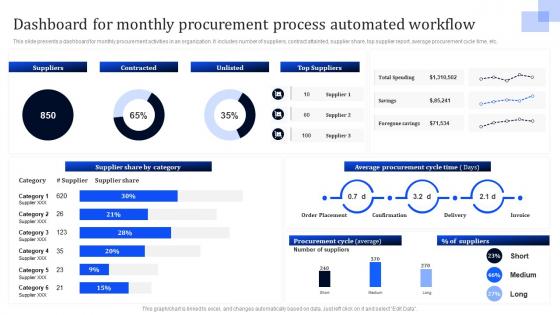
This slide presents a dashboard for monthly procurement activities in an organization. It includes number of suppliers, contract attainted, supplier share, top supplier report, average procurement cycle time, etc.
People who downloaded this PowerPoint presentation also viewed the following :
Dashboard For Monthly Procurement Process Workflow Workflow Improvement To Enhance Automation with all 7 slides:
Use our Dashboard For Monthly Procurement Process Workflow Workflow Improvement To Enhance Automation to effectively help you save your valuable time. They are readymade to fit into any presentation structure.





FAQs for Dashboard For Monthly Procurement Process Workflow Workflow Improvement
Dude, start with the boring stuff that eats up your day - purchase requisitions and invoice processing are game changers. Vendor onboarding automation is clutch too. Contract management will save your butt by tracking renewals automatically (I learned that one the hard way). Even basic inventory reorder points make life easier. The reporting side runs itself once you set it up - no more digging through endless spreadsheets on Friday afternoons. Spend analysis gives you solid insights without the headache. Focus on whatever you're doing most often first. Trust me, you'll feel the difference immediately.
Honestly, automation makes supplier relationships so much better. You're not buried in paperwork anymore, so you actually have time for the strategic stuff that matters. Suppliers get paid faster (they're way happier about that), and everyone gets real-time updates instead of those weird email chains about missing docs. The data visibility thing is huge too - you can see how everyone's performing without digging through spreadsheets. I'd probably start with whatever process eats up most of your day. It's wild how much more collaborative things get when you're not constantly chasing people down for invoices.
Honestly, just focus on three things to start: a good cloud procurement platform, API connections, and workflow automation. The platform is your home base for everything. APIs hook it up to your ERP and financial stuff - super important but kinda boring to set up. Workflow automation is where the magic happens though - no more hunting down managers for approvals! You can add AI for spend analysis later, maybe some RPA for data entry. But seriously, get your platform solid first and make sure those integrations actually work. Everything else is just extra bells and whistles you can worry about down the road.
Dude, procurement automation is a total game-changer for cutting costs. You'll catch way fewer manual errors that usually lead to overpayments. Faster approvals mean you can actually grab those early payment discounts (which honestly, most companies just leave on the table). The spend visibility alone helps you negotiate better deals with vendors. But here's the thing - your team stops drowning in paperwork and can focus on the strategic stuff that actually moves the needle. Oh, and it forces people to stick with your preferred vendors instead of going rogue. Start with whatever processes are driving you crazy first. Trust me, you'll see the savings pretty fast.
Honestly, your team's gonna push back the hardest - nobody likes change when they're comfortable. Integration with existing systems is a nightmare too. Staff worry about getting replaced, which makes sense. The upfront costs hit hard, and weirdly, productivity drops at first while everyone figures it out. Oh, and if your procurement data is already a mess, automation just makes it messier faster. Start small though - pick one boring process and nail it. Quick wins shut up the doubters pretty fast.
So most tools connect through APIs or those pre-built connectors - purchase orders, invoices, vendor stuff all syncs automatically. No more manual data entry hell. Field mapping between your ERP and the procurement platform is honestly kind of a pain during setup, but once it's done you're golden. Finance loves it because reconciliation happens automatically in the ERP. Meanwhile procurement gets way better workflow tools - win-win really. Oh, and definitely ask for a demo of their specific ERP integration first. Some vendors are great, others... not so much. The quality difference is huge.
So AI basically turns procurement from dumb automation into something that actually thinks. It'll spot weird spending patterns, predict what you'll need next quarter, and catch sketchy supplier stuff automatically. The best part? It gets smarter by learning from all your old purchasing data. Contract reviews that used to take forever now happen in minutes - honestly wish we'd had this years ago. My advice though: don't go crazy trying to automate everything right away. Pick one thing like spend analysis first and build from there.
Honestly, cycle times drop like 30-50% pretty fast - that's your biggest early win. Cost-per-PO gets way cheaper since you're not doing everything by hand anymore. Accuracy goes through the roof because machines don't mess up invoice numbers like we do (I swear I fat-finger something every day). You can finally track stuff you never could before too - supplier response times, contract compliance rates, all that good stuff. Just make sure you document where you're starting from before going live, or you'll be kicking yourself later when leadership asks for proof it actually worked.
Honestly, start with encrypting all that supplier data - both when it's moving around and just sitting there. Role-based permissions are huge too, so random people can't approve big purchases or peek at financial stuff. I'd map out where your sensitive data actually goes first, then secure those routes. Regular audits of your automation tools matter because some are way leakier than you'd expect. Third-party integrations are probably your biggest risk though - they're like leaving your back door unlocked. Vet those carefully since that's usually how breaches happen.
Honestly, small businesses actually have it way better with procurement automation than the big guys. Your processes are simpler to digitize, so you'll see results fast. Time savings hit different when you've only got like 3 people doing purchasing instead of entire departments. Big companies? They get stuck in approval hell for months just deciding which tool to use - it's kind of ridiculous. You can pick something, set it up in weeks, and start saving money right away. No corporate bureaucracy slowing you down. Just tackle your most repetitive stuff first and build from there.
Spend analytics and approval workflows - start there. Those two will save you the most headaches right away. Supplier management tools are clutch too, plus automated PO generation if you're tired of doing that manually. Oh, and make sure whatever you pick plays nice with your current ERP system or you'll hate your life. Contract management was a game-changer for us since we were literally buried in paperwork. Customizable approval chains are non-negotiable because every company does their own weird thing. Budget tracking and decent reporting dashboards round it out. Honestly, just write down your top 3 procurement nightmares first, then demo stuff that actually fixes those specific problems.
Honestly, automation is a game-changer for compliance stuff. Built-in controls automatically enforce your procurement policies, and you get these audit trails tracking every single decision. The workflows become standardized so nothing slips by. What's really nice is the system flags potential issues before they blow up - saves you tons of stress later. Your regulatory reporting gets way cleaner too since everything's captured the same way each time. Oh, and definitely start with automating approval workflows first. That's where most gaps happen anyway, from what I've seen.
So I've seen some wild success stories with this stuff. Unilever cut their sourcing costs by 30% just automating supplier onboarding and contracts. Johnson & J got 40% faster approvals by automating their whole requisition process. Then there's Siemens - they went from weeks to days on purchase-to-pay cycles using AI for invoice processing. Even AppDynamics (before Cisco snagged them) reduced manual work by 60% with automated vendor management. Honestly, the key thing they all did was pick their biggest headache first instead of trying to fix everything. Don't overthink it - just start with whatever manual process is eating up most of your time.
So procurement automation basically takes all that messy manual stuff and turns it into clean data you can actually use. Your dashboards show real-time spend patterns, supplier performance, contract stuff - way better than hunting through endless email chains. Data's cleaner since people aren't constantly fat-fingering numbers into spreadsheets. You'll spot trends fast, like suppliers who are always late or categories where you're bleeding money. Honestly, the automated reports are a game changer - they actually help you decide things instead of just creating more files to forget about.
Honestly, automation's gonna change how your procurement team works, but it's not the job-killer people think. Most roles just shift focus - instead of doing boring data entry all day, your people can actually negotiate with suppliers and handle the tricky stuff that needs human judgment. The mundane tasks get automated (which is honestly a relief), but you'll need folks who can analyze data and think strategically. Your procurement team becomes way more valuable as actual business partners. Start getting your current team trained on analytics and strategic planning now - those skills are gonna be huge. People don't disappear, they just get to do the interesting work finally.
-
Their templates are super easy to edit and use even for the one like me who is not familiar with PowerPoint. Great customer support.
-
The presentations are very helpful. I am always able to get appropriate templates for the different topics related to my profession.