


Deploying Advanced Plan For Managed Helpdesk Services Powerpoint Presentation Slides
Service Desk is a ticket management framework that enables the business to implement strong and effective workflows for internal and customer-oriented support departments. Check out our professionally designed presentation on Deploying Advanced Plan for Managed Helpdesk Services. It provides a general overview, major trends, statistics, and best practices that service desk professionals and enterprises can refer to. This PowerPoint presentation offers access to multiple strategies that can help businesses optimize their service desk operations these include automation, knowledge management, incident management, ticket management, and service request escalation management. Also, the module covers self-service portal deployment, utilization of service desk management tools, customer experience management, etc. Furthermore, the complete deck includes slides that can help the support teams through the RACI matrix, training program, and communication plan, assisting in re-organizing and streamlining workflows. Moreover, it also provides details related to costs and software selection relating to service desk management. Lastly, the PPT deck can help assess the performance of the above strategies through impact analysis, KPIs, and dashboards. Customize this 100 percent editable template through assistance from our highly-skilled research or design team. Get access now.
Service Desk is a ticket management framework that enables the business to implement strong and effective workflows for int..



















-

- Google Slides is a new FREE Presentation software from Google.
- All our content is 100% compatible with Google Slides.
- Just download our designs, and upload them to Google Slides and they will work automatically.
- Amaze your audience with SlideTeam and Google Slides.
-

Want Changes to This PPT Slide? Check out our Presentation Design Services
-

- WideScreen Aspect ratio is becoming a very popular format. When you download this product, the downloaded ZIP will contain this product in both standard and widescreen format.
-

- Some older products that we have may only be in standard format, but they can easily be converted to widescreen.
- To do this, please open the SlideTeam product in Powerpoint, and go to
- Design ( On the top bar) -> Page Setup -> and select "On-screen Show (16:9)” in the drop down for "Slides Sized for".
- The slide or theme will change to widescreen, and all graphics will adjust automatically. You can similarly convert our content to any other desired screen aspect ratio.
Compatible With Google Slides

Get This In WideScreen
You must be logged in to download this presentation.


Do you want to remove this product from your favourites?
PowerPoint presentation slides
Deliver this complete deck to your team members and other collaborators. Encompassed with stylized slides presenting various concepts, this Deploying Advanced Plan For Managed Helpdesk Services Powerpoint Presentation Slides is the best tool you can utilize. Personalize its content and graphics to make it unique and thought-provoking. All the seventy four slides are editable and modifiable, so feel free to adjust them to your business setting. The font, color, and other components also come in an editable format making this PPT design the best choice for your next presentation. So, download now.

People who downloaded this PowerPoint presentation also viewed the following :
Content of this Powerpoint Presentation
Slide 1: This slide introduces Deploying Advanced Plan for Managed Helpdesk Services. State your company name and begin.
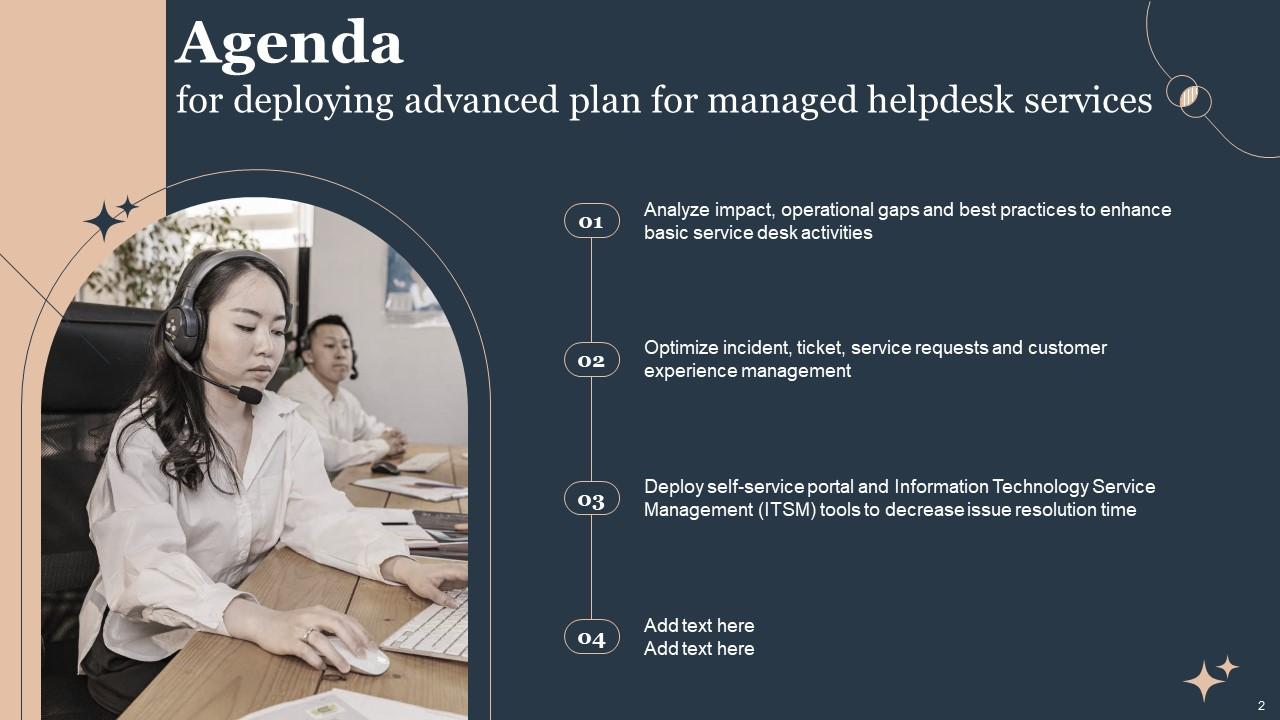
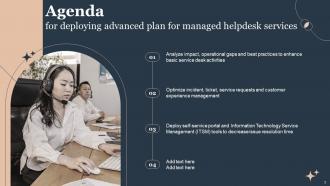
Slide 2: This slide states Agenda of the presentation.
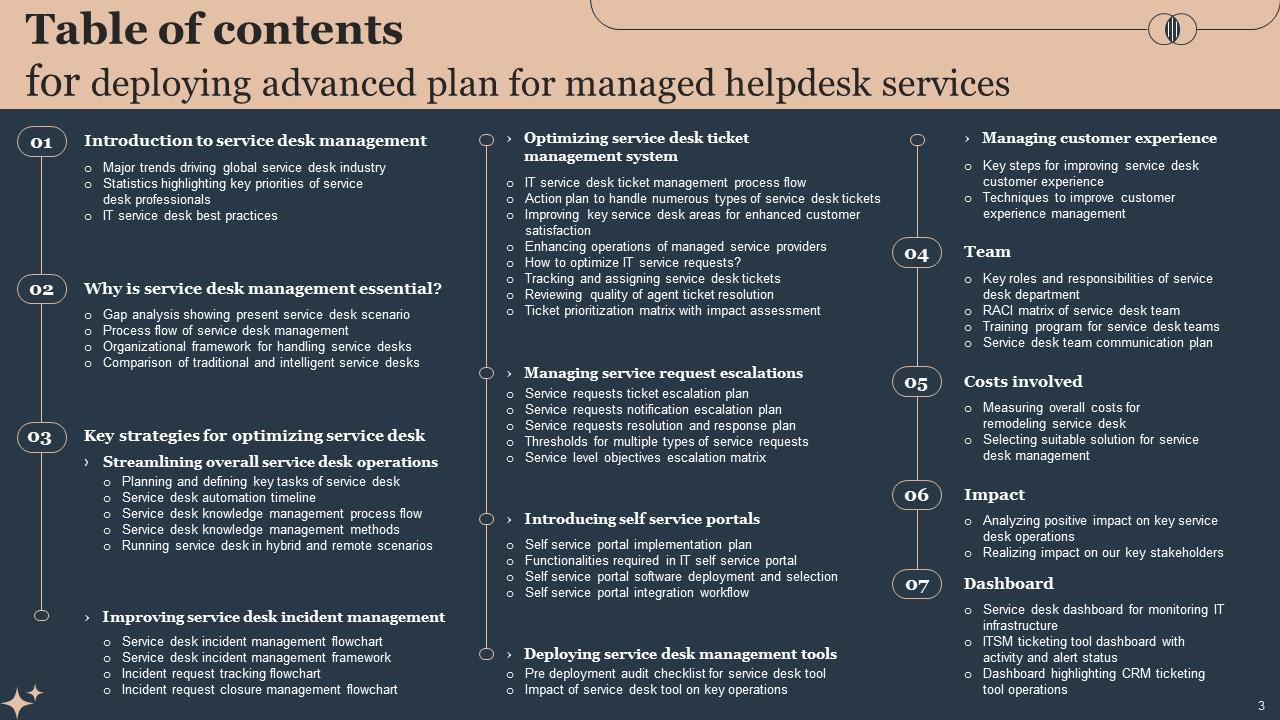
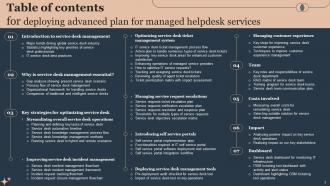
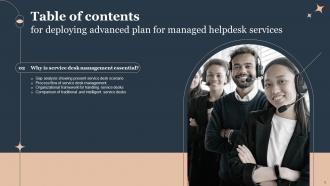
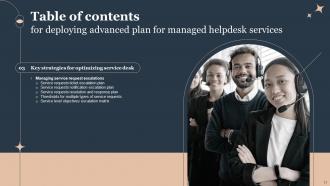
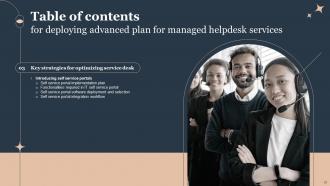
Slide 3: This slide shows Table of Content for the presentation.
Slide 4: This slide highlights title for topics that are to be covered next in the template.
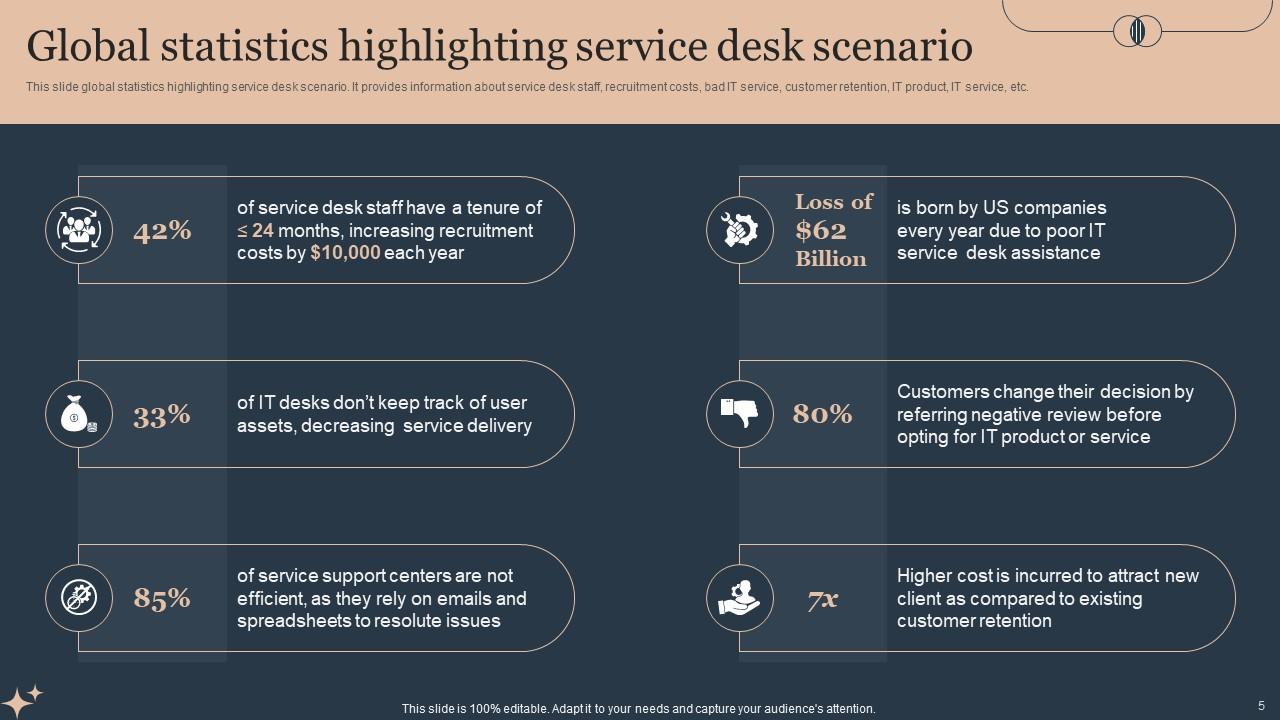
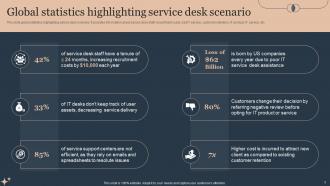
Slide 5: This slide presents Global statistics highlighting service desk scenario.
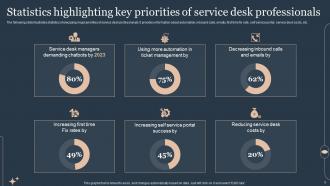
Slide 6: This slide displays Statistics highlighting key priorities of service desk professionals.
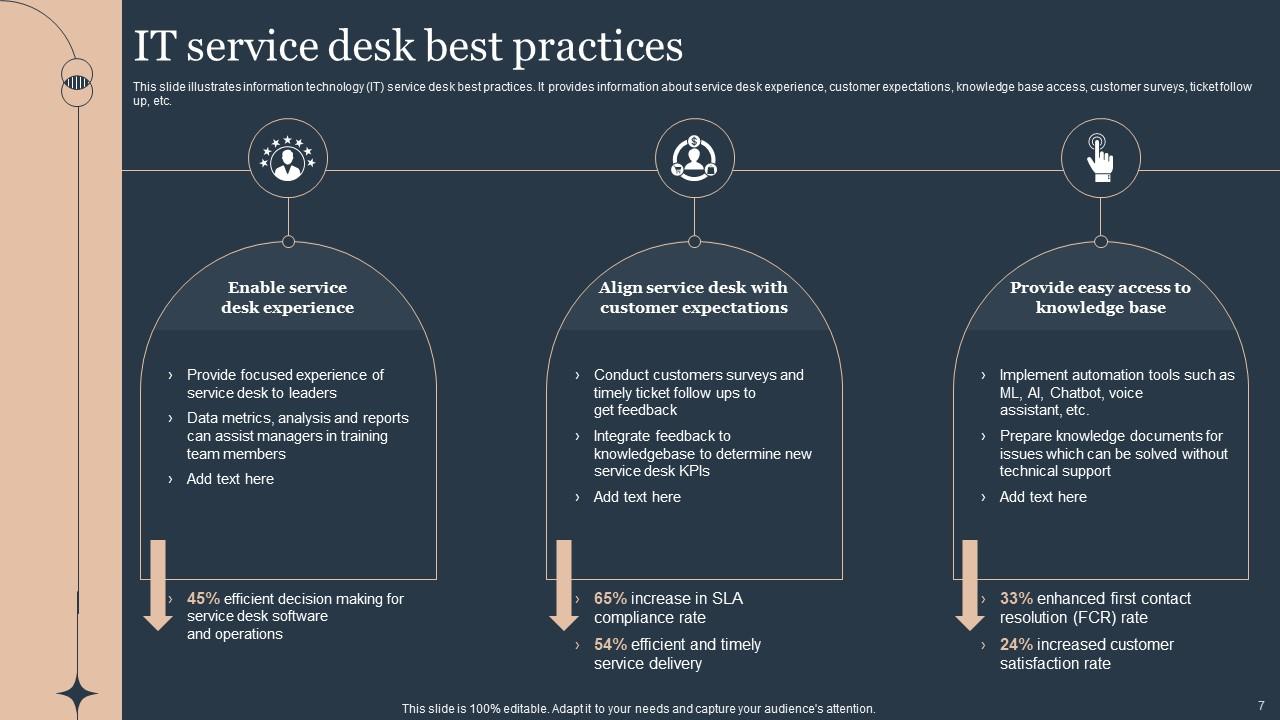
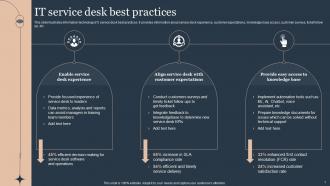
Slide 7: This slide represents IT service desk best practices.
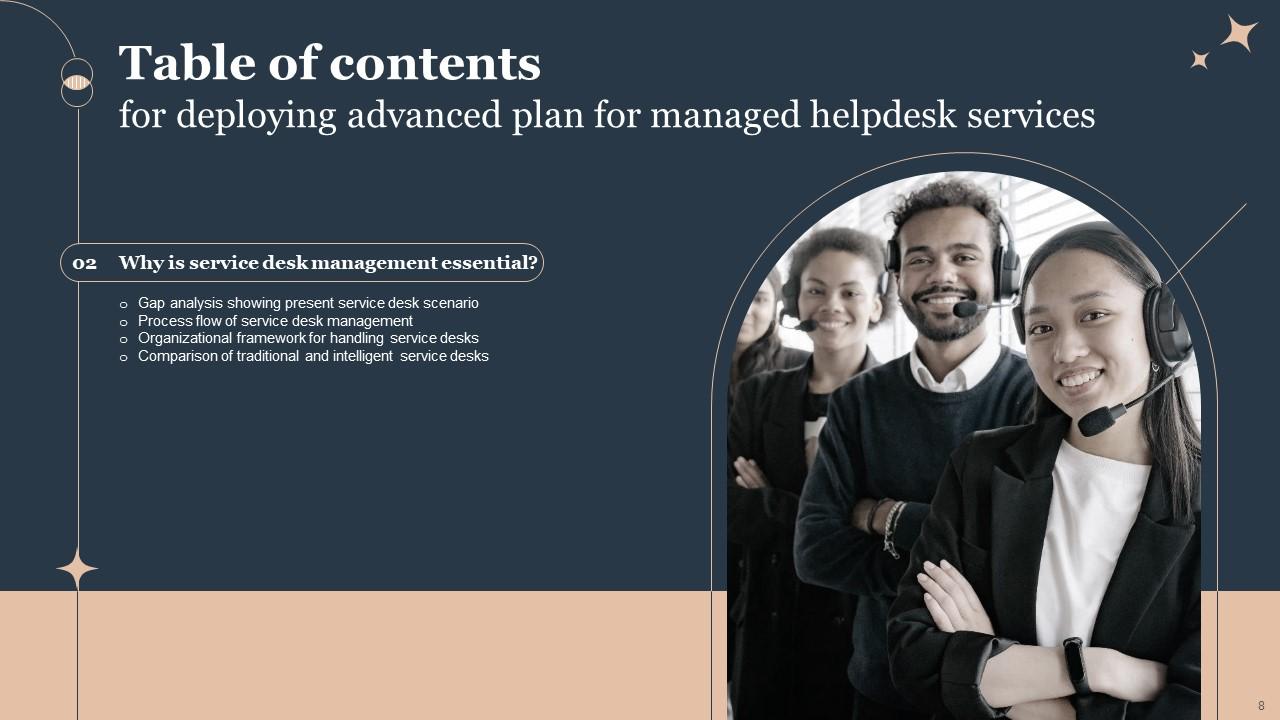
Slide 8: This slide highlights title for topics that are to be covered next in the template.
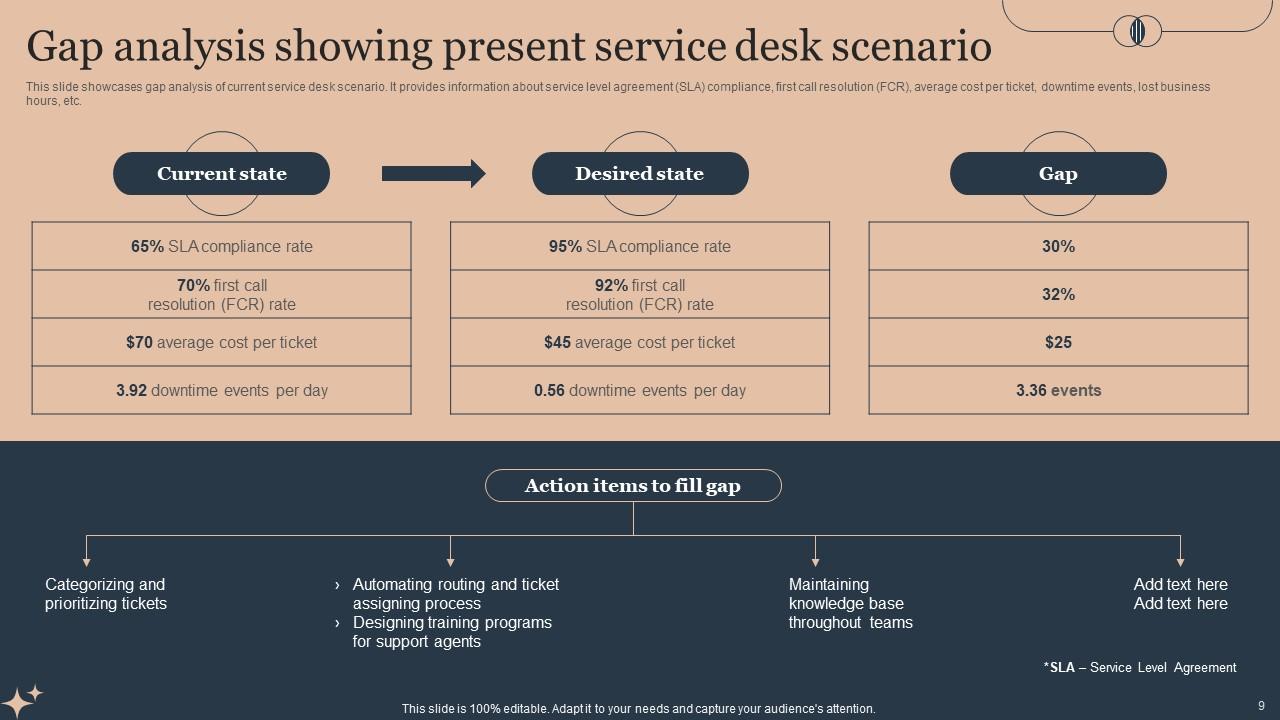
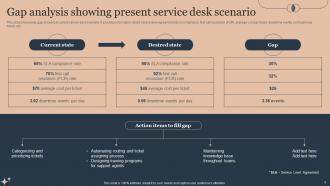
Slide 9: This slide showcases Gap analysis showing present service desk scenario.
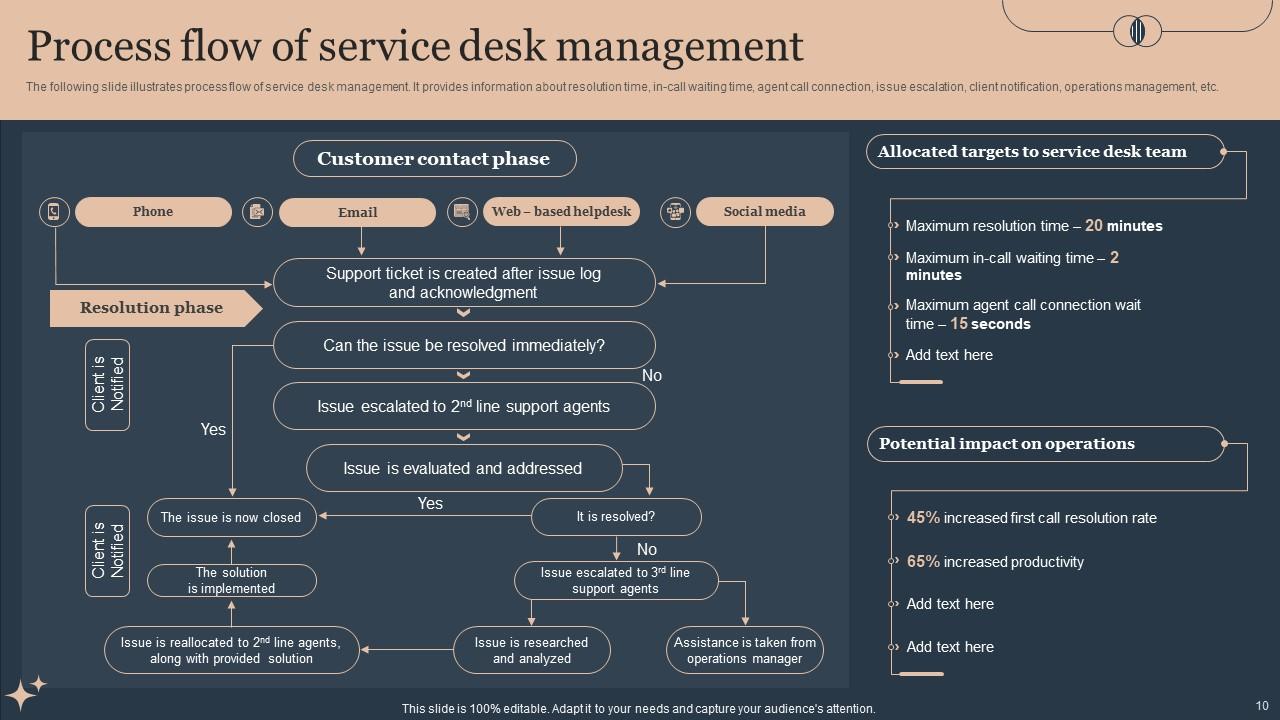
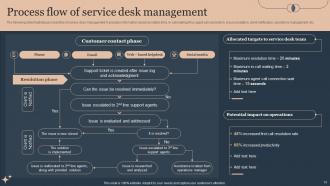
Slide 10: This slide shows Process flow of service desk management.
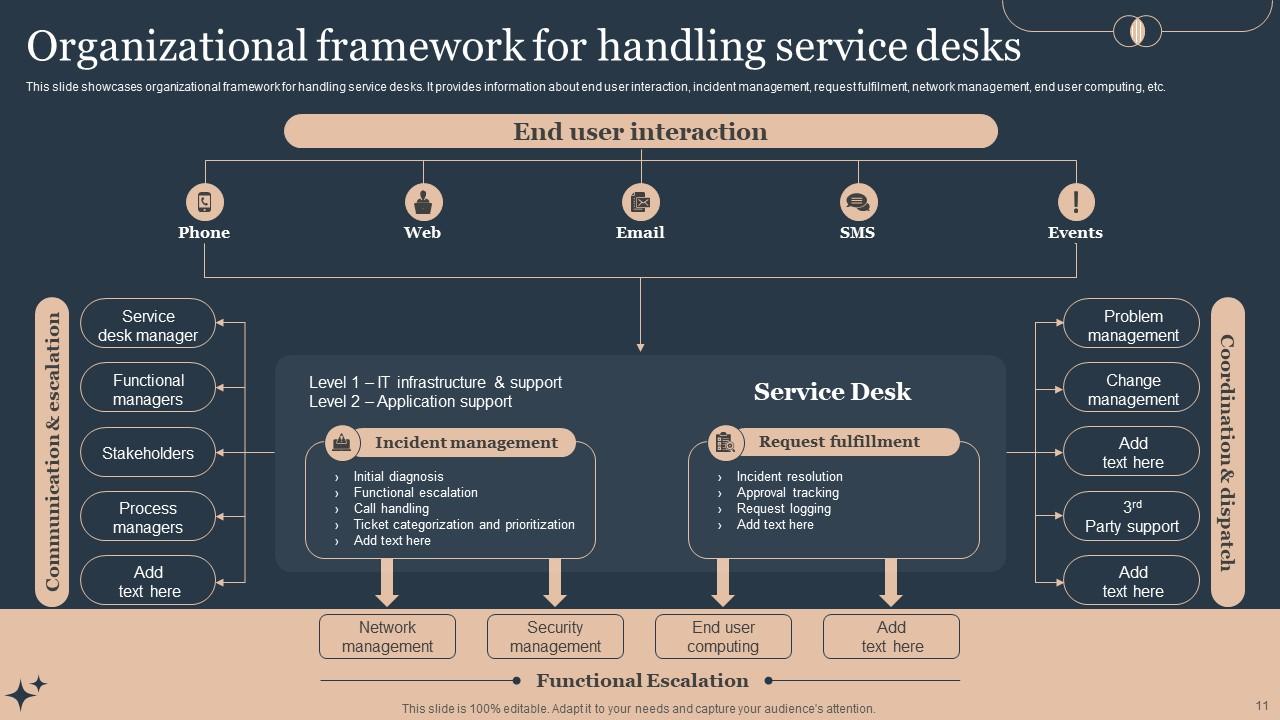
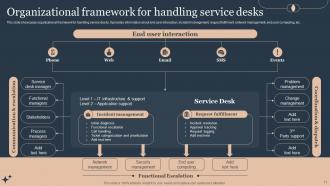
Slide 11: This slide presents Organizational framework for handling service desks.
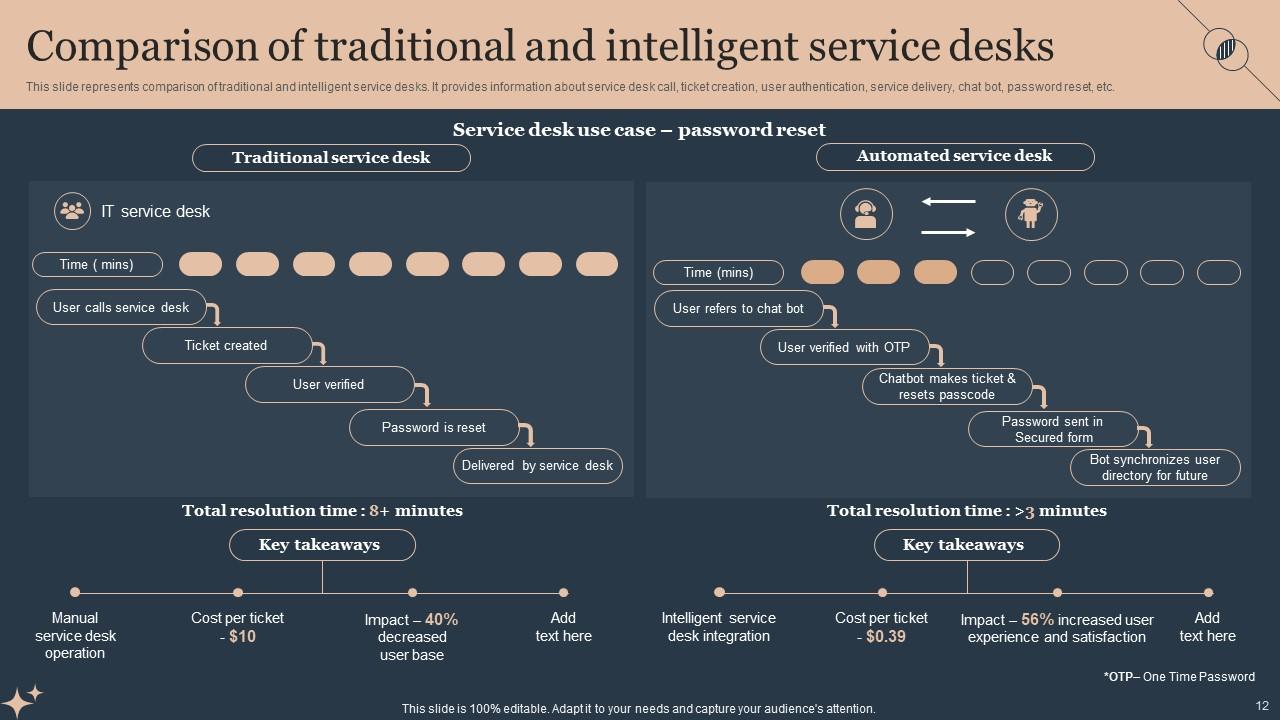
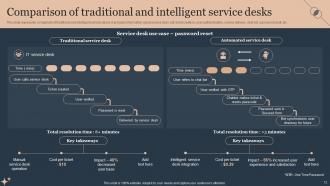
Slide 12: This slide displays Comparison of traditional and intelligent service desks.
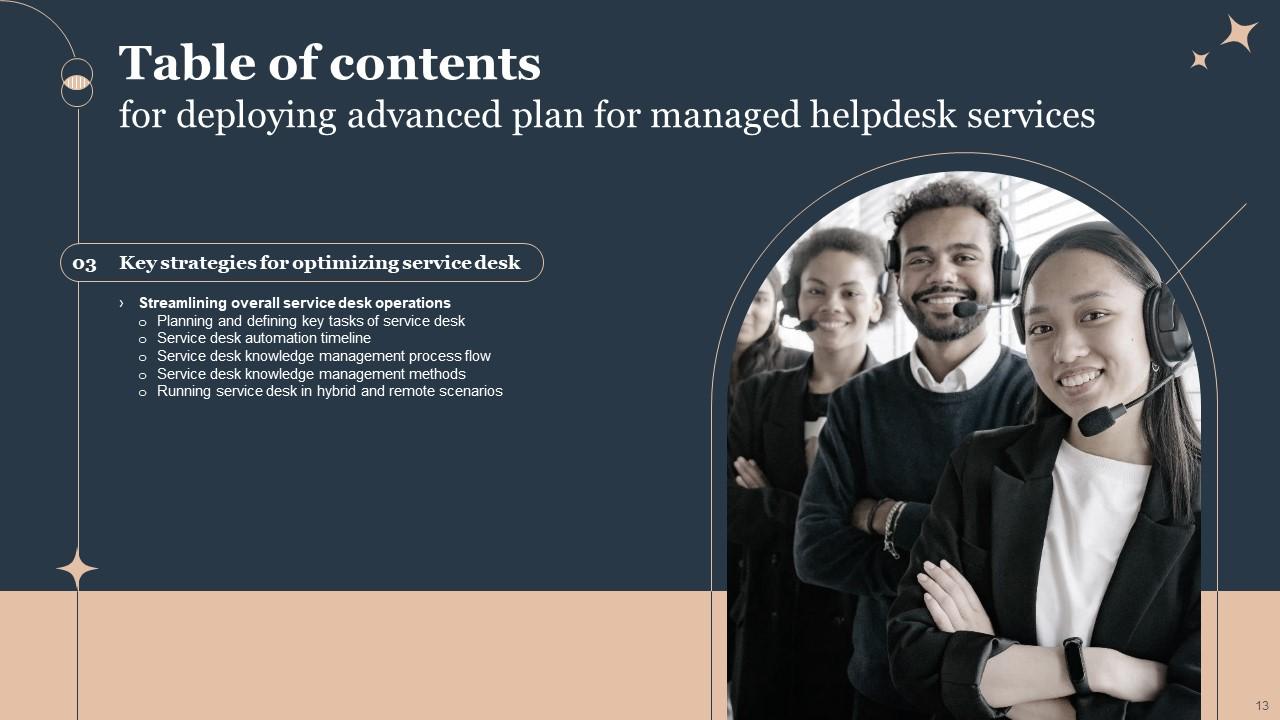
Slide 13: This slide highlights title for topics that are to be covered next in the template.
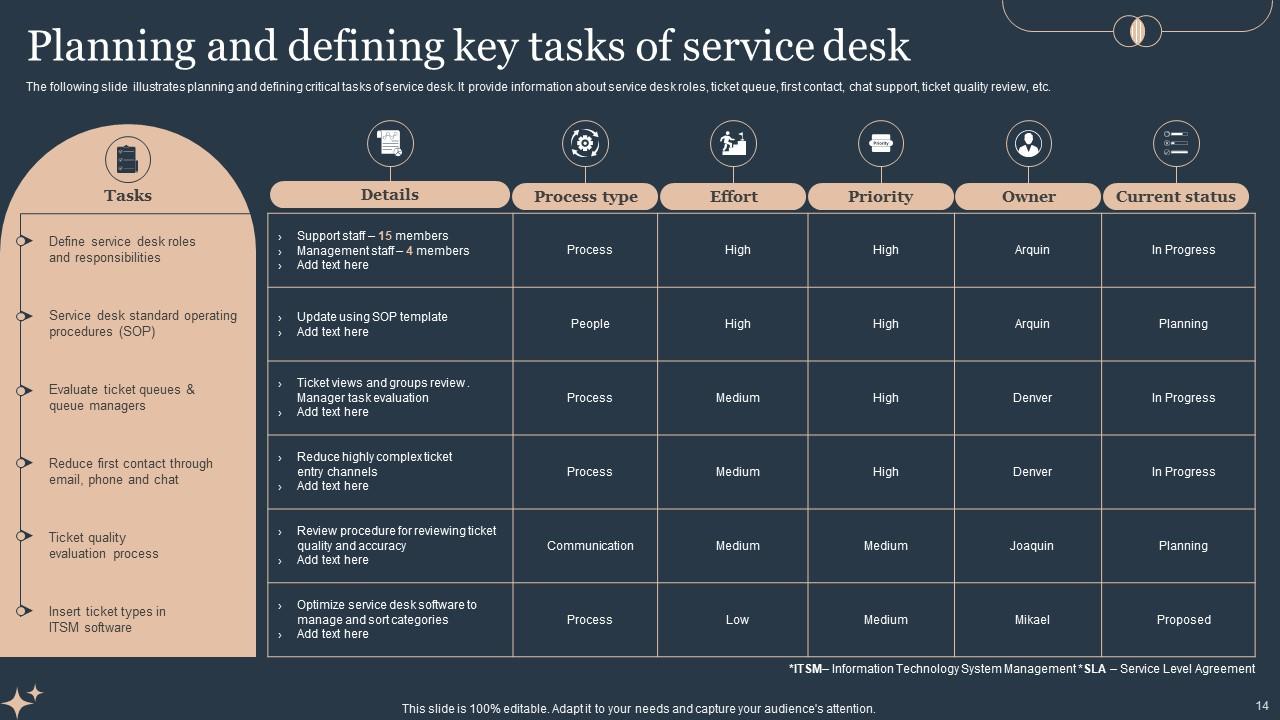
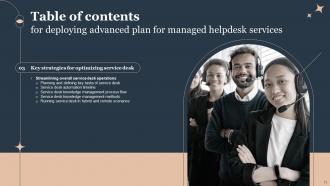
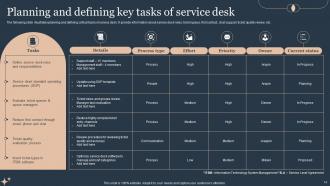
Slide 14: This slide represents Planning and defining key tasks of service desk.
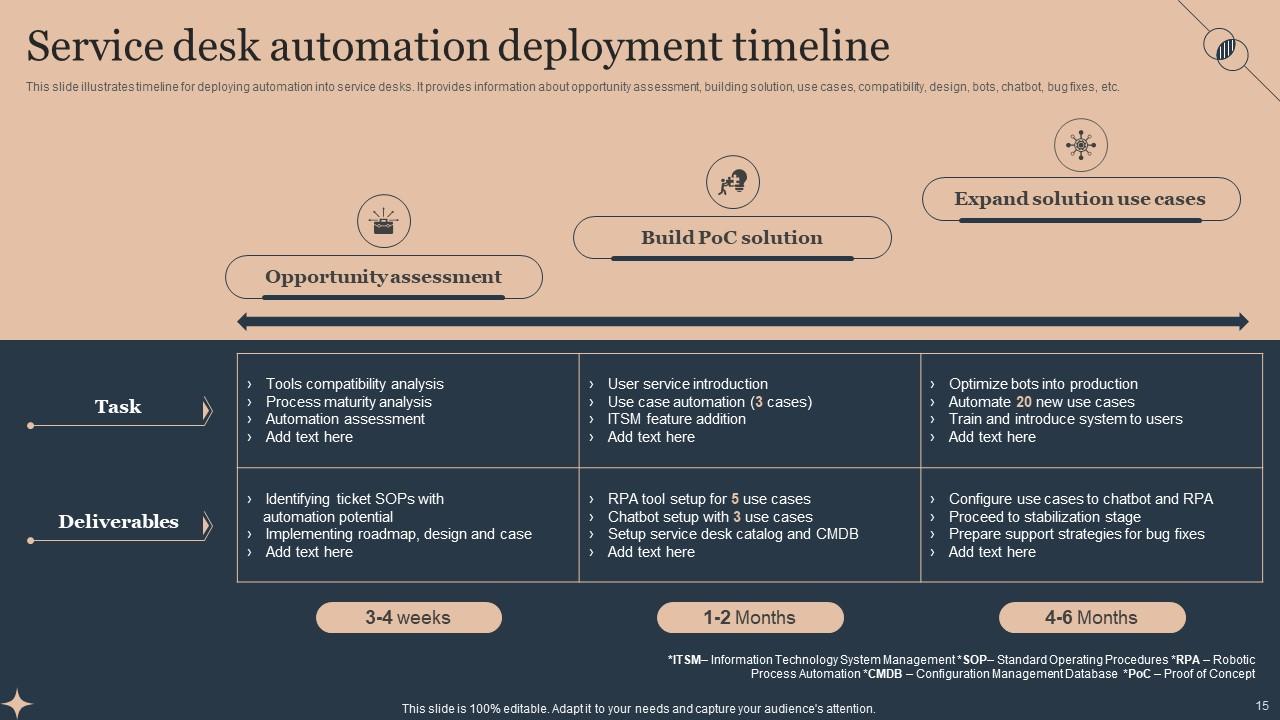
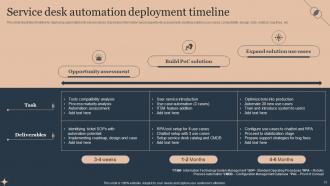
Slide 15: This slide showcases Service desk automation deployment timeline.
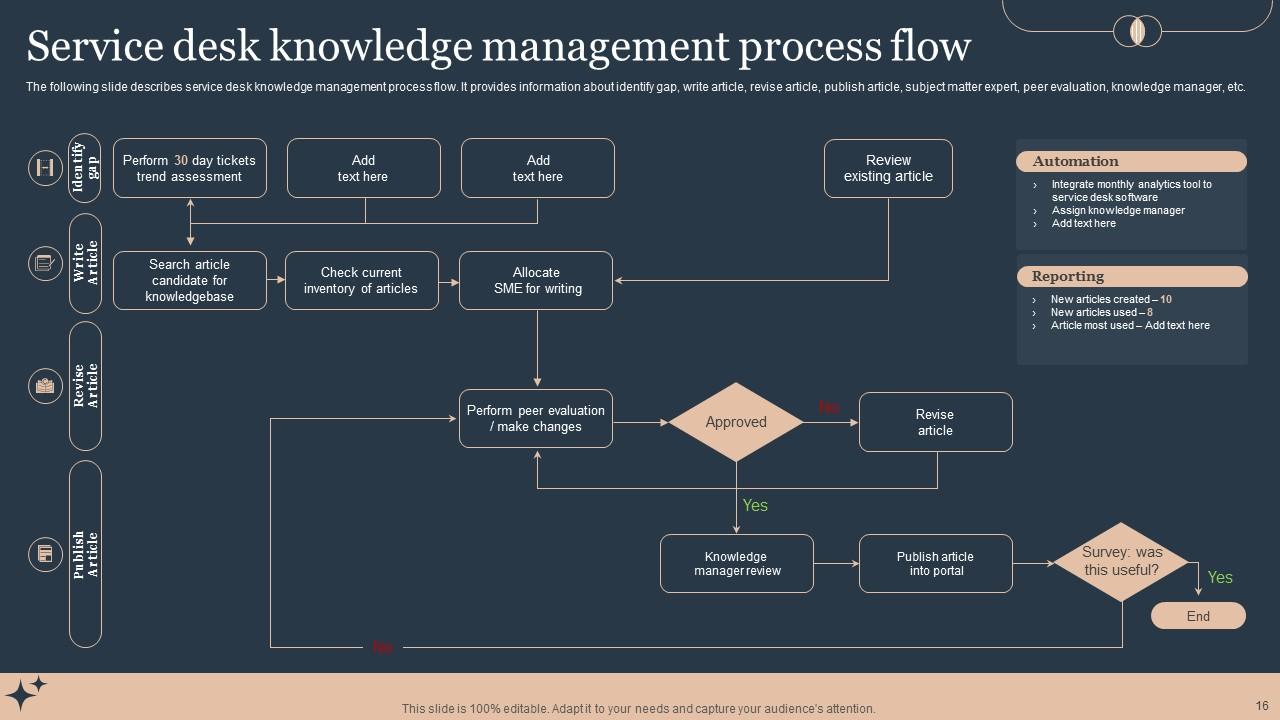
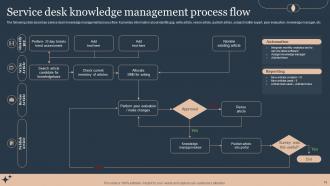
Slide 16: This slide shows Service desk knowledge management process flow.
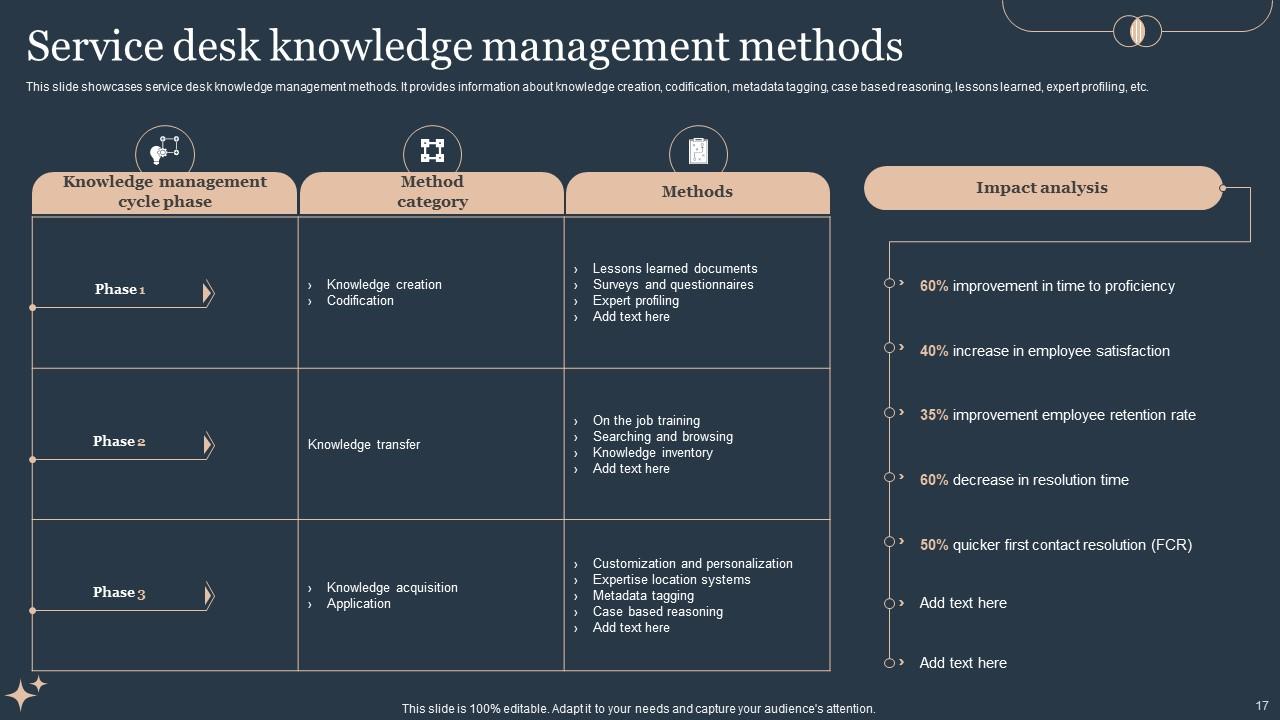
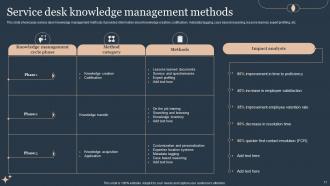
Slide 17: This slide presents Service desk knowledge management methods.
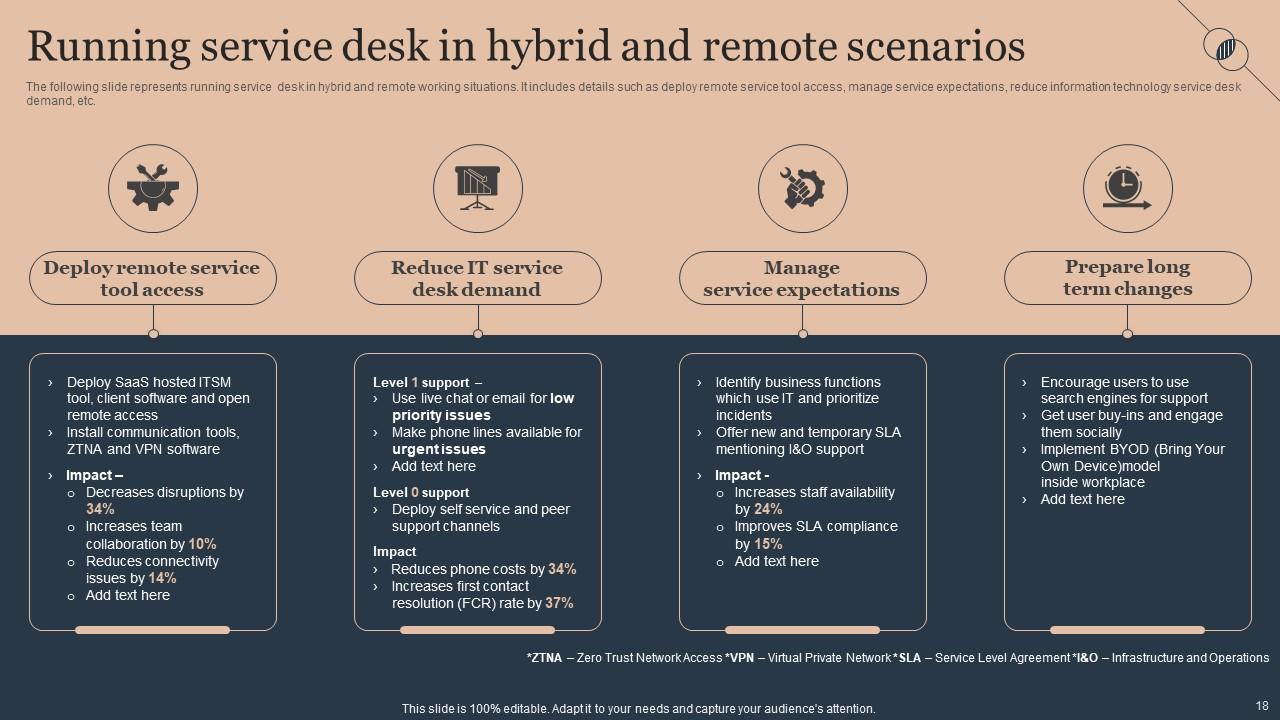
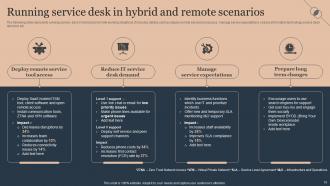
Slide 18: This slide displays Running service desk in hybrid and remote scenarios.
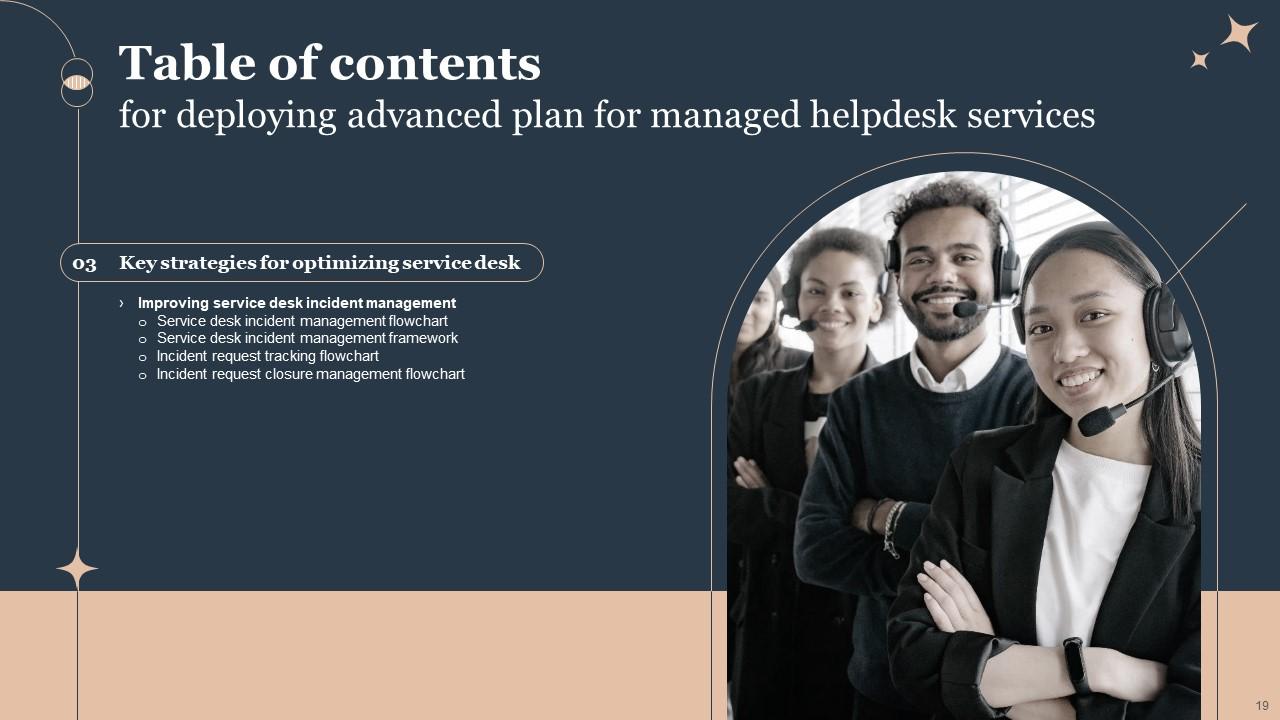
Slide 19: This slide highlights title for topics that are to be covered next in the template.
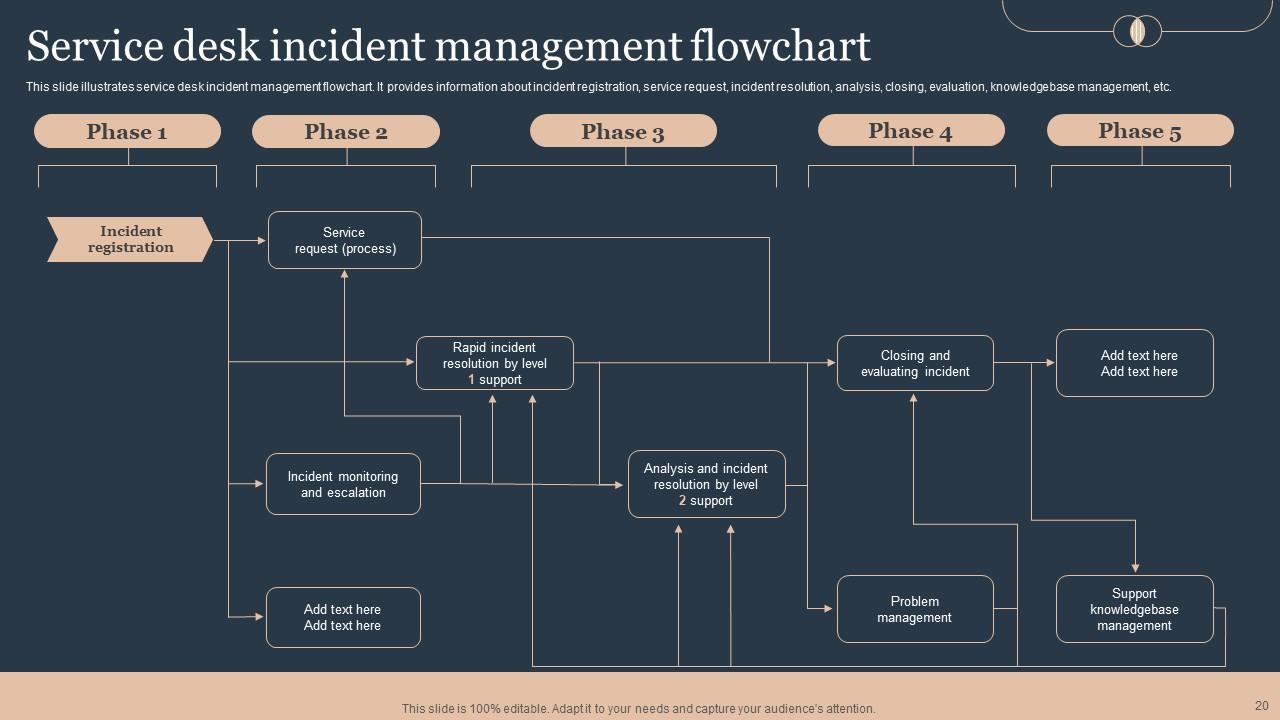
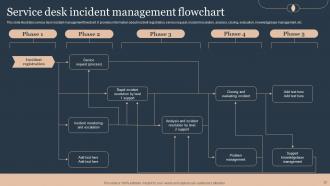
Slide 20: This slide represents Service desk incident management flowchart.
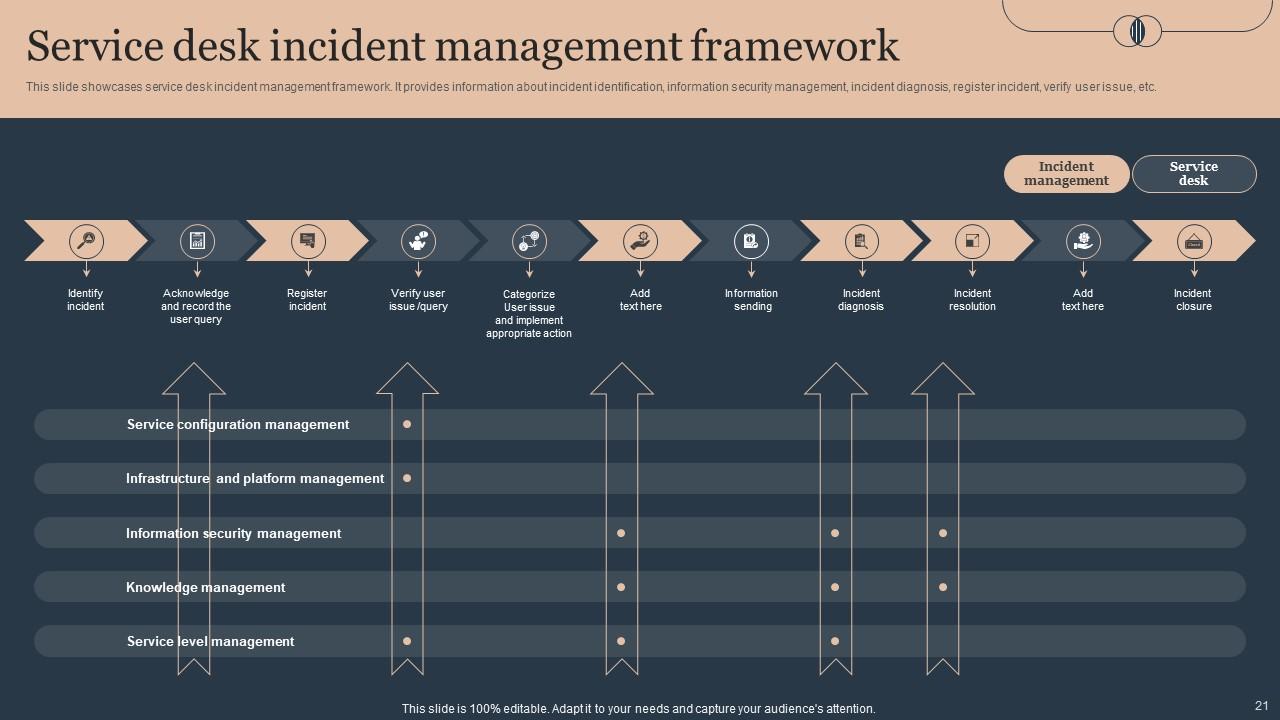
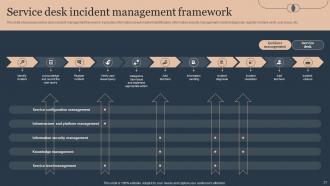
Slide 21: This slide showcases Service desk incident management framework.
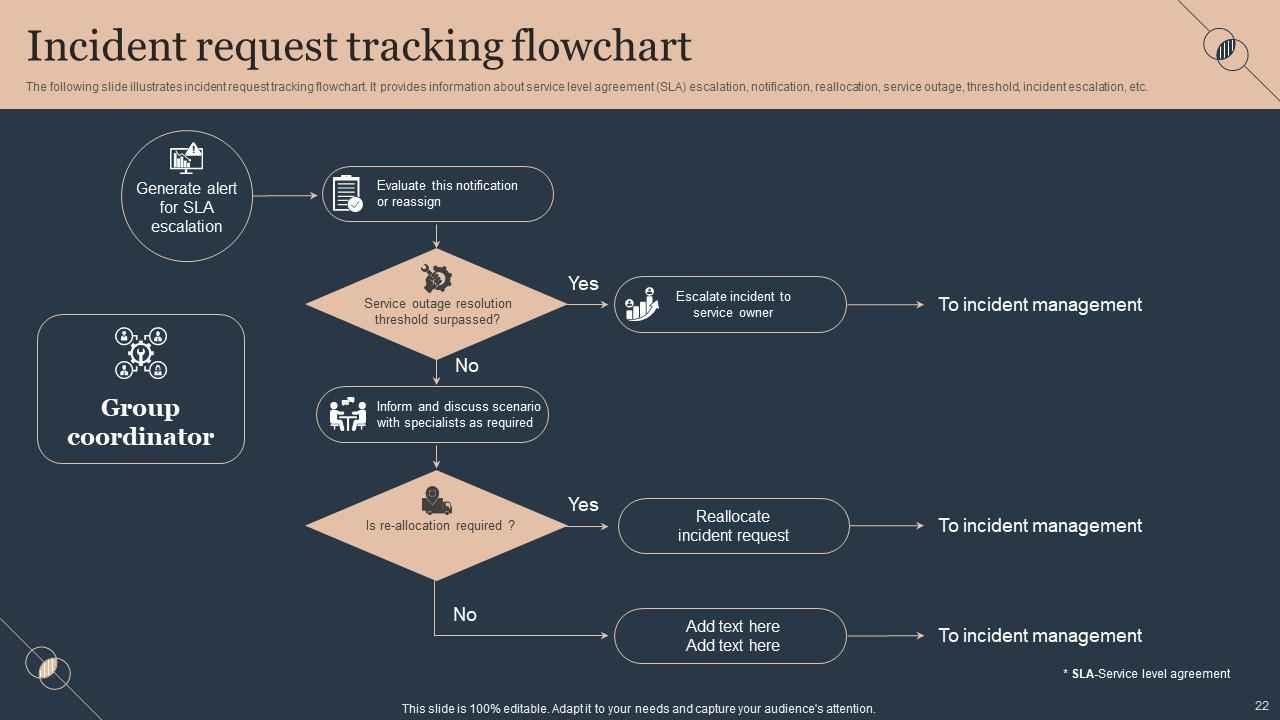
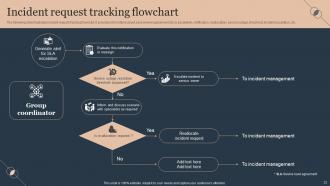
Slide 22: This slide shows Incident request tracking flowchart.
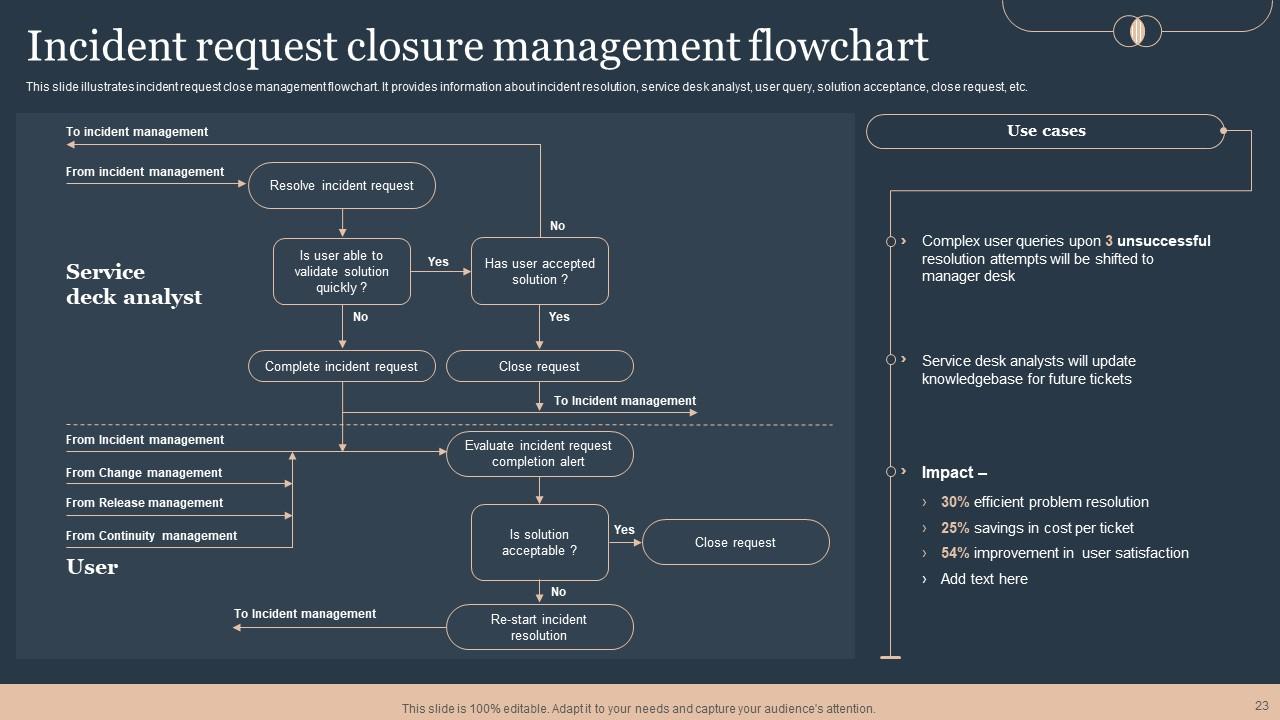
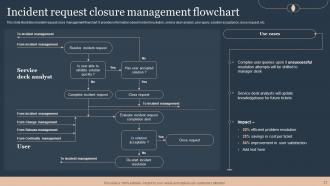
Slide 23: This slide presents Incident request closure management flowchart.
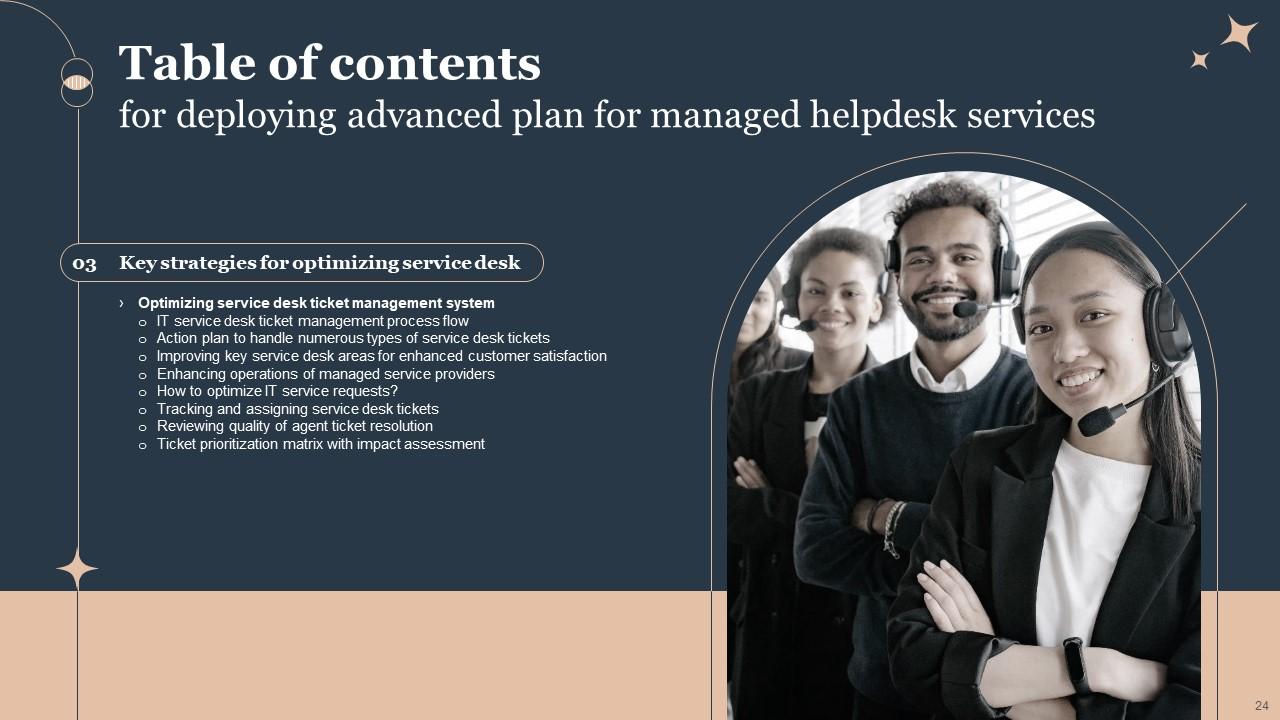
Slide 24: This slide highlights title for topics that are to be covered next in the template.
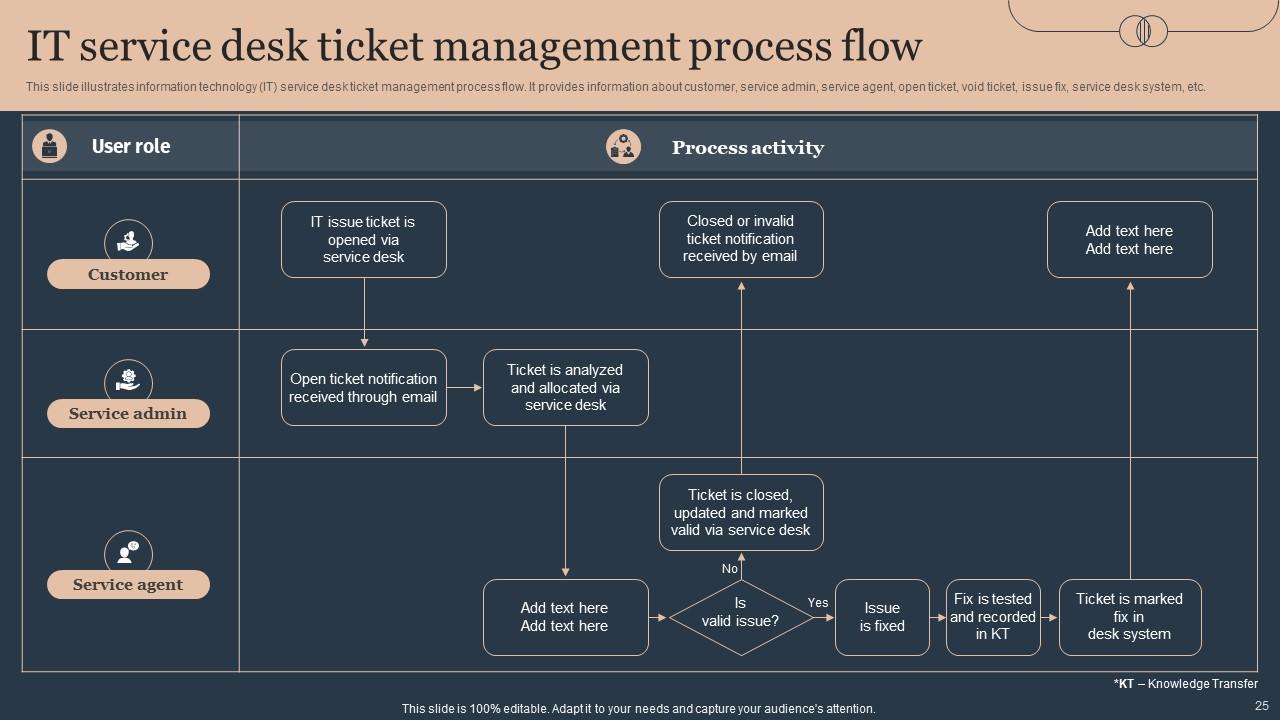
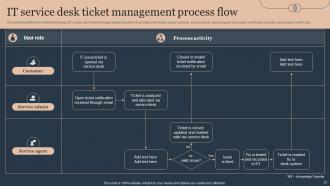
Slide 25: This slide displays IT service desk ticket management process flow.
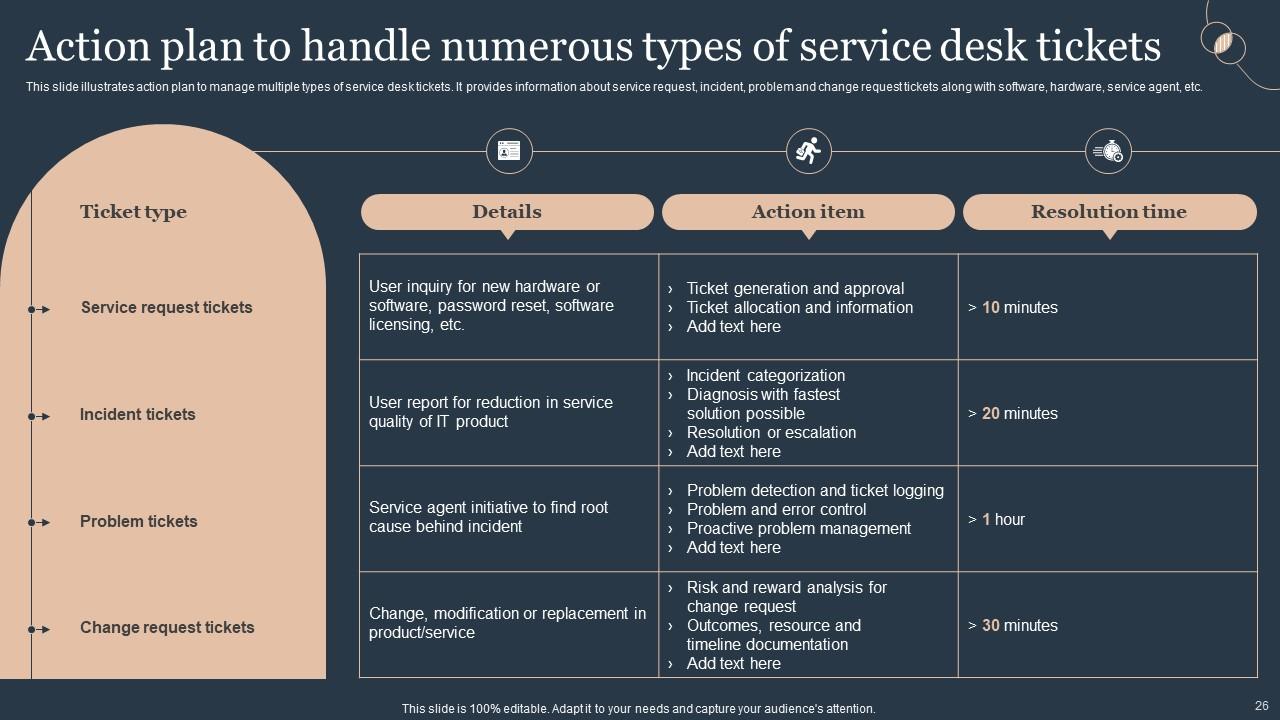
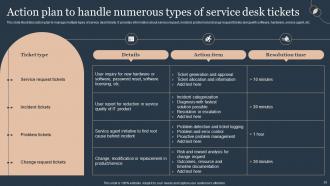
Slide 26: This slide represents Action plan to handle numerous types of service desk tickets.
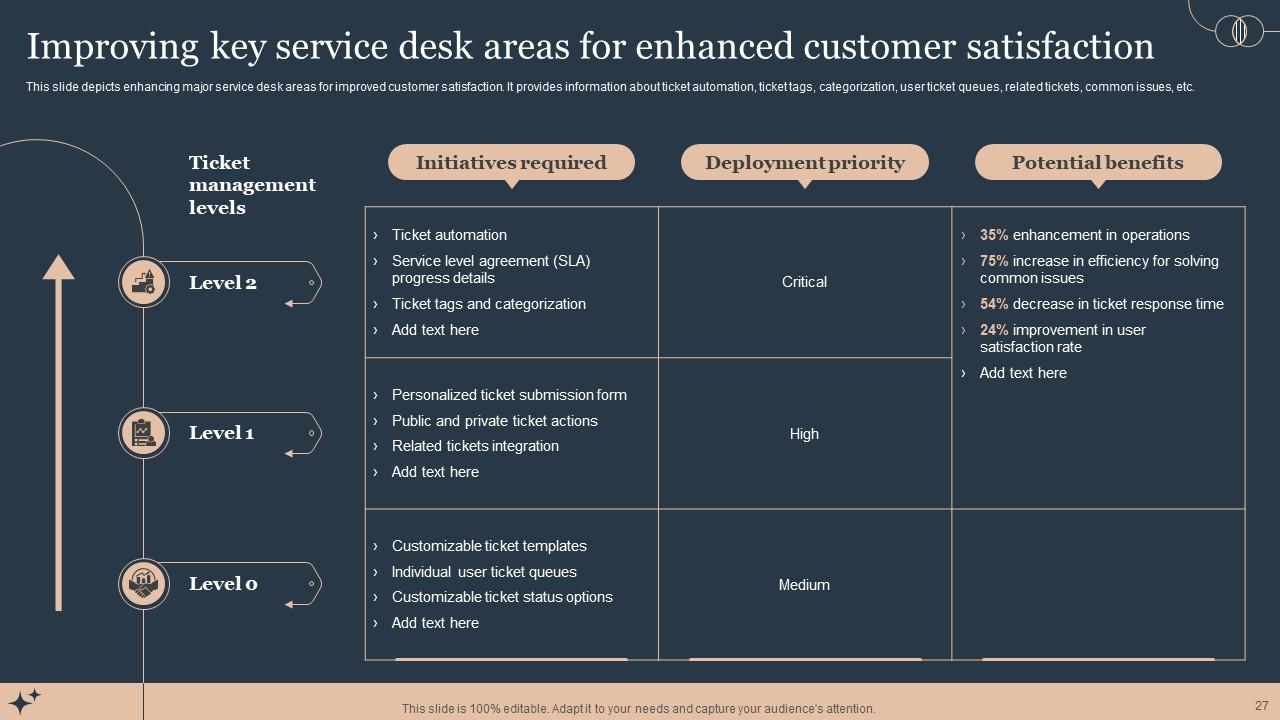
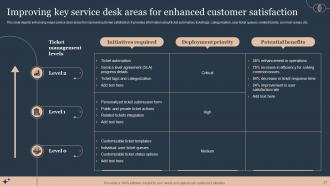
Slide 27: This slide showcases Improving key service desk areas for enhanced customer satisfaction.
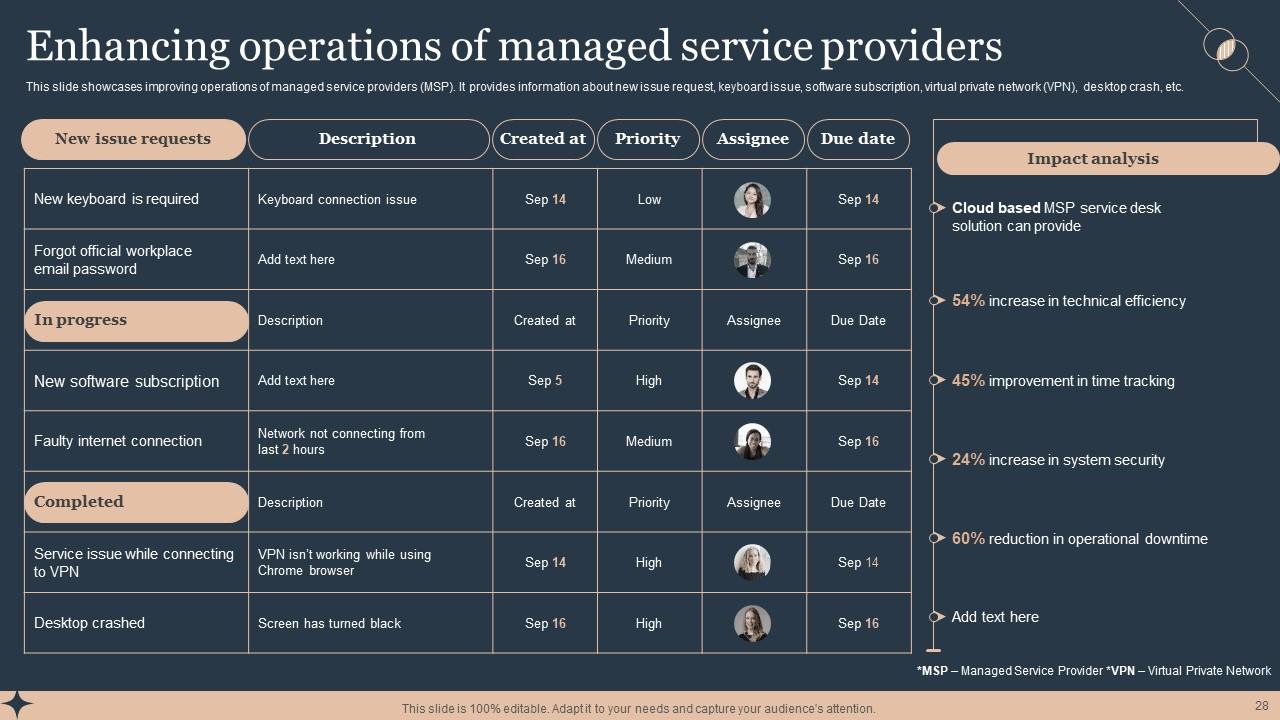
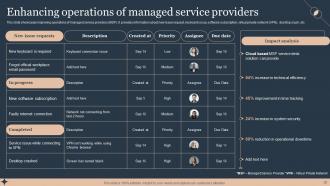
Slide 28: This slide shows Enhancing operations of managed service providers.
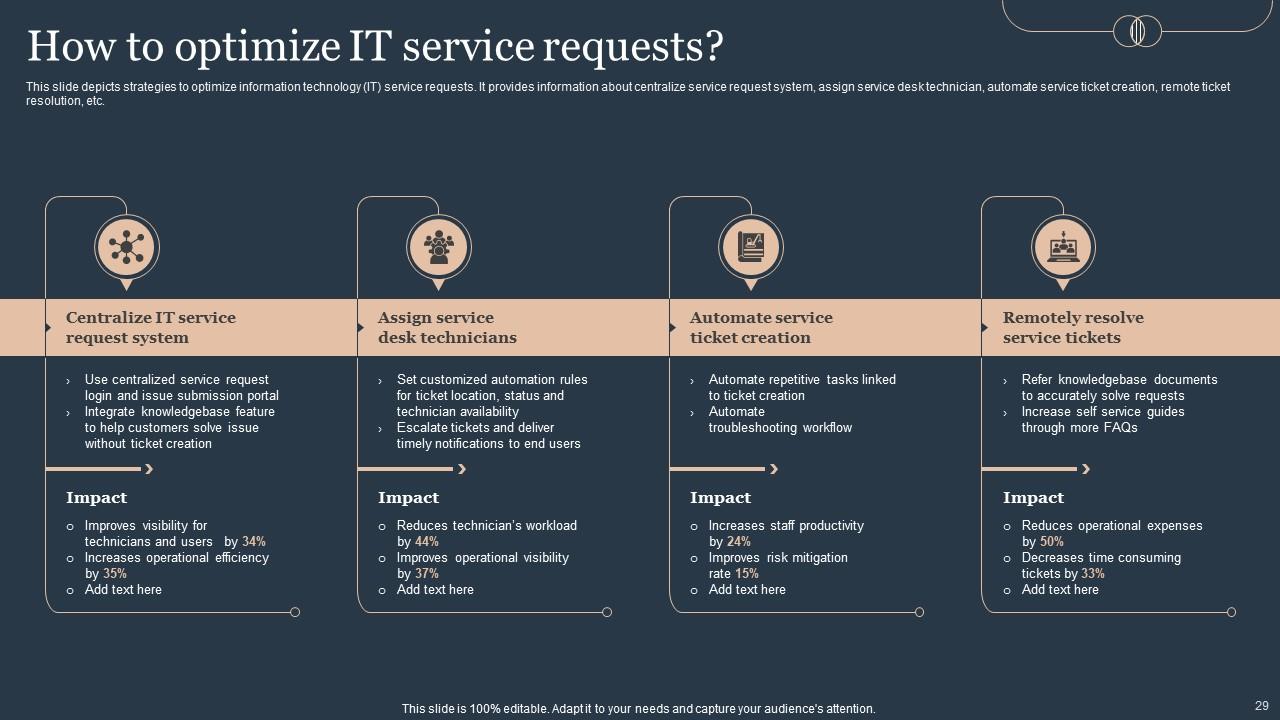
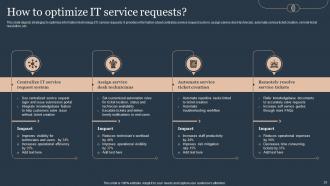
Slide 29: This slide depicts strategies to optimize information technology (IT) service requests.
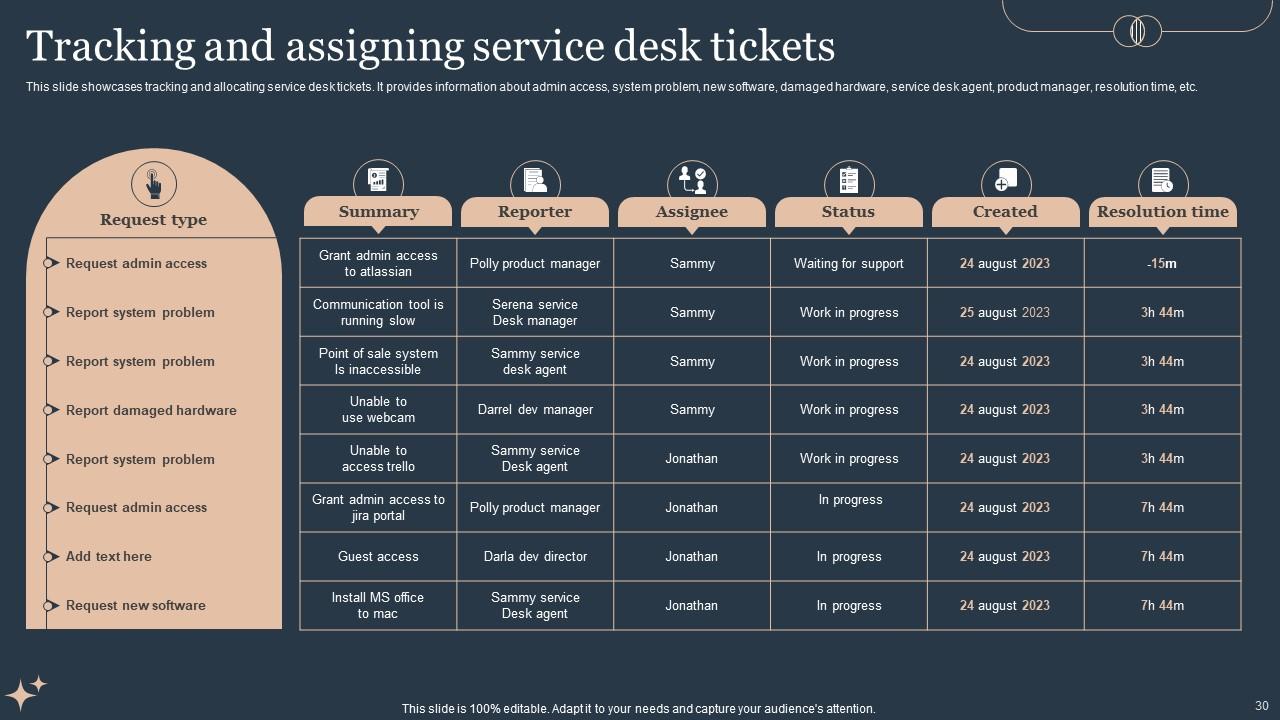
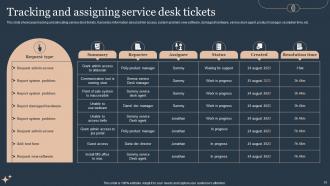
Slide 30: This slide presents Tracking and assigning service desk tickets.
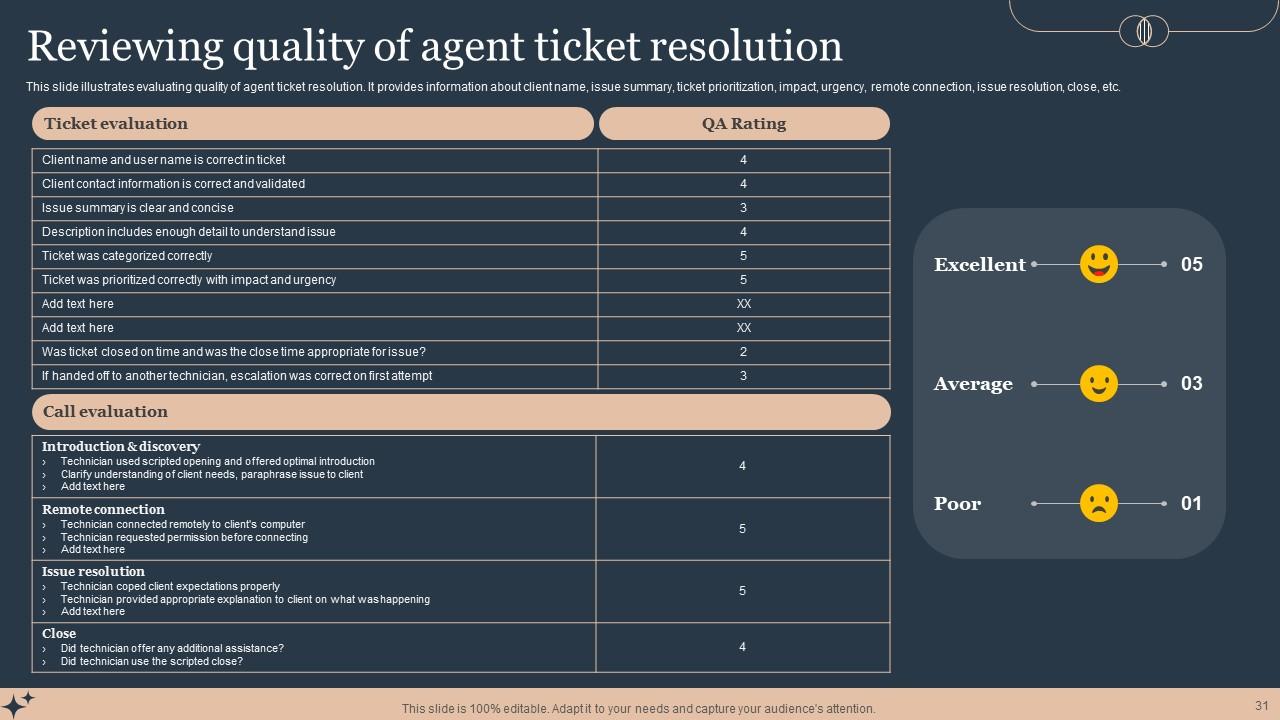
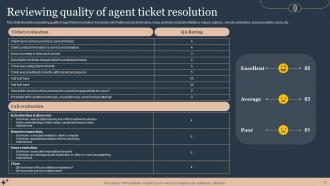
Slide 31: This slide displays Reviewing quality of agent ticket resolution.
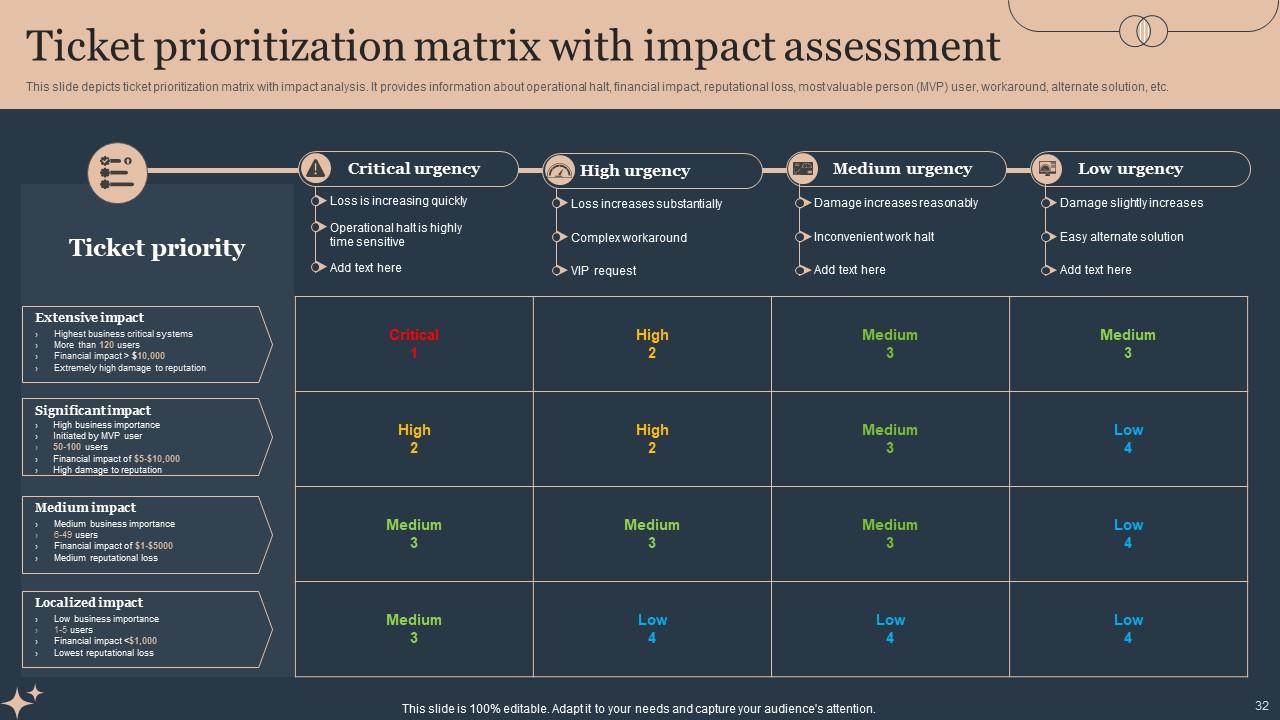
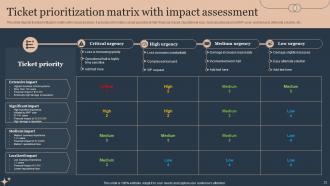
Slide 32: This slide represents Ticket prioritization matrix with impact assessment.
Slide 33: This slide highlights title for topics that are to be covered next in the template.
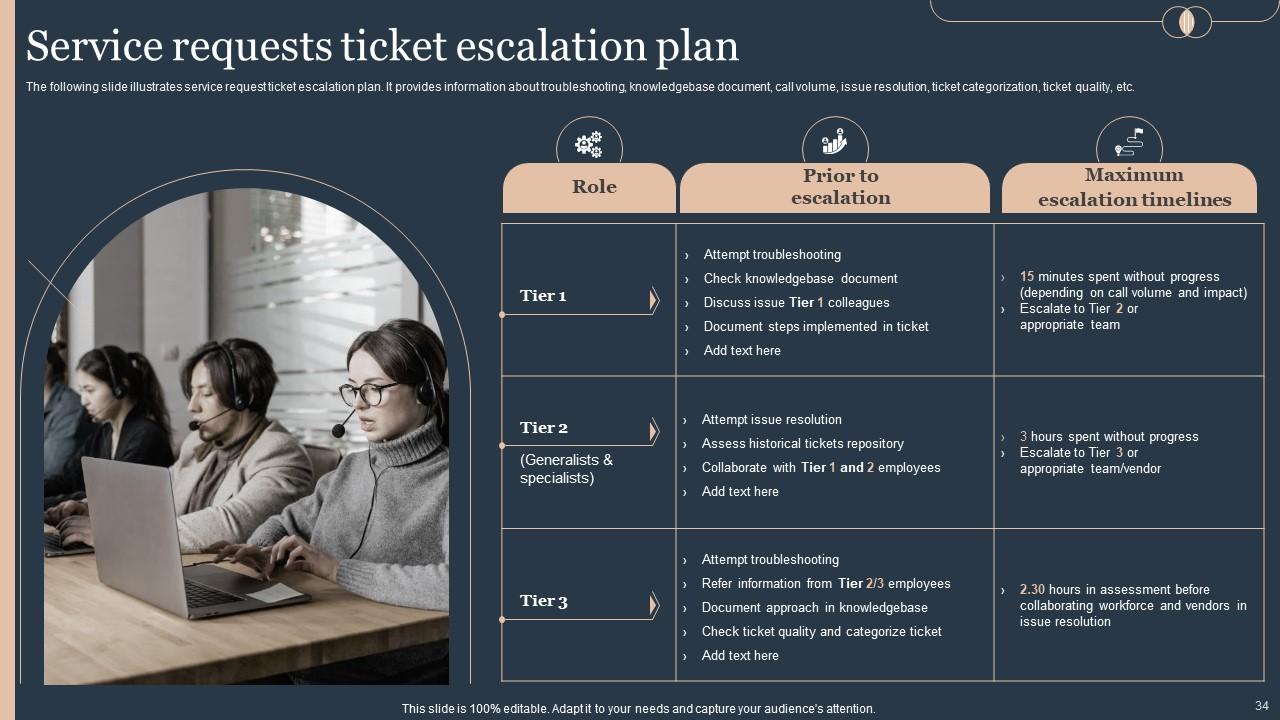
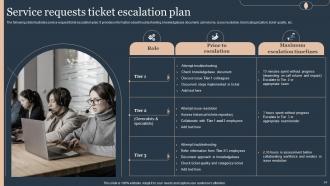
Slide 34: This slide showcases Service requests ticket escalation plan.
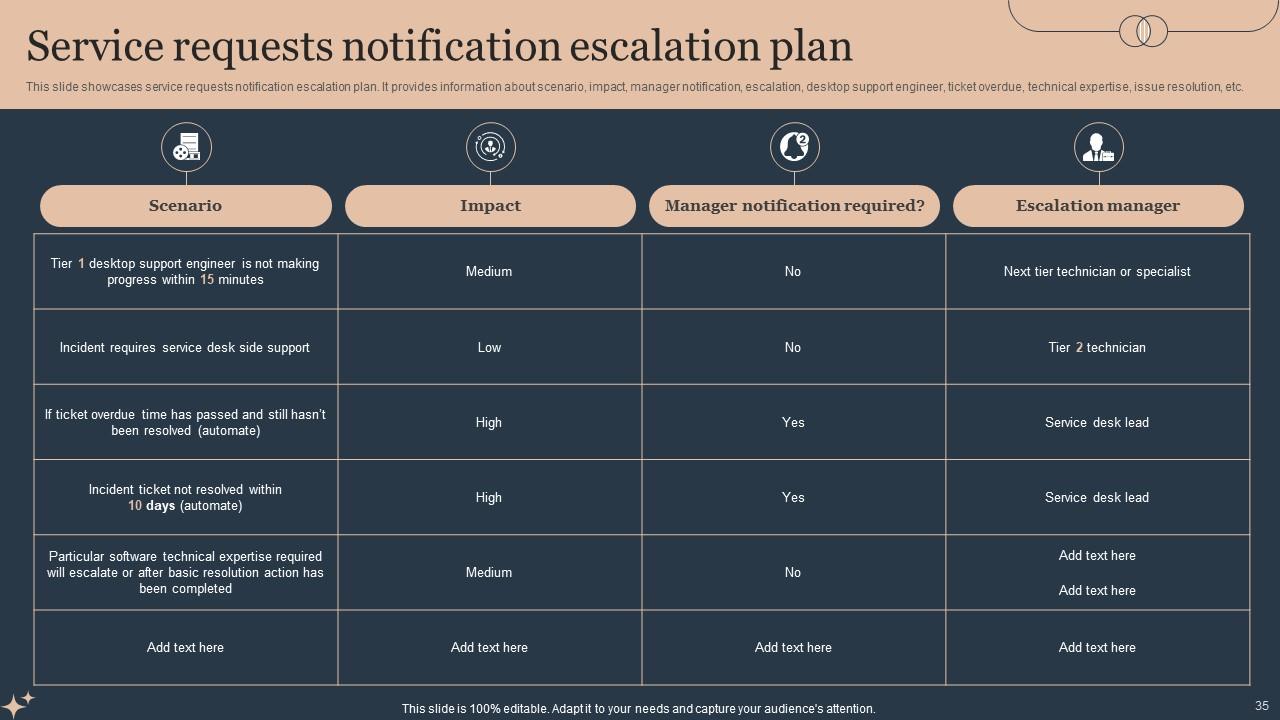
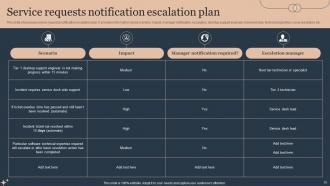
Slide 35: This slide shows Service requests notification escalation plan.
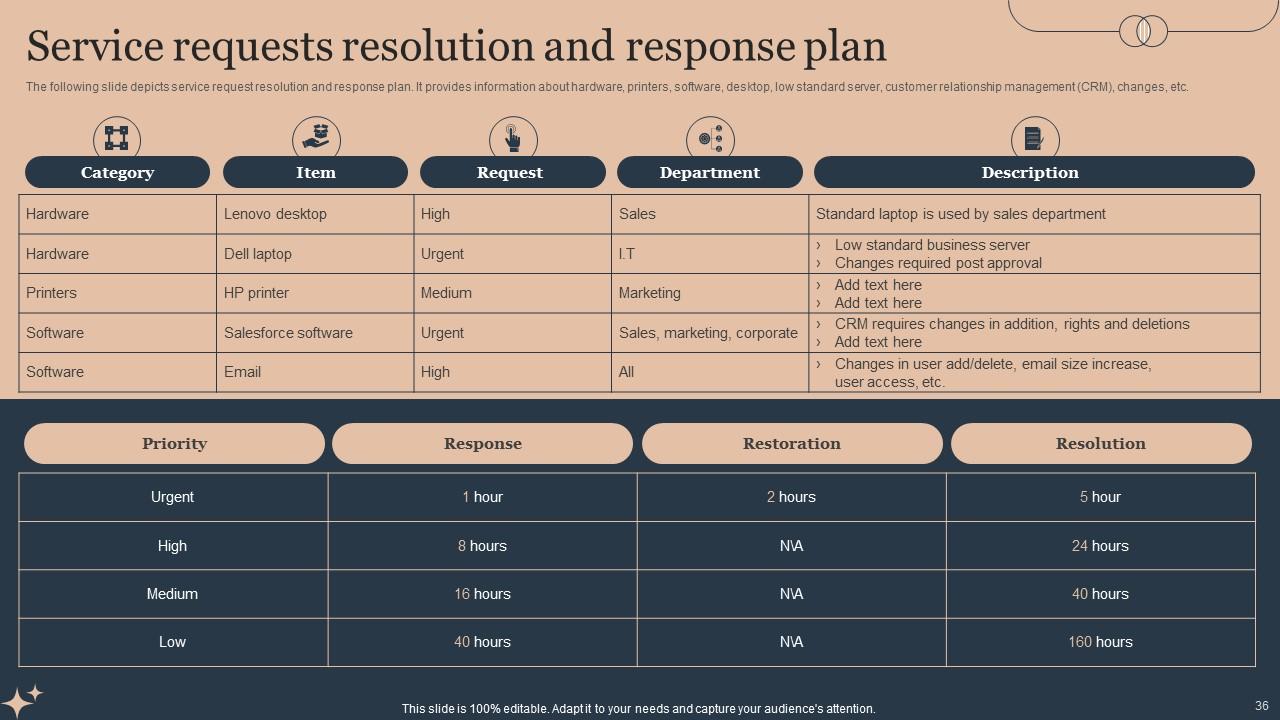
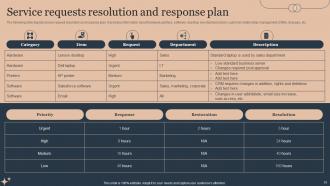
Slide 36: This slide presents Service requests resolution and response plan.
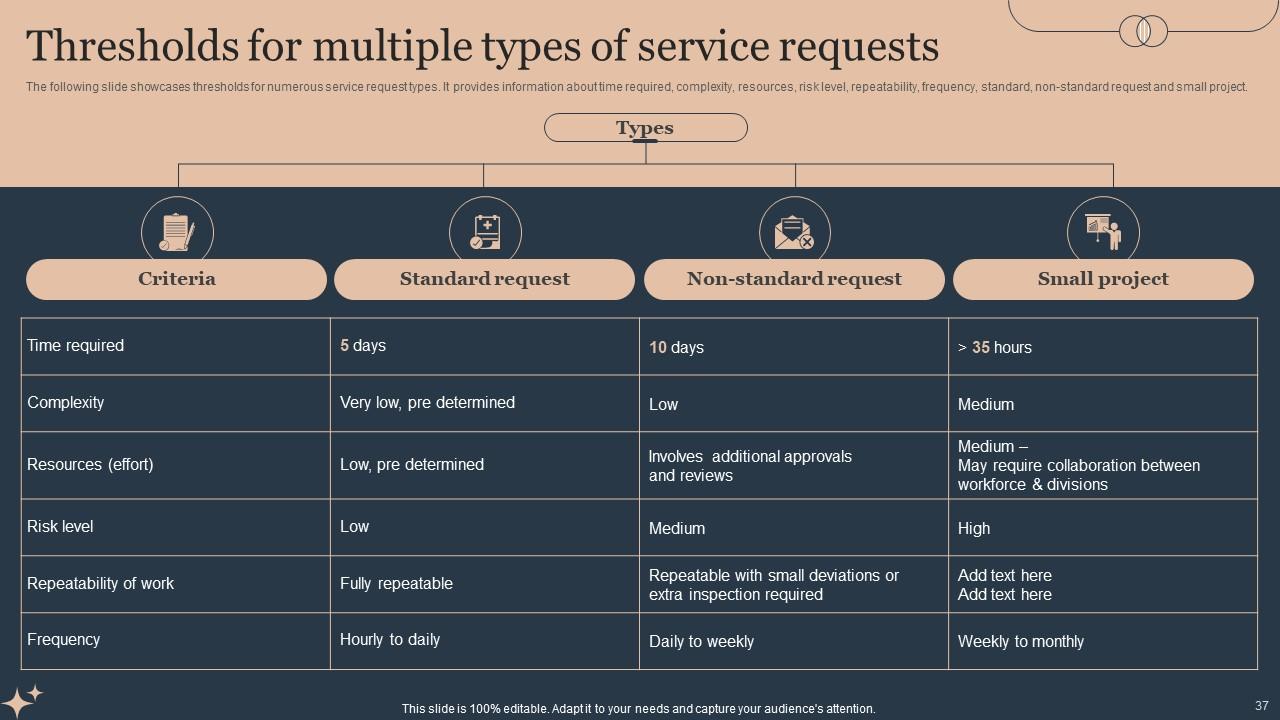
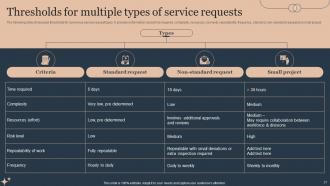
Slide 37: This slide displays Thresholds for multiple types of service requests.
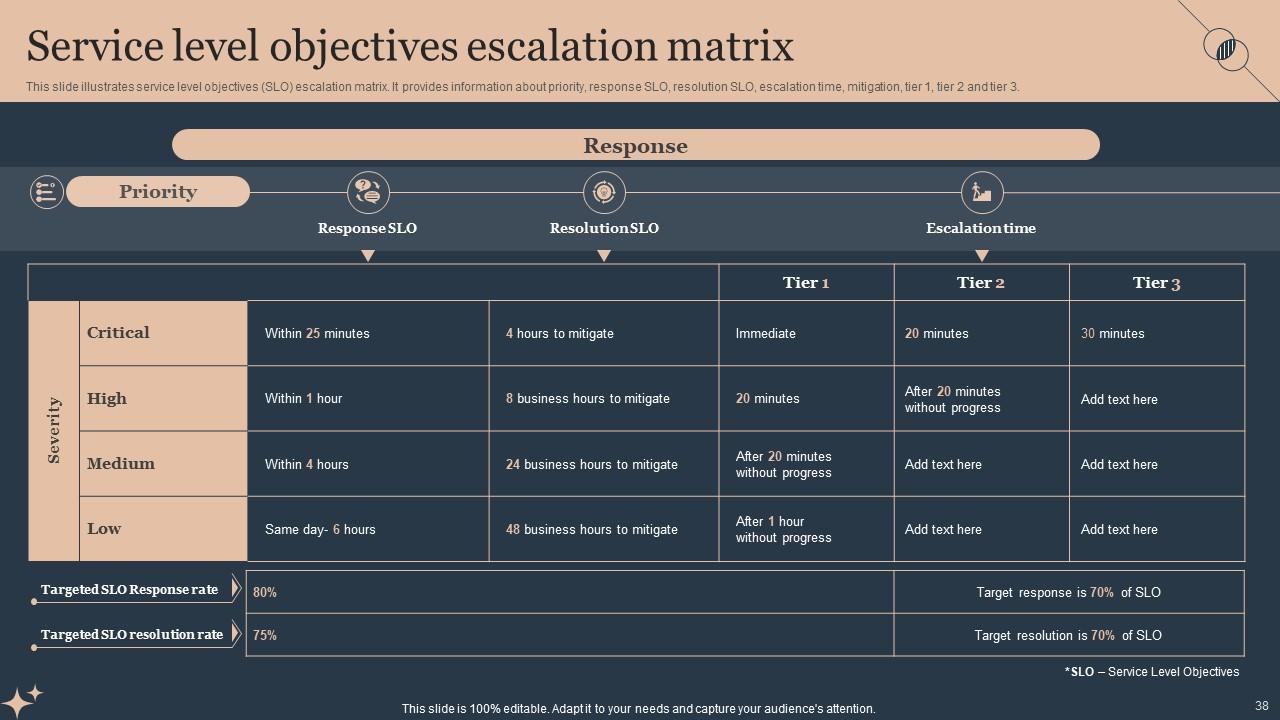
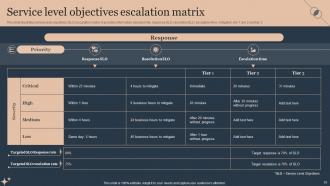
Slide 38: This slide represents Service level objectives escalation matrix.
Slide 39: This slide highlights title for topics that are to be covered next in the template.
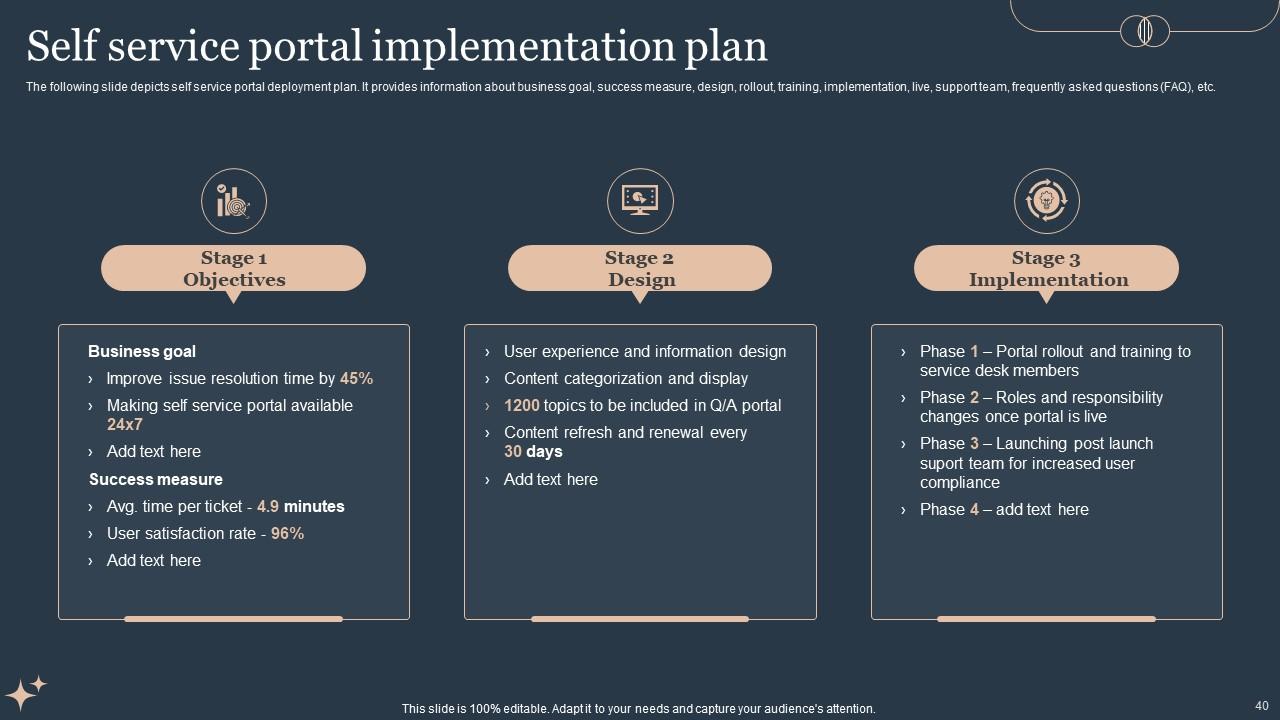
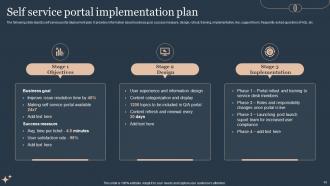
Slide 40: This slide showcases Self service portal implementation plan.
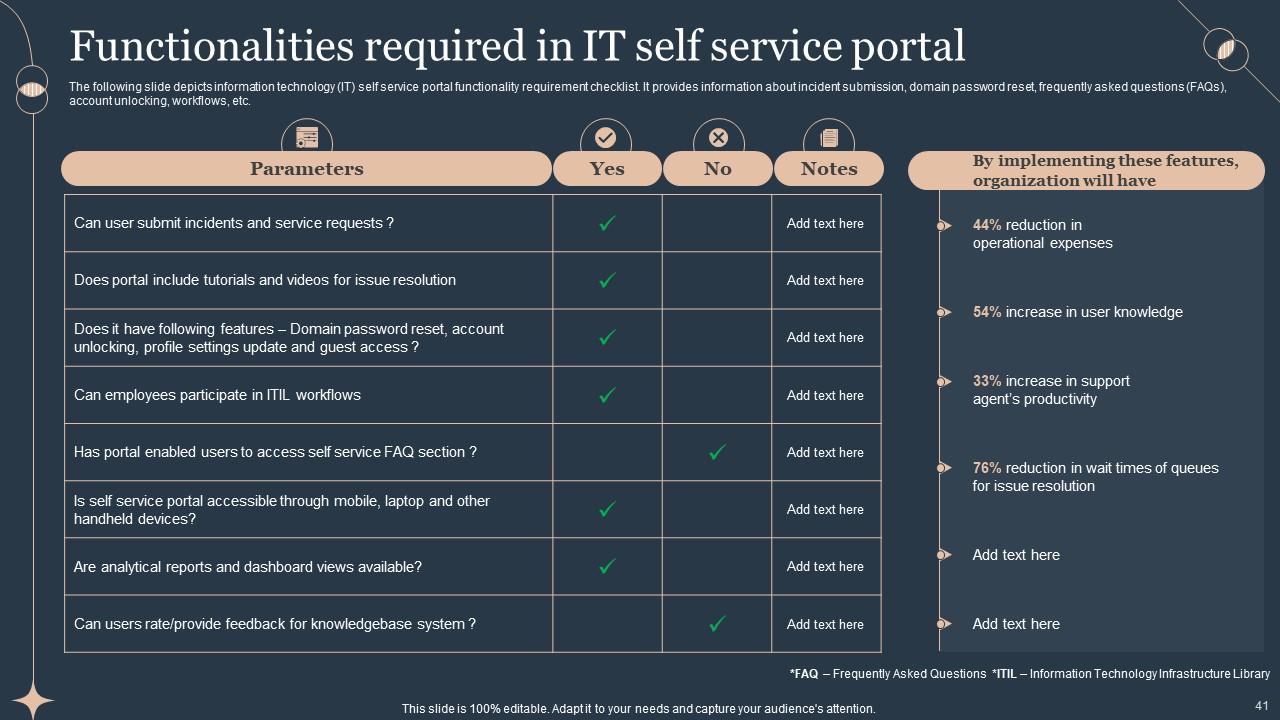
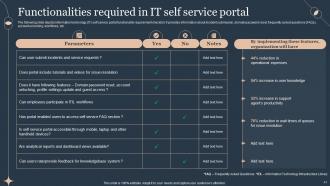
Slide 41: This slide shows Functionalities required in IT self service portal.
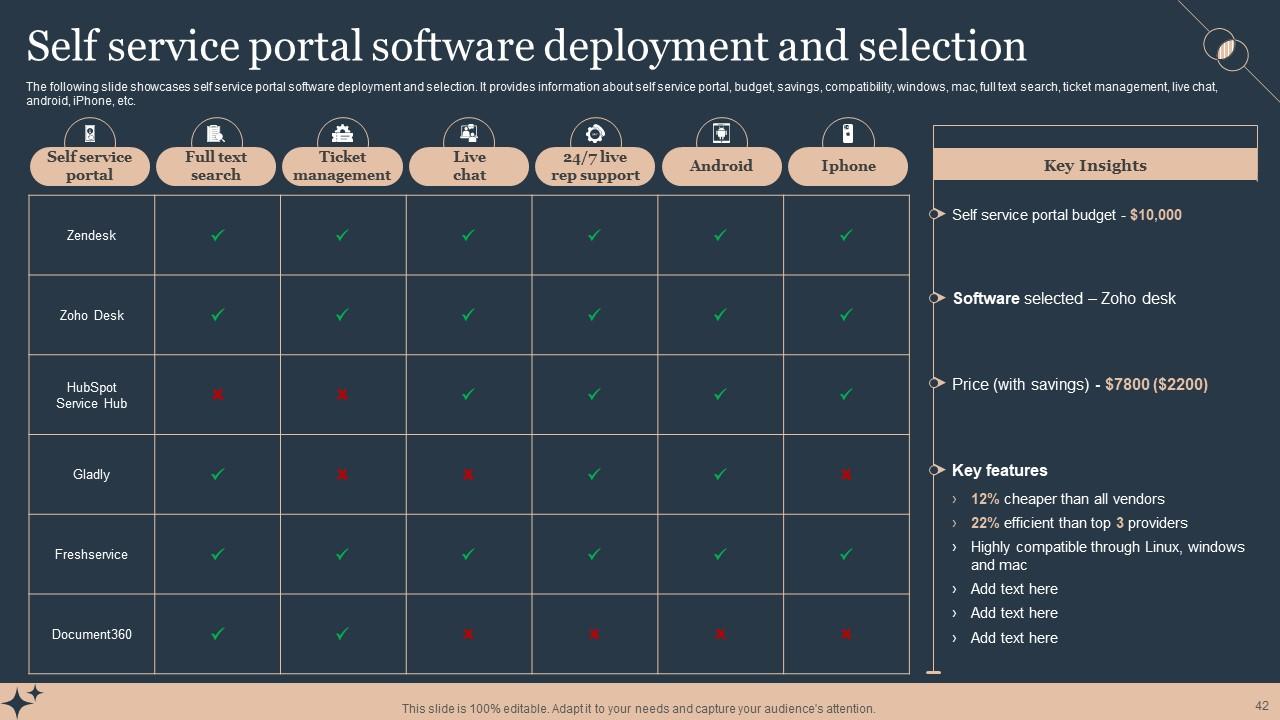
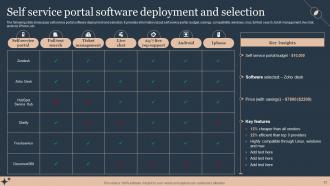
Slide 42: This slide presents Self service portal software deployment and selection.
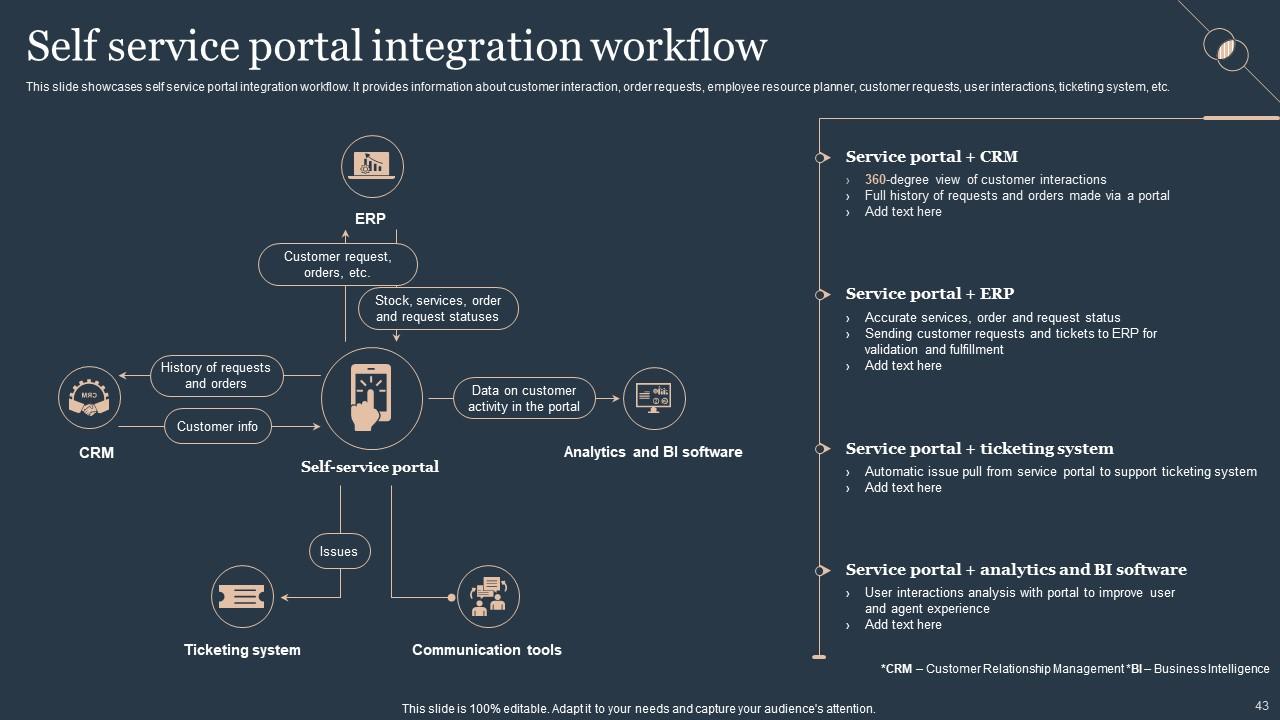
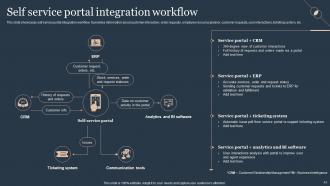
Slide 43: This slide displays Self service portal integration workflow.
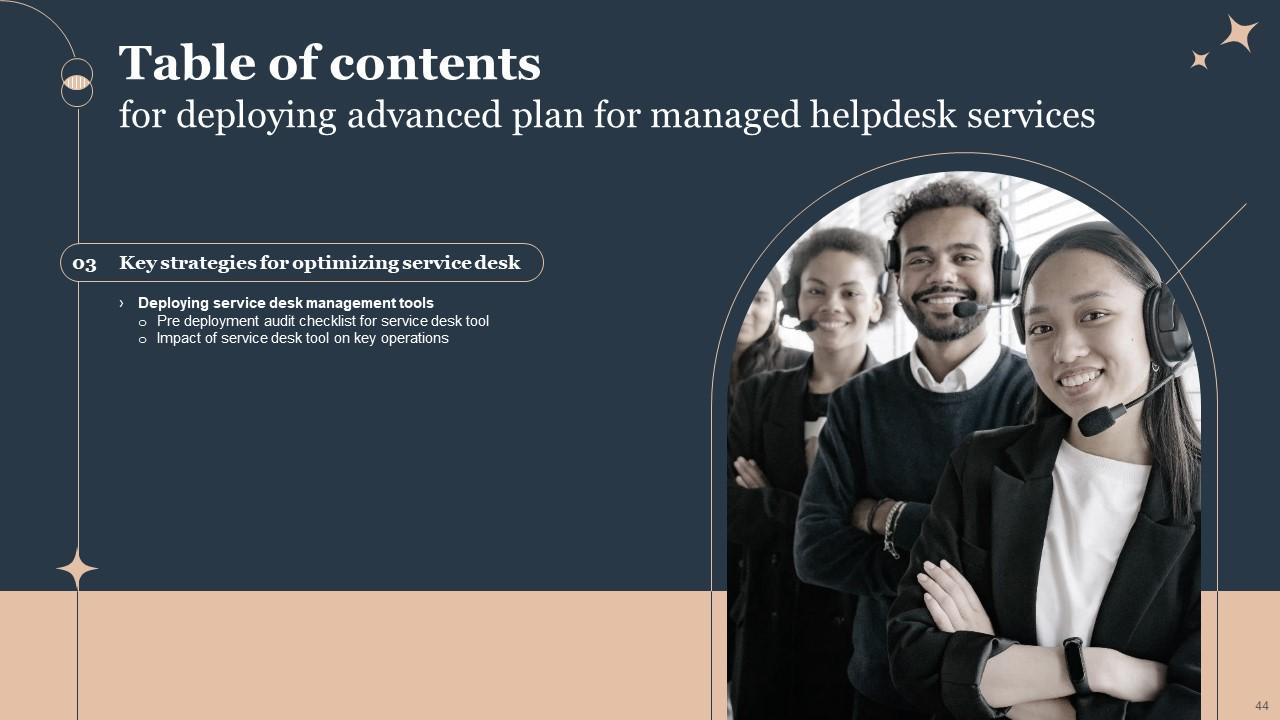
Slide 44: This slide highlights title for topics that are to be covered next in the template.
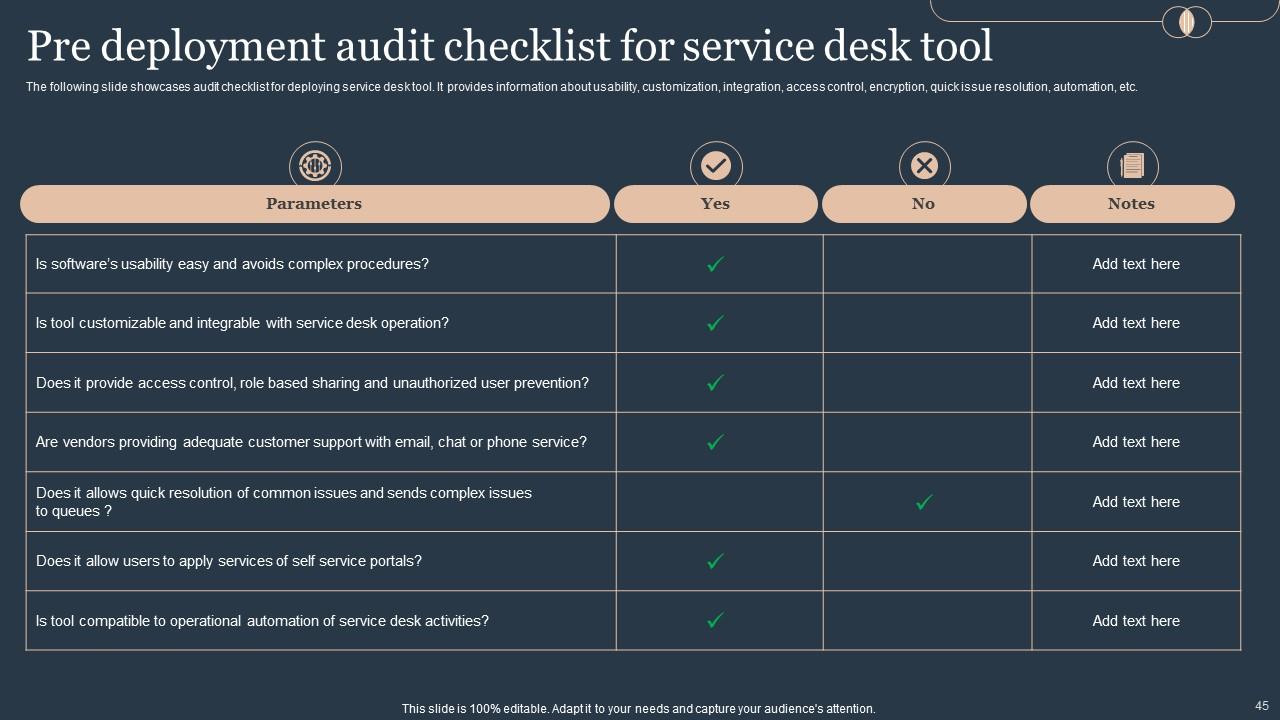
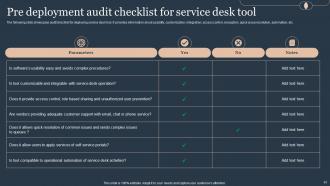
Slide 45: This slide represents Pre deployment audit checklist for service desk tool.
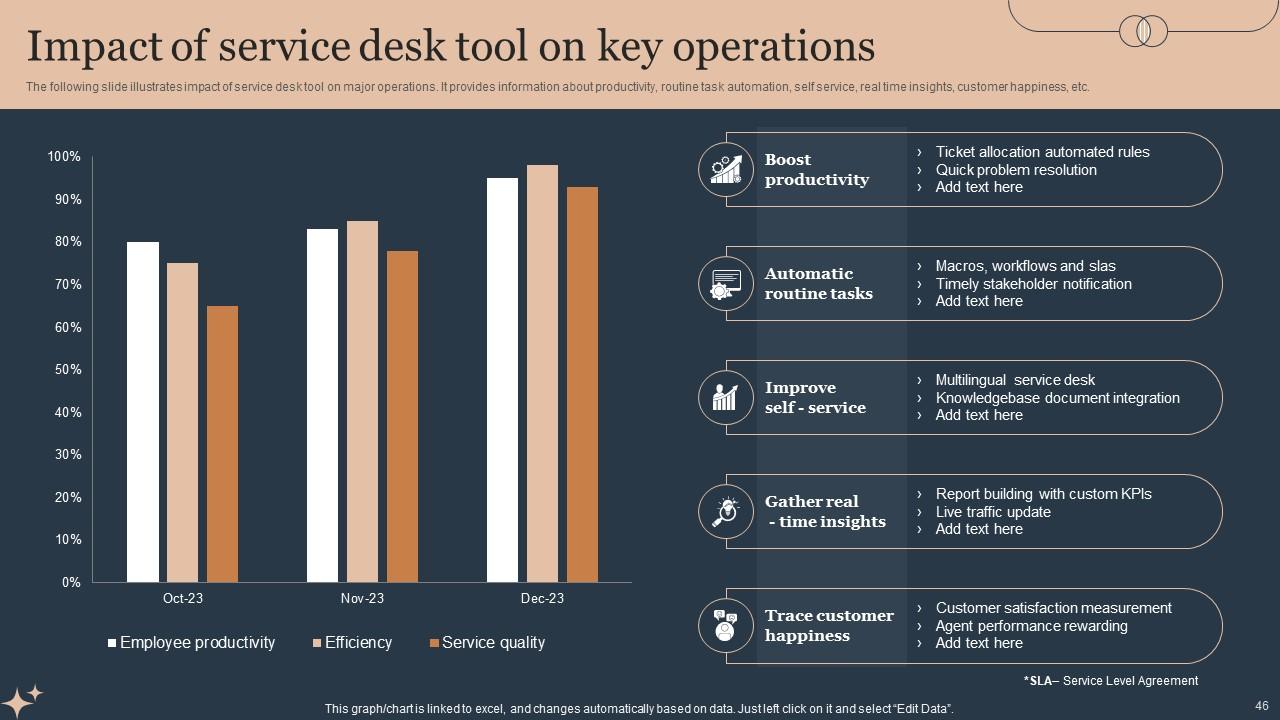
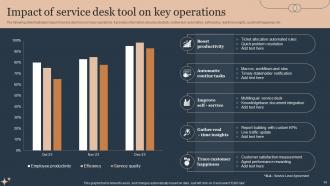
Slide 46: This slide showcases Impact of service desk tool on key operations.
Slide 47: This slide highlights title for topics that are to be covered next in the template.
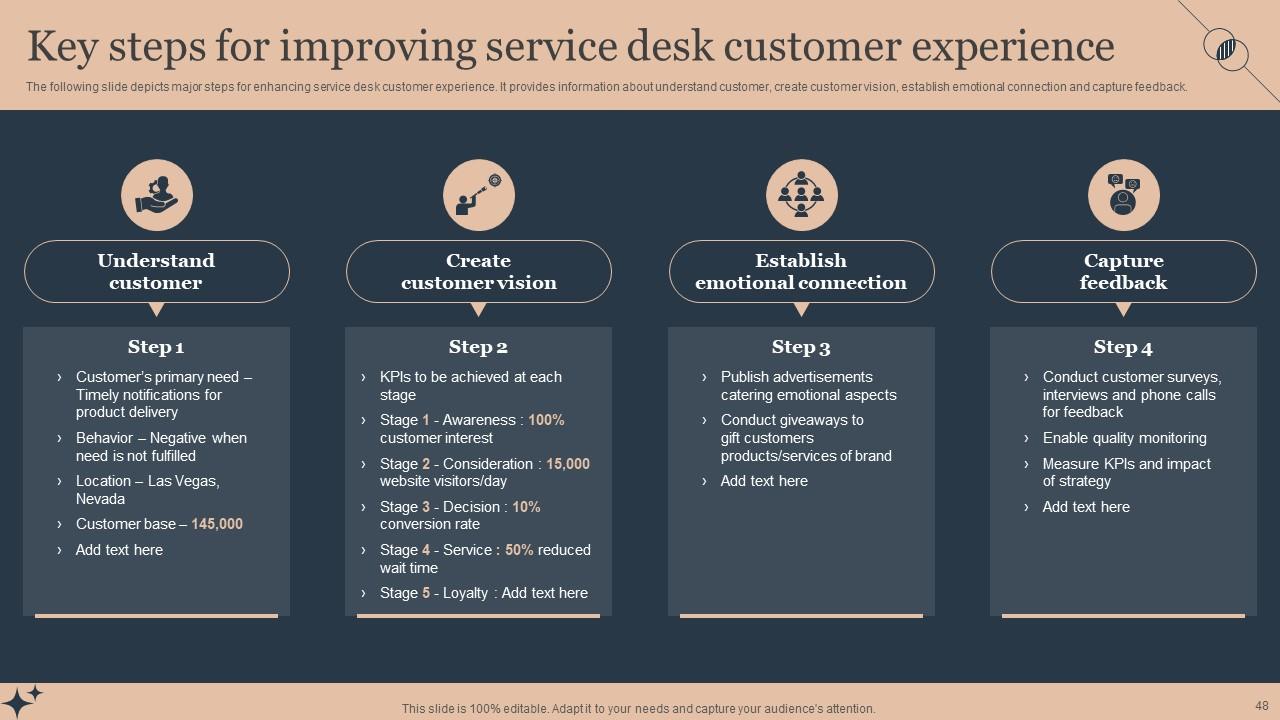
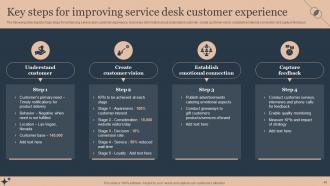
Slide 48: This slide shows Key steps for improving service desk customer experience.
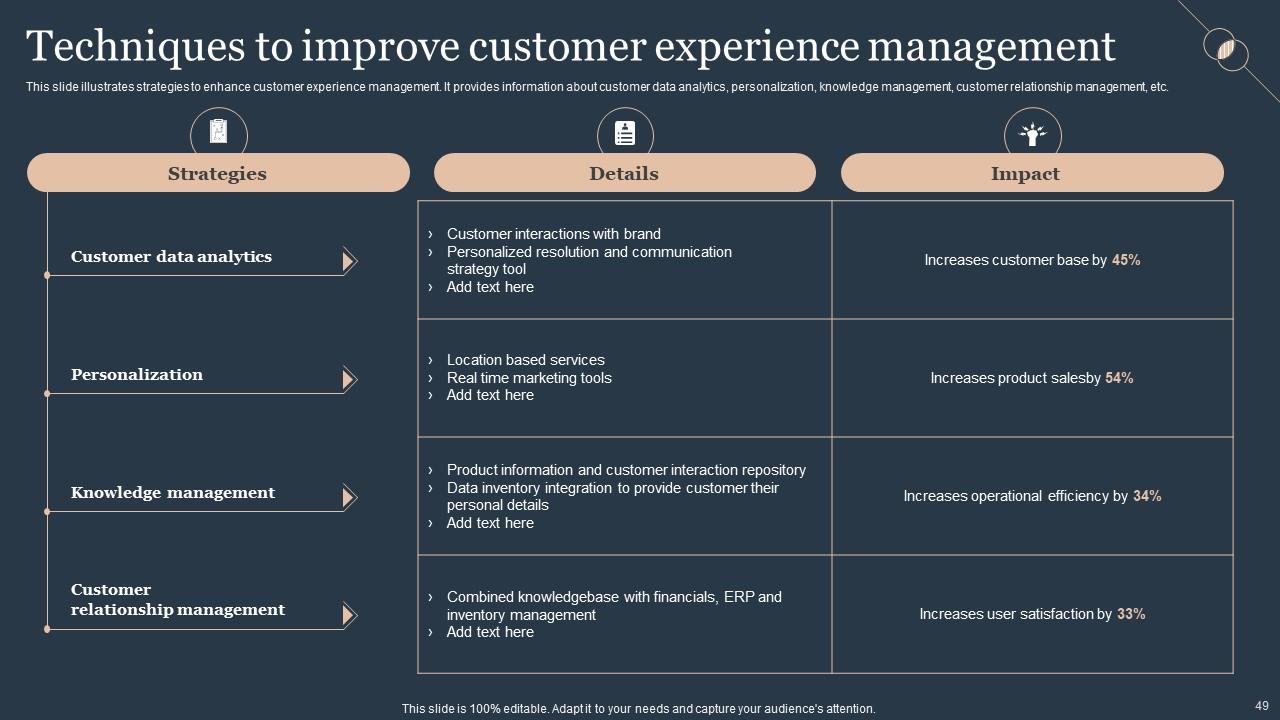
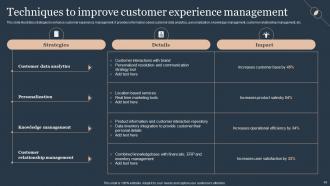
Slide 49: This slide presents Techniques to improve customer experience management.
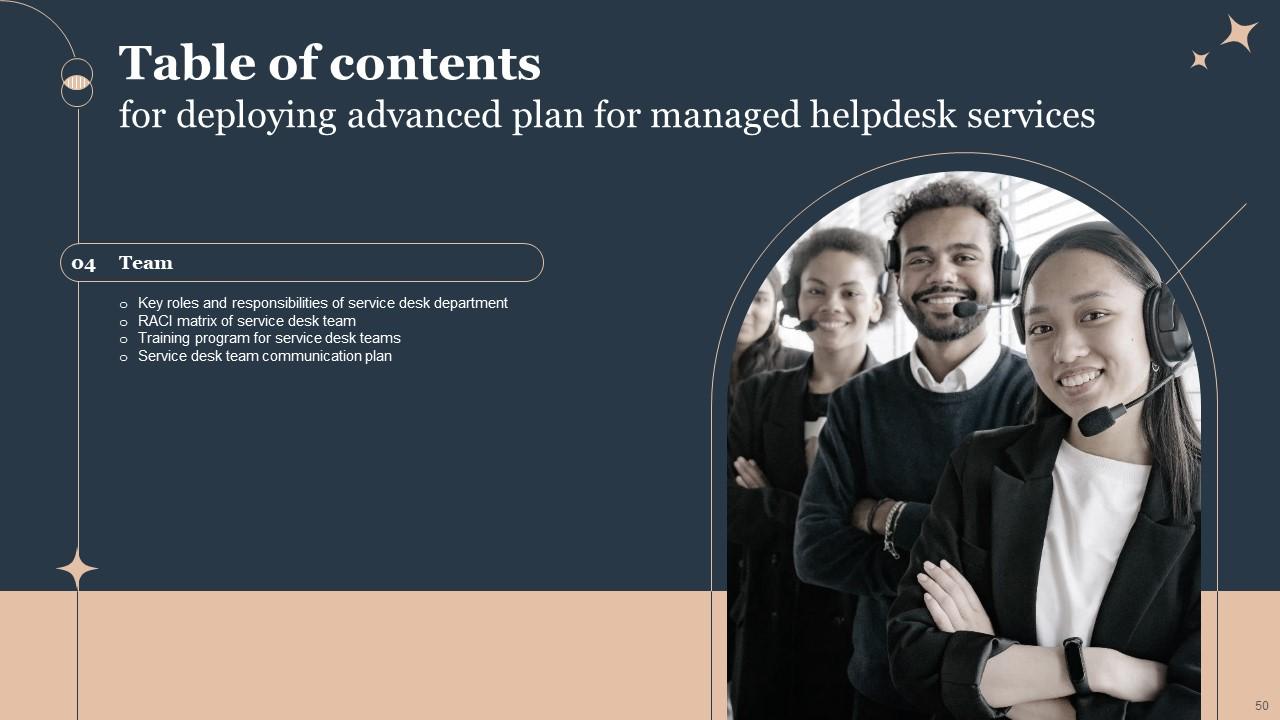
Slide 50: This slide highlights title for topics that are to be covered next in the template.
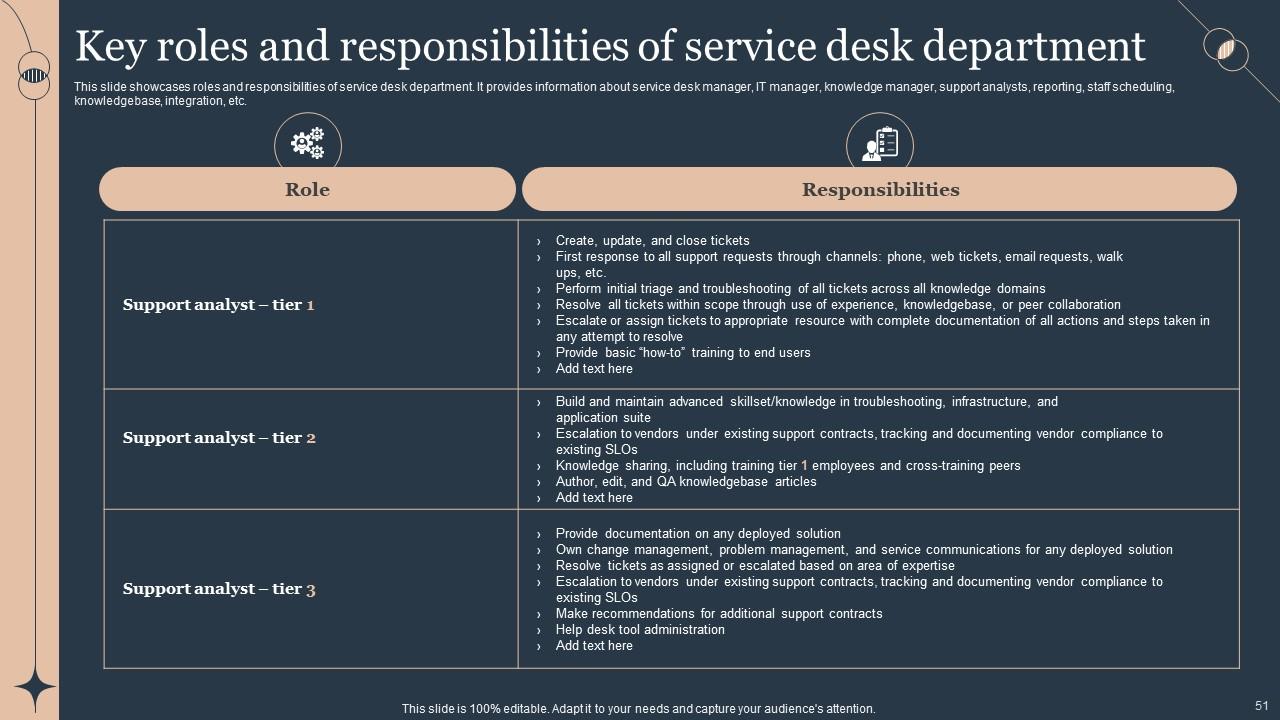
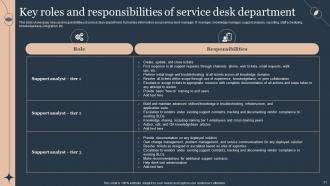
Slide 51: This slide displays Key roles and responsibilities of service desk department.
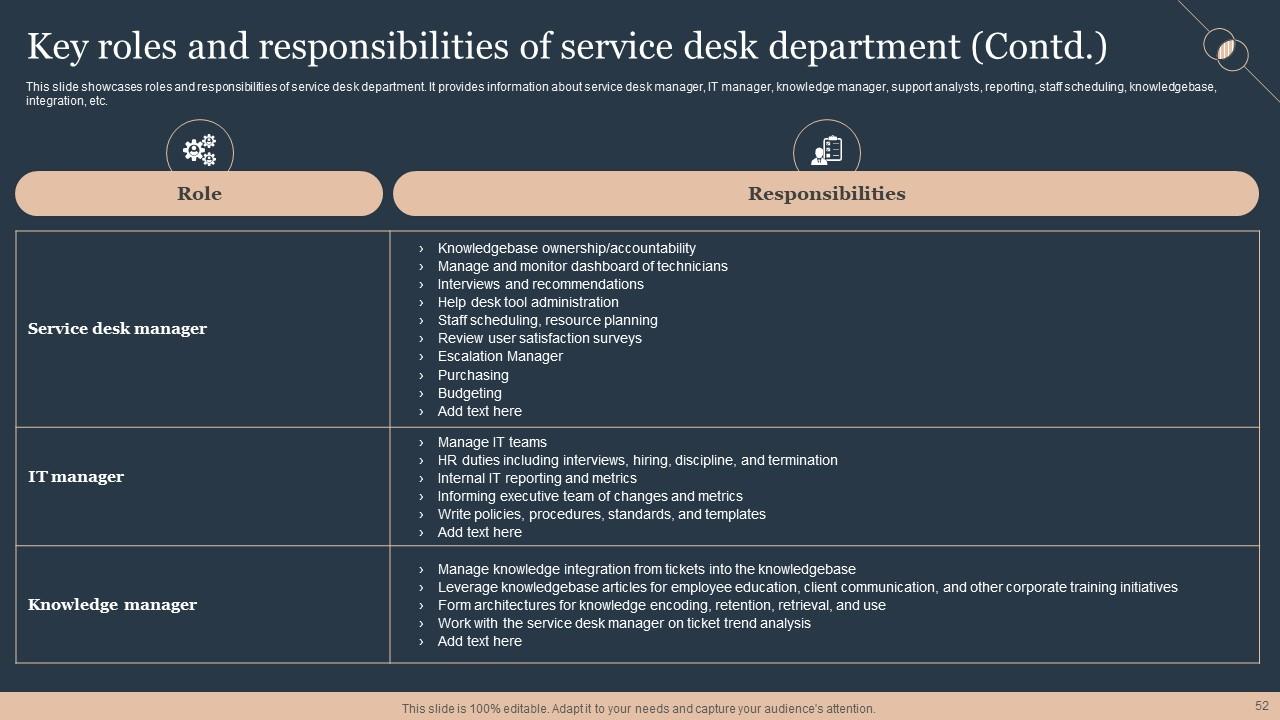
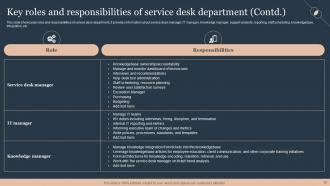
Slide 52: This is another slide continuing Key roles and responsibilities of service desk department.
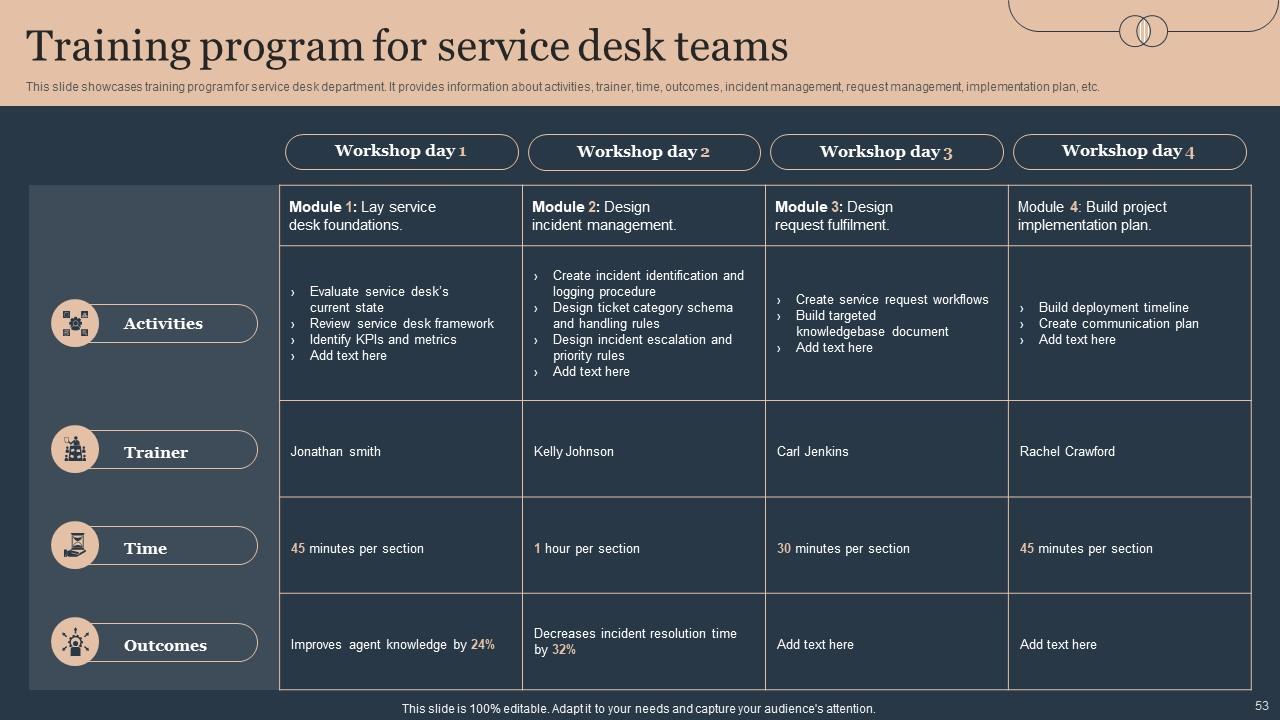
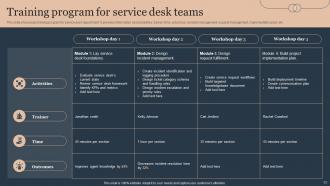
Slide 53: This slide represents Training program for service desk teams.
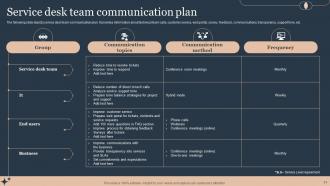
Slide 54: This slide showcases Service desk team communication plan.
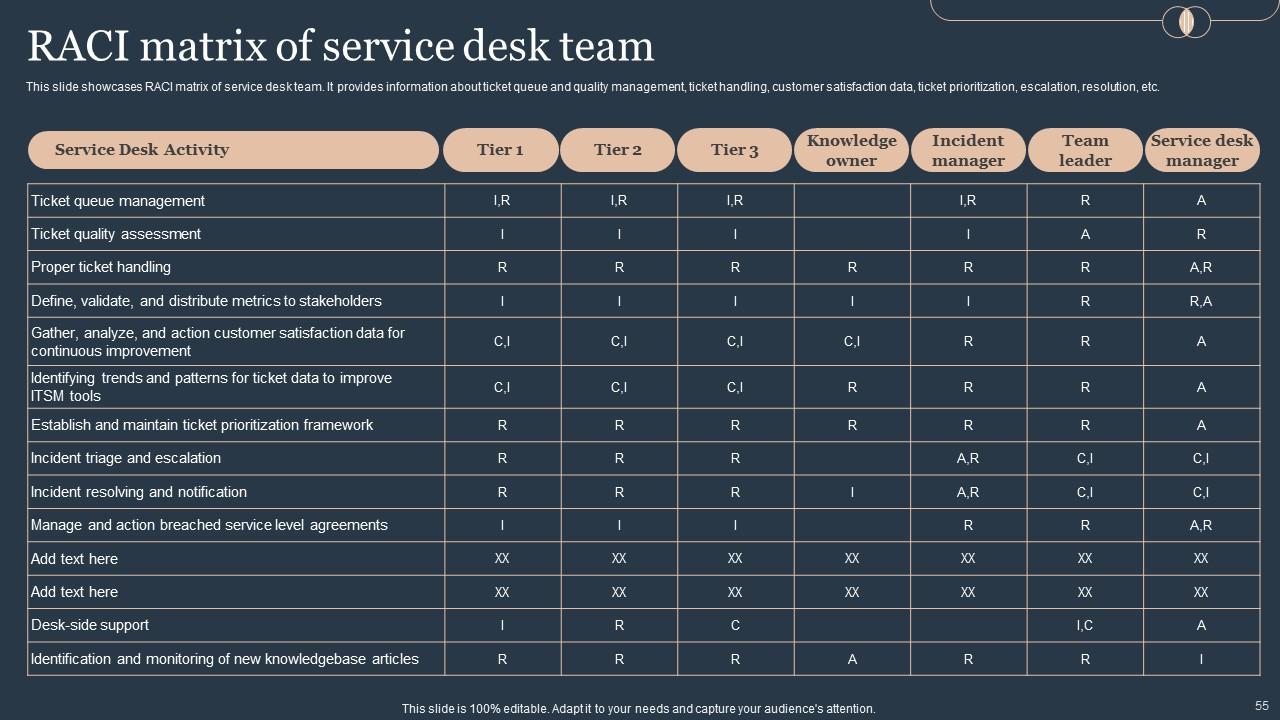
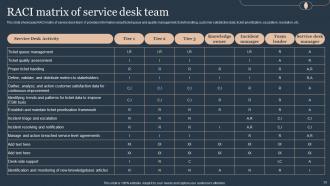
Slide 55: This slide shows RACI matrix of service desk team.
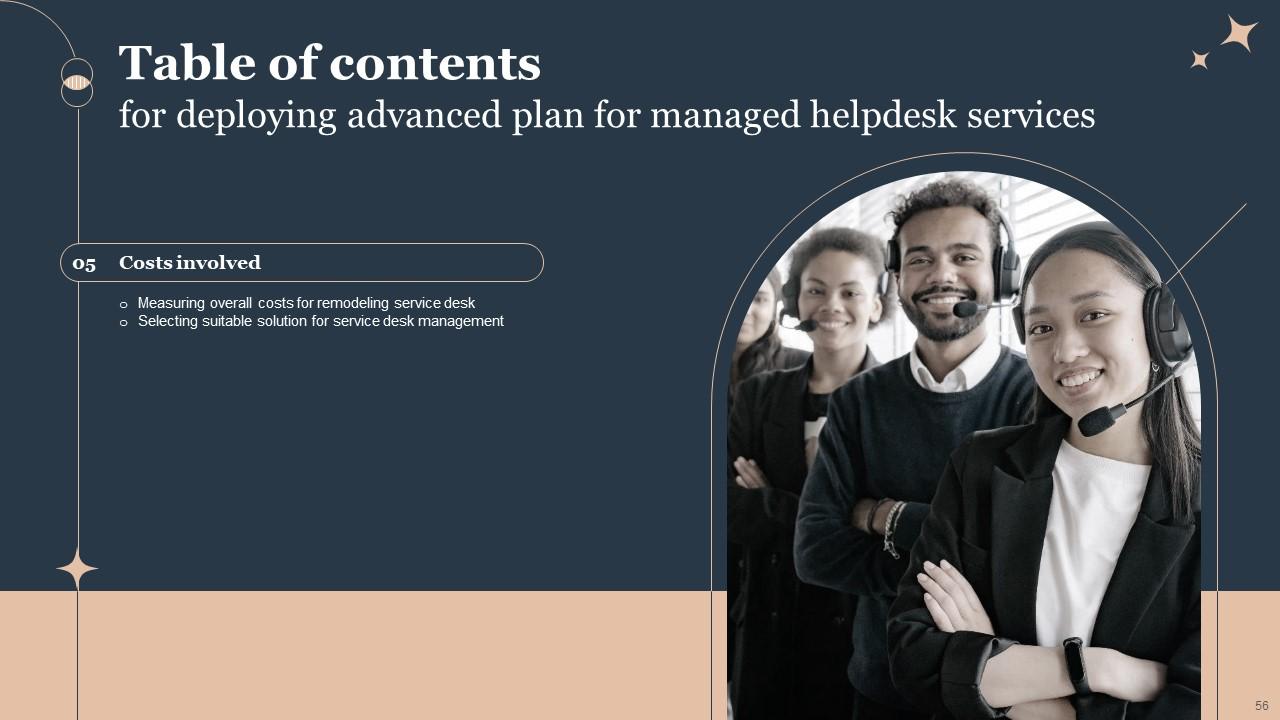
Slide 56: This slide highlights title for topics that are to be covered next in the template.
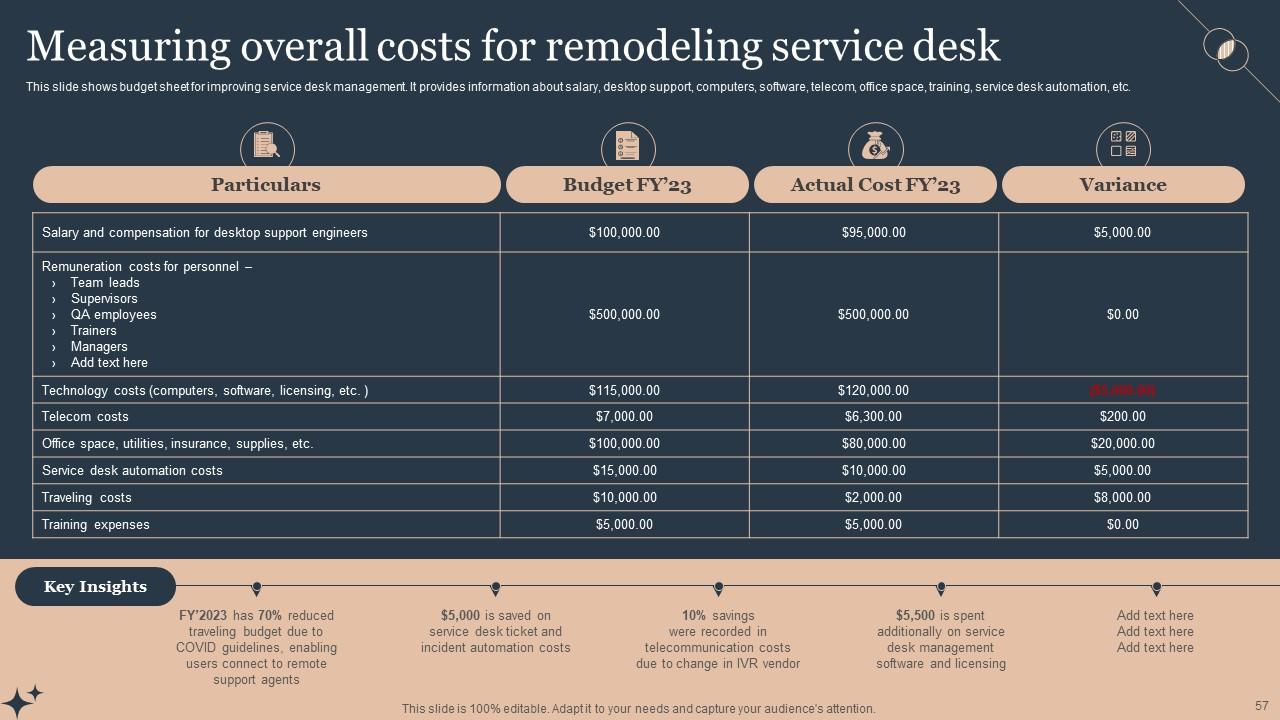
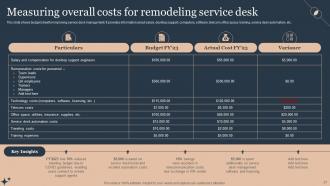
Slide 57: This slide presents Measuring overall costs for remodeling service desk.
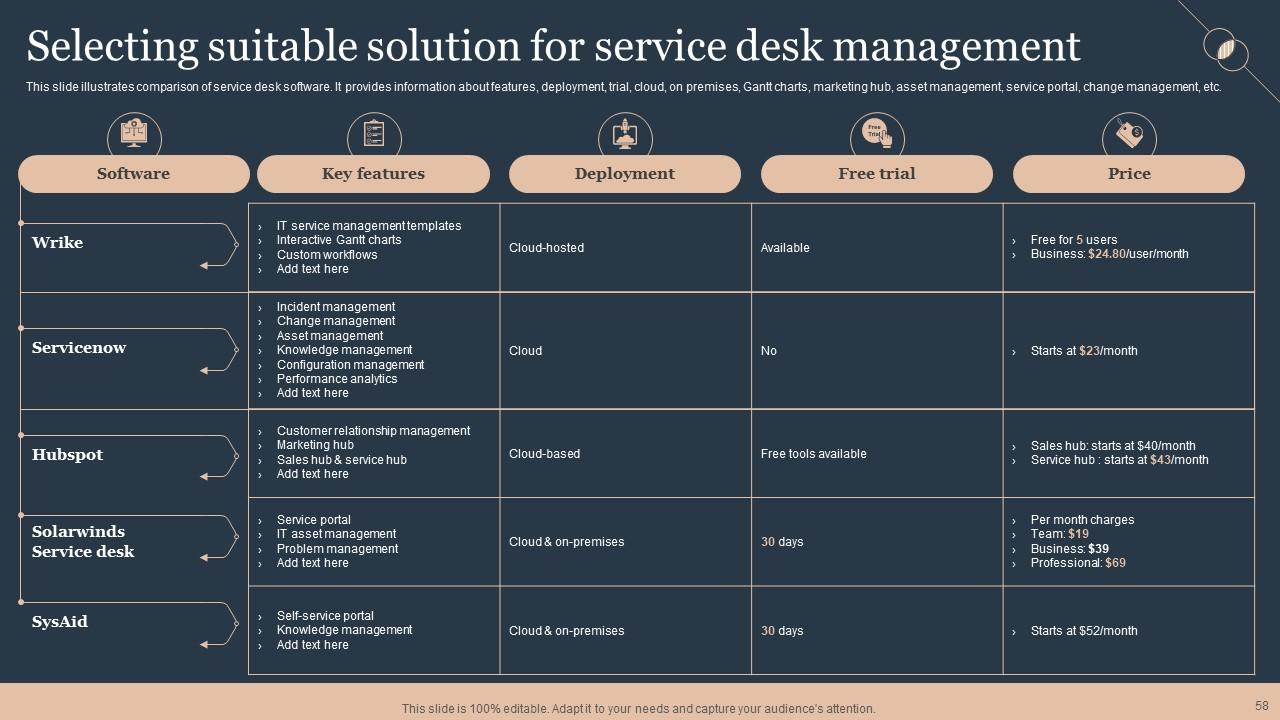
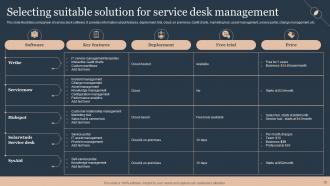
Slide 58: This slide displays Selecting suitable solution for service desk management.
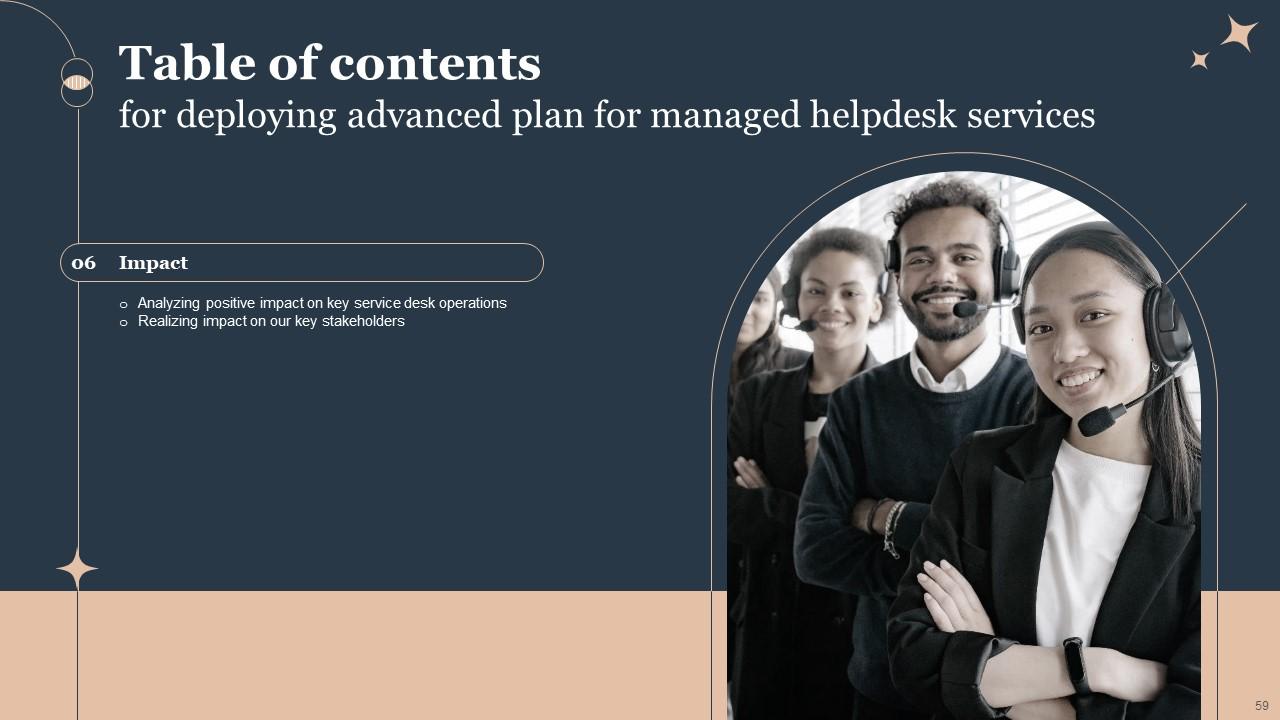
Slide 59: This slide highlights title for topics that are to be covered next in the template.
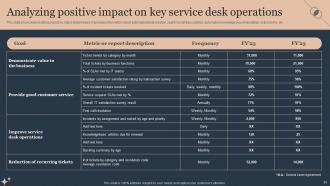
Slide 60: This slide represents Analyzing positive impact on key service desk operations.
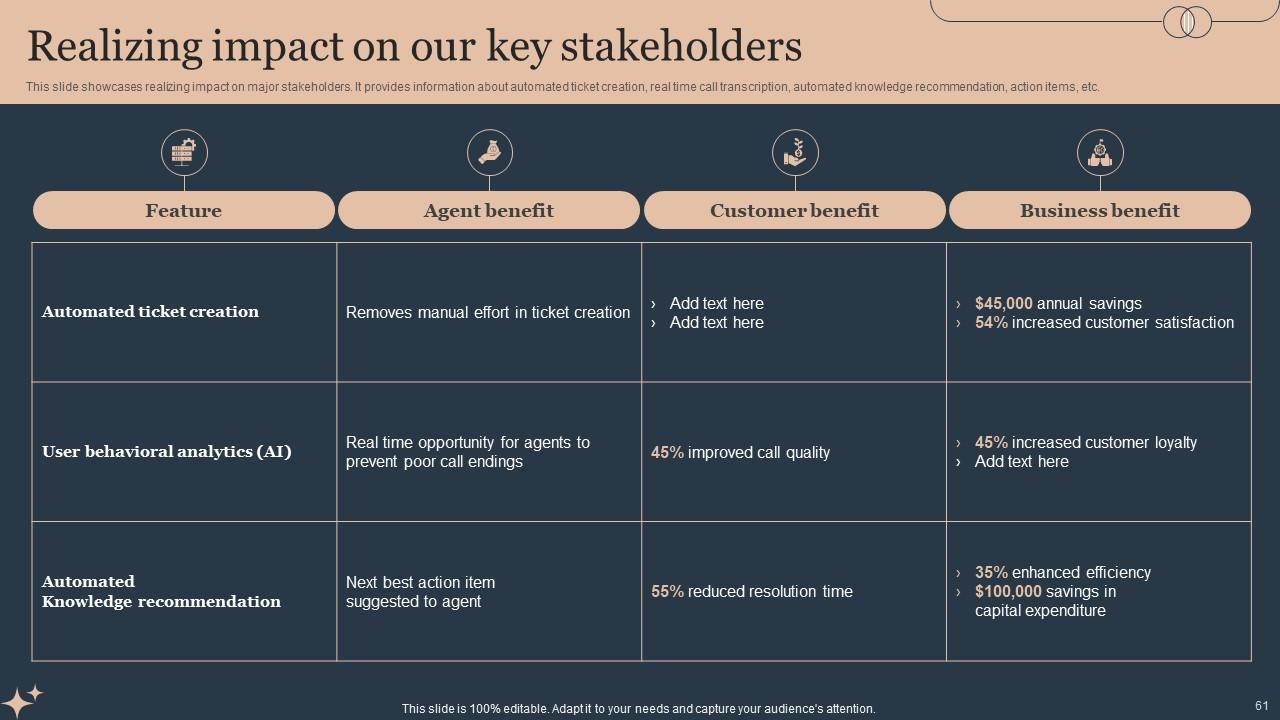
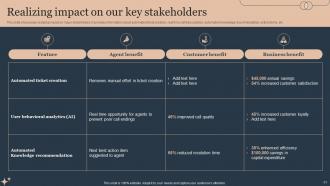
Slide 61: This slide showcases Realizing impact on our key stakeholders.
Slide 62: This slide highlights title for topics that are to be covered next in the template.
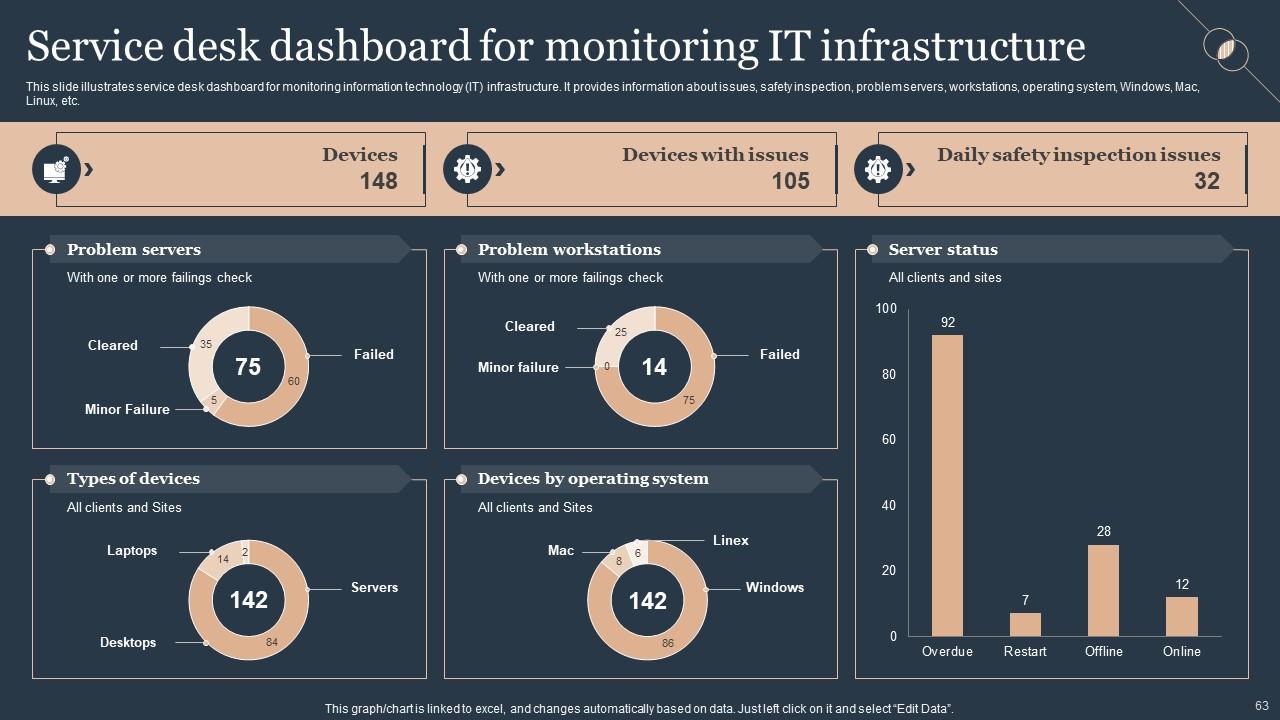
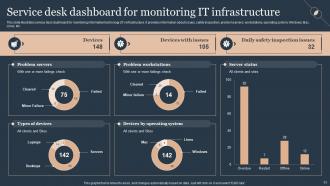
Slide 63: This slide shows Service desk dashboard for monitoring IT infrastructure.
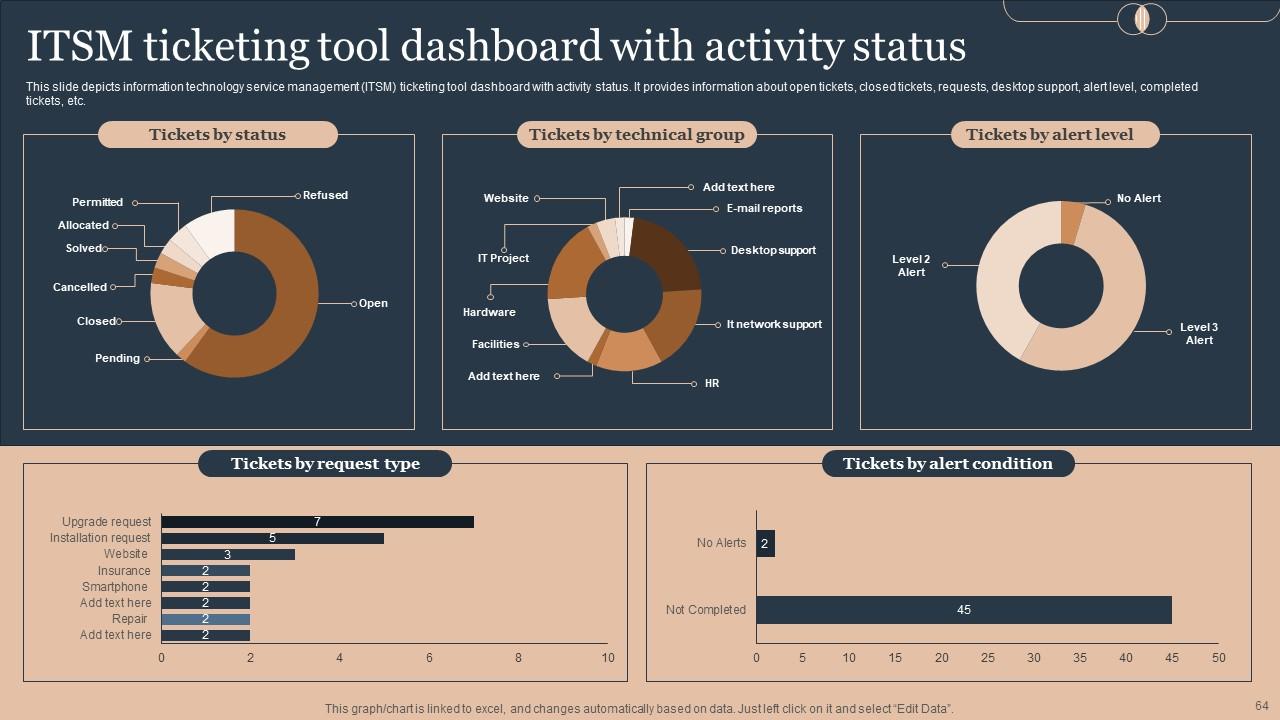
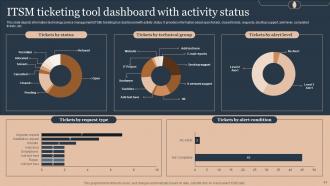
Slide 64: This slide presents ITSM ticketing tool dashboard with activity status.
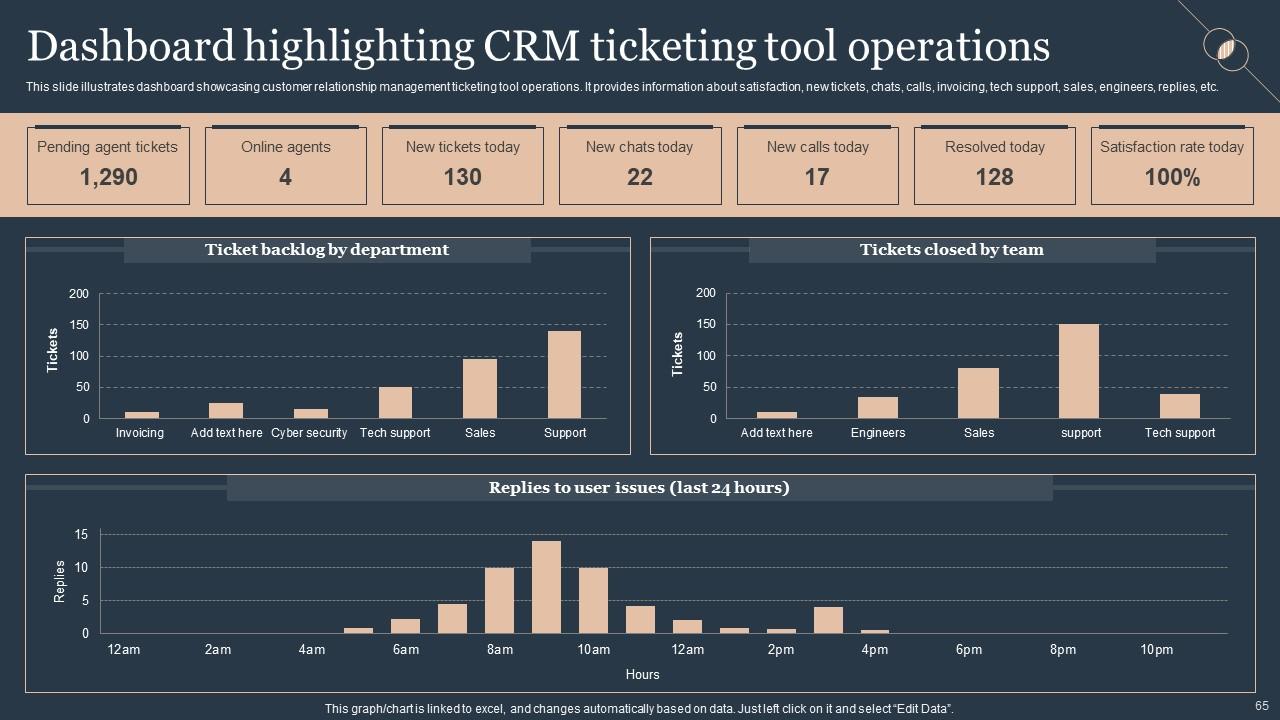
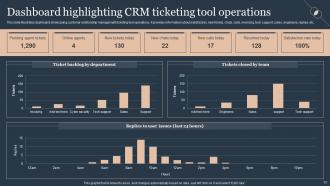
Slide 65: This slide displays Dashboard highlighting CRM ticketing tool operations.
Slide 66: This slide contains all the icons used in this presentation.
Slide 67: This slide is titled as Additional Slides for moving forward.
Slide 68: This slide depicts Venn diagram with text boxes.
Slide 69: This slide provides 30 60 90 Days Plan with text boxes.
Slide 70: This slide shows Post It Notes. Post your important notes here.
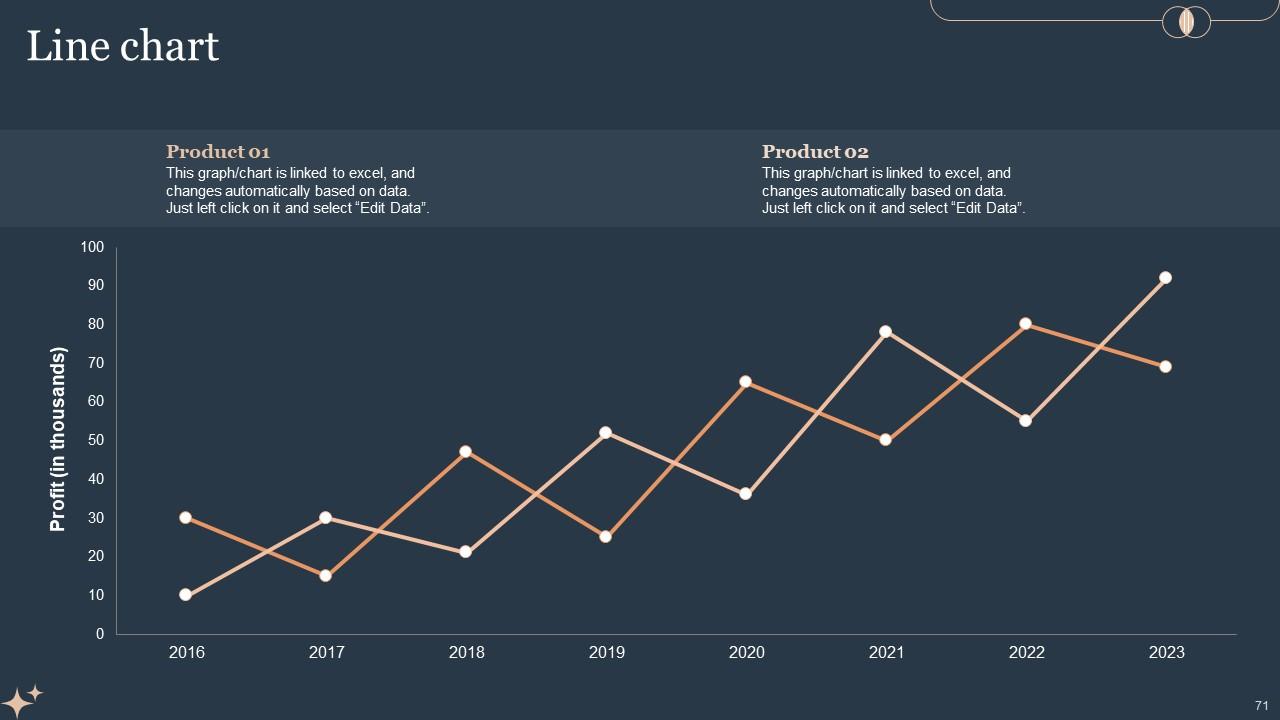
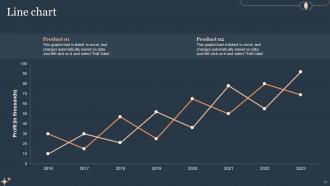
Slide 71: This slide describes Line chart with two products comparison.
Slide 72: This is Our Target slide. State your targets here.
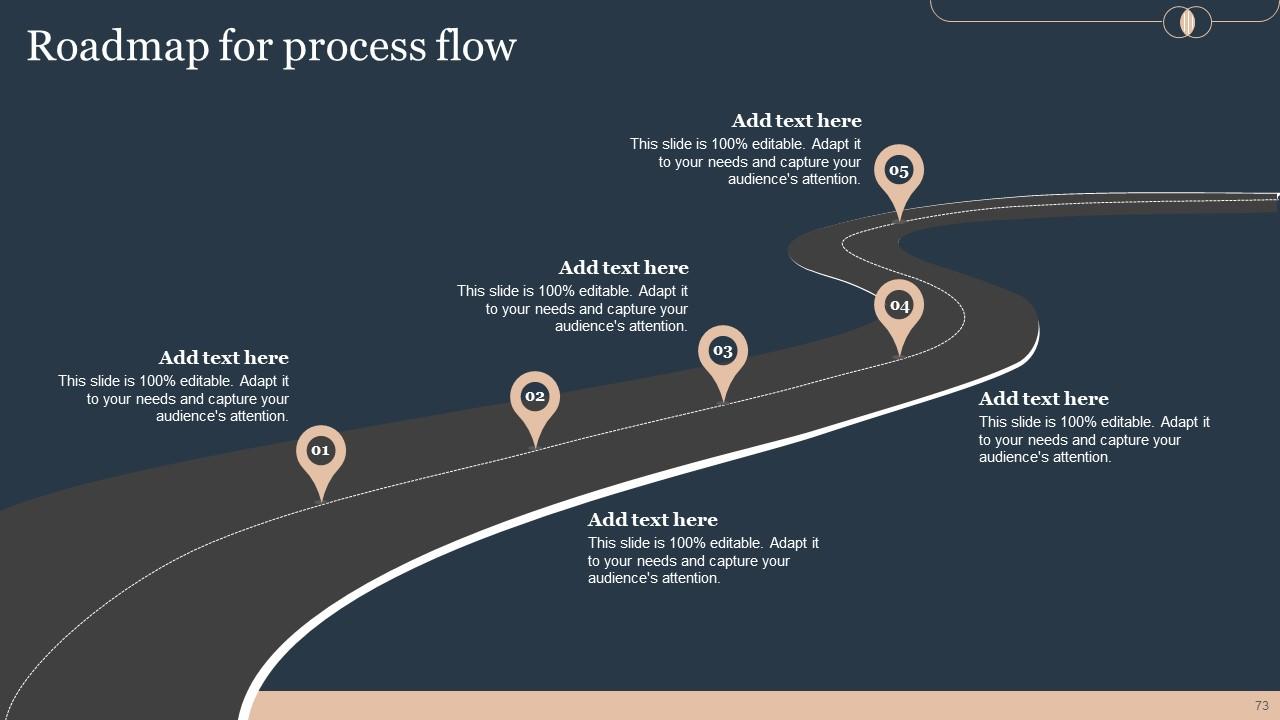
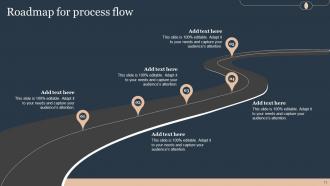
Slide 73: This slide presents Roadmap for process flow.
Slide 74: This is a Thank You slide with address, contact numbers and email address.
Deploying Advanced Plan For Managed Helpdesk Services Powerpoint Presentation Slides with all 79 slides:
Use our Deploying Advanced Plan For Managed Helpdesk Services Powerpoint Presentation Slides to effectively help you save your valuable time. They are readymade to fit into any presentation structure.
-
SlideTeam, Please don’t stop sharing discount coupons! I love your occasional discounts and tend to buy your products around that corner.
-
The quality of PowerPoint templates I found here is unique and unbeatable. Keep up the good work and continue providing us with the best slides!
