Determine user persona for better deployment of agile in bid and proposals it
Try Before you Buy Download Free Sample Product
Audience
Editable
of Time
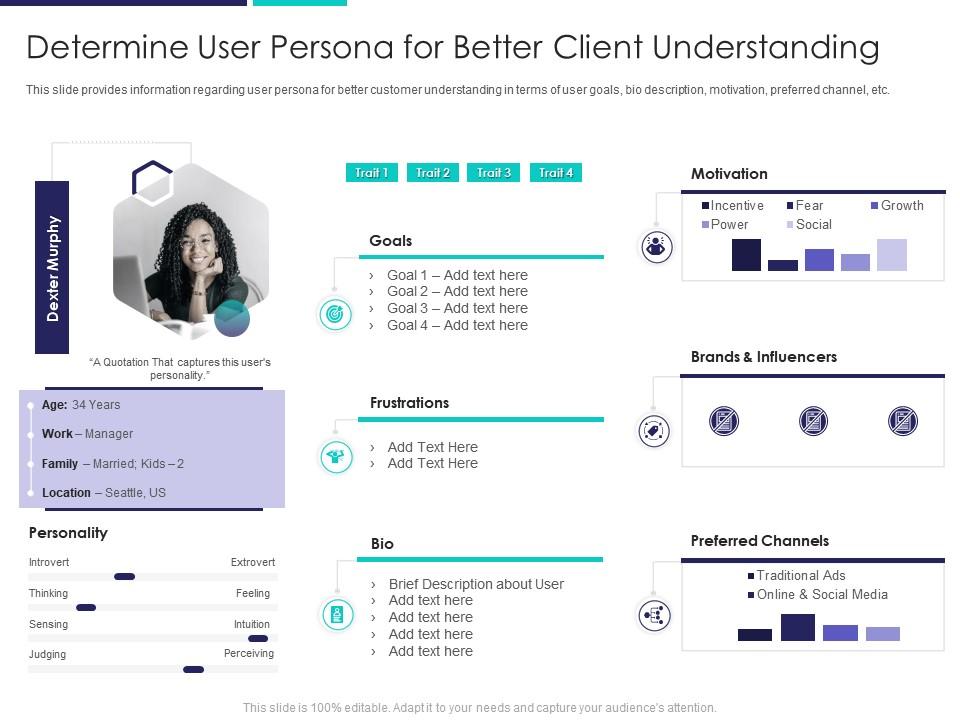
This slide provides information regarding user persona for better customer understanding in terms of user goals, bio description, motivation, preferred channel, etc.
People who downloaded this PowerPoint presentation also viewed the following :
Determine user persona for better deployment of agile in bid and proposals it with all 2 slides:
Use our Determine User Persona For Better Deployment Of Agile In Bid And Proposals IT to effectively help you save your valuable time. They are readymade to fit into any presentation structure.
FAQs for Determine user persona for better deployment of agile in bid
For B2P personas, focus on three things: who makes decisions, their actual problems, and how they measure wins. Target the people who'll evaluate your proposal - procurement folks, technical reviewers, budget approvers. Honestly, don't waste time on end-users who won't even read it (save that for later). Figure out what each persona cares about when evaluating bids. What keeps them up at night? Career goals matter too - nobody wants to be the person who picked the vendor that failed. I'd start by talking to previous clients about what really drove their choices. Their risk tolerance and personal motivations are just as important as the technical requirements they list.
So personas are basically your cheat sheet for who's actually reading your proposals. No more writing for some mystery committee. Figure out what's stressing your evaluators out - usually money and avoiding disasters, obviously. Then you can actually speak to their specific concerns instead of using boring corporate fluff. Different stakeholders care about different things, so hit those pain points directly. Your proposals turn into real conversations instead of generic pitches. Honestly, just pick 2-3 key personas for your next bid and you'll see how much better your messaging gets.
Honestly, customer interviews are your best bet - nothing beats talking directly to people about their pain points. Surveys work too if you can't get face time. Try getting procurement and end-users together for workshops (nightmare to schedule but worth it). Fill gaps with analytics from past client stuff, competitor research, maybe some social media digging. Oh and for quick deployment? Short surveys are clutch. You can iterate fast without getting bogged down. Start with whatever's easiest to pull off first, then build on that foundation.
Honestly, I'd say every 3-6 months or when you're jumping into a totally different market. But here's the real talk - don't waste weeks perfecting these things when you could be out there actually landing clients! Treat them like living docs that change as you learn more. Your win rates tanking? Getting weird feedback about missing what stakeholders want? Time for an update. I just throw a quarterly reminder on my calendar and spend maybe 30 minutes checking if anything big has shifted with my target agencies or who's making decisions now.
Look, empathy is your secret weapon here. You've got to actually get inside evaluators' heads - what's stressing them out about this whole procurement mess? What does winning look like for them personally? Sure, demographics and org charts help, but dig deeper. Interview past clients if you can (seriously underrated move). Figure out what risks make them sweat and how their boss will judge this project. When you really understand their world, your proposals will hit different. You'll address the stuff they actually care about, not just the boring requirements they had to list. It's like... you're solving their real problem, not the one they think they're supposed to have.
Okay so here's the thing - user personas basically show you exactly how to structure your proposal. Map your document flow to how each persona thinks. Budget people? Lead with ROI. Engineers? Jump straight into technical specs. Most people just write the same boring generic proposals for everyone, which is wild to me. Your personas also tell you what tone to use, how complex to get with language, and what kind of evidence actually matters to them. Find your main persona type first. Then reorganize your whole section order to match how they'd naturally make decisions. It's pretty straightforward once you get it.
Ugh, the generic "busy executive who values efficiency" personas are the worst - they're basically useless fluff. I'd stick with 2-3 personas max, otherwise your proposal gets all over the place. The thing that kills me though? Teams just making up pain points instead of actually looking at client research or data from similar projects. You don't want to get buried in demographics either. Focus on the real decision-making stuff and workflow headaches your solution fixes. Make them super specific to this bid - each persona should tie directly to one of your key benefits. Trust me on this one.
Honestly, working with your team on personas is a game changer. You'll catch so many blind spots you'd miss flying solo. Sales people know what objections prospects actually throw at them. Your tech folks understand how users really navigate stuff day-to-day. Subject matter experts bring their own angle too. The best part? When everyone helps build the personas, they actually use them later instead of ignoring them completely. I'd grab 4-5 key people and run a quick workshop - you'll be shocked how much better your user profiles get. Way more realistic than just guessing.
Miro's probably your best bet - handles brainstorming and the final visuals really well. You can also check out Figma if your team likes collaborative workshops, they're solid for building personas together. HubSpot has this persona generator that's pretty straightforward with templates, and Xtensio does nice detailed layouts too. Honestly though? Sometimes I just use Google Slides because everyone knows how it works and you don't need to learn another tool. Whatever you pick, just make sure your whole bid team can jump in and make updates easily. Start with Miro if you're torn.
Oh man, you can't just copy your domestic personas for international stuff - learned that the hard way once. Each culture has totally different communication styles and decision-making processes. Germany loves direct communication, but try that approach in Japan where everything's consensus-based? Good luck with that. Research their business practices first - hierarchy matters, risk tolerance varies wildly. Power structures are huge too. Before you finalize anything, definitely run your personas by local partners or stakeholders. They'll spot the cultural blindspots you completely missed.
Here's the thing - when you actually know who's reading your proposal, you can write like you're talking directly to them. Instead of some generic sales pitch, you're hitting their exact problems and showing why your solution makes sense for their world. I always map out 2-3 people who'll be making the decision (honestly, this step saves so much time later). Then you can use their language, pick examples they'll relate to, focus on what they actually care about. Makes the whole thing feel way less templated. Your proposal suddenly reads like "oh wow, these people totally get us" instead of another cookie-cutter document they have to slog through.
User personas are like your cheat sheet for what visuals actually work. Tech-savvy CTOs? Go nuts with detailed dashboards and technical diagrams. CFOs though? They want clean charts showing ROI and cost savings - keep the fancy stuff out. I bombed a presentation once using way too many animations for this super conservative banking client... learned that lesson fast. Your audience's industry and role should basically dictate everything from colors to how complex you get. Don't make slides for yourself - make them for their world.
Lost proposal feedback is honestly a goldmine for fixing your personas. When you dig into what worked vs. what bombed, you'll spot where your assumptions were off. Like maybe you pegged the CTO as the main guy, but turns out procurement was calling all the shots - that's massive info right there. Win debriefs work the same way, just confirming you hit the right pain points. I'd keep a basic feedback log after each proposal (doesn't need to be fancy) and review it quarterly to update your personas. Trust me, this stuff adds up fast.
Think of user personas as your cheat sheet for writing proposals that actually land. Instead of boring clients with every feature you offer, you're speaking their language. A CFO wants to hear about cost savings and ROI. Meanwhile, that CTO is way more interested in technical specs and innovation potential. Same solution, totally different pitch. Honestly, once I started doing this my win rate went up like crazy. Pro tip - literally keep your persona profiles open while writing. Before each section I'm like "ok would this make sense to Jake the operations manager?" Sounds obvious but it works.
Look at IBM's Watson Healthcare - they built out detailed personas for hospital admins, doctors, and IT staff, which helped them snag a $2.6B contract. Barcelona's smart city proposal was similar. Accenture mapped personas for citizens, planners, and municipal workers (honestly those docs were a good read). Winners don't just say "end users" - they give personas actual names, workflows, daily headaches. The whole thing. Pull a couple case studies from your space and see how they used those personas to frame their tech approach and pricing. Makes a huge difference.
-
Perfect template with attractive color combination.
-
Qualitative and comprehensive slides.