Developing A Transnational Strategy To Increase Global Reach Dashboard
Try Before you Buy Download Free Sample Product
Audience
Editable
of Time
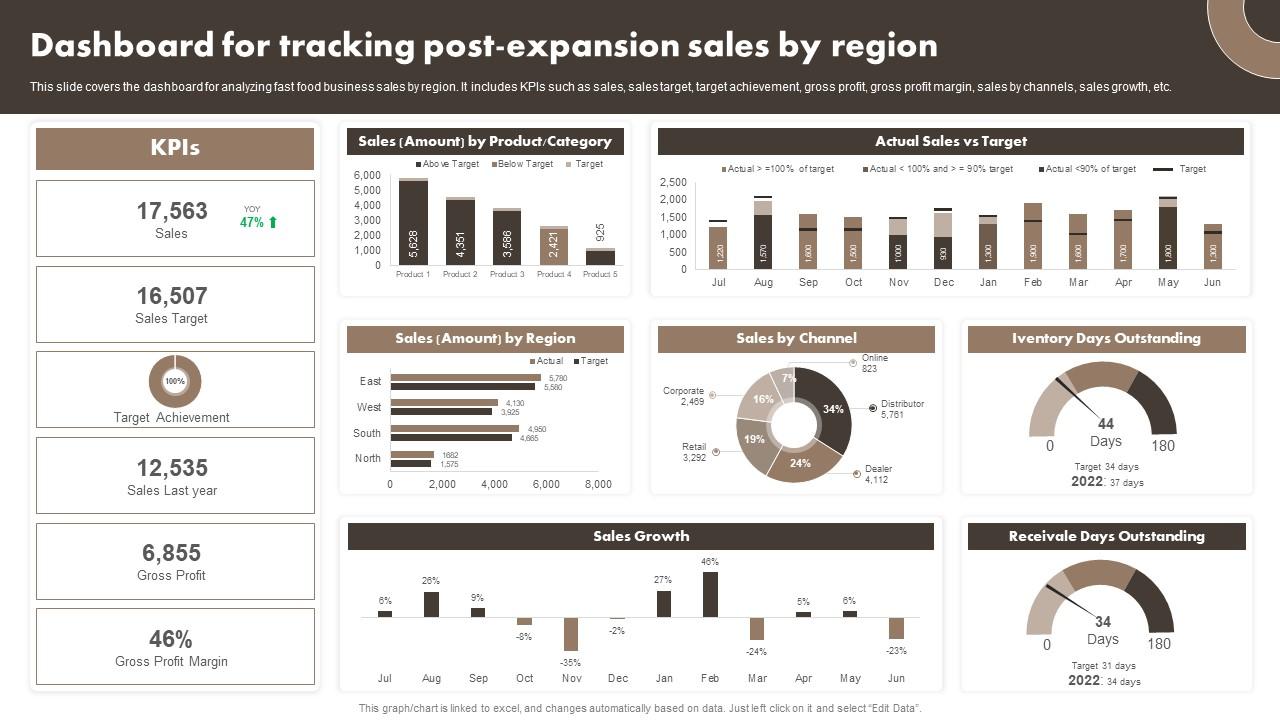
This slide covers the dashboard for analyzing fast food business sales by region. It includes KPIs such as sales, sales target, target achievement, gross profit, gross profit margin, sales by channels, sales growth, etc.
People who downloaded this PowerPoint presentation also viewed the following :
Developing A Transnational Strategy To Increase Global Reach Dashboard with all 7 slides:
Use our Developing A Transnational Strategy To Increase Global Reach Dashboard to effectively help you save your valuable time. They are readymade to fit into any presentation structure.
FAQs for Developing A Transnational Strategy To Increase
Honestly, you need three main things for this to work: global efficiency, local responsiveness, and getting your teams to actually share what they learn. Standardize the stuff that makes sense - like R&D or supply chains - but adapt to local markets and their weird regulations. Most companies absolutely suck at the knowledge sharing part though. Your leadership has to think globally but still execute locally, which is harder than it sounds. Don't create silos between regions or you'll regret it. I'd start by figuring out what really needs local tweaking versus what benefits from global scale.
So transnational strategy is like getting the best parts of both approaches without the downsides. Multidomestic lets you adapt to local markets but costs way more since you're not getting economies of scale. Global strategies save money through standardization but your products might totally miss what locals actually want. McDonald's does transnational pretty well - they keep their main operations streamlined globally but switch up menus for different countries (honestly genius). The tricky part? You'll need serious coordination skills across multiple markets while still customizing. Don't jump into this unless your team can actually handle that level of complexity.
Look, if you're going transnational, cultural adaptability isn't optional - it'll make or break you. Don't just hire translators and call it good (I've watched companies crash doing exactly that). You need people who actually get the local vibe - how customers think, what they want, how business really works there. Your whole approach has to shift for each market. Products, marketing, operations... everything. Honestly? Start by hiring local talent who know their stuff. Then get your leadership some real cross-cultural training. Can't fake understanding culture from a corporate handbook.
Look, it's basically a balancing act that you're constantly tweaking. Figure out what stuff works better at global scale first - R&D, buying materials, main production lines - and keep those centralized. Everything else that needs local touch? Marketing, getting products to customers, support calls. Do those locally. Most companies totally blow this by making everything too rigid, which is dumb. You want systems that can actually bend when things change. The real trick is getting your global and local teams talking to each other regularly instead of being territorial. Oh, and build in time to review how it's working - markets shift and you'll need to rebalance.
Honestly? You're trying to pull off being globally efficient while staying locally responsive - it's like juggling fire. Local managers want their freedom but HQ needs control for those sweet economies of scale. Communication gets messy fast across different time zones and cultures. Knowledge sharing will definitely break down more than you'd like. The upfront costs are pretty rough too since you're investing in both global integration AND local stuff. Oh, and don't even get me started on the organizational complexity. My take? Test it in a few pilot markets first. Build up your coordination skills gradually instead of going transnational everywhere right away.
So transnational strategies basically turn your supply chain into this weird hybrid thing - you're trying to go global while staying local. Flexible sourcing becomes super important since you need to adapt to different markets but still get some scale benefits. Honestly, the logistics get pretty messy when you're customizing products locally but want centralized efficiency too. I'd start by figuring out which supply chain parts actually need local touch versus global coordination. Building the right partnerships helps - ones that can handle both standard components and local assembly. It's definitely more of an art than a science, if that makes sense.
Honestly, start with just 3-4 metrics that actually matter for your goals - don't try tracking everything right away. Revenue breakdown by region is obvious but super important. See what percentage comes from where and watch those trends. Market share in your target countries shows if you're really winning locally or just spinning wheels. Customer satisfaction by region matters too since you gotta nail that local stuff. Oh, and track how well knowledge transfers between offices - like are your teams actually sharing what works? That operational side gets overlooked but it's huge for global companies. Pick metrics that tell a story about both your financial wins and whether operations are clicking.
Honestly, tech makes transnational strategy way less of a headache than it used to be. Digital platforms let you coordinate operations across countries in real-time, which is pretty game-changing. Your global teams can share knowledge instantly now. Cloud systems are cool because they centralize data but still give regions flexibility - kind of the best of both worlds? Communication tools basically eliminate those geographic barriers that made coordination a total nightmare before. Analytics help you catch market patterns you'd probably miss otherwise. Oh, and you can customize products locally without losing economies of scale. I'd start by figuring out which tech gaps are currently bottlenecking your cross-border work.
Dude, working in transnational orgs is wild - you're constantly torn between what HQ demands and what actually works locally. Communication goes every direction instead of just top-down, which gets messy fast. Plus you're juggling cultural differences in how people even approach decisions. My advice? Start building those informal connections across regions now, not just the official reporting stuff. Honestly, sometimes it feels like you need to be a diplomat more than a manager. The formal structures only get you so far when you're trying to share knowledge between, say, Tokyo and Detroit teams.
Dude, leadership makes or breaks transnational strategy. You're basically managing chaos across different countries, cultures, and regulations. Strong leaders figure out what to keep consistent globally vs. what needs local tweaks - and honestly, some companies are terrible at this balance. They keep teams focused on the big picture while making those hard standardization calls. Short sentences work here. Without good leadership coordinating everything, you'll end up with scattered operations that don't capitalize on being a global company. Find leaders who can think big but adapt locally - it's not easy but it's crucial.
Ugh, regulatory stuff is such a pain when you're expanding globally. Each country has totally different tax codes, labor laws, environmental rules - you name it. Can't just use the same playbook everywhere, which honestly sucks because it'd be so much easier. Your pricing, operations, how you even enter the market - it all changes based on local compliance requirements. I learned this the hard way on a project last year. Best thing you can do is research regulatory differences super early and build in flexibility from the start. That way you can adapt to each market but still keep some consistency across regions.
So McDonald's is the classic example here - rice burgers in Taiwan but same operations everywhere. Unilever's really smart about this too, making different Dove formulas for different climates while keeping the brand consistent. Toyota builds cars locally but uses identical quality systems globally. Netflix does this now with region-specific shows on the same platform. Honestly, the streaming wars made this approach way more obvious. Bottom line: be local where customers actually care, stay global where you can save money and streamline things. That's literally the whole playbook.
Honestly, local partnerships are like having an insider guide when you're trying to crack a new market. They've got the distribution channels, cultural know-how, and regulatory shortcuts that'd take you forever to figure out solo. Plus customers actually trust them - which is huge. I'd focus on finding partners who fill your knowledge gaps rather than ones doing exactly what you do. Maybe start by listing what you don't know about the local scene, then hunt for partners who nail those areas but still get your bigger picture. It's way smarter than going in blind.
Dude, yeah - a bad transnational strategy will absolutely wreck you. Your regional teams end up fighting with headquarters constantly, nobody knows which rules to follow, and you're basically burning money. I've watched companies take literal years trying to fix this mess once it starts. Local staff hate the cookie-cutter processes while management has zero clue what's happening on the ground. Brand gets inconsistent, you're doing the same work twice in different places, compliance becomes a nightmare. Oh, and your employees? Totally confused about conflicting directions. Set up solid communication and governance first or you're screwed.
Honestly, market research is like having a cheat sheet before you expand anywhere. Consumer habits in Germany are totally different from Japan - trust me on that one. You'll save yourself from some brutal mistakes by understanding local competition and regulations first. Some stuff you can standardize across markets for efficiency, but other things? You gotta adapt to local preferences or you're toast. I'd pick 3-4 target markets max and really get their dynamics down before throwing money at it. Way better than going in blind and hoping for the best.
-
Great designs, really helpful.
-
The quality of the templates is as fine as it could get. It was a purchase well made!