

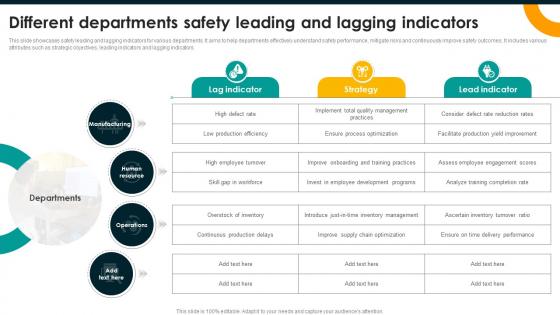
Different Departments Safety Leading And Lagging Indicators




Try Before you Buy Download Free Sample Product
 Impress Your
 Audience
 100%
100% Editable
 Save Hours
 of Time


This slide showcases safety leading and lagging indicators for various departments. It aims to help departments effectively understand safety performance, mitigate risks and continuously improve safety outcomes. It includes various attributes such as strategic objectives, leading indicators and lagging indicators.
People who downloaded this PowerPoint presentation also viewed the following :
Different Departments Safety Leading And Lagging Indicators with all 9 slides:
Use our Different Departments Safety Leading And Lagging Indicators to effectively help you save your valuable time. They are readymade to fit into any presentation structure.








FAQs for Different Departments Safety Leading
You'll want to track both types - the stuff that predicts problems and the stuff that shows what already went wrong. Leading indicators are like your early warning system: safety training rates, near-miss reports, audit scores. Lagging indicators are injury rates, comp claims, lost time incidents. Most companies just focus on the lagging ones which honestly makes no sense - it's all reactive. Track both monthly if you can swing it. Oh and actually do something with the data, don't just collect it. Start simple with whatever's easiest to measure, then add more as you go.
Start by looking at what safety stuff you're already doing and figure out where new indicators make sense. Don't mess with systems that are working - just add to them like installing new sensors. Mix in some leading indicators (near-misses, safety observations) with your current lagging ones (actual incidents). Honestly, if your team doesn't get why each metric matters, they'll just tune out the whole thing. Keep it simple at first - maybe 3-4 indicators that actually mean something. Nobody wants another overwhelming dashboard they can't do anything about.
So basically, leading indicators catch problems before they blow up - stuff like near-misses, training records, hazard reports. Lagging indicators? That's measuring what already went wrong. Injury rates, lost time, you know. Here's what I've learned though - leading indicators are way more valuable because you're actually preventing stuff instead of just tallying up the damage later. Don't get me wrong, you still need the lagging ones to see your big picture trends. But honestly? Put your energy into tracking those leading indicators. They're like your safety radar system.
Start with what's actually dangerous in your industry - like falls and equipment failures in construction, or needle sticks and patient falls in healthcare. Sounds dark but you gotta track what really hurts people. Look at your incident reports from last year to spot patterns. That's honestly the best place to start. Build your safety indicators around preventing those specific problems, then make sure they line up with OSHA standards or whatever regulations apply to your field. Don't overthink it - just focus on the stuff that's most likely to go wrong.
There's actually some pretty cool tech out there now for safety tracking. IoT sensors can monitor air quality, equipment vibration, all that stuff in real-time. Wearable devices track worker fatigue too - kinda crazy how much data we can pull these days. AI analytics help spot patterns you'd probably miss doing it manually. Oh, and predictive analytics are huge - they use your old data to catch problems before they blow up. Honestly though, I'd figure out your worst safety issues first, then grab whatever tech fixes those specific problems. Don't try doing everything at once or you'll go nuts.
Look, quarterly reviews are the bare minimum - but don't just stick to that schedule. Had any incidents lately? New equipment or staff? Review them immediately. I've watched way too many companies get burned using safety indicators that were outdated by months. Your indicators need to match what's actually happening on your floor right now, not ancient history. Monthly team check-ins work great for spotting stuff that doesn't make sense anymore. Honestly, staying current with this beats having perfect quarterly reports that miss real problems.
Your workers are literally the best source for this stuff since they're out there dealing with the actual hazards every day. Near-miss reports from them? Gold. They'll spot things you'd never see from an office. I swear some of my best safety insights came from random conversations during shift changes - people just casually mentioning stuff that turned into major indicators. Get them talking during safety meetings about what metrics make sense and where your current tracking misses the mark. Their suggestions help you catch leading indicators before they become real problems. Don't underestimate how much they know about what's actually risky out there.
Culture totally changes how teams read safety data. What seems like "no big deal" risk in one workplace might look terrifying somewhere else. In super hierarchical places, people won't report near-misses because they don't want to make the boss look bad. Blame-heavy cultures? Everyone gets defensive about bad trends - honestly, who wouldn't? Even basic stuff like whether people feel comfortable speaking up affects how reliable your data actually is. Communication styles matter too. You've got to figure out your organization's specific cultural blind spots so you can tweak how you gather and present safety info.
Data quality will drive you nuts - that's your biggest headache right there. Teams hate changing their reporting habits, which I totally get, but without clean data your indicators are basically useless. The trickier part is picking metrics that actually predict problems instead of just telling you what went wrong yesterday. Most places end up with these gorgeous dashboards that sit there collecting digital dust because nobody knows what to do with the info. Oh, and leadership buy-in is huge - if they don't care, your team won't either. Start with maybe 3-4 key indicators, train everyone properly, and make sure the bosses are visibly on board.
Honestly, dashboards are a game-changer because they turn boring safety spreadsheets into something people actually want to look at. Visual trends hit different - you can instantly see injury rates improving or which departments are having issues. Way better than scanning endless rows of data. Real-time updates keep safety on everyone's radar instead of being this thing you only remember during quarterly meetings (we've all been there). Even executives who aren't data nerds can quickly spot patterns and ask the right questions. My advice? Start with your core metrics first, then build from there once people get addicted to checking it.
Honestly, you've got to be super careful with safety data - one screw-up and you're looking at major liability issues. False reporting can bite you hard later. Different industries have their own mandatory thresholds too, so definitely check what applies to you. The thing that trips up most companies? Their internal numbers don't match what they file externally. That's a nightmare if lawyers get involved after an incident. My advice - document everything the same way every time, and maybe have legal peek at your whole system before you start. It's way easier to get it right from the beginning.
Look, without benchmarking you're basically flying blind on your safety numbers. That 2% injury rate might feel awesome until you realize everyone else in your industry is hitting 0.5%. Benchmarking shows you what "good" actually looks like - and honestly, it'll probably humble you a bit. You'll also discover metrics you never thought to track when you see what other companies are measuring. Industry associations are your best bet for solid data, or check what your regulatory bodies publish. Just make sure you're comparing apples to apples, not your manufacturing plant against some tech startup's office stats.
Honestly, just pick 2-3 key safety metrics and blast them everywhere - break room dashboards, quick weekly emails, team meetings. Don't wait for accidents to talk numbers. Most companies I've seen just bury this stuff in management reports that nobody reads, which drives me crazy. Break it down so it actually connects to what people do every day. Simple charts work better than complicated spreadsheets. When things improve, celebrate it! Also explain why these specific numbers matter to their jobs. You can always add more metrics later, but start simple and stay consistent with whatever you choose.
Look at your safety data from the past 6 months first - find the top three problem areas. Maybe it's night shift incidents or that one machine everyone hates working with. Build your training around those exact issues, not some cookie-cutter program. Honestly, most safety training is pretty useless because it doesn't match what's actually happening on the floor. Create realistic scenarios that mirror your workplace hazards. Then track if your safety numbers actually get better after training. If they don't improve, you're wasting everyone's time.
Honestly, tracking safety metrics is probably the smartest money move you can make. Your workers' comp costs drop, people actually stick around longer, and productivity goes up when folks aren't getting hurt. Plus your team feels way more valued knowing you're watching out for them - which sounds cheesy but it's true. The best part? You catch problems early before they turn into major headaches. I'd just pick 3 or 4 metrics you can actually do something about though. Otherwise you'll end up with spreadsheets full of useless numbers that just sit there.
-
The quality of PowerPoint templates I found here is unique and unbeatable. Keep up the good work and continue providing us with the best slides!
-
SlideTeam has helped me take my presentation to the next level. Everyone at the office is impressed! I’ll be using their designs for a long-long time.