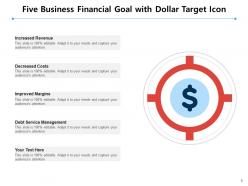
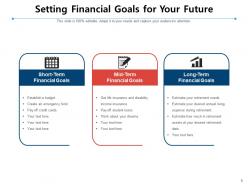
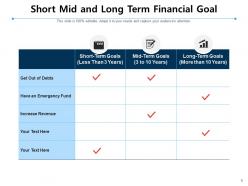
Financial Goal Arrow Target Dollar Icon Board Coins Image
Try Before you Buy Download Free Sample Product
Audience
Editable
of Time
Handle inflated egos with our Financial Goal Arrow Target Dollar Icon Board Coins Image. Furnish the data for a factual assessment.
People who downloaded this PowerPoint presentation also viewed the following :
Financial Goal Arrow Target Dollar Icon Board Coins Image with all 12 slides:
Furnish the data for a factual assessment with our Financial Goal Arrow Target Dollar Icon Board Coins Image. It helps handle inflated egos.
FAQs for Financial Goal Arrow Target Dollar Icon
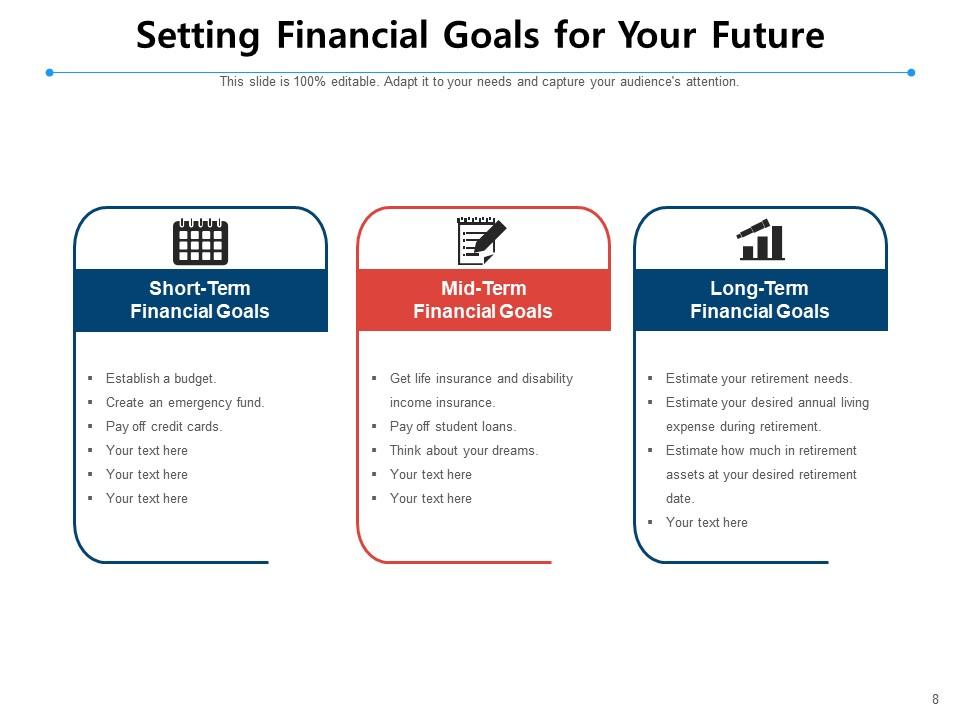
Key components for short-term financial goals include specific target amounts, realistic timelines, clear priorities, measurable milestones, and dedicated funding sources. These elements work together by creating accountability, maintaining focus, and enabling systematic progress tracking, with many individuals and businesses finding that structured approaches ultimately deliver faster achievement rates and stronger financial discipline across their planning horizons.
Effectively tracking financial goals involves establishing clear metrics, setting milestone checkpoints, using budgeting apps or spreadsheets, and conducting regular monthly reviews to assess progress. Through automated tracking tools and consistent monitoring, individuals streamline their financial oversight, identify spending patterns, and make strategic adjustments, ultimately delivering greater accountability and faster goal achievement with many finding that visual progress indicators significantly enhance their motivation and success rates.
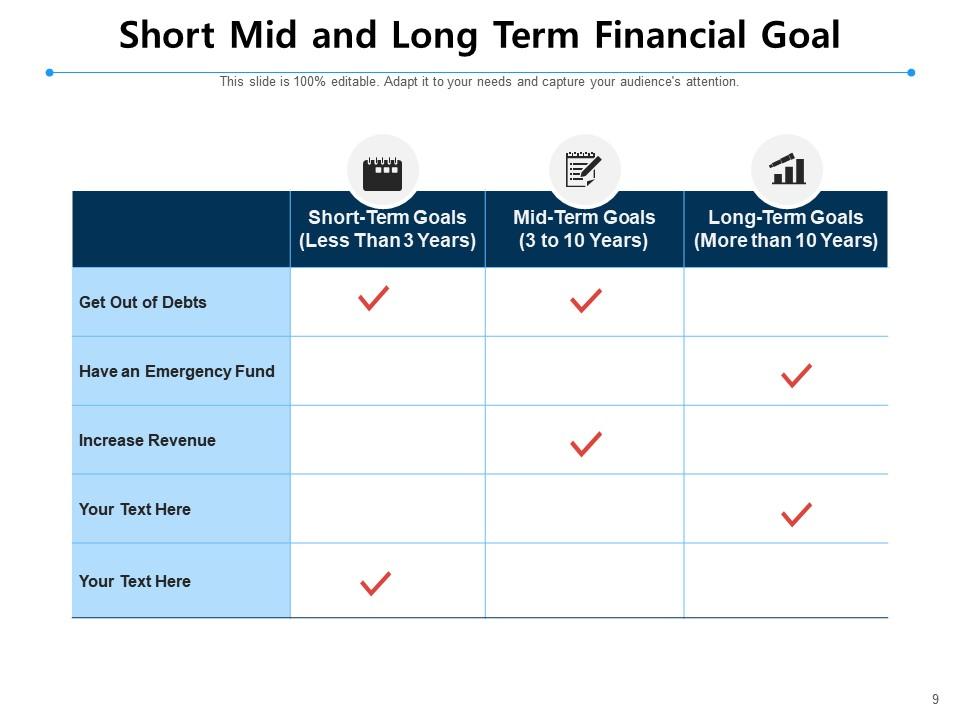
Effective prioritization strategies include the 50/30/20 budgeting rule, ranking goals by urgency and impact, automating essential savings first, and using income percentage allocation methods. Many financial advisors recommend addressing high-interest debt elimination and emergency fund building initially, then progressing to medium and long-term investment goals, ultimately creating a structured pathway that scales with income growth.
External factors like inflation and interest rates significantly impact financial goals by eroding purchasing power, affecting investment returns, and altering borrowing costs. While inflation reduces the real value of savings over time, rising interest rates can benefit savers but increase loan expenses, with many financial planners recommending diversified strategies that adapt to these economic shifts, ultimately delivering more resilient wealth-building approaches.
Budgeting serves as the strategic foundation for achieving financial goals by tracking income, controlling expenses, allocating resources toward priorities, and monitoring progress systematically. This disciplined approach enables individuals and businesses to identify spending patterns, eliminate unnecessary costs, and redirect funds toward savings, investments, or debt reduction, ultimately accelerating goal achievement while building sustainable financial habits.
Adjusting financial goals during unexpected life changes involves reassessing priorities, reallocating resources, and establishing new timelines based on current circumstances. Through strategic budget reviews and emergency fund utilization, individuals can navigate transitions like job loss, medical expenses, or family changes while maintaining long-term financial stability, ultimately preserving their wealth-building momentum.
Saving involves storing money in low-risk accounts like savings accounts or CDs for short-term goals, while investing means purchasing assets like stocks, bonds, or mutual funds for long-term wealth building. While saving provides stability and liquidity for immediate needs, investing delivers higher potential returns through compound growth, with many financial advisors recommending both strategies for comprehensive goal achievement.
Start by establishing 2-3 specific, measurable objectives with clear timelines, breaking larger aspirations into smaller monthly milestones that feel achievable. This approach enables steady progress tracking, reduces decision fatigue, and builds confidence through consistent wins, with many individuals finding that celebrating small victories ultimately delivers sustainable financial habits and long-term wealth-building momentum.
Common financial goal pitfalls include setting unrealistic timelines, underestimating inflation's impact, lack of emergency fund planning, ignoring tax implications, and failing to diversify investment strategies. These oversights often derail progress through inadequate risk management and poor resource allocation, with many financial advisors finding that balanced, flexible approaches ultimately deliver more sustainable wealth-building outcomes.
Aligning financial goals with personal values involves defining what matters most to you, whether environmental sustainability, family security, or career flexibility, then structuring budgets and investments accordingly. This strategic approach enables prioritizing spending on value-aligned areas like education, travel, or charitable giving, while reducing expenses in less meaningful categories, ultimately delivering greater financial satisfaction and life fulfillment.
**INPUT**: What are the best tools or apps for monitoring my financial goal progress? **OUTPUT**: Popular financial goal tracking tools include Mint, YNAB, Personal Capital, PocketGuard, and Goodbudget, each offering automated tracking, goal visualization, and progress analytics. These platforms streamline financial monitoring by connecting bank accounts, categorizing expenses, and providing real-time dashboards, with many users finding that automated insights and milestone alerts significantly enhance their savings discipline and goal achievement rates. [Word count: 60]
Setting up an emergency fund involves determining your target amount, typically three to six months of living expenses, choosing a high-yield savings account for accessibility, and automating regular monthly contributions to build it consistently. This strategic approach provides financial security during unexpected situations like job loss or medical expenses, while many financial advisors recommend treating emergency fund contributions as non-negotiable monthly expenses, ultimately delivering peace of mind and protecting your other financial goals from disruption.
Delaying retirement savings creates compound interest loss, reduced portfolio growth, increased required contributions, and potential lifestyle compromises in retirement years. While starting later presents challenges, many financial advisors find that aggressive catch-up strategies, diversified investment approaches, and extended working timelines can help bridge gaps, ultimately delivering improved outcomes for those committed to accelerated savings plans.
Individual financial goals typically focus on personal milestones like career advancement, debt reduction, and retirement planning, while family goals encompass broader considerations including children's education, healthcare coverage, and estate planning. These different approaches require strategic resource allocation and timeline adjustments, with families increasingly finding that coordinated financial planning delivers enhanced security and long-term wealth building across generations.
Having both measurable and aspirational financial goals creates a balanced framework that drives immediate accountability while inspiring long-term vision. Measurable goals, like saving $10,000 annually or reducing debt by 15%, provide trackable milestones and operational discipline, while aspirational goals fuel motivation and strategic planning, ultimately delivering sustained financial progress and enhanced wealth-building momentum.
No Reviews