Food And Beverages Revenue Analysis Dashboard For Marketing Activities For Fast Food
Try Before you Buy Download Free Sample Product
Audience
Editable
of Time
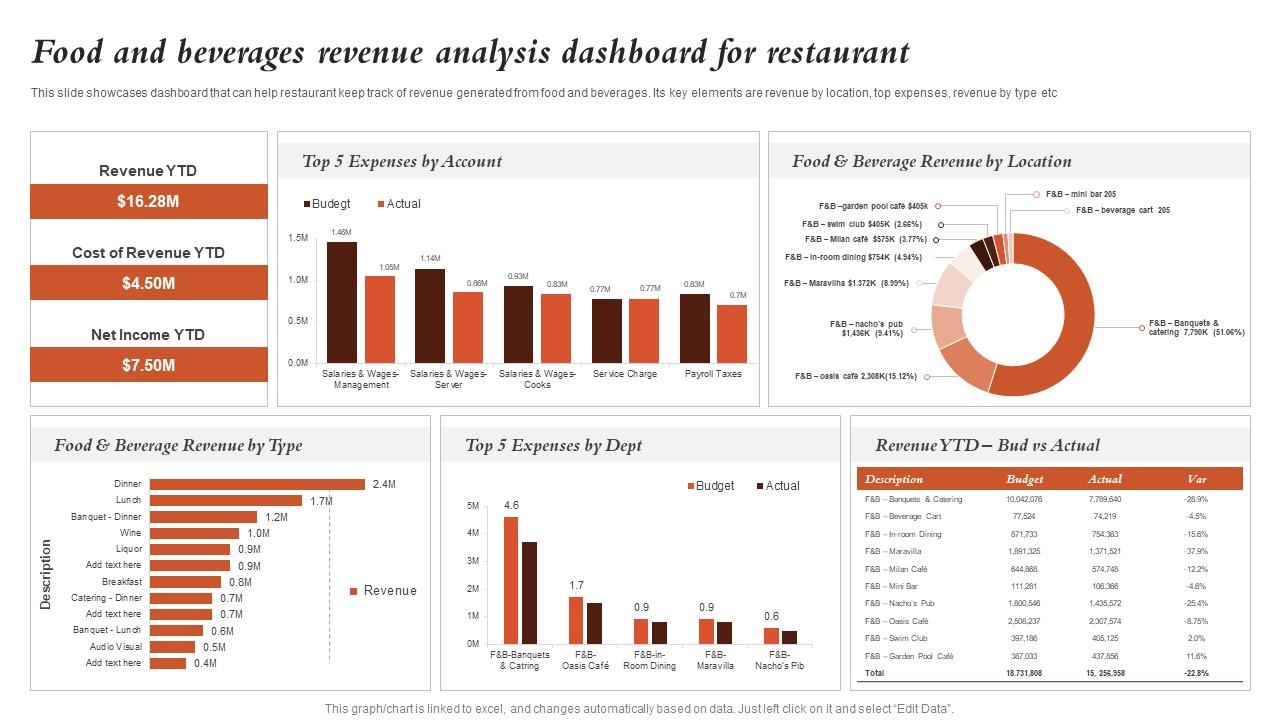
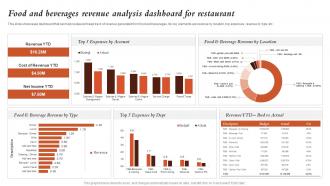
This slide showcases dashboard that can help restaurant keep track of revenue generated from food and beverages. Its key elements are revenue by location, top expenses, revenue by type etc.
People who downloaded this PowerPoint presentation also viewed the following :
Food And Beverages Revenue Analysis Dashboard For Marketing Activities For Fast Food with all 7 slides:
Use our Food And Beverages Revenue Analysis Dashboard For Marketing Activities For Fast Food to effectively help you save your valuable time. They are readymade to fit into any presentation structure.
FAQs for Food And Beverages Revenue Analysis Dashboard For Marketing Activities
Honestly, start with same-store sales growth and average transaction value - that's where you'll see the real story. Track customer traffic too. Food costs are make-or-break since margins suck in this business. Table turnover matters big time if you're doing sit-down. Revenue per square foot is clutch because rent's brutal these days. Don't forget seasonal patterns and customer acquisition costs either - I learned that one the hard way. Compare everything to industry benchmarks first, then figure out what's actually changing month to month.
Yeah, so basically your sales are gonna follow pretty predictable patterns each year. Summer's huge for cold stuff - drinks, ice cream, anything BBQ-related. Winter flips completely to comfort foods and hot drinks, plus all the holiday madness. Spring's when fresh produce takes off, and don't even get me started on fall... pumpkin spice literally becomes a goldmine for like three months straight. Your first quarter numbers will never match your third quarter - that's just how it works. Track this stuff for a couple years though, and you can actually plan your inventory and staffing around it instead of scrambling every time.
Honestly, pricing makes or breaks your revenue game. You've gotta hit that sweet spot - charge enough to actually make money but don't scare people off. Food costs are annoying because they're always changing, so build in some flexibility. Try the psychological tricks like $9.99 instead of $10 (it actually works). Bundle deals bump up order totals too. I'd start by figuring out which menu items are your real profit winners versus the ones that just bring in volume. Then test different price points on similar stuff - you might be surprised what people will pay. The data will tell you everything.
Honestly, predictive analytics can totally change your F&B forecasting game. Your POS system should connect with inventory management - gives you instant visibility during rushes, which is clutch. Machine learning picks up on stuff we miss, like weather patterns affecting sales or local events driving demand spikes. Social media trends are surprisingly useful too. Historical data shows seasonal patterns that help predict customer behavior. I'd start simple though - build a basic dashboard that pulls your sales data together with external factors. Weather integration alone makes a huge difference for most restaurants.
Dude, menu engineering is seriously underrated - you can bump revenue 10-15% without breaking a sweat. Pull your POS data from last quarter and see which dishes are both profitable AND popular. Those are your goldmine items that need the best spots on your menu. The low-margin stuff that nobody orders? Bury it or just cut it completely. I swear it's like tricking people's brains with math. Put your "star" dishes where customers' eyes naturally go first. Psychology meets profit margins, basically. Takes some number crunching but it's way easier than you'd think.
Look, consumer preferences literally control your revenue - when people jump on plant-based or keto or whatever, your sales follow. These trends are crazy unpredictable though (cronuts, anyone?). Companies that pivot fast usually see 15-30% revenue boosts in those categories. You should track social media mentions and search trends monthly. That way you can catch shifts early and beat competitors to adjusting your product mix. Honestly, the data's pretty clear on this stuff.
Timing is everything - watch for when people seem relaxed, not rushed. Have your servers suggest specific stuff that actually goes together, like recommending a wine that pairs with their dish or mentioning appetizers while they're still looking at entrees. Nobody likes pushy servers, trust me on that one. Make things sound appealing with good descriptions, and always give them options instead of just pushing one thing. Track what combos work best so you can teach your team the winning pairings. Honestly, genuine recommendations that make their meal better will always beat aggressive selling.
Focus on personalized rewards that actually mean something to your customers - free items after so many purchases, early access to new menu stuff, you know? Mobile apps are perfect since everyone's glued to their phone already. Make redemption dead simple and track what people buy so you can hit them with targeted offers. Skip the boring "10% off" garbage - do double points days or limited-time bonuses instead. Points-per-dollar is the easiest way to start. Then just watch what works and tweak from there. Honestly, the urgency factor is huge for getting people to actually use their rewards.
So here's what happens - people start buying cheaper brands and skip restaurants. Revenue takes a hit from multiple directions. Bulk buying during sales creates these weird demand spikes that mess with your planning. Premium stuff gets cut first (seriously, who needs $12 artisanal jam during a recession?). But basics like bread and milk? Pretty stable. Supply chain issues will screw with your costs too. The smart move is tracking which product categories are tanking versus staying steady. That data tells you exactly where to adjust pricing and run promotions.
Dude, location is everything for restaurants. Prime spots can boost revenue 40-60% over crappy locations - I'm talking shopping centers, business districts, near train stations. Yeah, rent's gonna be higher, but trust me, the extra customers make it worth it. Even amazing food won't help if you're hidden somewhere nobody walks by. You'll want to actually camp out and count people at different times before signing anything. I spent hours doing this for my cousin's place last year - the patterns were wild. Visibility and foot traffic beat everything else.
Honestly, the logistics are a nightmare at first - delivery costs, food safety stuff, and you're basically competing with Amazon. Third-party app fees will destroy your margins too (learned that one the hard way). But here's the thing: you can hit way more customers without opening new stores, plus the data you get on buying habits is insane. Covid proved people aren't going back to old shopping patterns. My advice? Pick one platform, figure out your delivery game first, then branch out. Don't try to do everything at once or you'll burn out fast.
Yeah, sustainability stuff can actually make you more money! Customers will pay extra for eco-friendly products - it's wild how much they care about this now. The trick is being real about it, not just slapping "green" on everything because people see right through that BS. You'll save money too from things like using less packaging or cutting energy costs. Honestly, the hardest part is the upfront investment - that can be rough. But once you find sustainable practices that actually fit your brand (not just trendy ones), you'll see it in your revenue. Just don't try to be something you're not.
Watch your inventory turnover ratio and days sales outstanding - those are huge. Food cost percentage is critical too, keep it between 28-35% or you're bleeding money. I'd also track stockouts and waste religiously because honestly, throwing food away feels terrible. Do an ABC analysis to figure out which items actually make you money so you can focus there. Set up alerts for when stuff hits reorder points. Oh, and check gross margin per item weekly - catches problems before they spiral. Most people review monthly but weekly's way better for spotting trends early.
So campaigns usually bump spending 15-30% while they're running - especially for new stuff or seasonal pushes. Digital targeting works insane well, and millennials absolutely lose their minds over food content on social. Influencer collabs and limited offers get people buying way faster than traditional ads, though those still work for bigger brands. Effects drop off after 2-3 months if you don't keep pushing though. Oh and definitely check your spend vs sales weekly - you'll catch when things start shifting before it's too late.
Food partnerships are honestly a goldmine for revenue. Cross-promotion creates that FOMO effect - like when two brands drop a limited collab product. Your partner's customers suddenly discover you, and their marketing reach becomes yours too. Distribution gets way cheaper when you're sharing networks. Plus, some partnerships unlock revenue streams you'd never touch solo. I mean, look at how many weird brand collabs actually work these days. The trick? Find partners whose audience would vibe with yours but aren't your direct competition. Don't overthink it.
-
I had them make a presentation for an office retirement party. They were very helpful in understanding what we wanted and delivered the perfect presentation. Highly recommended!
-
I was able to find the right choice of PPT template for my thesis with SlideTeam. Thank you for existing.