HR-KPI-Dashboard mit mehreren Leistungsmetriken
Try Before you Buy Download Free Sample Product
Audience
Editable
of Time
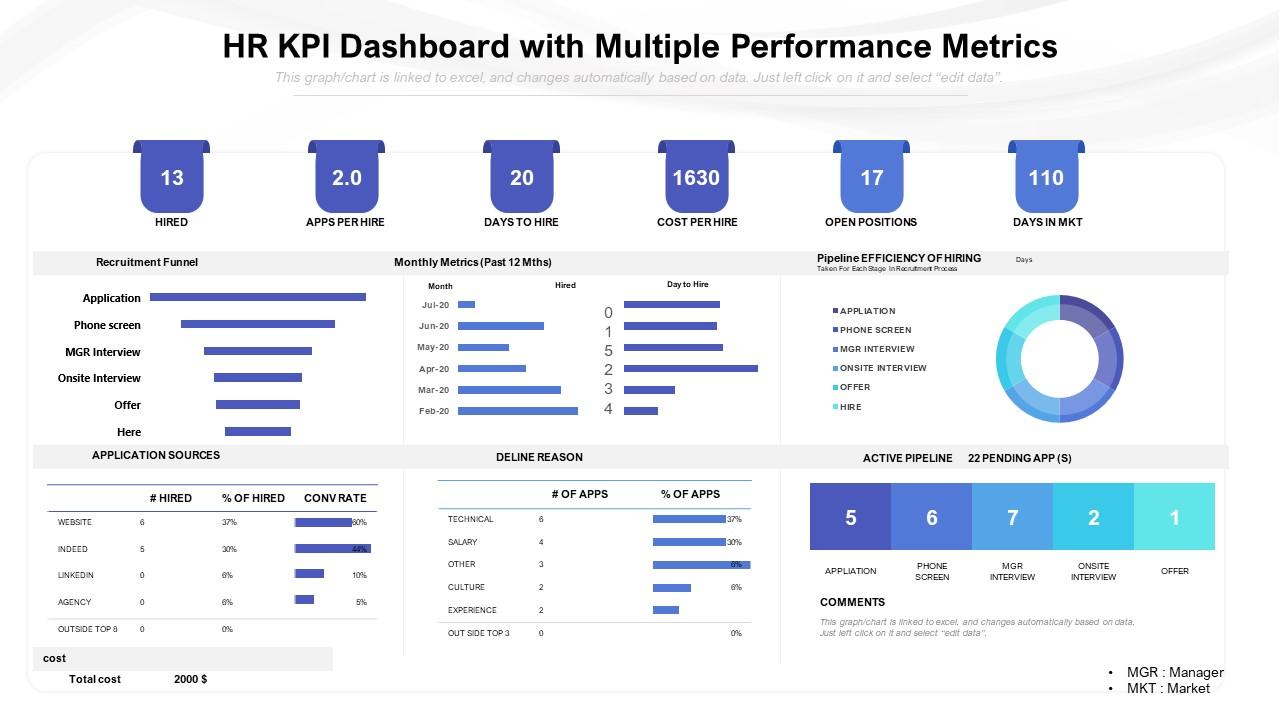
Firmen und Organisationen können dieses HR-KPI-Dashboard mit mehreren Leistungskennzahlen integrieren. Diese PPT-Vorlage für das HR-KPI-Dashboard kann von Geschäftsleuten verwendet werden, um einen Überblick über die von der Personalabteilung verwaltete Arbeit zu erhalten. Mit dieser Personal-KPI-PPT-Vorlage können Sie eine eindrucksvolle Präsentation nach Ihren Anforderungen erstellen. Diese PPT-Vorlage für HR-Instrumententafeln erleichtert den gesamten Prozess der Erstellung einer Präsentation, da Sie nur Text eingeben müssen. Sie können bestimmte Änderungen in der Präsentation selbst vornehmen. Erklären Sie Ihren Praktikanten, was das HR-Dashboard ist und welche Vorteile seine Verwendung mit unserer professionell gestalteten HR-KPI-Dashboard-PPT-Vorlage hat. Besprechen Sie Schritt für Schritt, wie Sie ein HR-Dashboard erstellen, indem Sie unser PowerPoint-Layout für Personalkennzahlen verwenden. Beleuchten Sie HR-KPIs und -Metriken mit Hilfe der HR-Instrumentenbrett-PPT-Vorlage. Diese Auswertung zeigt Ihnen, wie hart Ihre Personalabteilung für Ihr Unternehmen arbeitet. Brechen Sie also die Monotonie und laden Sie unsere KPI-PPT-Folie für Humanressourcen herunter und stehlen Sie die Aufmerksamkeit Ihres Publikums.
Funktionen dieser PowerPoint-Präsentationsfolien:
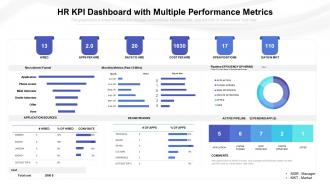
Präsentieren dieser Folien mit dem Namen HR KPI Dashboard mit mehreren Leistungsmetriken. Die in diesen Folien behandelten Themen sind "Angestellt", "Apps pro Einstellung", "Tage bis zur Einstellung", "Kosten pro Einstellung" und "Offene Positionen". Dies ist eine vollständig bearbeitbare PowerPoint-Präsentation, die sofort heruntergeladen werden kann. Laden Sie es jetzt herunter und beeindrucken Sie Ihr Publikum.
People who downloaded this PowerPoint presentation also viewed the following :
HR-KPI-Dashboard mit mehreren Leistungskennzahlen mit allen 2 Folien:
Geben Sie Ihrem Publikum ein erfüllendes Erlebnis. Sie werden unser HR-KPI-Dashboard mit mehreren Leistungskennzahlen als steigend empfinden.
FAQs for Hr kpi dashboard with
Okay so the big ones you gotta track are employee turnover and how long it takes to fill positions. Engagement scores too - those surveys actually matter. I'd also look at retention by department (some managers are just better than others, honestly), plus training completion rates and performance reviews. Cost-per-hire is boring but executives love that stuff. Oh, and don't skip internal promotion rates or absenteeism patterns. Those tell you if people actually want to grow there or if they're just mentally checked out. Start with these and you'll get a pretty clear picture of what's working.
Honestly, tracking the right HR metrics is a game-changer for catching retention issues early. Monitor stuff like employee survey scores, which departments have the highest turnover, and how long promotions actually take. You'll start noticing patterns - maybe your engineering team's satisfaction is tanking, or everyone's complaining about the same manager in exit interviews. Way better than playing the guessing game when people quit. I'd focus on maybe 3-4 metrics that actually matter for your specific situation and check them monthly. The data gives you something concrete to fix instead of just wondering what went wrong.
Honestly, good data viz will save your life here. Raw numbers are brutal to parse through - you'll miss everything important. Charts and graphs let you catch turnover spikes or engagement drops right away, stuff that would take hours to spot otherwise. Pick the right chart types for each metric, but keep it super clean. I learned this the hard way, but test it with real people first - they should understand what they're looking at in like 30 seconds max. Otherwise you'll just confuse everyone.
Hey! So for HR dashboards, I'd probably start with what you already have. If you're using Workday or BambooHR, their built-in stuff might be enough honestly. Power BI and Tableau are awesome but can be overkill - though they'll handle all your complex turnover and satisfaction metrics no problem. Google Data Studio is free and pretty decent for beginners. Excel works too but gets messy quick with lots of data. My advice? Don't go crazy tracking everything right away. Pick like 5-7 key metrics first, then build from there. Way less overwhelming that way.
Check your HR KPIs monthly - that's when you'll spot trends before they become problems. Every quarter though, step back and ask if you're even tracking the right stuff. Honestly, I've watched so many teams build these fancy dashboards then completely ignore them for months. Big mistake. Quick monthly reviews keep you on track, but those quarterly deep dives? That's where you figure out if these metrics actually matter anymore. Your business changes, your KPIs should too. Oh, and block actual calendar time for the quarterly review or it won't happen.
Honestly, the worst part is always data quality - your HR info is scattered everywhere and pulling it together is such a pain. Leadership buy-in is tricky too. Oh, and prepare for endless arguments about which metrics actually matter (seriously, everyone becomes an expert overnight). Training your team is huge because otherwise they just stare at charts looking confused. I'd probably start with like 3-5 metrics that your leadership already obsesses over. Once you show some wins there, then you can add more stuff. Way easier to prove value first than try to boil the ocean right away.
First, figure out what your company's actually trying to achieve - more revenue, keeping customers, expanding markets, whatever. Map your HR metrics straight to those goals. So if they want 20% growth, track hiring speed, how fast new people get productive, and who's leaving key positions. Executives eat this stuff up, honestly. Show them the clear link between your people data and business wins. Your dashboard should connect each HR metric to a specific company objective. Oh and don't just dump numbers on them - prove that HR actually moves the needle on success.
Look at performance reviews first - break them down by skill areas to see patterns. Training completion rates tell you a lot too, especially which departments are falling behind. How long are positions staying open? That's usually a dead giveaway you're missing key skills internally. Employee surveys about confidence levels are pure gold - people know where they're weak. Manager feedback helps too, though sometimes they sugarcoat things. The big one though? Map your current skills against where the business is headed. That gap analysis will hit you right in the face with what's missing.
Honestly, the biggest game-changer is just getting rid of all that manual data entry nonsense. Connect your HRIS and payroll systems so they talk to each other - no more copying numbers into spreadsheets every month (seriously, who has time for that?). Real-time data flows mean your turnover rates and hiring metrics stay consistent across teams. Automated alerts will catch weird data spikes before they mess up your reports. I'd start with whatever KPIs you're still calculating by hand. Those are usually the easiest wins for automation.
Dude, you absolutely need industry benchmarks or you're just guessing at everything. That 15% turnover might look scary until you realize it's actually decent for your sector. SHRM has solid data that's pretty easy to find - honestly saved my butt so many times in leadership meetings. Without context, you can't tell if problems are real or just noise. Plus it gives you ammo when executives get unrealistic about goals or budgets. Check industry reports too, they'll make your dashboard discussions way more credible.
Honestly, it comes down to how much data you can actually handle. Small businesses usually stick to the basics - turnover, how long it takes to hire someone, whether people seem happy. Makes sense when you've got limited time. Big companies though? They go nuts tracking everything - retention rates by department, diversity numbers, performance across different teams. Sometimes I think they collect data just because they can, not because it's useful. For your situation, I'd pick maybe 3-5 things that actually move the needle for your business. You can always add more later, but don't overwhelm yourself right out the gate.
Honestly, start with turnover prediction - that's where you'll see the biggest impact and it's easier to prove ROI to leadership. Predictive analytics can spot flight risks before people actually leave, which beats the usual panic when someone drops their resignation. Build models for forecasting hiring needs too, plus performance outcomes and team compositions. The training needs forecasting is pretty neat - catches skill gaps early. I'd say pick one model first though, maybe the turnover thing since that's usually everyone's biggest headache. Get that working smoothly, then add more features. Way less overwhelming than trying to do everything at once.
Honestly? Leaderboards work really well - gamify stuff like training completion or peer recognition scores. Those digital displays in break rooms are surprisingly effective too, people actually pause to check them out. Monthly push notifications through your company app help, or get leadership to do quick video explainers about what the numbers actually mean. Some teams I know do "KPI coffee chats" where managers just break it down casually over coffee. Way better than endless spreadsheets that nobody reads anyway. Keep it visual and simple. Pick one approach first and see how it goes!
Look, D&I metrics basically tell you if your HR stuff is actually working or if you're just going through the motions. Track hiring diversity, promotion rates by demographics, inclusion surveys - that kind of thing. It helps you catch talent pipeline issues early before they get expensive. Short sentences work. Research consistently shows diverse teams outperform others anyway, so there's that business case too. The trick is using this data to tweak your recruitment and retention strategies as you go. I'd start with maybe 3-4 metrics that match your biggest headaches and check them monthly. Don't overthink it.
Look, performance metrics are basically your crystal ball for how the whole company's doing. Track stuff like productivity and goal completion - you'll spot problems way before they tank your bottom line. Think of it like... checking your car's engine instead of waiting for it to die on the highway, except less stressful and more spreadsheets. Better individual performance usually means happier customers and more revenue. Honestly, most HR dashboards make this connection pretty obvious once you know what to look for. You can catch trends early and actually do something about them.
No Reviews