


Internal and external source of finance powerpoint slide deck




Try Before you Buy Download Free Sample Product
 Impress Your
 Audience
 100%
100% Editable
 Save Hours
 of Time


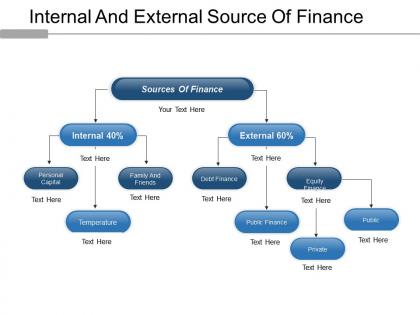
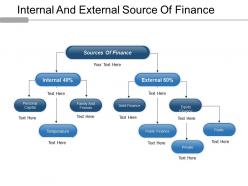
Internal and external sources of finance PowerPoint slide deck is a presentation slide applicable for professional as well as educational purposes. The provided sources of finance: internal and external PPT presentation model comprises of a flowchart design wherein the finance has been further divided into internal and external and further into the detailed sources of funding under each head. Not only this, but the percentage of finance belonging to each of the two leading sources has also been given. Internal versus external sources of finance PowerPoint slide visual is, therefore, a very comfortable to present and easy to comprehend financial slide. The classification of sources of finance PPT slide graphic is thoroughly colored in blue with variation in shades and the text has been written in white for the proper highlight. This slide design is far above the boring and monotonous financial presentation which though are essential, fail to attract the attention of the viewers. So, all you need to do is now, download this hassle free slide and customize it to suit your needs. Our Internal And External Source Of Finance Powerpoint Slide Deck ensure all elements combine beautifully. You will discover the best formula.
People who downloaded this PowerPoint presentation also viewed the following :
Internal and external source of finance powerpoint slide deck with all 5 slides:
Introduce a breath of fresh air with our Internal And External Source Of Finance Powerpoint Slide Deck. Discard jaded approaches.

FAQs for Internal and external source of finance
So there's bootstrapping with your own cash, friends & family rounds, angel investors, VCs, and crowdfunding. I'd start with bootstrapping or asking people you know - super awkward but everyone does it. Angels usually come after that, dropping like $25K-$100K when you're still figuring things out. VCs are for when you need big money and actually have some traction to show. Crowdfunding's solid if you're doing consumer stuff. Honestly, you'll probably mix a few of these as you grow. Just figure out what fits where you're at right now and your industry.
Honestly, I'd go for public financing first - way easier to get if you qualify. Government grants and SBA loans have way better terms than most private stuff. Private financing moves faster, sure, but good luck getting it without solid credit or connections. Banks are picky as hell about track records. And don't even get me started on VCs - they're crazy selective. My buddy spent months chasing private investors when he should've just started with public programs. Once you get some momentum going, then you can think about adding private money on top.
Crowdfunding's pretty solid if you want to skip banks entirely. You're basically getting money straight from customers while testing if people actually want your product - which is kinda genius, honestly. Pick your platform wisely though. Kickstarter works great for creative stuff, Indiegogo's more flexible, or there's equity platforms if you don't mind giving up some ownership. Fair warning: you'll need to hustle hard on marketing before you launch. I learned this the hard way - you can't just throw something online and expect it to blow up.
Don't just look at interest rates or equity percentages - you gotta crunch the real numbers. With debt, add up interest plus fees (but hey, it's tax-deductible). Equity's trickier since you're basically betting on future growth. Debt keeps you in control but creates payment pressure. Equity gives breathing room but means sharing decisions with investors, which honestly can be a pain. I'd map out both scenarios for like 3-5 years and see what the actual costs look like. The "cheaper" option isn't always obvious until you do the math.
So VCs want like 10-30% of your company, plus board seats and veto power on big stuff - hiring, fundraising, exits, you name it. They're looking for 10x returns which means they'll push hard for aggressive growth. Honestly though, their expertise can be worth it if you pick the right ones. Just make sure you actually like working with them first because they'll be pretty involved in everything. Oh and don't rush into signing - once you're in, you're kinda married to them until exit. Does your vision actually match theirs?
Dude, timing is literally everything here. Short-term financing works great when you need quick cash - like stocking up for the holidays or covering payroll during a slow month. You pay it back fast and you're done. Long-term stuff is different though. Big purchases like equipment or expanding your business? That's when you want payments spread out over years since that's how long it'll take to see real returns. I've seen people mess this up badly - using short-term loans for long-term investments is a recipe for disaster. Your cash flow will be completely screwed. Just match the loan timeline to what you're buying and you'll be fine.
Honestly, don't blow through all your savings - that's just risky as hell. Business fails and you're left with nothing for emergencies. Personal money only goes so far anyway, and most people think they have more runway than they actually do. External funding brings other perks too, like connections and expertise you wouldn't get otherwise. I'd say use some of your own cash to show you're serious, but keep a cushion. Maybe look into mixing it with other funding options? You'll sleep better knowing you're not totally exposed if things go sideways.
So banks basically want to know two things - can you pay them back and will you actually do it? Your credit score is huge here, shows your track record with debt. Income matters too obviously, plus they'll check if your monthly debt payments aren't already eating up everything you make. Employment history helps prove you're not gonna lose your job next week. Honestly, some lenders are way more strict than others depending on what's happening in the market. Just have your documents ready and don't try to fudge numbers - they'll find out anyway and it makes you look sketchy.
So you've got peer-to-peer stuff like LendingClub, which is pretty straightforward. Crowdfunding's everywhere now - Kickstarter for products, equity platforms if you want to give up some ownership. Revenue-based financing is interesting though, they just take a cut of sales instead of equity. Crypto funding exists but honestly feels sketchy to me still. There's also invoice factoring apps and those AI micro-lenders that'll approve you crazy fast based on your online activity. My brother used one last year actually. Just figure out what fits your business first before jumping into anything.
Honestly, grants are pretty sweet if you can get them - free money that you don't have to pay back or give up ownership for. Way better than loans in that sense. The downside is everyone and their mom is applying, so competition is brutal. Also, brace yourself for mountains of paperwork and endless waiting. Oh, and they'll probably make you jump through hoops with reporting requirements and rules about how you spend it. Still worth it though. If you actually land one, you can hire people, buy equipment, whatever you need without going into debt.
Dude, positive cash flow is like your secret weapon for getting funding. Banks want to see you're making more than you're spending - proves you won't default on their loan. It's basically like having good credit when you apply for anything financial. Plus you'll have way more bargaining power instead of looking desperate. Honestly, I learned this the hard way with my first business attempt (yikes). Track that stuff monthly at minimum. If your numbers are trending negative, fix it before you even think about approaching lenders. Makes all the difference.
Get your stuff valued first - inventory, receivables, equipment, all of it. Lenders are super picky (honestly they're kind of annoying about it) so keep your records spotless. Your accounts receivable and inventory are usually most liquid, so focus there. Don't rely too heavily on just one asset type though. Mix it up so you're not screwed if one category tanks. Oh and negotiate everything upfront - rates, terms, whatever. Think of it as a cash flow Band-Aid, not some permanent fix. My buddy learned that the hard way last year.
Honestly, it comes down to your cash situation and how fast the equipment becomes useless. Leasing is great because you're not dropping a huge chunk upfront, plus they usually handle maintenance - which is honestly a lifesaver. But you'll never actually own it. Buying means it's yours, you get those depreciation tax breaks, but yeah... there goes your cash flow. I'd definitely crunch the numbers on both - don't forget about all those sneaky fees either. If it's something that'll be obsolete in a few years (like most tech), just lease it. Way less headache.
Honestly, the timeline thing gets everyone - banks are painfully slow, so start way earlier than feels necessary. Your paperwork needs to be perfect too, because messy financials are basically an instant rejection. Don't make the classic mistake of asking for either too little money (you'll be broke again in six months) or going crazy high and freaking them out. Oh, and definitely shop around! I learned this the hard way - different lenders are like night and day with their requirements. Bottom line: have a solid plan for exactly how you'll use the cash, and maybe grab some coffee before diving into all that paperwork.
So international markets can totally open up more funding options when things are going well globally - you'll have access to foreign investors, cross-border loans, all that good stuff. But honestly? It's a double-edged sword. Currency swings can make foreign financing super expensive overnight, and when there's global uncertainty, international lenders basically vanish. Plus foreign interest rates mess with domestic ones too, which is annoying. My advice would be to spread your funding sources around - don't put all your eggs in one basket, whether domestic or international. Also worth watching global trends since they'll hit your financing strategy harder than you'd expect.
-
Editable templates with innovative design and color combination.
-
Excellent Designs.