Liquidity Risk Management Dashboard For Organizations
Try Before you Buy Download Free Sample Product
Audience
Editable
of Time
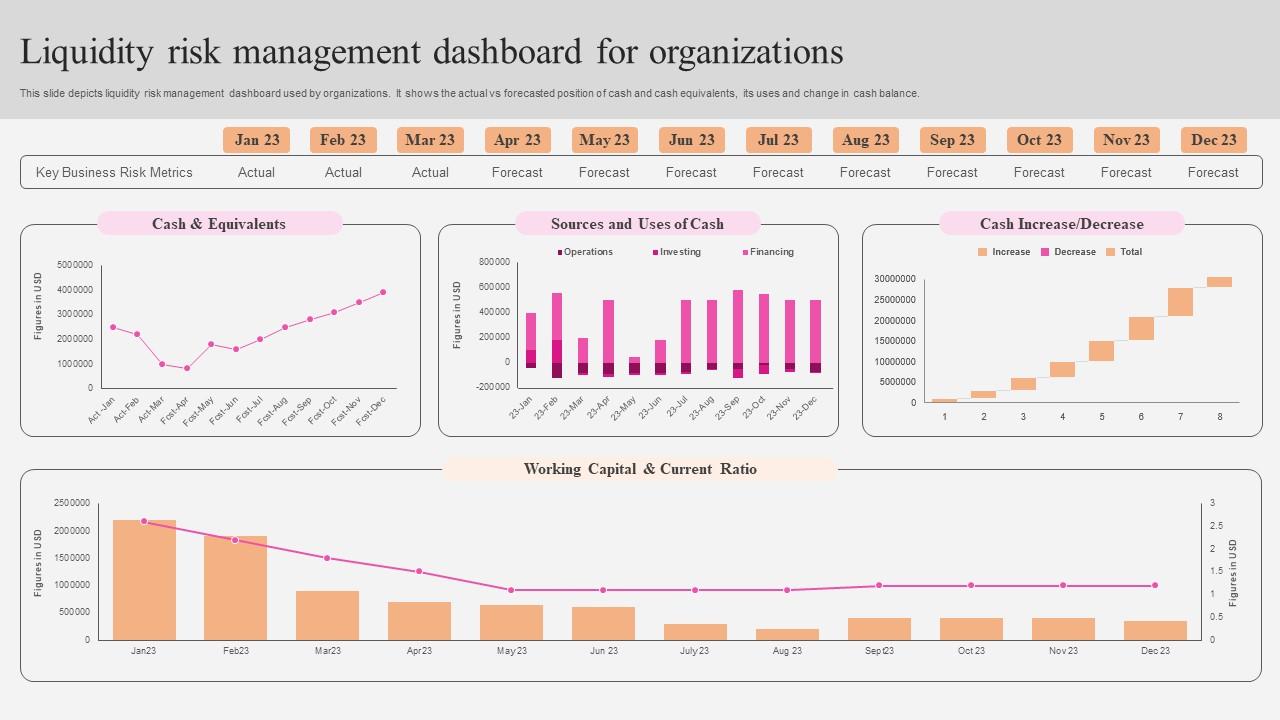
This slide depicts liquidity risk management dashboard used by organizations. It shows the actual vs forecasted position of cash and cash equivalents, its uses and change in cash balance.
People who downloaded this PowerPoint presentation also viewed the following :
Liquidity Risk Management Dashboard For Organizations with all 7 slides:
Use our Liquidity Risk Management Dashboard For Organizations to effectively help you save your valuable time. They are readymade to fit into any presentation structure.
FAQs for Liquidity Risk Management
Honestly, cash flow forecasts are your best friend here - track them daily and weekly, plus longer-term stuff. Current ratio and quick ratio show if you can actually pay your bills. Your cash conversion cycle matters too since it tells you how fast inventory becomes actual money in your account. Here's something people overlook: don't put all your eggs in one basket with funding sources. If you're relying on just one credit line or investor, that's sketchy. Set up alerts when these numbers get wonky so you're not panicking later trying to fix things.
So you basically simulate different crisis scenarios to see if your liquidity can handle the heat. Test stuff like massive deposit withdrawals, credit lines getting maxed out, or when funding markets just freeze up completely. I always start mild then crank it up to full apocalypse mode - honestly shocking how quickly things can spiral. Cover both your own specific risks (like if your reputation takes a hit) and broader market meltdowns. Oh, and run these tests regularly against your actual cash reserves and backup funding. Tbh the whole exercise is pretty humbling, but you'll thank yourself when you beef up those liquidity buffers beforehand.
Look, cash flow forecasting is just predicting when money hits your account versus when it leaves. Pretty straightforward stuff. You'll want to spot potential shortfalls before they bite you in the ass - like checking if you can actually pay rent next month. It's honestly more useful than most financial tools because it shows timing gaps between what customers owe you and what you owe suppliers. Update your forecasts regularly and run different scenarios. What if that big client pays late? That's where you get real insights, not just pretty spreadsheets.
So basically the regulators make you way more organized about liquidity stuff than you'd probably be otherwise. You've got to hit those LCR and NSFR ratios, do stress tests regularly, document everything (ugh). Honestly feels like bureaucratic overkill half the time, but it does catch things you'd miss. They want you diversifying funding sources too. Plus you need better liquid asset buffers. Oh and the governance frameworks - that's probably the most annoying part but whatever. Just start by checking what you're doing now against your local requirements and go from there.
Build up cash reserves now and get multiple credit lines set up before you need them - banks become total jerks when the economy tanks. Speed up collecting what customers owe you, but drag out paying your own bills when you can. Cut the unnecessary spending obviously. Daily cash monitoring is huge so you can see problems coming instead of getting blindsided. Working capital optimization helps too. If regular credit dries up, factoring or asset-based lending might save your butt. Honestly, most businesses wait too long to do this stuff. Being ahead of the curve makes all the difference when things get rough.
Honestly, it's all about balance - you can't hoard cash but you also can't be caught short. Diversify where your funding comes from because those overnight deposits? They vanish fast when things get sketchy. Think of it like your personal emergency fund but way more complicated lol. Run stress tests on different scenarios and keep a buffer that matches how much risk you're cool with taking. Price everything - loans AND deposits - so you're accounting for what it actually costs to keep that liquidity sitting there. I'd start by looking at your current ratios this quarter.
For liquidity risk stuff, treasury management systems are your starting point - they handle cash positioning and forecasting pretty well. Risk platforms like Moody's RiskIntegrity will automate your stress testing and ratio calculations. Most banks I've seen use ALM tools that actually talk to their core systems, which is nice. Bloomberg's everywhere for market data, obviously. Oh, and whatever you pick needs to pull real-time data from your GL. Trust me, you don't want to be stuck doing regulatory reports in Excel spreadsheets forever. Been there, it's painful.
Look, it really depends on what industry you're in. Banks get hit with withdrawals constantly, so they need cash ready immediately. Manufacturing? Way more predictable - they've got those seasonal patterns down. Tech companies are honestly living the dream with their cash reserves, but retail gets screwed by inventory timing all the time. Those slow months can really hurt. Healthcare and utilities have it easier with steady flows. Commodity businesses though - man, they're all over the place depending on market swings. You've just gotta know your cash conversion cycle and pad accordingly.
Dude, market chaos can wreck your liquidity situation so fast. Credit lines disappear, investors panic and bail - suddenly you can't access funds you thought were solid. Need to sell assets? Good luck, prices are tanked and you're getting pennies on the dollar. Everyone starts doubting each other's ability to stay afloat too, which makes everything worse. Interest rates going crazy throws off your cash flow projections. Honestly, it's like Murphy's law - this stuff always hits when you're already stretched thin. You should really run some "what if the world ends" scenarios on your liquidity position.
Start with stress testing and set those liquidity buffers first - that's your base. Monitor cash flows daily, not weekly (seriously, I've watched companies get blindsided by this). Don't put all your eggs in one funding basket - diversify those sources. Get your credit facilities locked down before you're desperate for them. Here's the thing though - having early warning indicators is useless without actual action plans ready to go. Oh, and make sure your governance meetings actually focus on liquidity metrics instead of just checking boxes. Those predetermined responses will save you when things get messy.
Basically, figure out how fast you can turn each asset into cash without killing its value. I'd group everything - super liquid stuff like cash and government bonds, then your moderately liquid holdings like blue-chip stocks, then the pain-in-the-ass illiquid ones (real estate, private equity, whatever random investment the last guy was obsessed with). Look at trading volumes and bid-ask spreads for each position. Honestly, the real test is running scenarios - what happens if you need 25% liquidated next week? Map your needs against realistic timelines and build in some cushion for when things go sideways.
Honestly, most companies screw up by being way too optimistic about cash conversion cycles. Plus they don't realize how fast things can implode when markets get weird. Don't put all your eggs in one funding basket either - I've seen too many businesses assume their credit lines are guaranteed (they're not). Here's what really gets me: nobody stress-tests their models properly. Like, what if your biggest client decides to pay 60 days late? Build relationships with multiple lenders now, and yeah, keep way more cash on hand than feels necessary.
So basically these two risks create this really ugly feedback loop. Credit losses eat up your cash, and suddenly lenders don't want to touch you anymore. Now you're cash-strapped, so you end up dumping assets cheap or taking crappy loan terms - which just makes your credit situation even worse. It's honestly pretty brutal how fast it spirals. The thing most people mess up is testing these risks separately instead of together. You've gotta look at how they play off each other, otherwise you're missing like half the picture.
Look at your funding concentration first - where's your money actually coming from? Cash flow gets messy, especially if you're seasonal like retail where December's crazy and February's dead. Asset liquidation sounds easy until you're selling at fire sale prices, which honestly happens more than people think. Don't forget your credit lines might disappear when you need them most. Counterparties get nervous fast during stress. Those regulatory minimums? Just the floor, not where you want to live. Run some worst-case scenarios over 30-90 days, see where you'd be screwed, then add extra cushion. Better safe than scrambling for cash later.
Look, you want everyone talking to each other before things go sideways with your cash flow. Your treasury folks need to chat regularly with risk managers and business units - sharing real-time data so you can catch problems early. Set up clear escalation rules too, because trust me, nobody wants to be that guy who missed the warning signs. The trick is having regular check-ins and making sure your systems actually connect properly. When info flows smoothly between departments, you can coordinate responses way faster. It's honestly pretty straightforward once you get the communication rhythm down.
-
Great product with effective design. Helped a lot in our corporate presentations. Easy to edit and stunning visuals.
-
If you have visited their site and failed to find the products, try reaching the customer service because it will be the case that you didn't use the search bar well.