Market analysis report with regional share

Rating:
92%
Market analysis report with regional share
Slide 1 of 2
Favourites Favourites

Try Before you Buy Download Free Sample Product

Audience Impress Your
Audience
Editable 100%
Editable
Time Save Hours
of Time
The Biggest Sale is ending soon in
0
0
:
0
0
:
0
0
Rating:
92%
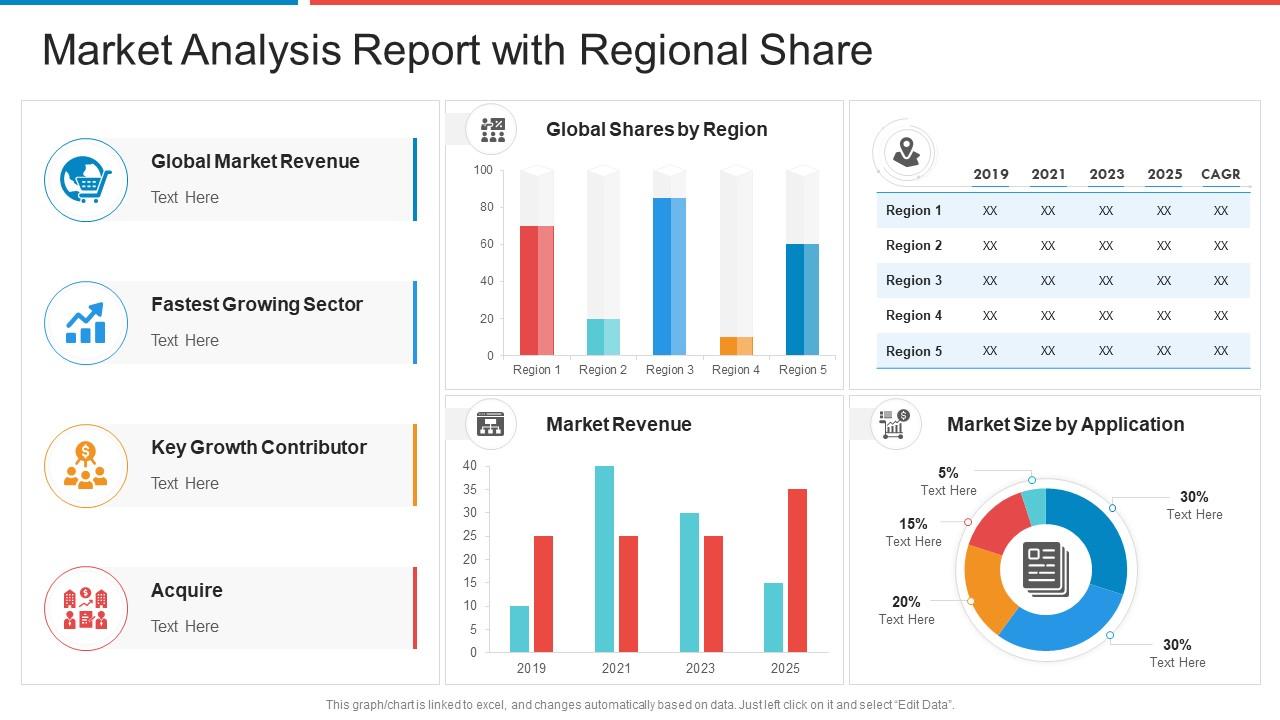
Presenting our well-structured Market Analysis Report With Regional Share. The topics discussed in this slide are Global Market Revenue, Key Growth Contributor, Acquire. This is an instantly available PowerPoint presentation that can be edited conveniently. Download it right away and captivate your audience.

People who downloaded this PowerPoint presentation also viewed the following :

FAQs for Market analysis report

Honestly, it's mostly about millennials hitting their peak earning years and Gen Z finally having real money to spend. The whole digital-first shopping thing is wild - like, people discover brands completely differently now than even five years ago. Urban markets keep growing too, which helps. Oh, and the multicultural consumer base is huge - their buying patterns are totally different from what we used to think of as "standard." I'd definitely break down your analysis by generation and culture. That's where you'll find the good stuff. The speed of all this change still catches me off guard sometimes.

Honestly, people get super predictable when the economy tanks. They'll ditch expensive stuff fast and focus on basics like groceries and rent. Big purchases? Forget it - they're waiting it out. But here's the crazy part - social media makes everyone panic faster now than it used to. One bad jobs report and suddenly your premium customers are buying generic everything. Good times flip this completely though. People blow money on fancy dinners and designer whatever. My advice? Check your weekly numbers religiously during weird economic periods. These shifts happen way quicker than you'd expect.

AI automation is probably the biggest one right now, plus blockchain for tracking stuff through supply chains. AR/VR is changing how people shop too - like trying on clothes virtually or whatever. IoT sensors are everywhere now, making everything "connected." Honestly though? Don't just jump on every trendy thing. Pick tech that actually fixes problems your customers have or saves you real money. I do a quick tech check every few months and ask myself "could this kill my business if I ignore it?" If the answer's yes, then it's worth testing out.

Honestly, competitive analysis is like having a cheat sheet for your market. Look at what's actually working for your competitors - their messaging, campaigns, pricing shifts. Find where they're dropping the ball because that's your opening. You can totally adapt their successful tactics (no shame in that game), but the trick is making it your own instead of being a total copycat. I usually tell people to pick 3-5 main competitors and check what they're up to monthly. Track their moves and customer reactions. It saves you from making the same mistakes they already made.

Yeah so social media's basically running the show now for market trends. Like, I'll see something blow up on TikTok and then boom - stock prices shift within hours. It's actually insane how fast things move. One viral video can create massive demand spikes that companies can't even keep up with. Influencers have way more power than people realize - they can literally tank or boost a brand overnight. My advice? Start tracking this stuff as a leading indicator, not something you check after the fact. Monitor hashtags, sentiment, engagement metrics alongside your usual data. Trust me, traditional channels just can't compete with that speed anymore.

Oh man, cultural stuff can totally make or break your product! Colors hit different everywhere - white packaging looks expensive in some places but literally symbolizes death in others. Super awkward if you get that wrong. Your audience's values, traditions, and religious beliefs basically shape everything about how they'll see your product. Even language goes way beyond just translating words correctly. I always tell people to dig into cultural research right from the start of development. Don't just slap it on at the end when you're thinking about expanding - that's when things get messy.

Honestly, I'd start by tracking purchase frequency and average order value - those metrics shift before everything else does. Cart abandonment rates are huge too. Social media engagement is where you'll catch trends early, plus whatever keywords people are suddenly searching for in your space. Oh, and don't sleep on customer service questions. People ask about stuff they're thinking about buying way before they actually do it. Track which product categories are getting hot or going cold. Maybe set up weekly dashboards? Otherwise you'll miss the shift until it's too late and you're scrambling to catch up.

Look for patterns in price history, volume, and market signals - they tend to repeat before big moves. Mix technical stuff like moving averages with fundamentals: earnings, economic data, even social media sentiment. Machine learning crushes humans at processing massive datasets, honestly it's not even close. Begin with basic trend tools, then add predictive algorithms as you get comfortable. Oh and definitely build in risk management because even killer models can't see random disasters coming. Black swan events will humble anyone.

Start with surveys and customer interviews - that's your gold mine right there. Set up Google Alerts for competitors too. CEOs spill everything on podcasts now, it's kinda wild what they'll admit. Your sales team probably has the best insights though since they talk to customers daily. Social listening tools like Mention work great for tracking market chatter. Don't sleep on your own analytics either. Industry reports give good context. Pick whatever fits your budget first, then add more methods later. Secondary data from competitor monitoring rounds it out nicely.

Dude, regulatory changes are wild - they completely flip who's winning and who's struggling. Pricing gets messy, compliance costs shoot up, and some companies just can't keep up anymore. The brutal part? What kills one competitor might actually help you out. You gotta stay ahead of this stuff though. Set up some alerts for regulatory news in your industry (I probably check mine too obsessively but whatever). Then maybe do a quarterly check on how these changes hit your competitors vs your own setup. Way better than scrambling to catch up after everyone else already figured it out.

Look, it's basically high risk, high reward. If you nail it, you could totally dominate - no competition, loyal customers, the whole nine yards. But there's probably a good reason nobody else is there yet, you know? Could be regulatory headaches, cultural stuff you haven't thought of, or just crappy infrastructure. Plus you're flying blind without much market data. Honestly, I'd test the waters first - maybe do some real research on the ground or try a small pilot thing before dumping all your money into it. Better safe than sorry with something this uncertain.

Figure out who's fighting for your customers - both obvious competitors and weird alternatives that solve the same problem. SEMrush and Ahrefs show you who's buying your keywords. Creep on their social posts and pricing. Job listings are gold since they spill future plans (I'm weirdly obsessed with this trick). Customer reviews reveal where they suck - perfect opportunities for you. Set Google Alerts for their names so you don't miss big announcements. Also their CEO's name if you're feeling extra. Monthly check-ins work better than going deep once and forgetting about it.

Look, start with revenue growth, market share, and customer acquisition costs - that combo tells you almost everything. If you're doing subscriptions, customer lifetime value is critical too. Conversion rates and churn? That's where the gold is. I swear, half the companies I know obsess over follower counts or page views when their churn rate is through the roof. Pick maybe 6 metrics tops and actually stick with tracking them. Better to nail the basics than drown yourself in spreadsheets, you know?

So customer journey mapping shows you every single place people interact with your brand. Super helpful for figuring out where to spend your marketing dollars, honestly. You'll spot exactly where potential customers are bailing - like maybe they're doing tons of research but never actually buy anything, or they'd love your stuff but just don't know you exist yet. Once you map it out, prioritize the channels that actually work and stop throwing money at dead ends. I'd start by tracking how your current customers found you, then look for those big drop-off points where you're losing people.

Segmentation just means you stop trying to be everything to everyone - honestly, that never works anyway. You pick specific customer groups and actually figure out what they want. Enterprise clients have totally different priorities than startups, so why would you pitch them the same way? Once you nail down your top 3 segments, map out what each one actually cares about. Then you can tweak your messaging, pricing, even how you sell to them. It's way better than that whole "spray and pray" thing where you're just hoping something sticks. Makes your product feel like the obvious choice for each group.

Ratings and Reviews

92% of 100
Review Form
Write a review
Most Relevant Reviews
  1. 100%

    by Huynh Khoa

    Good design
  2. 80%

    by Cruz Hayes

    Innovative and attractive designs.
  3. 100%

    by O'Kelly Phillips

    Best way of representation of the topic.
  4. 100%

    by Donn Hart

    Qualitative and comprehensive slides.
  5. 80%

    by Dudley Delgado

    Very well designed and informative templates.

5 Item(s)

per page: