Market Competitor Price Analysis And Comparison

Rating:
90%
Market Competitor Price Analysis And Comparison Market Competitor Price Analysis And Comparison
Slide 1 of 7

or

Favourites Favourites

Try Before you Buy Download Free Sample Product

Audience Impress Your
Audience
Editable 100%
Editable
Time Save Hours
of Time
The Biggest Sale is ending soon in
0
0
:
0
0
:
0
0
Rating:
90%
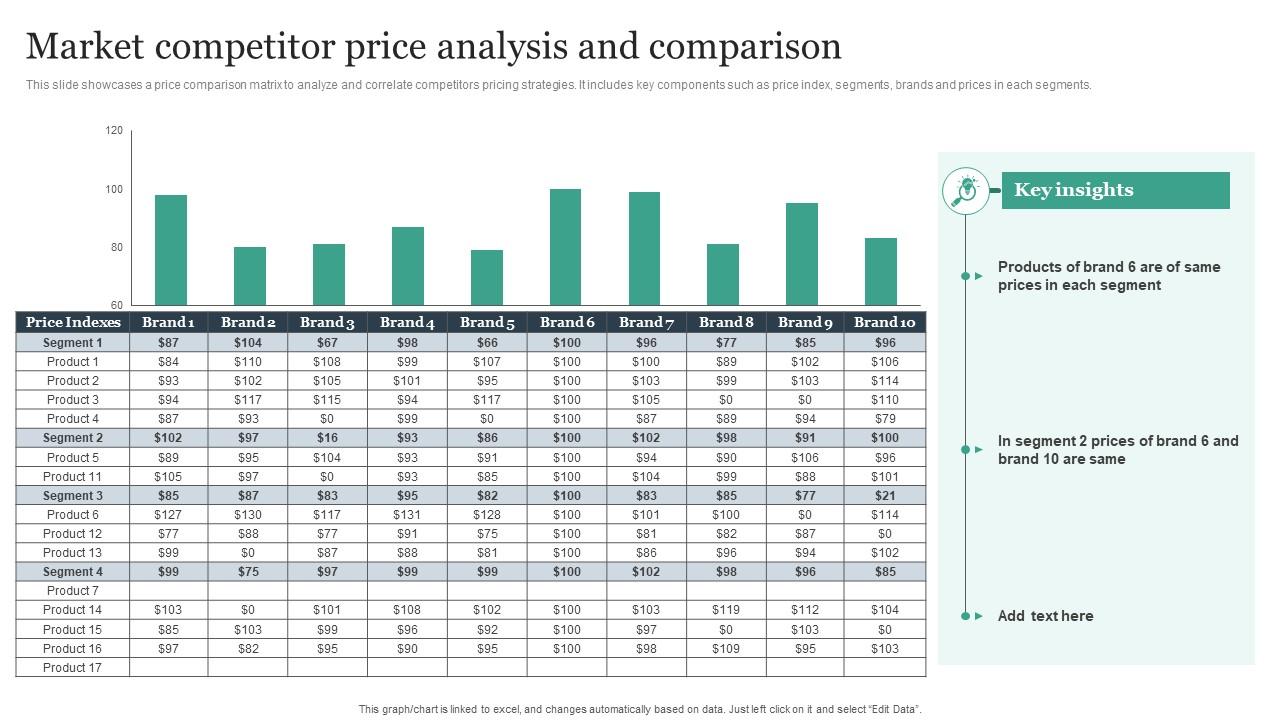
This slide showcases a price comparison matrix to analyze and correlate competitors pricing strategies. It includes key components such as price index, segments, brands and prices in each segments. Introducing our Market Competitor Price Analysis And Comparison set of slides. The topics discussed in these slides are Market Competitor, Price Analysis And Comparison. This is an immediately available PowerPoint presentation that can be conveniently customized. Download it and convince your audience.

FAQs for Market Competitor Price

Market competitor price analysis involves evaluating competitor pricing, cost structures, perceived value, and demand elasticity, ultimately shaping a company’s own pricing decisions. While competitive pricing is crucial, it also requires considering brand positioning, product differentiation, and operational efficiency, with many retail and financial services firms finding that value-based pricing enhances profitability and customer experiences.

Competitor price analysis involves web scraping, publicly available data, and subscription to industry reports, while ensuring adherence to legal standards. These technologies streamline data collection by automating processes, identifying trends, and benchmarking against rivals, with many financial services and retail organizations finding that ethical sourcing builds trust. Ultimately delivering competitive intelligence and informed pricing strategies, it enables strategic resource allocation and enhanced market positioning in an increasingly dynamic landscape.

Product differentiation significantly shapes competitive pricing by enabling businesses to justify premium pricing, reduce price sensitivity, and foster brand loyalty. While cost leadership focuses on undercutting rivals, differentiation—through features, quality, or service—allows organizations, like those in luxury retail or specialized manufacturing, to command higher margins. These strategies enhance perceived value, ultimately delivering increased profitability and a sustainable competitive advantage with many institutions finding that strong differentiation minimizes direct price comparisons.

Seasonal trends significantly impact competitor pricing strategies by influencing demand, inventory levels, and promotional calendars. While increased demand during peak seasons often leads to premium pricing, competitors also employ strategic discounts during off-peak periods to stimulate sales and clear inventory. With many retailers finding that dynamic pricing models, coupled with competitor monitoring, enhance profitability and market share, ultimately delivering competitive advantage and optimized revenue streams.

Competitor price monitoring tools include Price2Spy, Prisync, Competera, and Visualping, alongside specialized eCommerce platforms. These technologies streamline data collection by web scraping, automated alerts, and price comparison charts, ultimately delivering real-time insights and enabling dynamic pricing strategies with many retailers finding that proactive adjustments enhance profitability.

Psychological pricing tactics—like charm pricing ($9.99), prestige pricing, and odd-even pricing—impact consumer perception of value by leveraging cognitive biases, creating perceptions of savings, and influencing purchase decisions. While seemingly minor, these strategies significantly affect buying behavior across retail, hospitality, and financial services, with many organizations finding that perceived affordability drives volume. Ultimately delivering increased sales and enhanced brand loyalty, these tactics streamline marketing efforts and boost revenue streams.

Competitor price analysis should inform a dynamic pricing strategy encompassing cost-plus, value-based, and competitive pricing models, while consistently monitoring market fluctuations. These approaches enable organizations to respond swiftly to competitor actions, such as discounts or promotions, ultimately delivering enhanced profitability and sustained competitive advantage.

Competitor price analysis should encompass list price, discounts offered, payment terms, and shipping costs, alongside value-added services like warranties and support. These technologies streamline competitive assessments by identifying price gaps, margin discrepancies, and customer perception differences, with many retail and financial services firms finding that consistent monitoring enables strategic price adjustments. Ultimately delivering enhanced profitability and sustained competitive advantage in an increasingly dynamic marketplace.

Market competitor price wars significantly impact long-term industry health by eroding margins, fostering instability, and potentially diminishing perceived value. While short-term gains can be realized, it also necessitates strategic resource allocation towards innovation, customer retention, and operational efficiency, with many manufacturers finding that sustained profitability hinges on differentiation. These approaches streamline processes, enhance brand loyalty, and ultimately deliver competitive advantage and increased market share in an increasingly volatile landscape.

Market competitor price analysis involves gathering, evaluating, and interpreting pricing data from rivals, but presents both challenges and opportunities regarding ethical conduct. While understanding competitor strategies helps optimize pricing, it also requires avoiding deceptive practices like misrepresentation or illegally obtaining confidential information. With many organizations finding that transparency and fair competition build long-term trust, maintaining ethical standards ultimately delivers sustainable advantage and enhanced brand reputation.

Competitor pricing intelligence informs promotional strategies by revealing market gaps, identifying optimal price points, and highlighting opportunities for targeted discounts. While understanding competitor rates is crucial, it also requires analyzing their promotional calendars and value propositions. These technologies streamline resource allocation by enabling data-driven decisions, ultimately delivering increased market share and enhanced customer experiences with many retailers finding that agile pricing delivers a significant competitive advantage.

Competitor price analysis pitfalls include focusing solely on list prices, ignoring promotional offers, neglecting total cost of ownership, and failing to account for value-added services. These analyses can be misleading without considering shipping, financing, or post-sale support, with many retail and financial services organizations finding inaccurate data leads to flawed pricing strategies. Ultimately delivering reduced margins and lost competitive advantage, a holistic view enhances profitability and market positioning.

Social media monitoring reveals competitor pricing through tracking brand mentions, analyzing promotional posts, and observing customer discussions on platforms like X and Facebook. While direct price scraping can be challenging, sentiment analysis helps gauge customer reactions to competitor offers, enabling strategic adjustments. These technologies streamline market research by identifying trends, assessing perceived value, and ultimately delivering competitive advantage and informed resource allocation with many retail and financial services firms finding that proactive monitoring enhances pricing strategies.

Customer feedback plays a crucial role in refining our pricing model against competitors, informing adjustments based on perceived value, willingness to pay, and competitor offerings. While competitor pricing establishes a baseline, understanding customer responses to features, benefits, and price points enables strategic adjustments, with many organizations finding that incorporating this data enhances price optimization. These insights streamline resource allocation, ultimately delivering competitive advantage and increased customer satisfaction in an increasingly dynamic market environment.

Market competitor price analysis should occur at least monthly, and potentially weekly, given volatile conditions, encompassing direct competitor pricing, promotional offers, and value-added services. These frequent checks enable organizations to swiftly adjust strategies, maintaining competitive positioning while safeguarding profit margins, with many retail and financial services firms finding that agility delivers significant advantage.

Ratings and Reviews

90% of 100
Review Form
Write a review
Most Relevant Reviews
  1. 80%

    by Alexander Ramirez

    The information is visually stunning and easy to understand, making it perfect for any business person. So I would highly recommend you purchase this PPT design now!
  2. 100%

    by Charles Peterson

    Informative and engaging! I really like the design and quality of the slides.

2 Item(s)

per page: