


Optimization Of Cloud Computing Infrastructure Model Powerpoint Presentation Slides




Try Before you Buy Download Free Sample Product
 Impress Your
 Audience
 100%
100% Editable
 Save Hours
 of Time


Optimization of Cloud Computing Infrastructure Model talks about cloud computing infrastructure, which is the collection of software and hardware elements required to enable cloud computing. It incorporates various templates that showcase an overview of the companys existing IT infrastructure and the companys key challenges. It also highlights a budget overview for building your private cloud infrastructure. Additionally, it elucidates significant components of a cloud platform that act as an independent web service, comprising node, cluster, and cloud controller. This PowerPoint presentation covers slides that display a roadmap for setting up a load balancing architecture. Throw some light on the ways to secure cloud infrastructure from security threats taking the assistance of our cloud computing ppt presentations. It also gives you the authority to choose the right external service provider and select the right software vendor. It contains templates that focus on building relevant tools to manage day-to-day operations. You can also utilize our presentation to provide a tactical strategy for optimizing cloud performance to reduce overall costs. Lastly, it incorporates a dashboard that depicts major statistics based on data storage and server usage of the cloud for better optimizing cloud components. Get access now.
People who downloaded this PowerPoint presentation also viewed the following :
Content of this Powerpoint Presentation
Slide 1: This slide introduces Optimization of Cloud Computing Infrastructure Model. State Your Company Name and begin.
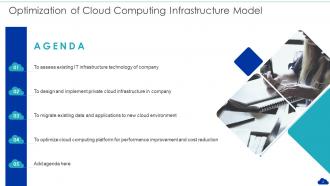
Slide 2: This slide states Agenda of the presentation.
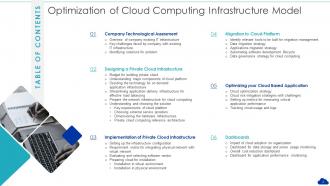
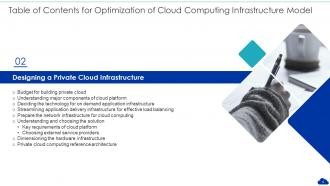
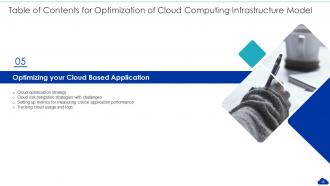
Slide 3: This slide presents Table of Content for the presentation.
Slide 4: This slide highlights title for topics that are to be covered next in the template.
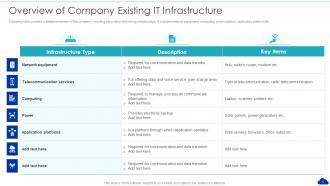
Slide 5: This slide shows Overview of Company Existing IT Infrastructure.
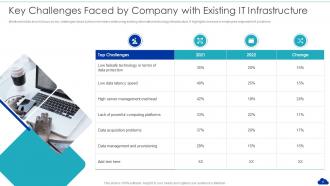
Slide 6: This slide presents Key Challenges Faced by Company with Existing IT Infrastructure.
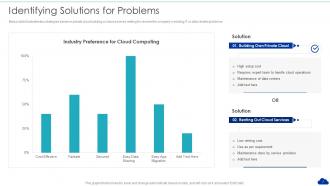
Slide 7: This slide displays Identifying Solutions for Problems.
Slide 8: This slide highlights title for topics that are to be covered next in the template.
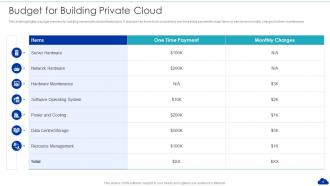
Slide 9: This slide highlights a budget overview for building own private cloud infrastructure.
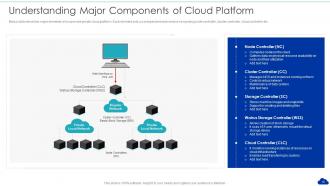
Slide 10: This slide shows Understanding Major Components of Cloud Platform.
Slide 11: This slide highlights title for topics that are to be covered next in the template.
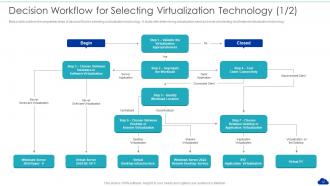
Slide 12: This slide presents Decision Workflow for Selecting Virtualization Technology.
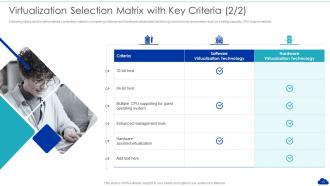
Slide 13: This slide displays Virtualization Selection Matrix with Key Criteria.
Slide 14: This slide highlights title for topics that are to be covered next in the template.
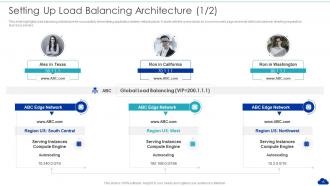
Slide 15: This slide shows Setting Up Load Balancing Architecture.
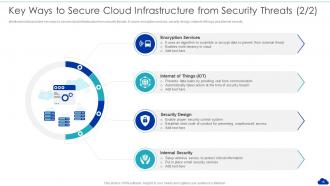
Slide 16: This slide presents Keyways to Secure Cloud Infrastructure from Security Threats.
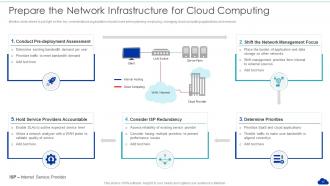
Slide 17: This slide represents Network Infrastructure for Cloud Computing.
Slide 18: This slide highlights title for topics that are to be covered next in the template.
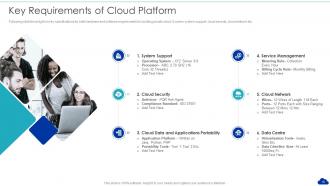
Slide 19: This slide showcases key specifications for both hardware and software requirements.
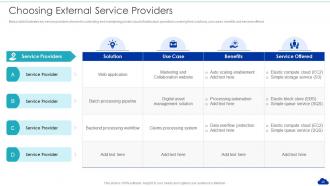
Slide 20: This slide shows Choosing External Service Providers.
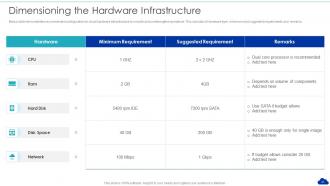
Slide 21: This slide presents Dimensioning the Hardware Infrastructure.
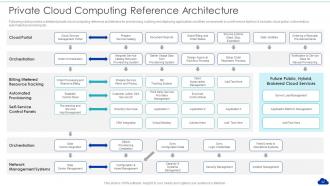
Slide 22: This slide displays Private Cloud Computing Reference Architecture.
Slide 23: This slide highlights title for topics that are to be covered next in the template.
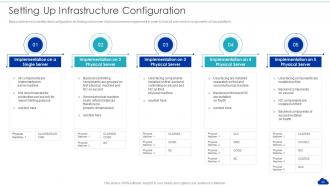
Slide 24: This slide represents Setting Up Infrastructure Configuration.
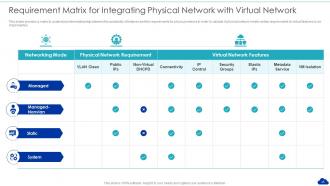
Slide 25: This slide showcases Requirement Matrix for Integrating Physical Network with Virtual Network.
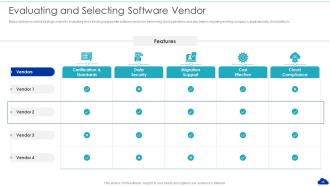
Slide 26: This slide shows Evaluating and Selecting Software Vendor.
Slide 27: This slide highlights title for topics that are to be covered next in the template.
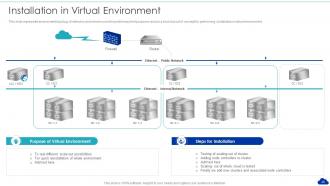
Slide 28: This slide represents environment topology of networks and servers used for preliminary test purposes.
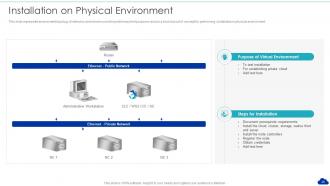
Slide 29: This slide showcases Installation on Physical Environment.
Slide 30: This slide highlights title for topics that are to be covered next in the template.
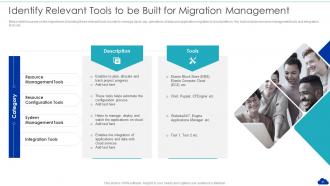
Slide 31: This slide shows Identify Relevant Tools to be Built for Migration Management.
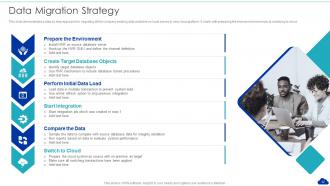
Slide 32: This slide demonstrates a step by step approach for migrating all the company existing data.
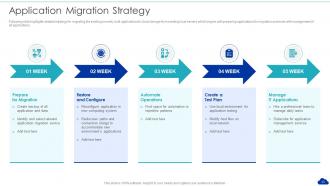
Slide 33: Following slide highlights detailed strategy for migrating the existing or newly built applications.
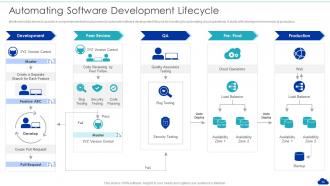
Slide 34: This slide presents Automating Software Development Lifecycle.
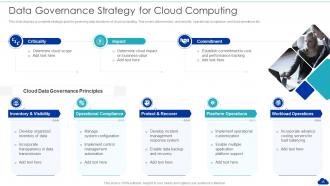
Slide 35: This slide displays Data Governance Strategy for Cloud Computing.
Slide 36: This slide highlights title for topics that are to be covered next in the template.
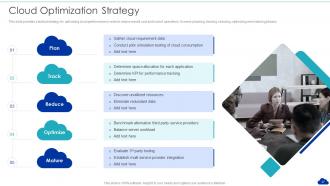
Slide 37: This slide provides a tactical strategy for optimizing cloud performance.
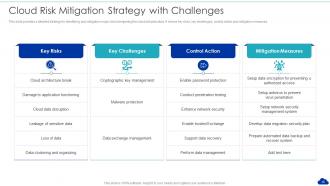
Slide 38: This slide represents Cloud Risk Mitigation Strategy with Challenges.
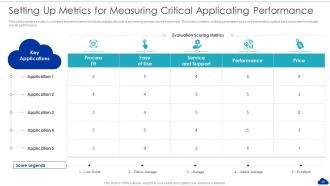
Slide 39: This slide showcases Setting Up Metrics for Measuring Critical Applicating Performance.
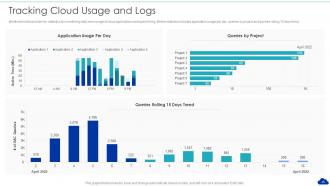
Slide 40: This slide shows key statistics for monitoring daily wise usage of cloud applications.
Slide 41: This slide highlights title for topics that are to be covered next in the template.
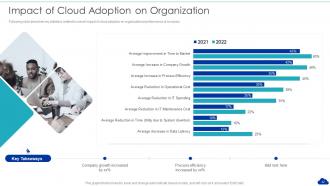
Slide 42: This slide presents Impact of Cloud Adoption on Organization.
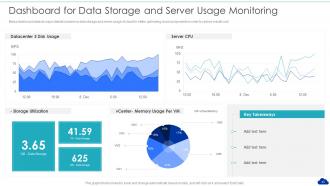
Slide 43: This slide displays Dashboard for Data Storage and Server Usage Monitoring.
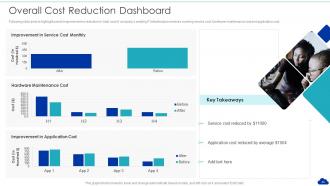
Slide 44: This slide presents Overall Cost Reduction Dashboard.
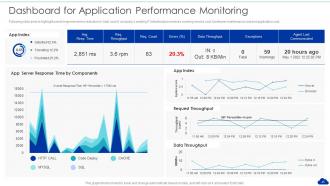
Slide 45: This slide represents Dashboard for Application Performance Monitoring.
Slide 46: This slide showcases Icons for Optimization of Cloud Computing Infrastructure Model.
Slide 47: This slide is titled as Additional Slides for moving forward.
Slide 48: This is Our Mission slide with related imagery and text.
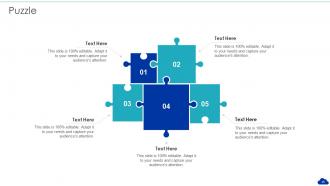
Slide 49: This slide contains Puzzle with related icons and text.
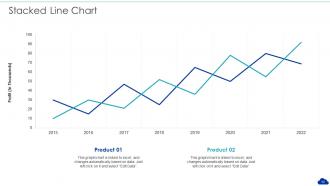
Slide 50: This slide represents Stacked Line chart with two products comparison.
Slide 51: This slide depicts Venn diagram with text boxes.
Slide 52: This slide provides 30 60 90 Days Plan with text boxes.
Slide 53: This is Our Goal slide. State your firm's goals here.
Slide 54: This slide shows Post It Notes. Post your important notes here.
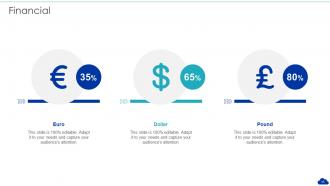
Slide 55: This is a Financial slide. Show your finance related stuff here.
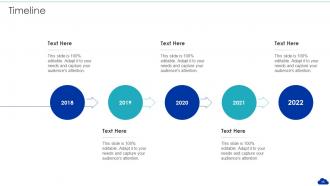
Slide 56: This is a Timeline slide. Show data related to time intervals here.
Slide 57: This is a Thank You slide with address, contact numbers and email address.
Optimization Of Cloud Computing Infrastructure Model Powerpoint Presentation Slides with all 62 slides:
Use our Optimization Of Cloud Computing Infrastructure Model Powerpoint Presentation Slides to effectively help you save your valuable time. They are readymade to fit into any presentation structure.








FAQs for Optimization Of Cloud Computing Infrastructure Model
Key factors include response time, throughput, scalability, resource utilization, and cost efficiency, along with security metrics and availability rates. Through comprehensive monitoring tools, organizations streamline performance assessment by tracking latency patterns, optimizing resource allocation, and enhancing user experiences, with many enterprises finding that strategic performance evaluation ultimately delivers competitive advantage and operational transparency.
Organizations can effectively monitor cloud resource usage through comprehensive analytics platforms, real-time performance dashboards, automated cost tracking tools, resource utilization reports, and predictive scaling algorithms. These monitoring solutions enable businesses to identify underutilized instances, optimize storage allocation, and reduce unnecessary expenses, with many enterprises finding that strategic resource analysis delivers 20-40% cost reductions while enhancing operational efficiency.
Automation streamlines cloud cost optimization by enabling dynamic resource scaling, automated scheduling of non-critical workloads, intelligent rightsizing recommendations, and continuous monitoring of usage patterns. Through automated policies, organizations significantly reduce over-provisioning waste, minimize manual intervention costs, and achieve real-time cost adjustments, with many enterprises finding 20-40% infrastructure savings while enhancing operational efficiency.
Businesses leverage containerization to enhance cloud resource management by enabling consistent application deployment, improving resource utilization, and facilitating automated scaling across environments. Through Docker and Kubernetes, organizations streamline development workflows, reduce infrastructure costs, and accelerate service delivery, with many enterprises finding that containerized applications optimize both performance and operational efficiency.
Strategies include load balancing, content delivery networks, auto-scaling, network segmentation, and bandwidth optimization. These approaches enhance performance by distributing traffic efficiently, reducing latency through geographically distributed servers, and automatically adjusting resources based on demand, with many organizations finding that strategic network optimization delivers faster application responses and improved user experiences.
Different cloud service models require distinct optimization approaches, with IaaS focusing on virtual machine sizing, storage allocation, and network configuration, while PaaS emphasizes application performance tuning and resource scaling. SaaS optimization involves user management and integration efficiency, with many organizations finding that strategic combinations across models deliver enhanced operational flexibility, reduced infrastructure overhead, and accelerated deployment capabilities.
**INPUT**: What are the best practices for scaling cloud infrastructure dynamically based on demand? **OUTPUT**: Best practices for dynamic cloud scaling include implementing auto-scaling policies, utilizing load balancers, leveraging containerization, monitoring real-time metrics, and establishing predictive analytics capabilities. These approaches streamline resource allocation by automatically adjusting capacity, minimizing costs, and maintaining performance consistency, with many organizations finding that strategic scaling ultimately delivers enhanced operational efficiency and competitive advantage in increasingly demanding digital environments. **Word count: 59 words**
Load balancing techniques improve cloud computing efficiency by distributing workloads evenly across multiple servers, preventing bottlenecks, and optimizing resource utilization. These methods enable organizations to handle traffic spikes seamlessly, reduce response times, and minimize infrastructure costs, with many enterprises in retail and financial services finding that strategic load balancing delivers enhanced performance and competitive operational advantage.
Essential metrics include CPU utilization, memory consumption, network latency, storage I/O performance, availability rates, and cost per workload. These performance indicators enable organizations to optimize resource allocation, predict scaling needs, and maintain service quality, with many enterprises finding that comprehensive monitoring ultimately delivers improved operational efficiency and reduced infrastructure costs.
Organizations apply hybrid cloud models by strategically distributing workloads between public and private clouds based on security requirements, performance needs, and cost considerations. This approach enables companies to maintain sensitive data on-premises while leveraging public cloud scalability for variable workloads, ultimately delivering enhanced operational flexibility, reduced infrastructure costs, and improved resource allocation across their entire technology ecosystem.
Common cloud infrastructure optimization tools include AWS CloudWatch, Azure Monitor, Google Cloud Operations Suite, Terraform, Kubernetes, and cost management platforms like CloudHealth and Spot.io. These technologies enhance performance by automating resource scaling, monitoring system metrics, and optimizing workload placement, with many organizations finding that strategic combinations deliver significant cost reductions and improved operational efficiency.
Data locality significantly influences cloud performance by reducing latency, minimizing bandwidth costs, and improving application responsiveness through strategic data placement near processing resources. Organizations in sectors like financial services and e-commerce increasingly leverage geo-distributed storage and edge computing to enhance user experiences, streamline operations, and deliver competitive advantages in global markets.
Key security considerations include data encryption, access controls, network segmentation, compliance frameworks, and continuous monitoring systems. These measures enhance cloud infrastructure by preventing unauthorized access, protecting sensitive information, and ensuring regulatory compliance, with many financial institutions and healthcare organizations finding that strategic security optimization ultimately delivers operational resilience and competitive advantage.
Serverless architectures optimize cloud resources by eliminating idle server costs, automatically scaling based on demand, and charging only for actual execution time. Through event-driven computing, organizations streamline operations, reduce infrastructure management overhead, and achieve significant cost savings, with many financial services and e-commerce companies finding that serverless delivers faster deployment cycles and enhanced operational efficiency.
Multi-cloud strategies present both challenges and opportunities for infrastructure optimization, requiring careful resource allocation, workload distribution, and cost management across multiple platforms. While organizations gain enhanced flexibility, redundancy, and vendor independence, they must navigate increased complexity in monitoring and integration, with many enterprises finding that strategic multi-cloud approaches ultimately deliver improved resilience and competitive advantage.
-
Very unique, user-friendly presentation interface.
-
Like always a great experience with you guys. Always there on the drop of hat to help.