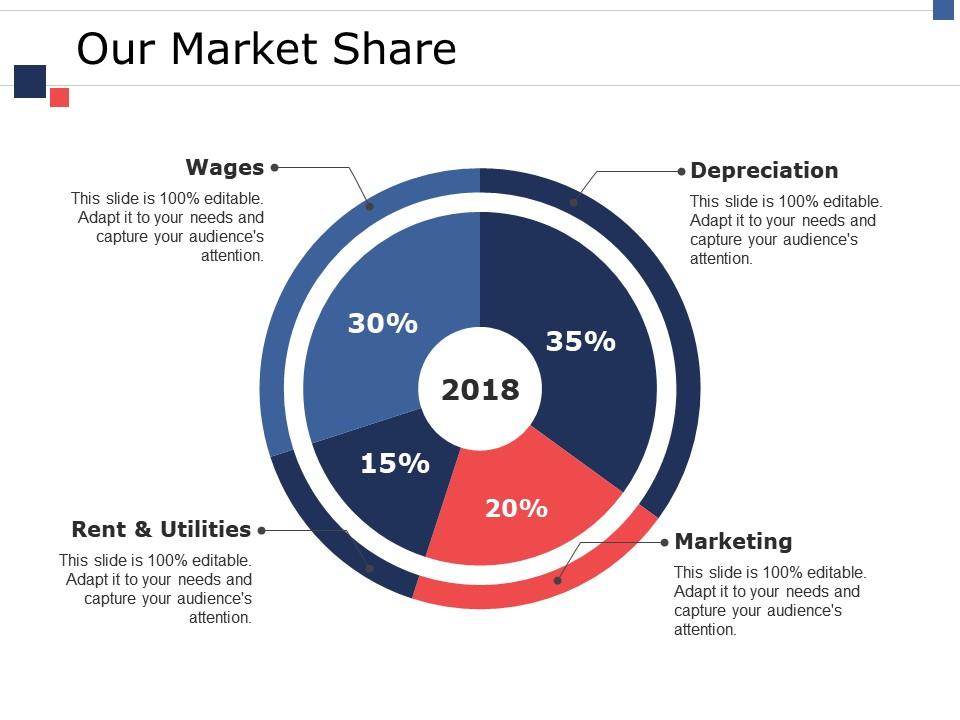
Our market share ppt show
Try Before you Buy Download Free Sample Product
Audience
Editable
of Time
Get elected to the helm of affairs with our Our Market Share Ppt Show. Folks will consider you an excellent choice.
People who downloaded this PowerPoint presentation also viewed the following :
Our market share ppt show with all 5 slides:
Create attitudinal changes with our Our Market Share Ppt Show. The audience will feel extremely enthusiastic.
FAQs for Our market
Product quality and pricing are obviously huge. But honestly? Customer service can make or break you - I've watched companies tank just from terrible support. Brand recognition matters too, plus how well you actually know your customers (not just think you do). Your marketing game, how fast you innovate, distribution channels... all critical. Then there's whatever mess your competitors are doing and any regulatory stuff that might hit your industry. Just compare yourself against the competition on these things first. You'll spot the gaps pretty quick.
Honestly, I'd start with tools like SimilarWeb or SEMrush to track their pricing and product launches. Social media is gold too - plus customer reviews are basically free intelligence (people really overshare lol). Watch their partnerships and distribution moves since that shows their real priorities. Then just cross-check everything with industry reports and your sales data. The trick isn't doing massive research dumps but setting up ongoing monitoring. That way you'll catch shifts before they blindside you. I learned this the hard way when a competitor pivoted right under our noses last year.
Honestly, think of loyal customers as your shield against competitors trying to poach your business. They won't bail the second someone else runs a flashy promotion or launches something new. Retention costs way less than hunting for fresh customers - like 5 times cheaper, which is pretty wild when you think about it. Your loyal bunch also turns into walking advertisements, bringing friends along. I'd track stuff like how many stick around and do NPS surveys to see where you stand. Just don't wait until they're already eyeing the competition to start caring about the relationship.
Honestly, segmentation is way smarter than trying to appeal to everyone. You can actually grow your overall market share by totally dominating specific niches. Look at Apple - they don't have the biggest phone market share, but they absolutely own the premium space and make crazy profits from it. When you focus on particular customer groups, your messaging hits harder and you get better conversion rates. People become way more loyal too. Once you've nailed one segment, it's pretty easy to expand into related ones. I'd pick your strongest segment first and just go all-in there.
There's a few ways to tackle this depending on what data you can actually get your hands on. Most companies go with revenue - just divide your sales by total market sales. If you're selling physical stuff, unit counts work too (your units vs everyone else's). Customer-based is another angle - how many customers you have compared to the whole market. Honestly though? Getting good industry data is usually where this gets messy. For B2B especially, you'll probably end up digging through industry reports or doing surveys since that comprehensive data just isn't sitting around waiting for you. I'd start with whatever reliable source you can find and stick with it.
So here's the thing - when the economy's doing well, people blow money on fancy stuff, vacations, random purchases. Those sectors grab more market share while basic necessities lose ground. Recession hits? Total opposite. Grocery stores and Walmart suddenly crush it while restaurants tank hard. I've seen this pattern play out so many times it's almost boring at this point. You should definitely check market share shifts against stuff like GDP and unemployment rates - oh, and consumer confidence too. That's where you'll actually see what's driving the changes instead of just guessing.
Look, SWOT analysis basically tells you why you're winning or losing customers. Strengths show what makes people pick you over the competition. Weaknesses? That's where you're probably hemorrhaging market share without realizing it. The opportunities section is honestly my favorite part - it reveals untapped customer segments or trends you haven't jumped on yet. Threats help you see what's coming that could mess with your position. Map each piece directly to what's happening in your market, then focus on moves that either protect what you've got or help you grab share from competitors. Pretty straightforward once you break it down.
Yeah so basically new tech lets scrappy companies completely bypass the old giants by changing the rules. Netflix crushed Blockbuster, smartphones made GPS devices pointless - you know the drill. Big companies get trapped protecting what they already have while startups can just dive headfirst into whatever's next. The pattern's always the same: new tech looks weak at first, then boom - suddenly it's everywhere. I'd watch for companies actually investing in emerging stuff instead of just defending their turf. Those are usually the ones that don't get left behind.
Market share data shows you exactly where to spend your development money and time. Losing ground in important segments? You probably need features that fix what competitors are doing better. When you've got high share, you can take bigger risks with innovation - though honestly, that's usually when teams get lazy. Low share means you either differentiate quick or find some niche you can actually own. I've seen too many companies waste resources fighting battles they can't win. The real trick is using this info to decide: double down where you're strong, or pivot to areas with less competition where you might actually have a shot.
Honestly, social media's pretty solid for figuring out market share stuff. Just track how often people mention your brand vs competitors - look at hashtags, comments, all that. Share of voice is what they call it, basically how much of the conversation you're owning. Brandwatch works great if you've got budget, but Google Alerts is free and does the trick too. I'd start with your top 3 competitors and check trends monthly. It's kinda like having a focus group that never stops running. Also watch sentiment - are people actually saying good things or just complaining? That matters way more than raw mentions.
Honestly, you gotta focus on stuff the big guys can't touch - like actually knowing your customers' names and what they want. Pick a specific group of people and serve them way better than anyone else bothers to. Social media's huge for this because it's cheap and you can actually talk to people instead of just shouting ads at them. Oh, and partner up with businesses that complement yours - it's like splitting marketing costs but doubling your reach. Don't try competing on everything though, that's a losing game. Just nail one thing first, then move on to the next.
So basically, bigger market share gives you more freedom to set higher prices - customers trust the dominant brand more. You can flip this though and use lower prices to steal market share from competitors. Honestly, most companies mess this up by going too extreme either way. The trick is finding your sweet spot between growing your customer base and not tanking your profits. I'd start by checking what your main competitors charge, then figure out if you should go for volume or premium pricing. It's like a balancing act, but once you nail it, you're golden.
Dude, regulations literally reshape entire markets overnight. Look at GDPR - suddenly all those privacy-focused startups had a real shot against Facebook and Google. Banking rules? Total nightmare for new players but keeps the old guard safe. One policy shift can completely flip who's winning in an industry. Markets get split up, consolidated, or totally restructured based on what regulators decide. I learned this the hard way watching fintech - those compliance costs are brutal. You really gotta stay on top of regulatory changes in your space because honestly? They'll disrupt market share way more than any competitor will.
Market share can flip really fast when people's buying habits change. Streaming absolutely destroyed Blockbuster - that happened so quick it was insane. Your customers might suddenly care more about being eco-friendly or saving money, and they'll just... leave for brands that get it. Organic food is huge now compared to like 10 years ago because everyone's obsessed with health (I mean, fair enough). Small shifts snowball as people talk. You've gotta watch your customer data and what they're saying online so you can pivot before everyone else catches on.
You'll want to track your market share against your biggest competitor specifically, not just overall market share. Growth rate over time matters too. Geographic breakdowns are huge - I've seen companies think they're doing great overall while getting crushed in key regions. Revenue share vs unit share tells totally different stories, especially if you're going premium. Share of wallet with existing customers is another big one people miss. Track monthly if you can swing it, and compare against your top 3 competitors instead of just market averages. That gives you way better insight into what's actually happening.
-
Nice and innovative design.
-
Excellent work done on template design and graphics.