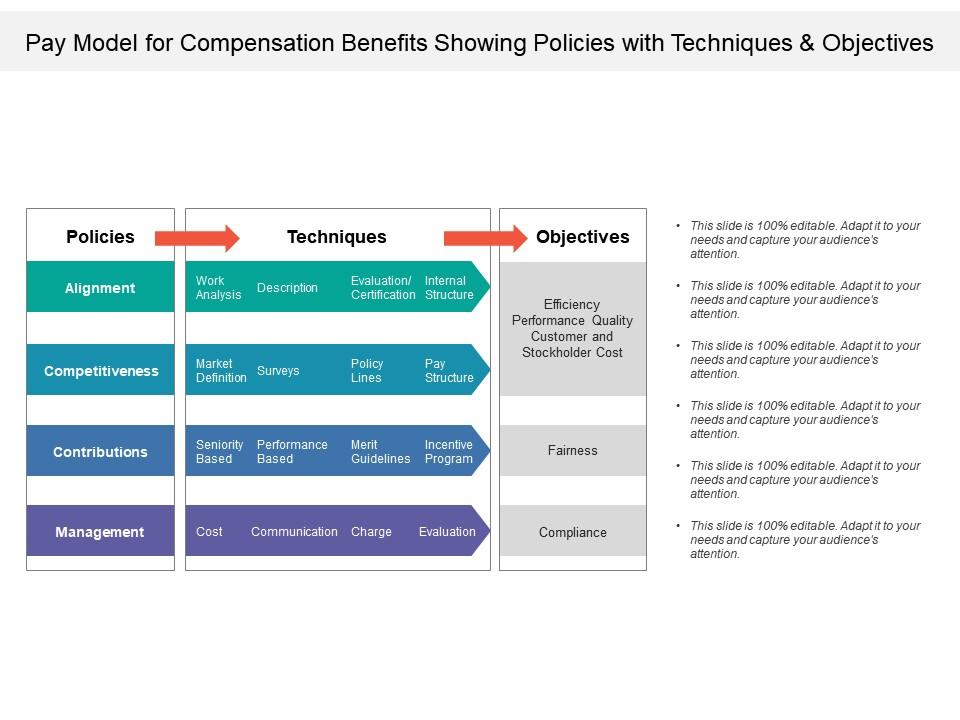
Pay model for compensation benefits showing policies with techniques and objectives

Rating:
100%
Pay model for compensation benefits showing policies with techniques and objectives
Slide 1 of 5
Favourites Favourites

Try Before you Buy Download Free Sample Product

Audience Impress Your
Audience
Editable 100%
Editable
Time Save Hours
of Time
The Biggest Sale is ending soon in
0
0
:
0
0
:
0
0
Rating:
100%
Presenting this set of slides with name - Pay Model For Compensation Benefits Showing Policies With Techniques And Objectives. This is a four stage process. The stages in this process are Compensation Benefits, Fixed Monetary, Fixed Cash.

People who downloaded this PowerPoint presentation also viewed the following :

FAQs for Pay model for compensation benefits showing policies with

Honestly, start with the basics - base salary, bonuses/commissions, and benefits. Stock options too if you're doing that. Then there's all the other stuff people actually care about now, like flexible schedules and decent PTO. If you've got remote people everywhere, you'll need to adjust for location - someone in NYC vs. rural Kansas, you know? Benchmark against what competitors are paying for similar roles first. Then figure out what behaviors you actually want to reward and structure everything around that. Performance metrics should tie back to what moves the needle for your business, not just random KPIs.

Look, compensation is huge for keeping people around. If your team can't see how their hard work translates to actual money - bonuses, raises, equity, whatever - they'll check out mentally or just leave. Makes total sense, right? The worst thing you can do is make pay decisions seem random or unfair. That's how you lose your best people overnight. Figure out what your team actually cares about first though. Some want that steady base salary, others are all about performance bonuses. Just ask them - seriously, send a quick survey. Then build your system around that.

So market analysis is your sanity check - shows what other companies pay for the same jobs so you don't get left behind. Compare against similar industry/location/company size to see how you stack up. Trust me, being 20% under market rate is a fast track to watching good people bail. The data helps set salary ranges and gives you ammo when asking leadership for budget increases. Oh, and pull from like 3-5 solid sources minimum before making moves. You don't want to base major pay decisions on sketchy data.

Start with clear pay bands for every role - that's your base. Regular pay audits will catch problems early (learned this the hard way at my last company). Document your promotion processes so there's no confusion about how decisions get made. Honestly, manager bias training is huge even when people mean well. Don't wait for issues to pop up. Check your comp data quarterly and actually do something about what you discover. The whole thing falls apart if you're just reactive instead of staying ahead of it.

Track your turnover and promotion rates first - that's where you'll see if people actually want to stay. Performance ratings matter too, obviously. Then check if pay lines up with results and whether you're hitting budget. Most companies just set their comp structure once and never look back, which is honestly pretty dumb. Recruitment metrics help too - how fast you're filling roles, success rates, all that. I'd run these quarterly and compare to last year. If turnover jumps or everyone's just coasting performance-wise, time to adjust. The financial stuff is important but the people metrics usually tell the real story first.

Dude, seriously look at the whole package, not just base salary. Like if they're offering $80k but throwing in solid health insurance, 401k matching, stock options, bonuses - you're actually getting closer to $95-100k in real value. I've seen companies pull this weird move where they lowball the salary then oversell their "incredible benefits package." Calculate everything when you're comparing offers. That base number everyone obsesses over? It's honestly just one piece of the puzzle. Some of those other perks can add up to serious money.

Honestly, the hardest part is gonna be convincing people this isn't just corporate BS. Employees hate pay changes - even bad ones they're used to. Leadership will freak about costs too. Then there's all the boring technical stuff, updating systems and staying compliant (ugh). Oh, and if you don't explain the "why" clearly, people will assume you're screwing them over. Communication is everything here. I'd definitely start small with a pilot group first. That way when things go sideways - and they will - you're not dealing with your entire workforce being pissed off.

Honestly, tech can totally save your sanity with comp stuff. HRIS systems pull salary data automatically and benchmark against market rates - cuts out so much tedious work. Analytics tools are great for spotting pay gaps before they become problems. Real-time tracking through comp management software beats the hell out of those endless spreadsheets we all hate. The visualization features actually make presenting to leadership way less painful too. I'd start by looking at what you're doing manually right now. Figure out which repetitive tasks are eating up most of your time, then find tools to automate those first.

Your comp model has to hit all the wage law basics - minimum wage, overtime rules, equal pay stuff. FLSA is the big one for overtime exemptions. Don't create pay gaps based on protected characteristics or you're asking for trouble. Some states now require salary ranges in job postings (California's a pain about this). Document everything and run regular audits for disparities. Honestly, loop in legal from day one when you're designing this stuff. Way cheaper than fixing a mess later. The rules keep changing too, so stay on top of updates.

Honestly, it's all about your industry. Tech throws equity and bonuses at people because the talent war is insane. Manufacturing? Usually base salary plus overtime. Sales teams live for commission structures - makes sense. Nonprofits can't compete on cash but they'll hook you up with solid benefits and you won't hate your life working there. Healthcare and finance are pretty locked into standardized pay bands because of regulations and stuff. You really just need to figure out what actually motivates people in your space and see what everyone else is paying. Then decide if you're going base-heavy or loading up on variable comp.

Honestly, your company culture is gonna shape everything about how you pay people. Transparent cultures? They'll do open salary bands and clear promotion paths. Traditional places keep everything hush-hush and hierarchy-driven. Team-focused companies love group bonuses and equity sharing. Competitive environments are all about individual performance rewards - which can get pretty cutthroat if you ask me. Even small stuff like unlimited PTO versus earned days shows whether leadership actually trusts employees. My advice? Figure out what your culture really is first, then build compensation that works with it instead of against it.

Honestly, I'd ditch the hourly tracking and focus on what actually gets done. Set up clear project milestones and pay when they hit those markers. For freelancers, try value-based pricing if their work really moves the needle - though hourly still makes sense for some stuff. Your remote employees should get the same base pay as office people, but you might need to adjust for where they live (cost of living varies like crazy). Start by writing down exactly what you want delivered. Then figure out what that's worth to you. Way easier than micromanaging hours.

Dude, don't wait for people to come ask about pay - that's already too late. Break down your compensation process in regular meetings and actually explain how you decide on raises. Write it all down too so people can look it up later. Honestly, most companies think one yearly review covers it, but that's laughable. Town halls work great for this stuff. Train your managers to talk about it openly instead of being weird and secretive. Make it feel normal, not like some HR mystery box that nobody's allowed to understand.

Check your pay model at least once a year, but twice is better if you can manage it. Markets move crazy fast now. Also jump in whenever there's big organizational changes or if people are bailing from certain roles - that's usually your canary in the coal mine. Honestly, being proactive beats scrambling later when your best people start leaving. Set those calendar reminders now and actually stick to them. Way easier than playing catch-up when you're hemorrhaging talent.

So here's the thing - employee feedback can completely flip your compensation approach. People will call out pay gaps leadership totally missed. They'll tell you what benefits actually matter (hint: sometimes it's not the salary bump). You can catch retention issues before good people bail. Plus you'll see if your current setup motivates the right stuff or backfires. I'd run regular comp surveys and maybe some focus groups. Exit interviews are gold too - track those patterns. Build something that works for real humans, not just what looks neat in Excel. Trust me, spreadsheets lie but employees don't.

Ratings and Reviews

100% of 100
Review Form
Write a review
Most Relevant Reviews
  1. 100%

    by Deshawn Schmidt

    Excellent template with unique design.
  2. 100%

    by James Lee

    Perfect template with attractive color combination.

2 Item(s)

per page: