


Quality Management Analysis Powerpoint Presentation Slides





Try Before you Buy Download Free Sample Product
 Impress Your
 Audience
 100%
100% Editable
 Save Hours
 of Time


Run quality management in your organization and analyse the quality using Quality Management Analysis PowerPoint Presentation Slides. Quality management is a must to deliver high quality products and services to the customers. To keep a tab on the quality of the deliverables, use this professionally designed content-ready quality control analysis PPT slideshow. This ready-made quality management presentation consists of topics on data analysis such as root cause analysis, opportunity analysis, timeline analysis, force field analysis, SIPOC analysis, 5 why analysis, and more. Incorporate the quality management system ppt to eliminate the waste and increase the efficiencies. Add this content-ready quality management PowerPoint slideshow to produce and deliver best quality products to the customers. Click the download button below to access this complete presentation on quality management. Our Quality Management Analysis Powerpoint Presentation Slides furnish you with the full facts. They won't let you go off half baked.
People who downloaded this PowerPoint presentation also viewed the following :
Content of this Powerpoint Presentation
Slide 1: This slide showcases Quality Management Analysis. State Your Company Name and begin.
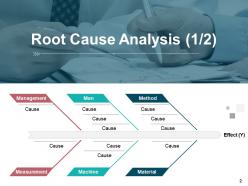
Slide 2: This slide presents Root Cause Analysis (1/2) with which you can add the various effects on market.
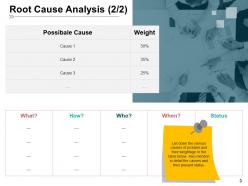
Slide 3: This slide showcases Root Cause Analysis (2/2). List down the various causes of problem and their weightage in the table below. Also mention in detail the causes and their present status.
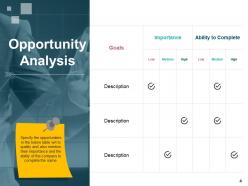
Slide 4: This slide presents Opportunity Analysis. Specify the opportunities in the below table wrt to quality and also mention their importance and the ability of the company to complete the same.
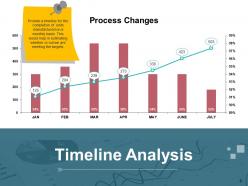
Slide 5: This slide showcases Timeline Analysis. Provide a timeline for the completion of units manufactured on a monthly basis. This would help in estimating whether or not we are meeting the targets.
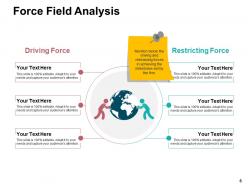
Slide 6: This slide shows Force Field Analysis with these two forces- Restricting Force, Driving Force, Mention below the driving and restraining forces in achieving the milestones set by the firm.
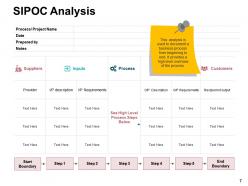
Slide 7: This slide SIPOC Analysis with these parameters- Start Boundary, End Boundary, This analysis is used to document a business process from beginning to end. It provides a high level overview of the process.
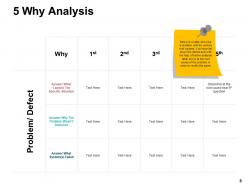
Slide 8: This slide presents 5 Why Analysis. This is a table showing a problem with its various root causes. You have list down the defect and with the help of below analysis table arrive at the root cause of the problem in order to rectify the same.
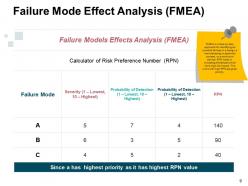
Slide 9: This slide showcases Failure Mode Effect Analysis (FMEA). (FMEA) is a step-by-step approach for identifying all possible failures in a design, a manufacturing or assembly process, or a product or service. RPN helps in indicating the failures which have high risk impact. The one’s with high RPN are given priority.
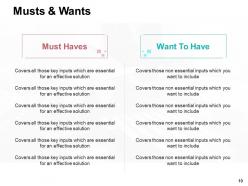
Slide 10: This slide presents Musts & Wants. You can add your data and make use of it.
Slide 11: This slide is a Coffee Break image for a halt.
Slide 12: This slide forwards to Charts & Graphs.
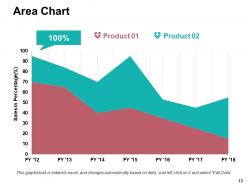
Slide 13: This slide showcases Area Chart. You can add the product the details.
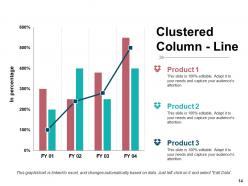
Slide 14: This slide presents Clustered Column - Line. Use it to add the details and make the use of it.
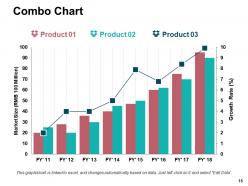
Slide 15: This slide showcases Combo Chart. You can add the product the details.
Slide 16: This slide is titled Additional slides.
Slide 17: This slide represents Our Mission. State your mission, goals etc.
Slide 18: This slide showcases Our Team with Name and Designation to fill.
Slide 19: This slide helps show- About Our Company. The sub headings include- Creative Design, Customer Care, Expand Company.
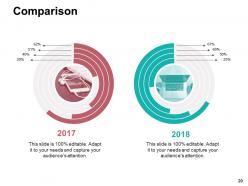
Slide 20: This slide shows Comparison of Positive Factors v/s Negative Factors with thumbsup and thumb down imagery.
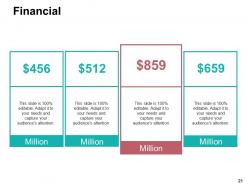
Slide 21: This is a Financial Score slide to show financial aspects here.
Slide 22: This slide displays a Bulb or idea image.
Slide 23: This is a Magnifying glass image slide to show information, scoping aspects etc.
Slide 24: This slide displays a Bulb or idea image.
Slide 25: This slide showcases Area Chart. You can add the product the details.
Quality Management Analysis Powerpoint Presentation Slides with all 25 slides:
Identify aspects deserving caution with our Quality Management Analysis Powerpoint Presentation Slides. Guide folks on how to be careful.
-
Quality Management Analysis
-
Root Cause Analysis 1 2
-
Root Cause Analysis 2 2
-
Opportunity Analysis
-
Process Changes
-
Force Field Analysis
-
SIPOC Analysis
-
5 Why Analysis
-
Failure Mode Effect Analysis FMEA
-
Musts Wants
-

Coffee Break
-

Charts Graphs
-
Area Chart
-
Clustered Column Line
-
Combo Chart
-

Additional Slides
-

Our Mission
-

Our Team
-

About Us
-
Comparison
-
Financial
-
Mind Map
-
Magnify Glass
-
Bulb Or Idea
-

Thank You
FAQs for Quality Management Analysis
Honestly, it all comes down to five things: customer focus, continuous improvement, getting employees involved, process approach, and making decisions based on actual data. Your team needs to feel like they can speak up about improvements - that's probably the biggest game-changer I've seen. Better quality, less waste, happier customers... it all follows from there. Oh, and everything runs smoother when people are working toward the same standards. Map out your current processes first though. Find where things usually go wrong - that's where you'll get the most bang for your buck.
Honestly, you need both leading and lagging indicators - don't just rely on one. Customer satisfaction scores and defect rates are obvious ones. On-time delivery too. But here's what people miss: employee engagement matters way more than most realize since your team actually drives quality, not some fancy system. Set up real-time dashboards instead of those useless monthly reports that just tell you what went wrong last month. Cost of quality is another big one to track. Start simple though - pick maybe 3-5 metrics your customers actually care about and expand from there.
Honestly, stakeholder feedback is like your reality check for quality stuff. Customers, employees, suppliers - they'll tell you what's actually broken vs what you think is working. Yeah, sometimes it hurts to hear, but that's when you know it's good feedback! Different people see different problems, so you figure out what to fix first. I learned this the hard way at my last job - we thought our process was fine until suppliers started complaining. Don't just wait for people to complain though. Set up surveys or regular check-ins to catch issues early.
So data analytics flips your quality management from just reacting to stuff to actually predicting problems before they hit. Pretty cool, right? You'll spot trends and root causes instead of just counting defects after the fact. Honestly, the dashboards alone will save you so much time on reporting - no more endless spreadsheets. Plus you can compare how different teams or processes are performing to figure out what's actually working. Just make sure your data collection is clean from the start, because even basic analytics beats going with your gut every time.
Oh man, where do I even start? Leadership has to actually care - not just say they do. Don't dump a million procedures on people day one, they'll hate you for it. I've seen companies literally copy someone else's playbook word for word... like why would that work? Your business isn't theirs. Train your team properly and let them help build it. Otherwise they'll find workarounds faster than you can blink. Honestly, most failures happen because nobody explains WHY we're doing this stuff. Start simple, get buy-in first, then expand.
So ISO 9001 basically stops you from just winging it and makes you get systematic about quality. Document your processes, set clear objectives, then actually measure if you're hitting them. The cool part? It shifts you toward preventing problems instead of constantly putting out fires - way less stressful honestly. Your whole team gets proper training and you build real feedback loops with customers. Quality becomes everyone's job, not just something you dump on the QA folks. Oh, and definitely map out what you're already doing first before jumping in.
So TQM is basically the "everyone cares about quality" vibe across your whole company - it's this cultural thing that touches everything. Six Sigma? That's when you break out the hardcore statistics to hunt down specific problems. Honestly, Six Sigma can be pretty intense with all its DMAIC processes and shooting for like 3.4 defects per million (which is wild if you think about it). But here's the thing - they actually work great together. TQM gets people in the right mindset. Then Six Sigma gives you the precise tools to actually measure and fix whatever's broken.
So lean basically cuts out all the BS and gets your team focused on stuff that actually matters to customers. You'll catch way fewer defects because instead of just patching problems after the fact, you're digging into why they happened in the first place. That whole "fail fast, learn faster" thing? It actually works. Tools like 5S and value stream mapping help you build systems that stop quality issues before they even start. Honestly, just map out your current quality processes first - I bet you'll find some ridiculous bottlenecks you didn't even know existed.
Okay so for root cause stuff, I'd start with the "5 Whys" method - literally just keep asking why something happened until you get to the actual problem. Super simple but works more often than you'd think. Fishbone diagrams are pretty useful too, especially if you're more of a visual person. They break everything into categories like people, processes, equipment - my old boss was obsessed with these. Fault tree analysis is good for really complex systems, and Pareto helps you tackle the biggest problems first. Honestly though? Just try 5 Whys first. It's fast and you'll be surprised what comes up.
Look, training is honestly what makes or breaks quality management. Your team needs to know what good work looks like and how to catch problems early. Without it, you're just hoping for the best. Trained employees actually care more about their work too - they feel confident instead of lost. Don't do some one-and-done training session though. Make it ongoing. Figure out where your biggest quality issues are happening first, then build training around fixing those specific problems. It's way more effective than generic stuff nobody remembers.
Honestly, you need both the numbers and the soft stuff to really get what's happening. Defect rates and customer satisfaction are obvious ones. First-pass yield is huge - tells you if you're getting it right the first time. Cost of quality too, plus cycle times and how much rework you're doing. But here's what people miss - ask your employees what they're seeing. They catch problems way before the data does. Pick maybe 5-6 metrics that actually relate to your biggest pain points right now. Don't go crazy tracking everything or you'll drown in spreadsheets. Start with whatever's making your life miserable and expand from there.
Honestly, you'll want to bake quality checks into every single step - vendor selection, materials coming in, production handoffs, the whole thing. Set hard standards for your suppliers upfront. Then actually audit them regularly (this is where most people get lazy). The real pain is getting suppliers on board - they hate changing their processes. Build shared dashboards so everyone can see quality metrics in real time. Oh, and create feedback loops! You don't want to discover problems after it's too late. Make it everyone's job, not just quality control's headache.
So AI in quality management is actually pretty crazy right now. Instead of just finding defects after they happen, you can predict them beforehand using machine learning on your production data. The automated inspection stuff finds tiny flaws way faster than humans ever could - honestly the accuracy is getting ridiculous. Root cause analysis gets way better too since these systems can connect thousands of variables at once. My advice? Start small though. Find one quality process where you've got solid data and try a pilot there first. Don't go crazy trying to AI everything at once.
Dude, cultural stuff totally makes or breaks quality management systems. Like in really hierarchical places, workers won't call out problems to their boss - they're too scared. Then you've got communication styles that are wildly different. Some cultures want you to be super direct, others? You'll destroy someone's reputation if you're not careful about face-saving. I swear, companies keep rolling out these "one-size-fits-all" quality programs that just implode. Take your core quality goals but bend them to match how people actually work in each place. Oh, and power dynamics are huge here too.
Honestly, most small businesses I know are finally jumping on automation for quality stuff. Manual checks are such a pain, right? Even basic QMS software doesn't cost a fortune anymore. That whole ISO 9001 thing really changed how people think - now it's about catching problems before they blow up instead of scrambling after. Sustainability tracking is getting crazy important too since customers actually give a damn about environmental impact these days. My advice? Pick one thing to automate first, like document control maybe. Then just build from there once you've got the hang of it.
-
Design layout is very impressive.
-
Understandable and informative presentation.