RPA And Hyperautoamtion Impact Dashboard For Logistics Hyperautomation Industry Report

Rating:
100%
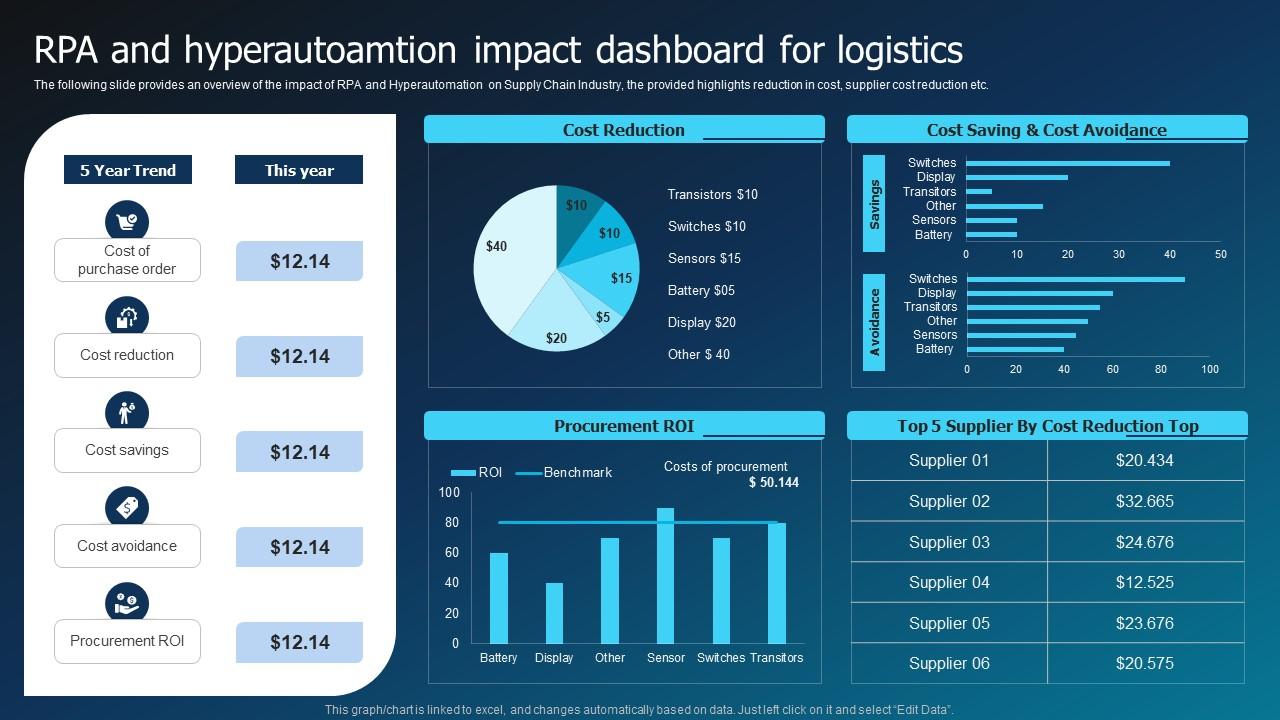
A dashboard highlighting cost reduction in a supply chain using RPA and hyperautomation
Slide 1 of 7
Favourites Favourites

Try Before you Buy Download Free Sample Product

Audience Impress Your
Audience
Editable 100%
Editable
Time Save Hours
of Time
The Biggest Sale is ending soon in
0
0
:
0
0
:
0
0
Rating:
100%
The following slide provides an overview of the impact of RPA and Hyperautomation on Supply Chain Industry, the provided highlights reduction in cost, supplier cost reduction etc. Deliver an outstanding presentation on the topic using this RPA And Hyperautoamtion Impact Dashboard For Logistics Hyperautomation Industry Report. Dispense information and present a thorough explanation of Cost Reduction, Cost Avoidance, Cost Saving using the slides given. This template can be altered and personalized to fit your needs. It is also available for immediate download. So grab it now.

People who downloaded this PowerPoint presentation also viewed the following :

FAQs for RPA And Hyperautoamtion Impact Dashboard For Logistics

You're gonna love the speed boost - bots crush repetitive stuff like order processing and inventory updates without screwing up like we do. Cost savings are insane too since they never sleep or take lunch breaks (honestly jealous). Your team can finally ditch the boring data entry and work on actual problem-solving instead. Real-time tracking across everything gives you way better visibility into what's happening. Oh, and definitely start with whatever process makes you want to bang your head against the wall first - that's usually the best ROI.

So hyperautomation basically connects all your scattered systems into one dashboard - no more jumping between different platforms to check shipment status or inventory. The AI part is pretty cool though, it spots potential problems before they actually hit by reading patterns in your data. You'll catch bottlenecks way faster and make decisions off current info instead of outdated reports. Honestly beats the hell out of manual checking. Plus it predicts disruptions which is huge for planning. I'd start by figuring out which systems are your biggest pain points to connect first.

So basically AI turns your RPA bots from dumb rule-followers into actually smart decision-makers. They can predict demand, figure out optimal routes on the fly, and adjust inventory automatically using past data. Pretty neat stuff, honestly. When weird things happen - like shipments getting delayed or you suddenly run out of stock - the bots can actually handle it instead of just breaking. Oh, and the exception handling is probably my favorite part since that's usually where everything falls apart. I'd start by looking at your most chaotic logistics processes first. Those are perfect candidates for this kind of smart automation.

So RPA cuts out most of those stupid human errors that kill order accuracy. Bots handle data entry, inventory updates happen automatically, and your systems actually sync up properly. No more fat-fingering addresses or quantities - honestly, manual order entry is such a nightmare. The AI double-checks everything matches before processing. Companies I know went from 85% accuracy to like 98%+. Your warehouse system just does its thing - updates stock, creates pick lists, prints shipping labels. Zero human touchpoints on the data side. I'd start by figuring out where you're screwing up most orders right now, then automate those spots first.

Honestly, the worst part is dealing with legacy systems that hate each other. Your warehouse management, transport, and inventory platforms weren't designed to play nice together - I've watched this derail so many projects. Staff will freak out thinking bots = layoffs, which is its own nightmare to manage. Data quality becomes a mess when every system uses different formats. Oh, and definitely map out your current data flows first before you touch any automation stuff. Seriously saves tons of headache down the road. The compatibility issues alone will make you want to pull your hair out.

So basically hyperautomation kills your manual work - warehouse stuff, inventory, shipping, all that tedious crap. Bots work 24/7 without coffee breaks (honestly jealous). You'll save big on labor costs and get way better accuracy. No more "oops wrong shipment" disasters. The cool part is it optimizes routes automatically and uses predictive analytics to avoid those nightmare stockout situations. Oh, and vendor management becomes hands-off. I'd start by looking at whatever processes eat up most of your team's time - that's where the money is.

Honestly, RPA is a game-changer for inventory stuff. You can automate stock monitoring, reorder triggers, cycle counting - basically all the boring repetitive work. It syncs data from your WMS, ERP, supplier portals without anyone touching it. Manual data entry is such a pain and screws up everything downstream, so the accuracy boost alone pays for itself. Those exception reports and low-stock alerts? All handled automatically now. I'd start with automating reorder point calculations first - quick win that shows results fast. My buddy at the warehouse says it's been a lifesaver for their team.

Honestly, hyperautomation is pretty wild for delivery stuff. It connects everything - route planning, inventory, warehouses, tracking - so there's no more waiting around between systems. You're looking at 30-50% faster deliveries because the manual handoffs disappear. Bots work around the clock on the boring tasks like processing orders and scheduling shipments. What's really cool though is the predictive side - it spots problems before they actually happen. I'd start by mapping out your current process first, see where things get stuck the most. Way easier than trying to automate everything at once.

DHL cut their invoice processing time by 75% with automation - that's huge. FedEx went after customs docs and delivery scheduling with bots. UPS tackled shipment tracking and inventory stuff, which honestly sounds mind-numbing to do manually. Smaller players like XPO jumped on freight matching and billing automation too. Here's the thing though - they all picked the boring, repetitive tasks first. You know, the stuff that makes people want to quit. Start there with whatever's driving your team crazy day-to-day. That's where you'll actually see results fast.

So compliance frameworks make you add all these extra safety checks to your RPA bots. Data retention policies, audit logs, access controls - depends on your industry and where you operate. GDPR changes how bots handle customer info, customs rules dictate exactly how shipping docs get processed (riveting, I know). High-risk transactions need approval workflows. Everything your bots do needs detailed logging. Honestly, the smartest move is building these compliance checks right into your automation from the start. Trust me, retrofitting this stuff later is a nightmare you don't want.

Honestly, start with the basics - processing time and error rates will show you the real impact. Cost per transaction is clutch too. For logistics stuff specifically, order fulfillment speed and inventory accuracy are game changers. Bot uptime matters more than people think - there's nothing worse than automation that constantly breaks and creates extra headaches. Exception handling rates tell you how well your bots deal with weird scenarios. Oh, and don't skip employee satisfaction scores. Good RPA should make everyone's life easier, not turn them into babysitters. Pick 3-4 metrics max though - data overload helps nobody.

So RaaS is like renting automation instead of buying it outright - way less risky than dropping tons of cash on licenses and servers you might not even use. You can scale up when you need more bots, scale down when you don't. Perfect for hyperautomation since you're not stuck with expensive tech forever. Honestly, the best part is testing stuff quickly without breaking the budget. Try automating one warehouse process first, see if it actually works (spoiler: sometimes it doesn't), then expand to other areas. It's basically the subscription model but for robots.

So basically your warehouse sensors, GPS trackers, and inventory systems feed data in real-time, and hyperautomation processes all that instantly. When demand jumps or shipments get delayed, it automatically reroutes stuff, adjusts staffing, reorders stock - no manual analysis needed. Pretty wild how quickly it happens. You'll get alerts and actions in seconds, not hours. The trick is nailing your decision rules upfront though. Once that's done, your whole logistics network adapts on its own as things change. Honestly beats the old way of scrambling to fix problems after they've already hit you.

Dude, training is everything with RPA - seriously can't stress this enough. Don't just throw bots at your team and hope they figure it out, because they won't. Your warehouse people and dispatchers need to get how this stuff actually fits into what they're already doing. Without proper training? The pushback will tank your whole project way before any tech issues do. Oh, and start with your best people first - the ones who pick up new stuff quickly. Once they're hyped about it, they'll help sell everyone else on it. Trust me on this one.

Honestly, the coolest stuff happening right now is AI getting baked into RPA workflows - like, actual smart decision-making instead of just following scripts. Companies aren't just automating tasks anymore, they're building systems that learn from logistics patterns and adapt. Pretty crazy how fast it's moving. IoT sensors are everywhere now, connecting with real-time tracking, and these cloud platforms let you scale automation across warehouses instantly. Oh, and predictive analytics is huge too - saves so much headache down the line. I'd start looking at your manual processes and figure out which ones could use this smarter automation approach.

Ratings and Reviews

100% of 100
Review Form
Write a review
Most Relevant Reviews
  1. 100%

    by James Lewis

    Great combination of visuals and information. Glad I purchased your subscription.
  2. 100%

    by Earle Willis

    Colors used are bright and distinctive.

2 Item(s)

per page: