Social Media Marketing Results With Kpi Scorecard
Try Before you Buy Download Free Sample Product
Audience
Editable
of Time
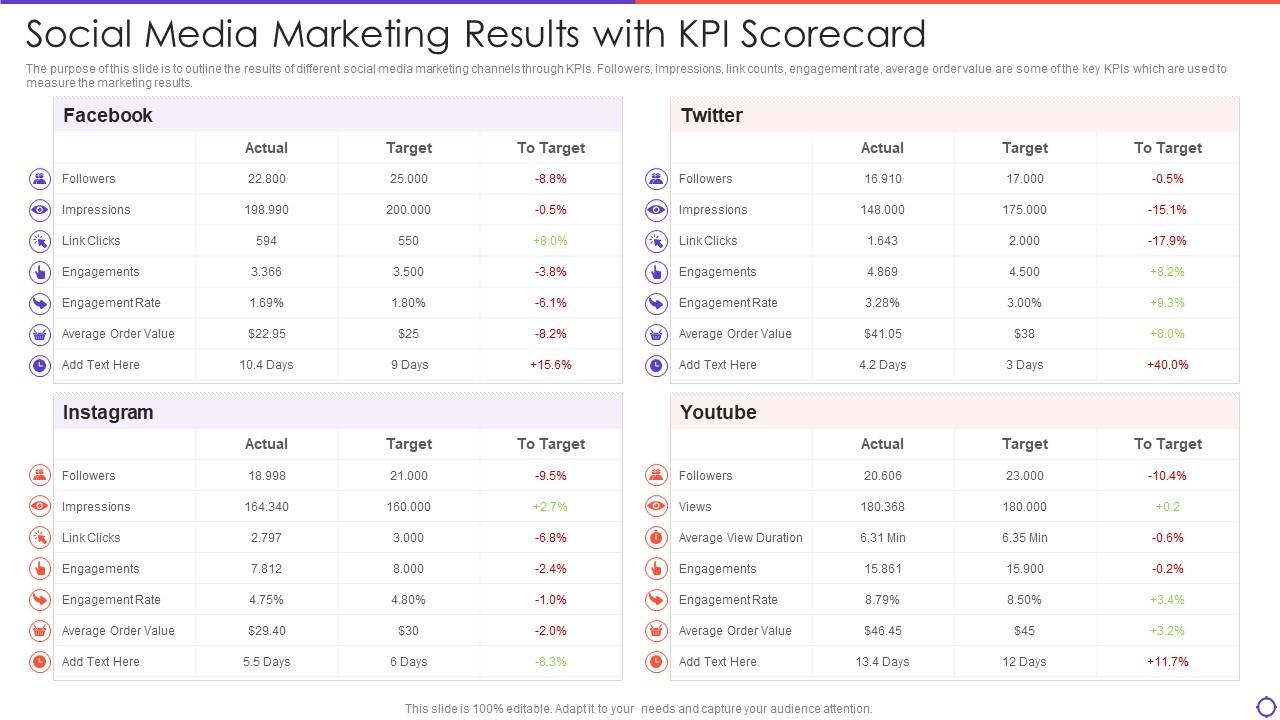
The purpose of this slide is to outline the results of different social media marketing channels through KPIs. Followers, impressions, link counts, engagement rate, average order value are some of the key KPIs which are used to measure the marketing results.
People who downloaded this PowerPoint presentation also viewed the following :
Social Media Marketing Results With Kpi Scorecard with all 6 slides:
Use our Social Media Marketing Results With Kpi Scorecard to effectively help you save your valuable time. They are readymade to fit into any presentation structure.
FAQs for Social Media Marketing Results
Key components of a successful social media marketing strategy include clear audience targeting, consistent brand messaging, engaging content creation, platform-specific optimization, and comprehensive performance analytics. These elements work together by building authentic connections, driving meaningful engagement, and delivering measurable ROI, with many businesses finding that strategic social media presence significantly enhances customer acquisition and brand loyalty.
Businesses measure social media ROI by tracking conversion rates, cost per acquisition, engagement metrics, website traffic, and revenue attribution through analytics platforms like Google Analytics, Facebook Insights, and social media management tools. Through comprehensive tracking, companies in retail, hospitality, and financial services can optimize campaign spending, identify high-performing content, and demonstrate tangible returns, ultimately delivering measurable business growth and competitive advantage.
Audience segmentation enables social media marketers to deliver targeted content, personalized messaging, and strategic ad placement by dividing followers based on demographics, behaviors, interests, and engagement patterns. This approach streamlines campaign effectiveness, enhances customer experiences, and maximizes ROI, with many brands finding that segmented strategies deliver significantly higher conversion rates and stronger audience engagement across platforms.
Brands maintain consistency by developing unified brand guidelines, content templates, and centralized social media management tools that ensure cohesive voice, visual identity, and messaging standards. Through strategic content calendars and cross-platform planning, companies like Nike and Starbucks deliver seamless brand experiences across Instagram, LinkedIn, and Twitter, ultimately strengthening brand recognition and customer trust.
Social media content best practices include platform-specific formatting, consistent visual branding, audience-targeted messaging, strategic hashtag usage, and optimal posting schedules. Through tailored approaches, brands enhance engagement by leveraging Instagram's visual storytelling, LinkedIn's professional insights, and Twitter's real-time conversations, ultimately delivering increased reach, stronger customer relationships, and measurable conversion rates across diverse audience segments.
Social media analytics tools enhance marketing efforts by tracking engagement metrics, analyzing audience demographics, monitoring competitor performance, and measuring campaign ROI across platforms. These insights enable marketers to optimize content timing, refine targeting strategies, and allocate budgets more effectively, with many brands finding that data-driven approaches deliver significantly higher conversion rates and customer engagement.
Businesses can increase follower engagement through consistent content scheduling, interactive polls and Q&As, user-generated content campaigns, behind-the-scenes storytelling, and timely responses to comments. These strategies enhance community building by fostering authentic connections, encouraging audience participation, and delivering personalized experiences, with many retail and service companies finding that consistent engagement ultimately drives stronger brand loyalty and conversions.
Visual storytelling is crucial in social media marketing because it increases engagement rates by up to 650%, enhances brand recall, and communicates complex messages quickly across diverse audiences. Through compelling visuals, infographics, and video content, businesses in retail, healthcare, and financial services create emotional connections with customers, streamline communication, and ultimately drive higher conversion rates while building stronger brand loyalty.
Influencers drive brand awareness by leveraging their established audiences, creating authentic content, and providing trusted recommendations that resonate with specific demographics. Through strategic partnerships, brands access targeted communities, enhance credibility, and generate engagement rates significantly higher than traditional advertising, with many companies finding that influencer collaborations deliver measurable increases in brand recognition and customer acquisition.
Businesses can utilize user-generated content by featuring customer reviews, resharing social media posts, creating branded hashtag campaigns, hosting photo contests, and incorporating testimonials into advertisements. This strategic approach builds authentic brand credibility while reducing content creation costs, with retail and hospitality companies finding that UGC drives higher engagement rates and ultimately delivers increased trust and conversions.
Social media marketing ethics include transparency in sponsored content, protecting user data privacy, avoiding misleading claims, respecting cultural sensitivities, and maintaining authentic brand voice. These considerations help brands build sustainable customer relationships by ensuring honest advertising practices, safeguarding personal information, and creating genuine engagement, ultimately delivering long-term trust and competitive advantage.
Businesses can effectively manage negative feedback through prompt, professional responses, transparent acknowledgment of concerns, and taking conversations private when necessary for detailed resolution. This approach demonstrates commitment to customer service while protecting brand reputation, with many companies finding that thoughtful responses to criticism actually enhance credibility and customer loyalty.
Emerging social media marketing trends include AI-powered personalization, short-form video content, social commerce integration, influencer authenticity shifts, and community-driven engagement strategies. These developments enable brands to streamline customer targeting, enhance interactive experiences, and accelerate conversion rates, with many organizations finding that early adoption delivers significant competitive advantages in increasingly crowded digital landscapes.
Paid advertising on social media enhances organic reach by increasing brand visibility, driving engagement that signals platform algorithms, and expanding audience discovery through targeted demographics. Strategic paid campaigns amplify content to lookalike audiences, generate shares and comments that boost organic visibility, ultimately creating a compound effect where paid investment drives sustained organic growth and broader brand recognition.
B2B social media marketing emphasizes thought leadership, professional networking, and longer sales cycles through LinkedIn content and industry expertise, while B2C focuses on emotional engagement, visual storytelling, and immediate conversions across Instagram and Facebook. B2B strategies target decision-makers with educational content and relationship building, whereas B2C leverages trending topics, user-generated content, and impulse purchasing behaviors to drive faster customer acquisition.
-
The team is highly dedicated and professional. They deliver their work on time and with perfection.
-
Awesomely designed templates, Easy to understand.