


Student engagement event proposal powerpoint presentation slides
Student success is based on a student-centric culture. It has been researched that it is the institutional culture and not the administrative structure that determines students success and ultimately helps them to complete graduation. More efficiently engage this generation of students, by hiring the student’s event services. Most of the event services can help their clients to perform extensive research on what drives and motivates the millennial generation. Use this Student Engagement Event Proposal PowerPoint Presentation Slides and help the students to bond by sharing life experiences. Promise the client to organize live events and experiences by showcasing dedicated services in the cover letter of the PPT proposal template. Highlight your expertise by organizing sports day events, providing special coordinators to manage the event, conducting indoor and outdoor sports games, and arranging sports equipment with other facilities. Attract your client by including the challenges in the project context faced by their firm or institution and give solutions in the form of objectives to be achieved in the event. Use your event creation PowerPoint Presentation, for elaborating the project process by including a detailed plan of action covering assessment of needs and interest, deciding the theme and location, running the event, choosing the date & time, and developing a timeline. Also, the PPT template includes a detailed plan of student event services and multiple sports activities included in the event. Help your client understand the budget allocation against each activity and the investment they will have to make. Mark your strengths and a company overview, company vision, mission, core values, team information, academic and non-academic events with this PowerPoint slideshow. Establish an edge over the competitors by sharing your client testimonials along with a case study of your previous well-implemented events. Go ahead and download the event proposal PPT now.
Student success is based on a student-centric culture. It has been researched that it is the institutional culture and not ..







-

- Google Slides is a new FREE Presentation software from Google.
- All our content is 100% compatible with Google Slides.
- Just download our designs, and upload them to Google Slides and they will work automatically.
- Amaze your audience with SlideTeam and Google Slides.
-

Want Changes to This PPT Slide? Check out our Presentation Design Services
-

- WideScreen Aspect ratio is becoming a very popular format. When you download this product, the downloaded ZIP will contain this product in both standard and widescreen format.
-

- Some older products that we have may only be in standard format, but they can easily be converted to widescreen.
- To do this, please open the SlideTeam product in Powerpoint, and go to
- Design ( On the top bar) -> Page Setup -> and select "On-screen Show (16:9)” in the drop down for "Slides Sized for".
- The slide or theme will change to widescreen, and all graphics will adjust automatically. You can similarly convert our content to any other desired screen aspect ratio.
Compatible With Google Slides

Get This In WideScreen
You must be logged in to download this presentation.


Do you want to remove this product from your favourites?
PowerPoint presentation slides
Presenting our Student Engagement Event Proposal PowerPoint Presentation Slides that is sure to impress your potential client. The content has been well-researched by our team of excellent researchers. You can change the colour, fonts, texts, images without any hassle to suit your business needs. It can be saved and opened in various formats like PDF, JPG, and PNG. The template is easily compatible with Google Slides that makes it easily accessible. It is readily available in both standard screen 4:3 and widescreen 16:9 aspect ratios. Download the presentation, enter your content in the placeholders, and propose it with confidence!

People who downloaded this PowerPoint presentation also viewed the following :
Content of this Powerpoint Presentation
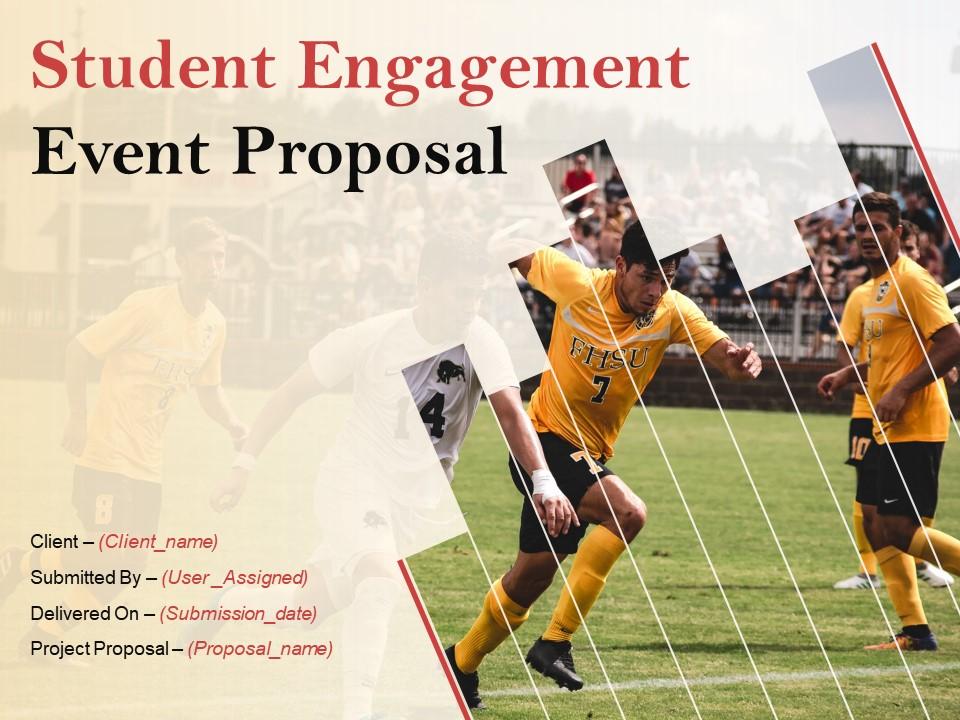
Slide 1: This slide introduces Student Engagement Event Proposal. Mention Client name, User assigned, Submission date and Begin.
Slide 2: This slide displays Cover Letter.
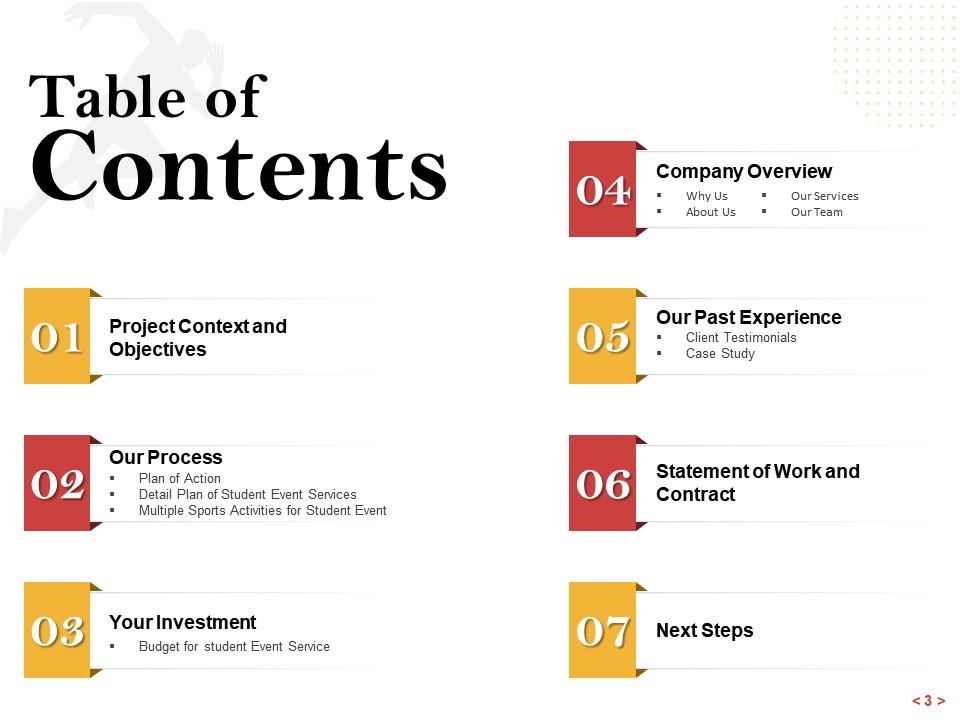
Slide 3: This slide showcases Table of Contents
Slide 4: This slide showscases Table of Contents with- Project Context and Objectives.
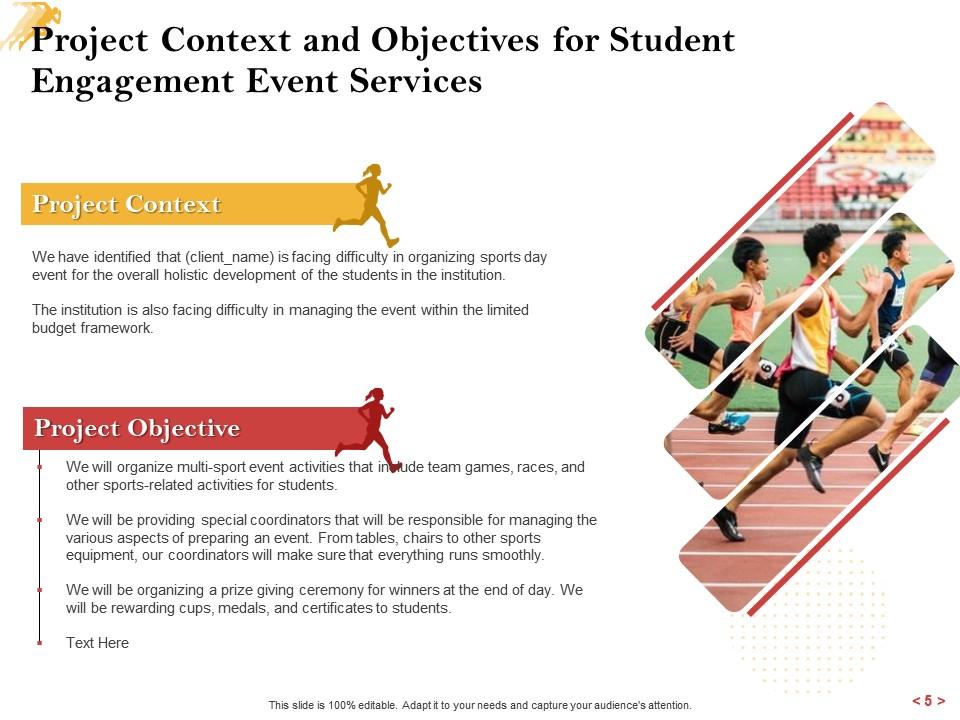
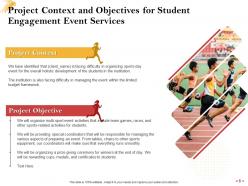
Slide 5: This slide depicts Project Context and Objectives for Student Engagement Event Services
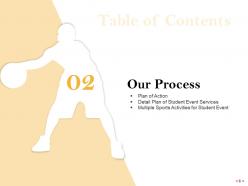
Slide 6: This slide displays Table of Contents of the presentation contaning- Our Process, Plan of Action, Detail Plan of Student Event Services, Multiple Sports Activities for Student Event.
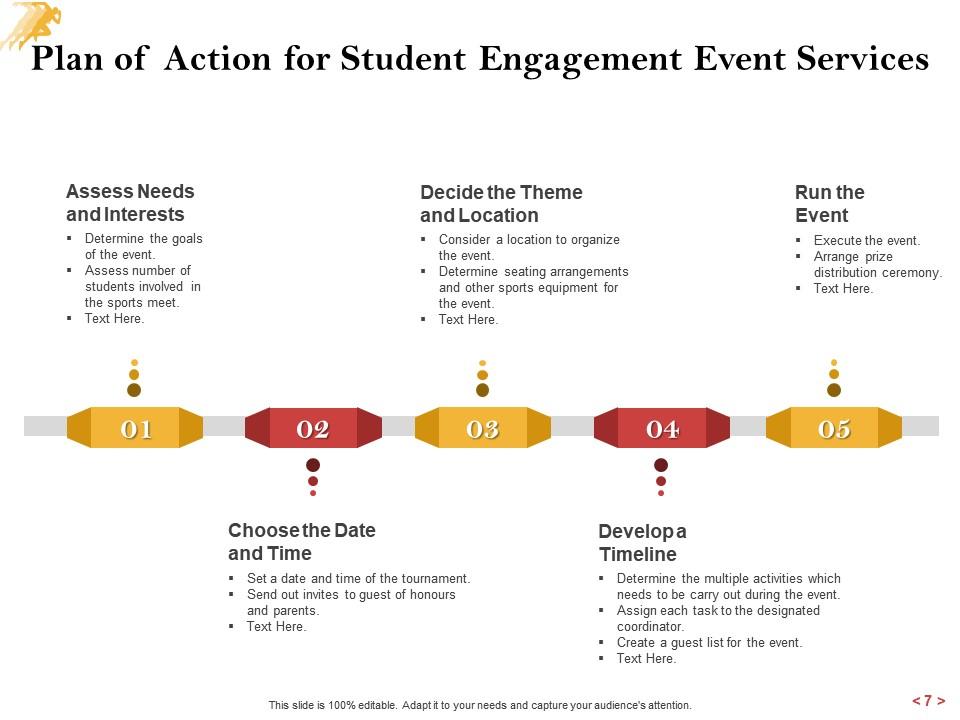
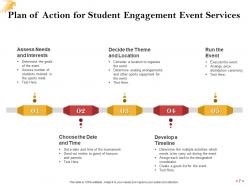
Slide 7: This slide describes Plan of Action for Student Engagement Event Services.
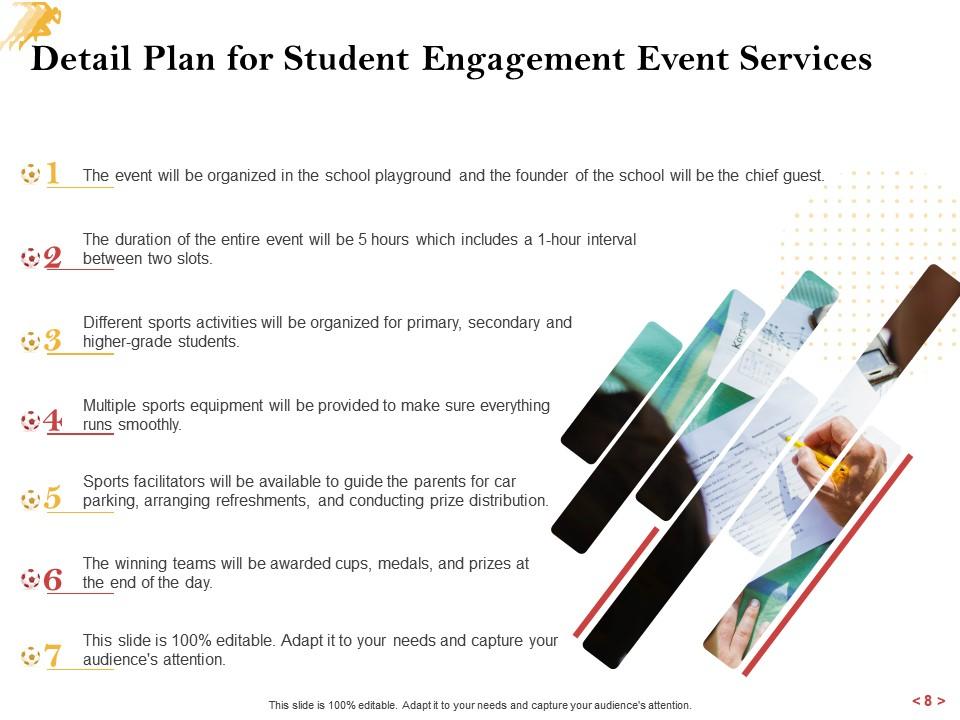
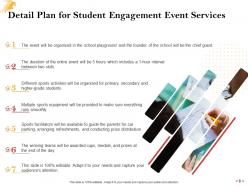
Slide 8: This slide represents Detail Plan for Student Engagement Event Services.
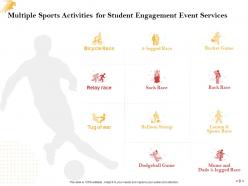
Slide 9: This slide showcases Multiple Sports Activities for Student Engagement Event Services contaning- Bicycle Race, Relay race, Tug of war, Dodgeball Game, Balloon Stomp, 3-legged Race, Sack Race, Mums and Dads 3-legged Race, Bucket Game, Back Race, Lemon & Spoon Race.
Slide 10: This slide represents Table of Contents with- Your Investment, Budget for student Event Service.
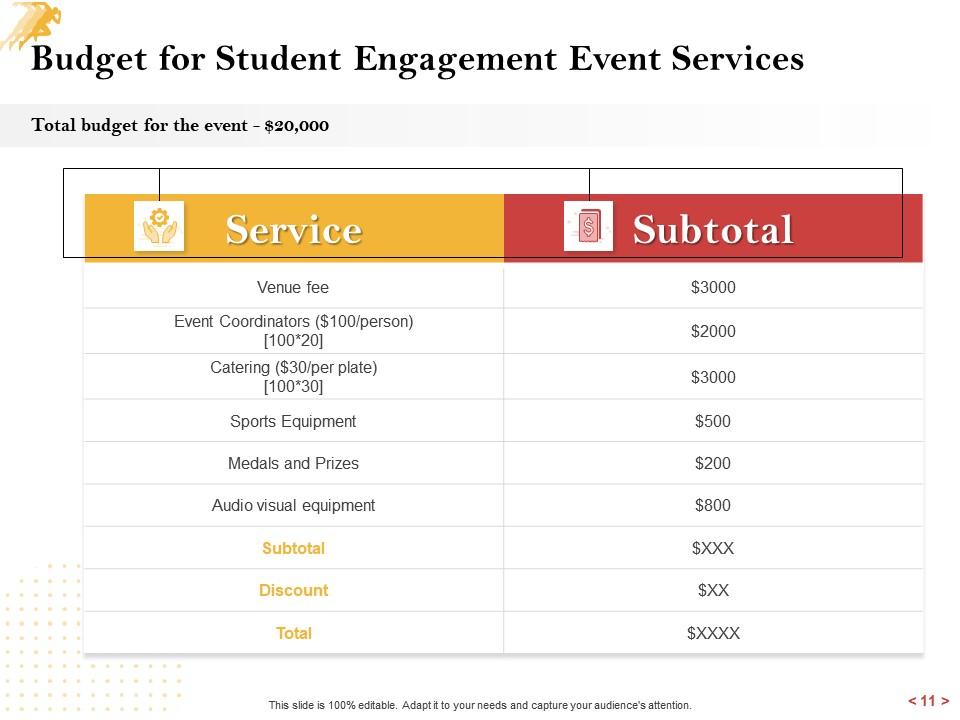
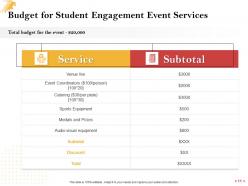
Slide 11: This slide showcases Budget for Student Engagement Event Services
Slide 12: This slide shows Table of Contents.
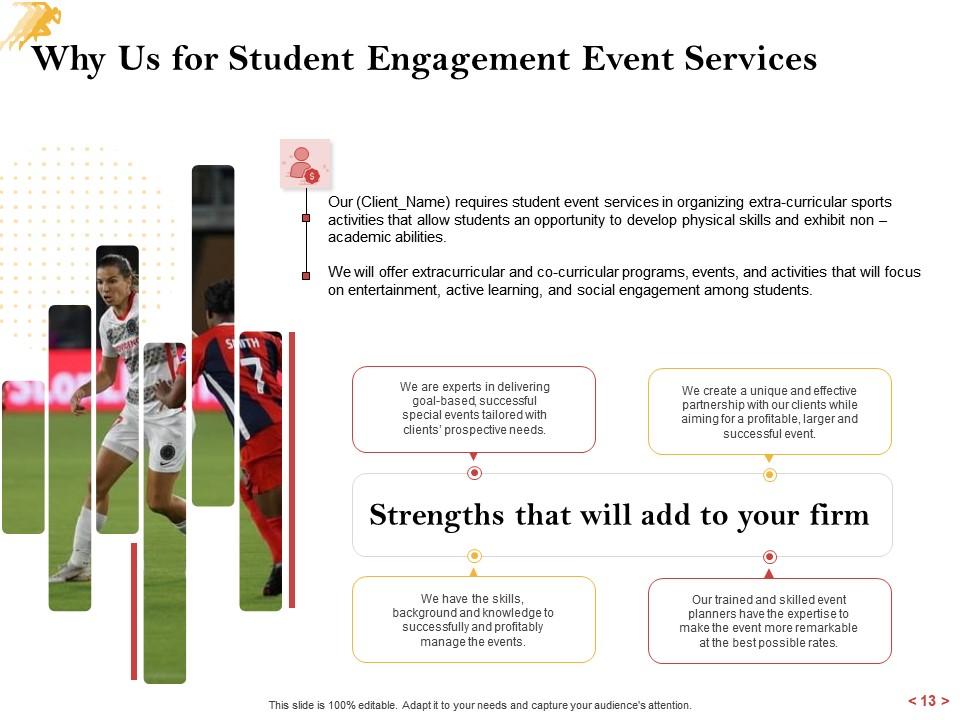
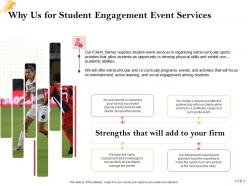
Slide 13: This slide shows reasons for choosing us for Student Engagement Event Services.
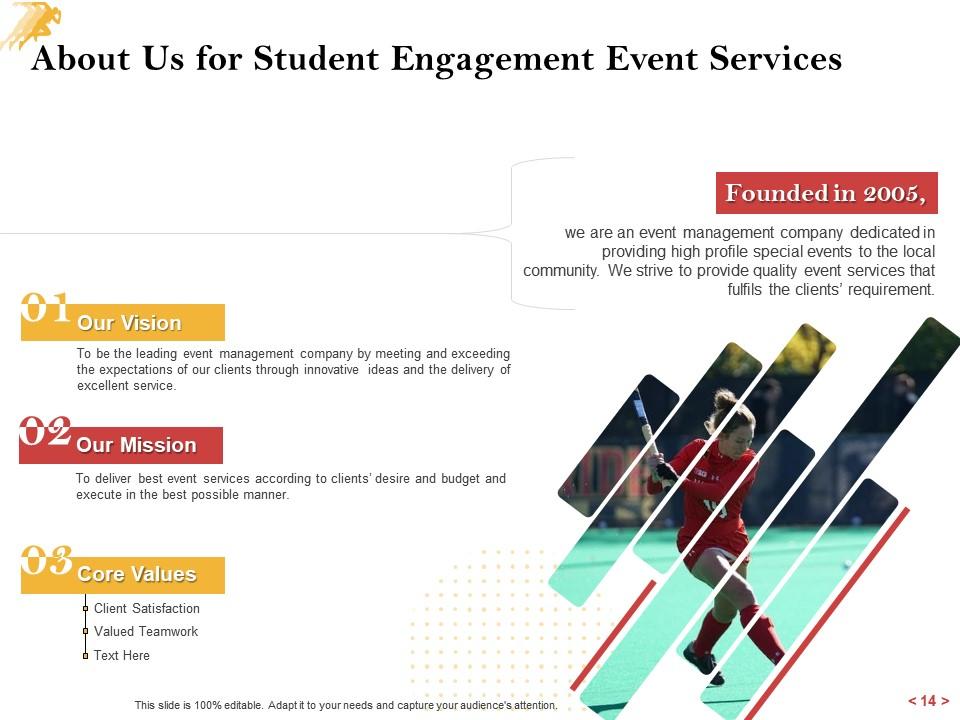
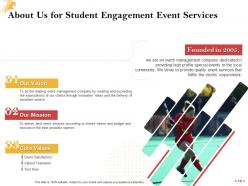
Slide 14: This is About Us slide to showcase Company specifications.
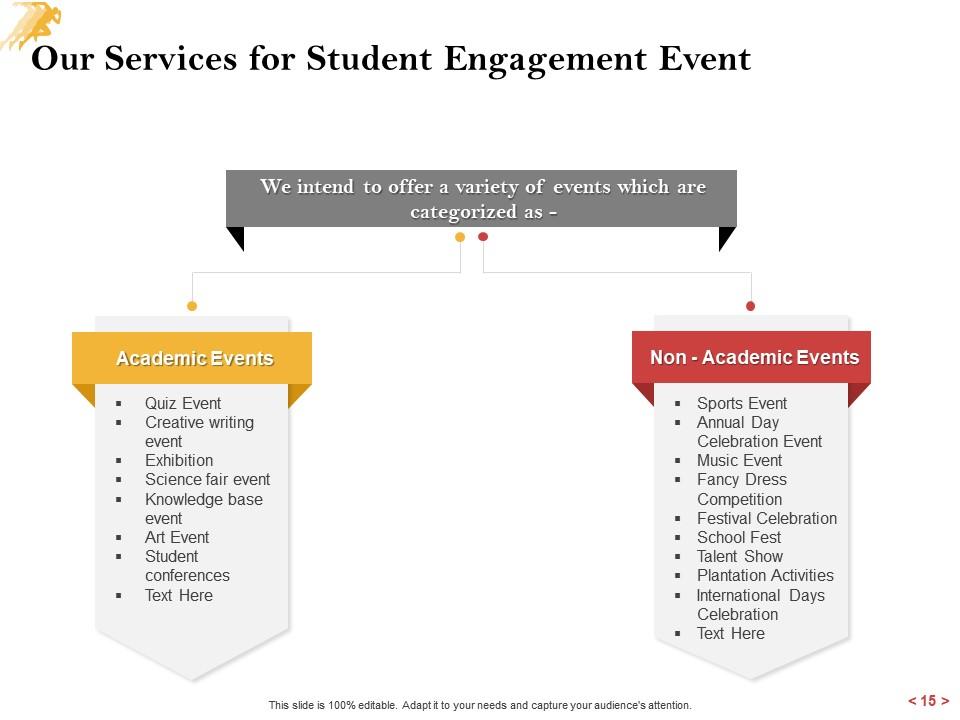
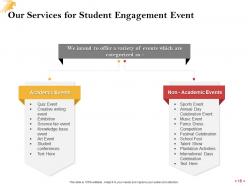
Slide 15: This slide depicts Our Services for Student Engagement Event.
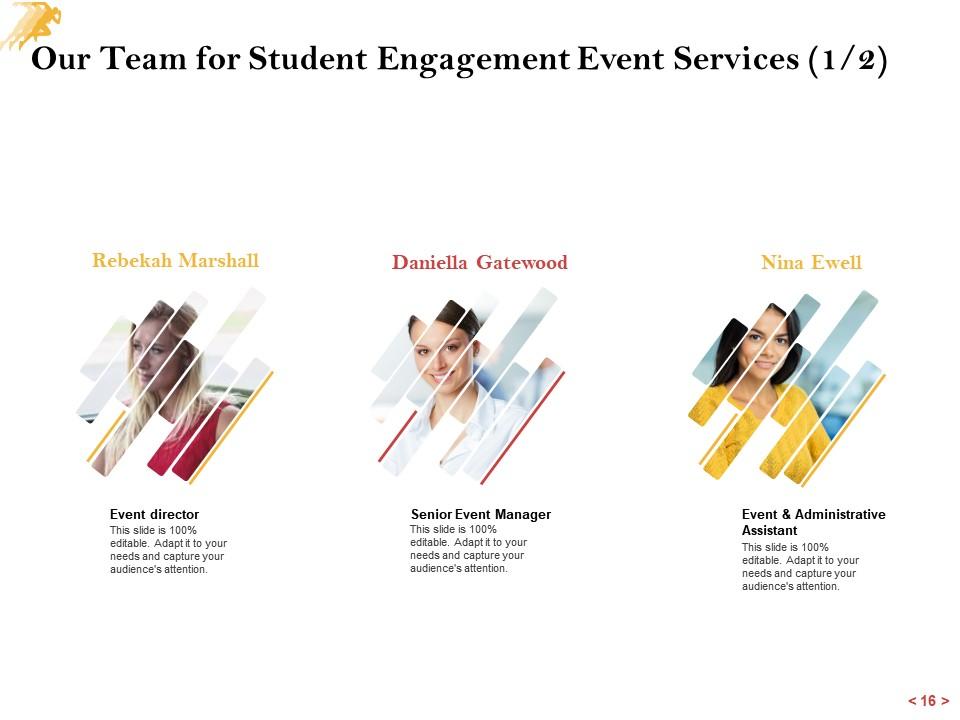
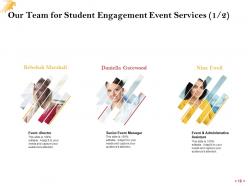
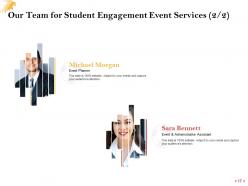
Slide 16: This is Our Team slide with Names and Designations.
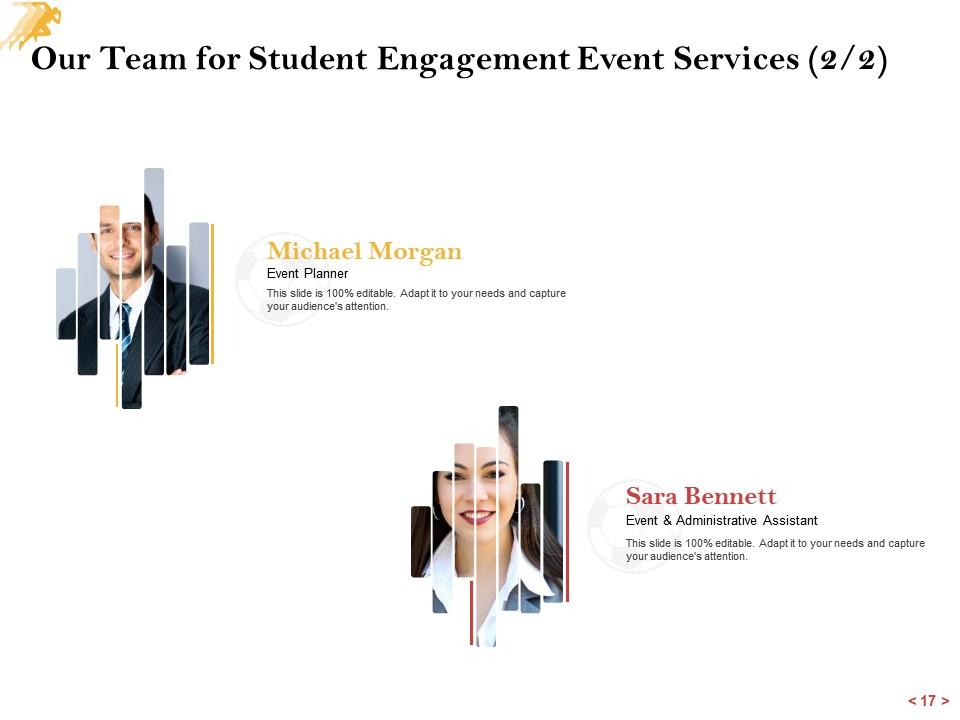
Slide 17: This is Our Team slide with Names and Designations.
Slide 18: This slide displays Table of Contents with- Our Past Experience, Client Testimonials, Case Study.
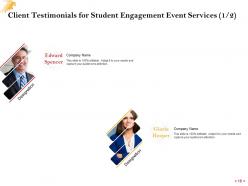
Slide 19: This slide depicts Client Testimonials.
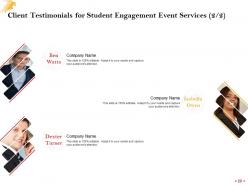
Slide 20: This slide showcases Client Testimonials.
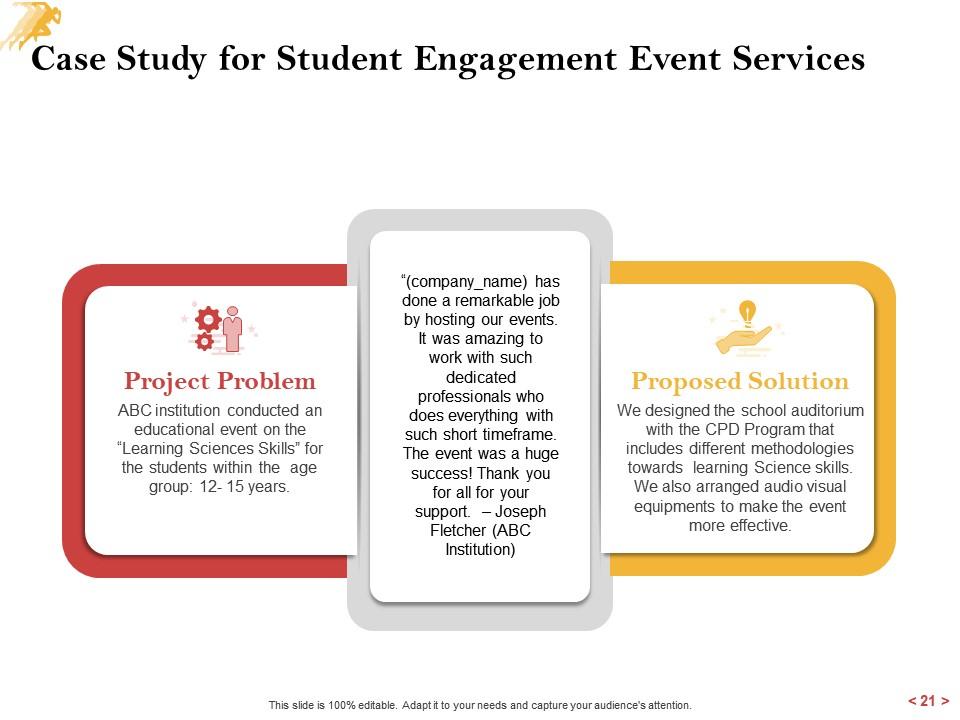
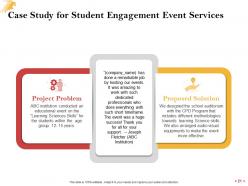
Slide 21: This slide represents Case Study for Student Engagement Event Services.
Slide 22: This slide showcases Table of Contents with- Statement of Work and Contract.
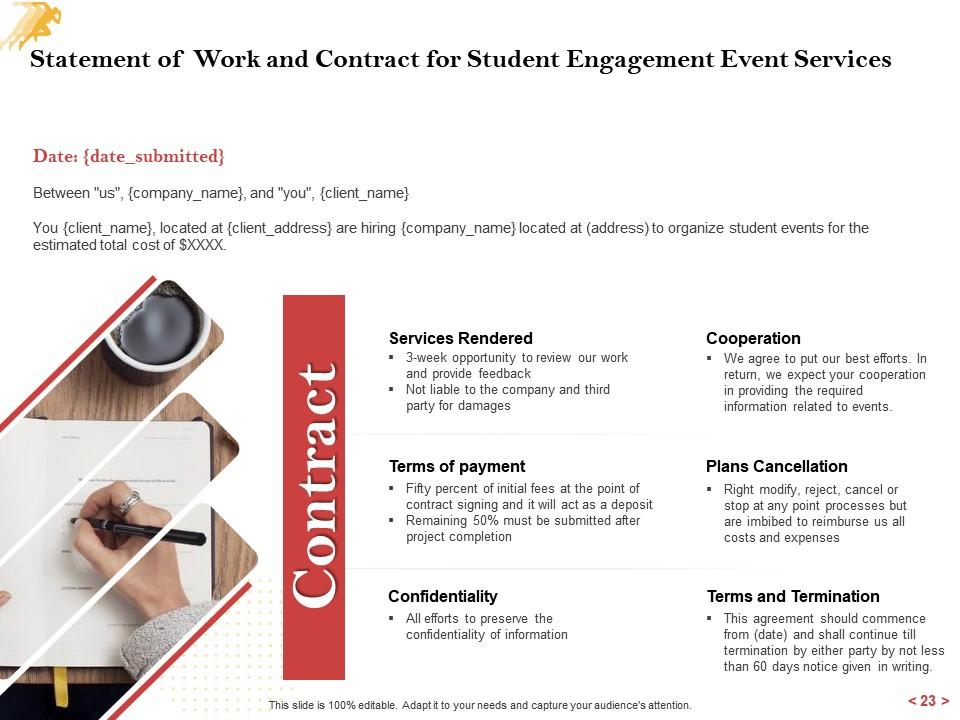
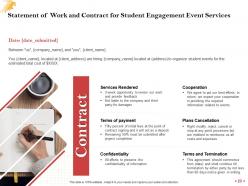
Slide 23: This slide shows Statement of Work and Contract for Student Engagement Event Services
Slide 24: This slide depicts Table of Contents with- Next Steps.
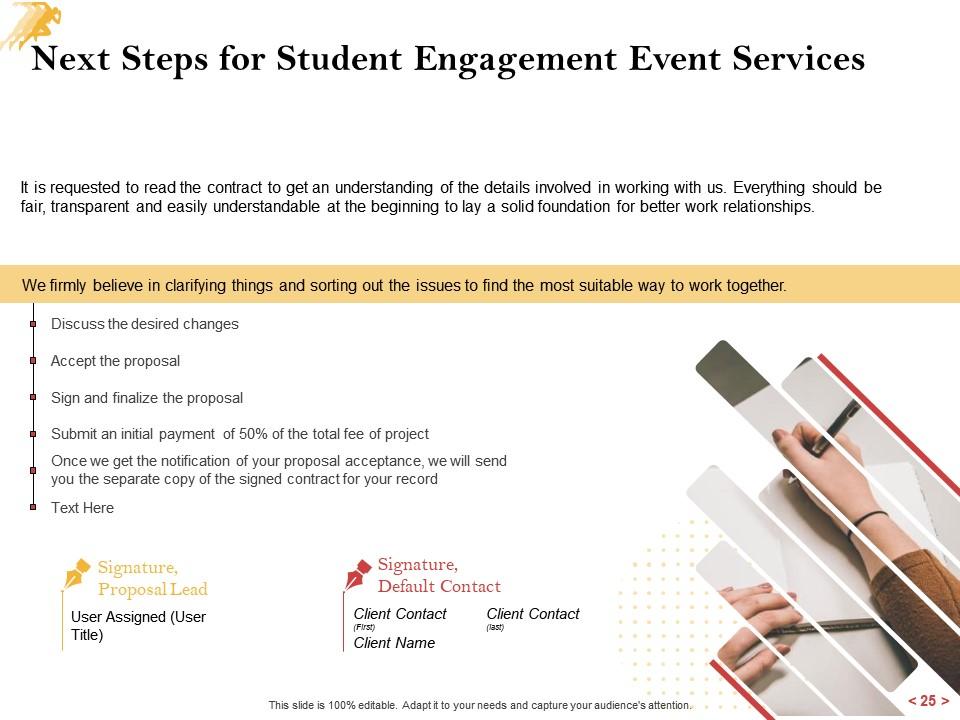
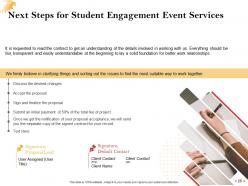
Slide 25: This slide shows Next Steps for Student Engagement Event Services.
Slide 26: This is Contact Us slide with Address, Contact number and Email address.
Slide 27: This is Icons Slide for Student Engagement Event Proposal.
Slide 28: This slide is titled as Additional Slides for moving forward.
Slide 29: This is About Us slide to showcase Company specifications.
Slide 30: This slide displays Vision and Mission.
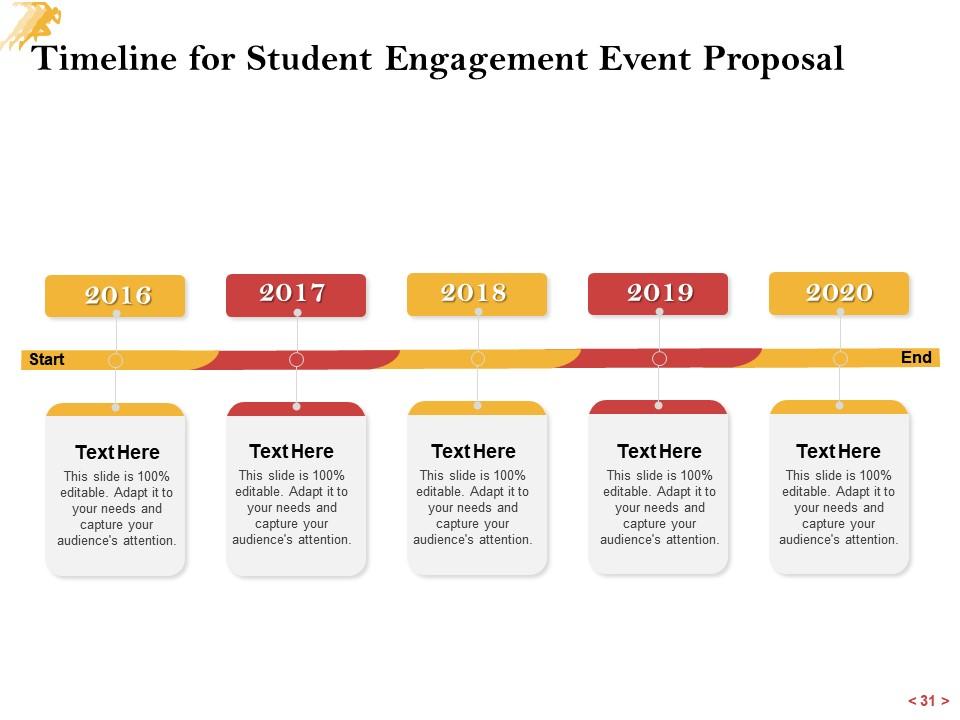
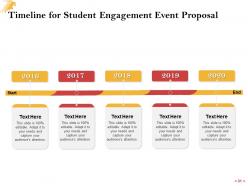
Slide 31: This slide showcases Timeline for Student Engagement Event Proposal.
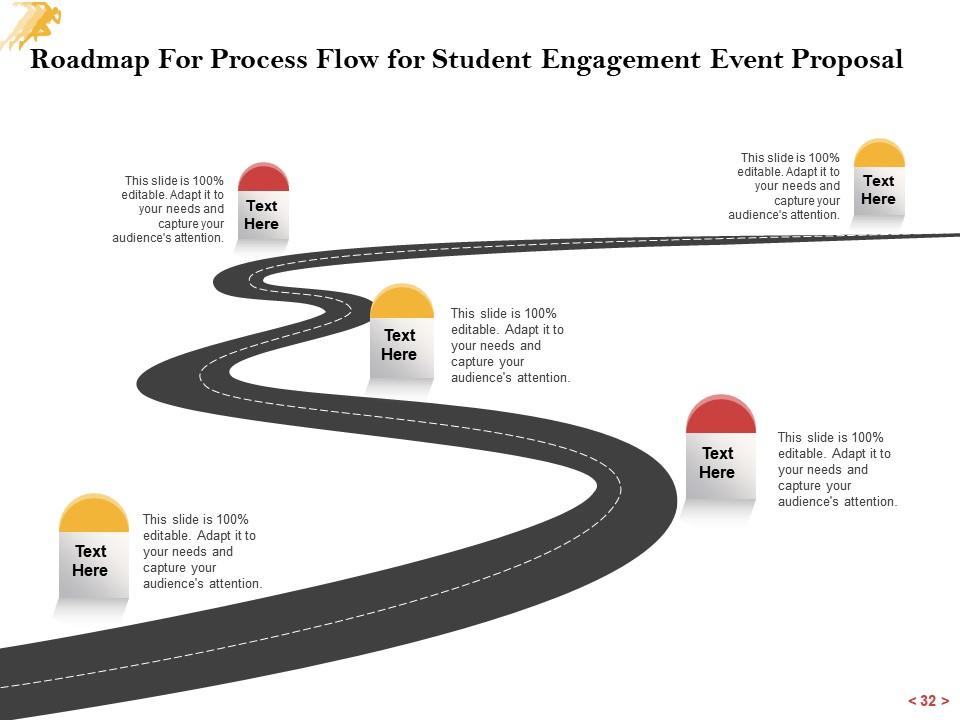
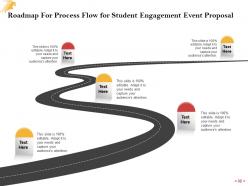
Slide 32: This slide depicts Roadmap For Process Flow for Student Engagement Event Proposal.
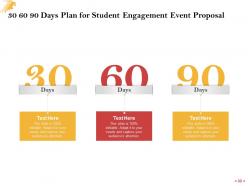
Slide 33: This is 30 60 90 Days Plan slide.
Student engagement event proposal powerpoint presentation slides with all 33 slides:
Use our Student Engagement Event Proposal Powerpoint Presentation Slides to effectively help you save your valuable time. They are readymade to fit into any presentation structure.
-
Top Quality presentations that are easily editable.
-
Content of slide is easy to understand and edit.
-
Visually stunning presentation, love the content.
-
Content of slide is easy to understand and edit.
-
Great quality slides in rapid time.
-
Editable templates with innovative design and color combination.
