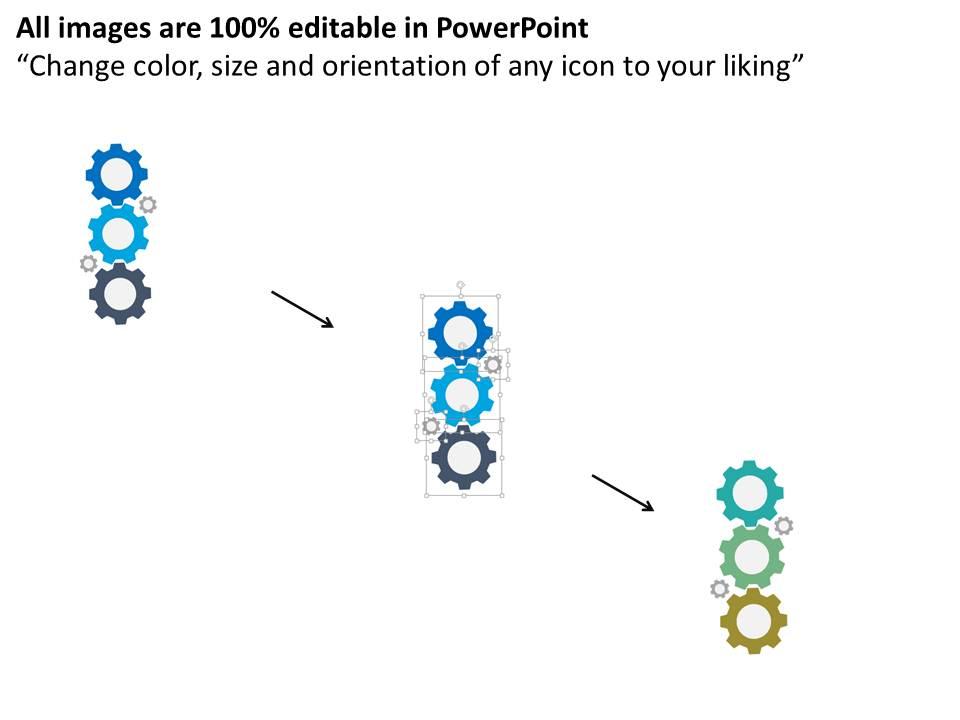
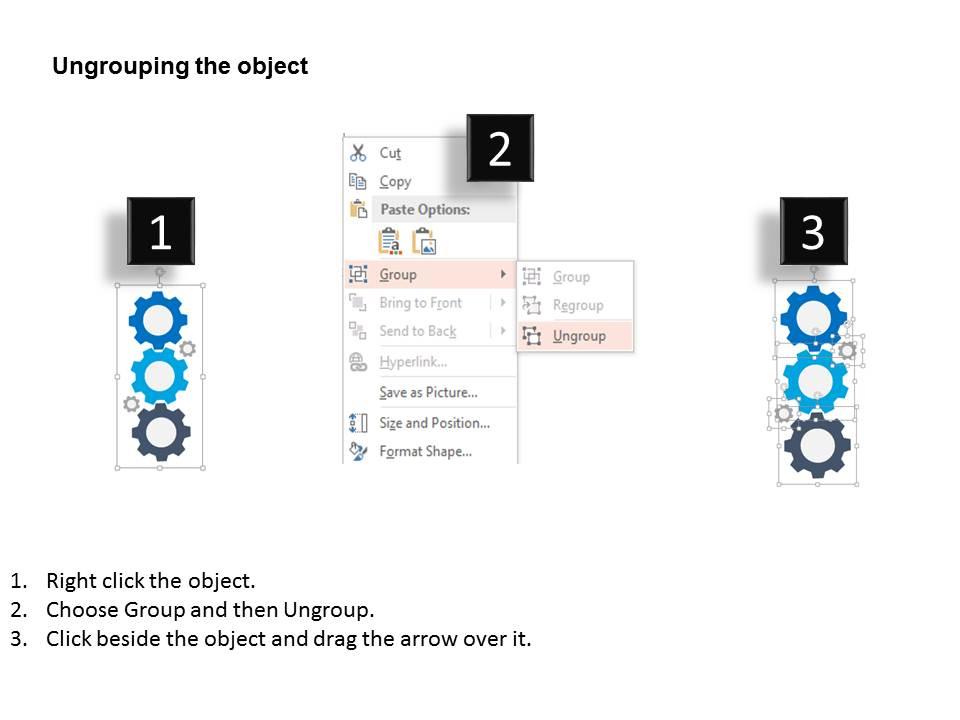
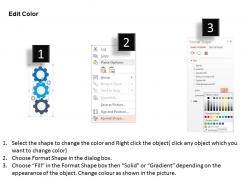
Tres engranajes verticales con iconos de tecnología Diseño plano de PowerPoint
Try Before you Buy Download Free Sample Product
Audience
Editable
of Time
La tecnología es la necesidad del momento, ya que somos confiables en una u otra herramienta o equipo para cumplir con nuestra tarea diaria. Nuestras diapositivas de PowerPoint de tres engranajes verticales con tecnología le permiten hacer que su gente comprenda el mejor uso de los recursos y cómo puede cambiar su enfoque de trabajo. Su empresa necesita un ejemplo excepcional de plantilla de presentación que pueda comunicar su mensaje de tal manera que el destinatario pueda comprenderlo. Para ello, hemos introducido nuestros tres engranajes verticales con iconos de tecnología de diseño plano PPT. Este diagrama de presentación no solo es valioso para representar un aspecto, ya que puede usarse para muchos propósitos, sino que, dado que viene con engranajes e íconos que representan el proceso tecnológico, es más valioso para las personas que trabajan en este sector. Los iconos dentro de cada objeto de engranaje señalan un tema diferente. Gears se puede utilizar para explicar más sobre las últimas tecnologías e innovaciones. Descargue y comparta el concepto relacionado con su conjunto de habilidades. Deje que nuestros tres engranajes verticales con iconos de tecnología Flat Powerpoint Design sean su compañero constante. Ellos literalmente hablarán con usted.
Características de estas diapositivas de presentación de PowerPoint:
Diapositiva de presentación diseñada con gran calidad de píxeles. Fácil de editar y reemplazar contenido. Convierta de manera competente en numerosas opciones de software, como JPG o PDF. Múltiples opciones de visualización, como vista estándar y de pantalla ancha. El diseño PPT proporciona un enfoque uniforme para su diagrama de PowerPoint. Preferencia de personalizar el nombre de la empresa, la insignia y la etiqueta. Se pueden descargar más plantillas de PowerPoint con diferentes nodos y etapas. Diagrama PPT armonizado con las diapositivas de Google
People who downloaded this PowerPoint presentation also viewed the following :
Tres engranajes verticales con iconos de tecnología Diseño plano de PowerPoint con las 4 diapositivas:
Martillea con nuestros tres engranajes verticales con iconos de tecnología Flat Powerpoint Design. Todas las barreras comenzarán a derrumbarse.
FAQs for Three verical gears with technology icons
Vertical gears offer improved space efficiency, enhanced load distribution, reduced friction losses, better heat dissipation, and simplified maintenance access compared to traditional horizontal configurations. These advantages enable manufacturing facilities, automotive systems, and industrial machinery to achieve higher torque transmission, minimize operational downtime, and optimize equipment footprint, ultimately delivering enhanced performance and reduced maintenance costs.
Vertical gears enhance efficiency in mechanical systems by optimizing space utilization, reducing friction through perpendicular force transmission, and enabling compact power transfer configurations. These mechanisms streamline operations in manufacturing equipment, automotive transmissions, and industrial machinery, while minimizing energy loss and maintenance requirements, ultimately delivering improved performance and reduced operational costs across various engineering applications.
Vertical gears technology is widely utilized across automotive, manufacturing, aerospace, marine propulsion, and heavy machinery industries. These sectors leverage vertical gear systems for power transmission in engines, industrial equipment, aircraft systems, and construction machinery, with many manufacturers finding that vertical configurations deliver enhanced torque control, space efficiency, and operational reliability in demanding applications.
Common materials for vertical gears include hardened steel, cast iron, bronze, aluminum alloys, and specialized composites like carbon fiber reinforced plastics. These materials enable manufacturers to optimize gear performance by enhancing durability, reducing weight, and minimizing noise levels, with many automotive and aerospace companies finding that strategic material selection ultimately delivers improved operational efficiency and competitive advantage.
Vertical gear designs significantly enhance space optimization by enabling compact stacking configurations, reducing horizontal footprint requirements, and facilitating efficient power transmission in confined areas. Manufacturing plants, automotive systems, and industrial equipment increasingly leverage these designs to maximize operational density while minimizing floor space, ultimately delivering cost-effective facility utilization and enhanced production capacity.
Vertical gears in robotics and automation enable precise motion control, torque transmission, and compact mechanical configurations within robotic joints, actuators, and automated assembly systems. These components streamline rotational movement transfer, enhance operational efficiency, and minimize space requirements, with manufacturing robots, automated packaging systems, and precision instruments leveraging vertical gear arrangements to deliver faster production cycles and improved accuracy.
Gear alignment significantly impacts vertical gear performance by affecting load distribution, minimizing vibration, and reducing wear patterns that can cause premature failure. Proper alignment ensures optimal torque transmission, extends operational lifespan, and maintains consistent power delivery, with manufacturing and automotive industries finding that precise alignment ultimately delivers smoother operations and reduced maintenance costs.
Recent advancements in vertical gear technology include improved helical designs, advanced lubrication systems, enhanced materials like carbon fiber composites, precision manufacturing techniques, and smart monitoring sensors. These innovations streamline power transmission by reducing friction, minimizing noise levels, and extending operational lifespan, with many manufacturing and automotive sectors finding that these enhancements ultimately deliver greater efficiency and reduced maintenance costs.
Vertical gears require specialized lubrication systems like forced circulation, splash lubrication, and mist systems to overcome gravity effects, while horizontal gears rely on simpler oil bath or splash methods. Manufacturing facilities, wind turbines, and marine applications increasingly adopt gravity-fed and pump-assisted lubrication for vertical configurations, ultimately delivering enhanced reliability and reduced maintenance costs.
Vertical gears contribute to noise reduction through improved tooth engagement alignment, reduced vibration transmission, and enhanced lubrication distribution along gear surfaces. This orientation minimizes gear mesh irregularities and mechanical resonance, with manufacturing equipment and automotive transmissions finding that vertical configurations deliver quieter operation, extended component life, and improved overall system efficiency.
Common vertical gear failure modes include tooth wear, pitting, scuffing, tooth breakage, and misalignment-induced stress concentrations. These failures often result from inadequate lubrication, excessive loads, or poor maintenance practices, with manufacturing and aerospace industries finding that regular monitoring and proper lubricant selection significantly reduce downtime while enhancing operational reliability.
Vertical gears integrate into renewable energy systems through wind turbine gearboxes, solar panel tracking mechanisms, hydroelectric generators, and energy storage systems. These components enhance power transmission efficiency, reduce maintenance costs, and optimize energy capture angles, with wind farms and solar installations finding that strategic gear placement delivers improved operational performance and extended equipment lifespan.
Testing methods for vertical gear reliability include vibration analysis, load testing, fatigue testing, dimensional inspection, and material hardness verification. These comprehensive approaches enhance operational efficiency by identifying potential failures, minimizing unexpected downtime, and ensuring consistent performance, with many manufacturing and industrial facilities finding that systematic testing protocols ultimately deliver reduced maintenance costs and improved equipment longevity.
Vertical gears enhance torque transmission by changing rotational direction, providing mechanical advantage through gear ratios, and enabling efficient power transfer between perpendicular shafts. These configurations streamline force distribution in manufacturing equipment, automotive differentials, and industrial machinery, while maintaining consistent torque output and reducing energy losses, ultimately delivering improved operational efficiency and precise mechanical control.
Vertical gear design significantly reduces maintenance requirements by improving accessibility to components, enabling easier lubrication systems, and minimizing contamination risks through better sealing capabilities. This configuration streamlines routine inspections and part replacements, with manufacturing facilities and power generation plants finding that vertical arrangements ultimately deliver lower operational costs and extended equipment lifespan.
-
Much better than the original! Thanks for the quick turnaround.
-
Unique and attractive product design.