12 months digital marketing budget allocation with social media

Rating:
88%
12 months digital marketing budget allocation with social media
Slide 1 of 2

or

Favourites Favourites

Try Before you Buy Download Free Sample Product

Audience Impress Your
Audience
Editable 100%
Editable
Time Save Hours
of Time
The Biggest Sale is ending soon in
0
0
:
0
0
:
0
0
Rating:
88%
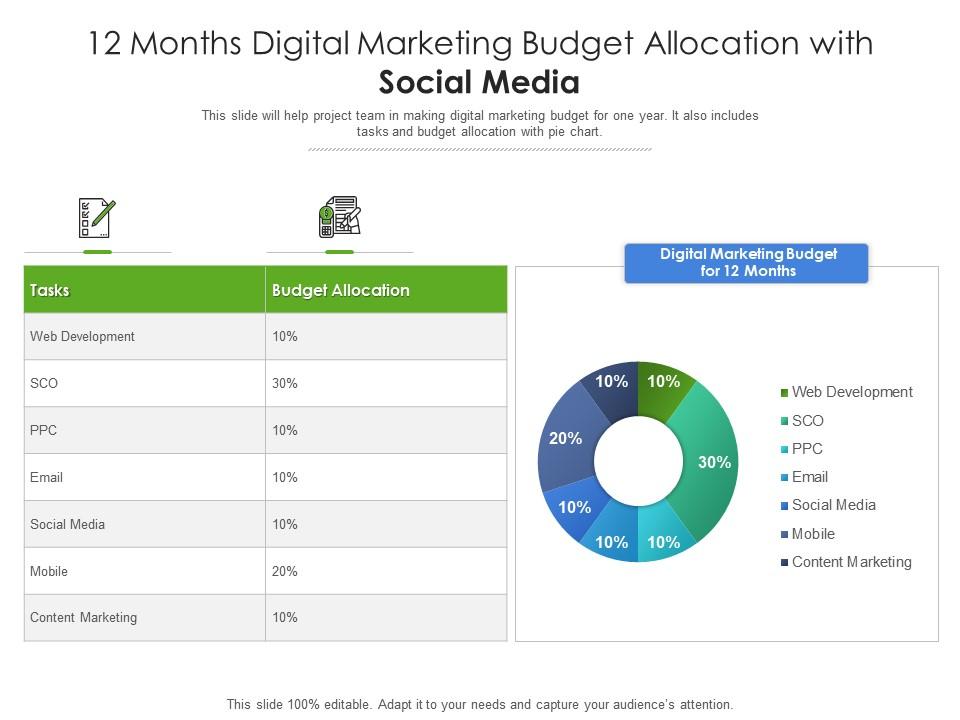
This slide will help project team in making digital marketing budget for one year. It also includes tasks and budget allocation with pie chart. Introducing our 12 Months Digital Marketing Budget Allocation With Social Media set of slides. The topics discussed in these slides are Web Development, Social Media, Mobile, Content Marketing. This is an immediately available PowerPoint presentation that can be conveniently customized. Download it and convince your audience.

FAQs for 12 months digital marketing budget allocation

So I usually tell people to split it up like this: throw most of your money at paid ads (maybe 60-70%), then budget for content creation, tools, and team stuff. Email marketing gets forgotten a lot but it's honestly gold. Same with SEO - boring but it works. Oh, and save like 10-15% for trying random new channels because sometimes TikTok ads or whatever just randomly pop off for your business. Really depends on your industry though. Start by figuring out where your actual customers spend time online, then just follow the money there.

So most companies throw around 5-10% of revenue at digital marketing, but it really comes down to what you're selling and where you're at. SaaS companies? They'll go crazy with like 15%. Established retail brands usually play it safer around 5%. Competitive markets or trying to grow super fast means you gotta spend more - just how it works. What really matters is making sure your customer acquisition cost actually makes sense compared to what they're worth over time. I'd check what your competitors are doing first, then just test stuff out. Oh and honestly, don't get too caught up in the percentages - focus on what's actually bringing customers through the door.

Start with ROI and ROAS - that's your real money check. Conversion rates and cost per acquisition matter way more than impressions (learned that the hard way). Click-through rates across channels show what's actually working. Customer lifetime value is massive since it reveals long-term impact. Attribution tracking gets messy but you need it - people almost never buy on the first click. I do monthly reviews comparing targets vs reality, then move budget toward whatever's crushing it. Honestly, vanity metrics are tempting but revenue drivers should be your obsession.

Pick 2-3 channels tops, don't spread yourself thin. Google Ads and organic social are my go-tos since you control the spend. Email marketing though? That's where the magic happens - ROI is honestly ridiculous if you're not already doing it. Track everything like a hawk so you actually know what's working vs what just looks pretty. Oh, and ignore vanity metrics completely. Test small first, then dump more money into whatever brings real customers through the door. I made the mistake early on of chasing likes instead of sales.

Think of audience segmentation as your cheat sheet for spending money smarter. You'll see which groups actually convert and which ones are just burning cash. I used to throw budget everywhere like confetti - terrible idea, don't do that. Now I put more money toward segments that perform well and cut the losers loose. Short sentences work here. Pull up your current performance data first, then move budget around based on what's actually working. Way better than just guessing which audiences might work out.

Yeah definitely don't spread your budget evenly - that's like wearing the same outfit year-round lol. Black Friday's the obvious example where you'd dump way more into Q4 if you're retail, then probably dial it back in January when everyone's recovering from holiday spending. Dig into your past data first to figure out when people actually engage and buy from you. Then move more money toward those hot periods. Oh and keep maybe 20% flexible so you can jump on unexpected trends or pull back when things get quiet. Way better than being stuck with a rigid plan that doesn't match reality.

Honestly, you gotta set aside some budget for testing - maybe 10-15% to start. Otherwise you're just throwing money at stuff and hoping it sticks. Try different audiences, new ad formats, whatever. Even tiny improvements in your conversion rates add up to serious money over time. The data you get is gold for planning future campaigns too. I mean, running the same ads over and over expecting different results is kinda nuts, right? Way better to actually learn what works instead of guessing.

Here's the thing - focus your money on whatever's actually making you revenue, not just getting clicks. Those vanity metrics are total BS honestly. I'd pull budget from the stuff that's flopping and put more into what's working. Weekly check-ins work way better than doing massive changes once a month. When you test new splits, give them at least 2-4 weeks before you decide if they're worth keeping. Oh, and start small - maybe shift like 10-15% at first so you don't completely mess up what's already going okay.

Honestly, start with the basics - Google Analytics and Facebook Ads Manager will track your platform spending. If you're running stuff across multiple channels (and who isn't these days?), grab something like HubSpot or Hootsuite for that bigger picture view. Budget-wise, Monday.com works well, though I've seen people crush it with just a good Google Sheets setup. Set up some automated reports so you're not stuck pulling numbers manually every damn week. My advice? Start free and see what actually breaks before you spend money on fancy tools.

If you're just starting out, go 70% organic and 30% paid. Quick wins needed? Flip that ratio. I made the mistake of dumping everything into ads early on - total waste of money lol. Your organic stuff like SEO and social builds lasting value, while paid gets you instant traffic. Run both for about 3 months and actually track your cost per acquisition. Then shift your budget toward whatever's bringing in customers. Some businesses do way better with organic than others, so don't assume ads are always the answer.

Honestly, milk every piece of content you create - turn one blog post into like 5 social posts, newsletter content, maybe even a quick video if you're feeling it. User-generated stuff is gold because people trust other customers way more than they trust you lol. Skip paid ads for now and just focus on writing blog posts that actually show up in Google searches. Content swaps with other small businesses or micro-influencers work great too. Oh, and track what's actually making you money, not just how many hearts you're getting on Instagram.

Honestly, where you spend your ad money totally depends on which channels actually work for your business. Google Ads eats up budget fast with those pricey keywords, but social might cost more upfront for creative stuff. I'd look at your data first – which platforms are actually converting? Those deserve the biggest chunk of your budget. Also random thought, but don't forget some channels have minimum spends that might mess with your planning. Seasonal stuff matters too. Skip the gut feeling approach and go with whatever's giving you the best ROI right now.

Hey! So for influencer budgets, I usually tell people to start with like 10-20% of whatever you're spending on digital marketing. There's a few ways to pay them - flat rate per post, commission based on actual sales, or just product trades (though bigger influencers honestly won't go for that). Micro-influencers are where it's at IMO, but throw in one bigger name if you can swing it. Oh and definitely track your cost-per-acquisition religiously - I learned that the hard way. You'll want to see what's actually moving the needle so you can shift money around accordingly.

Always keep 15-20% of your budget unallocated from the start. Trust me on this one - you'll need it for pivots or surprise opportunities. Monthly budget reviews work way better than annual lockdowns. Avoid long contracts when you can (though some platforms basically force you into them, which is annoying). Set up trigger points beforehand - like if CPCs spike 30% or a competitor launches something big. Performance-based allocation lets you move money fast from what's bombing to what's working. Oh, and track competitor moves monthly. Markets shift quick and you don't want to be scrambling to catch up.

Honestly, the biggest mistake I see is teams throwing like 30-40% of their budget at whatever shiny new platform just launched. Keep it to 10-15% max until you actually test it properly. Also - just because your competitors are doing something doesn't mean you should jump on it too. (God, remember the Clubhouse madness?) Set up your tracking first, obviously. Keep funding whatever's already working for you. Test small amounts on new stuff, be ruthless about measuring results, then scale up only what actually moves the needle for YOUR audience. Not everyone else's.

Ratings and Reviews

88% of 100
Review Form
Write a review
Most Relevant Reviews
  1. 80%

    by Duane Ray

    Designs have enough space to add content.
  2. 80%

    by Brown Murphy

    Good research work and creative work done on every template.
  3. 100%

    by O'Sullivan Evans

    Great product with effective design. Helped a lot in our corporate presentations. Easy to edit and stunning visuals.
  4. 80%

    by Mason Thompson

    Out of the box and creative design.
  5. 100%

    by Edison Rios

    Nice and innovative design.

5 Item(s)

per page: