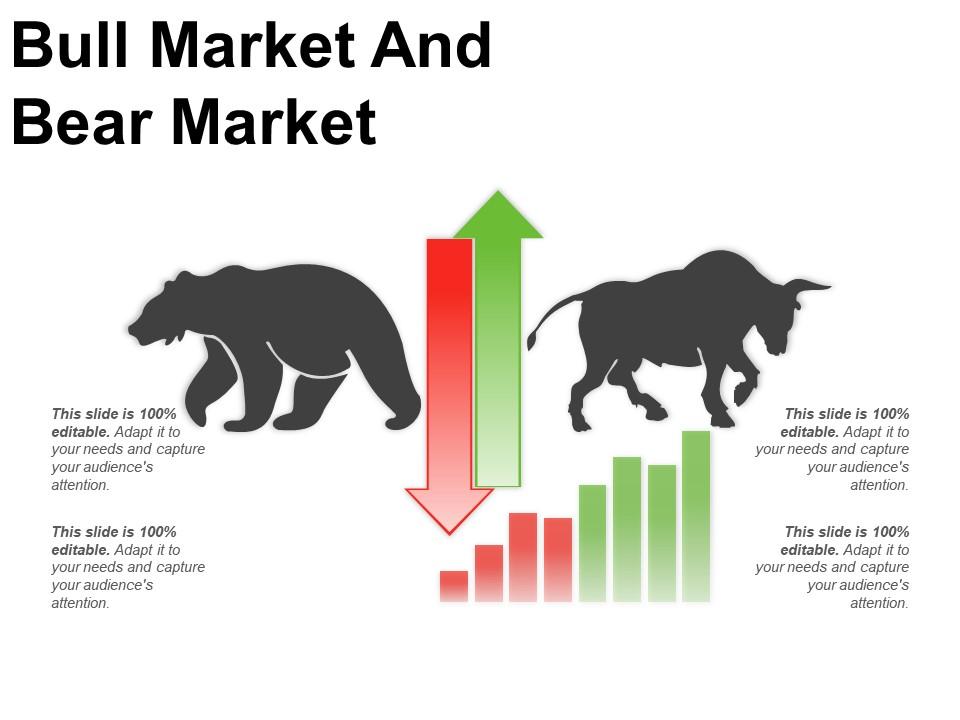
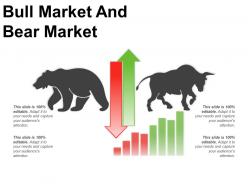
Bull market and bear market good ppt example

Rating:
90%
Bull market and bear market good ppt example
Slide 1 of 5
Favourites Favourites

Try Before you Buy Download Free Sample Product

Audience Impress Your
Audience
Editable 100%
Editable
Time Save Hours
of Time
The Biggest Sale is ending soon in
0
0
:
0
0
:
0
0
Rating:
90%
Presenting Bull Market And Bear Market Good PPT Example. This is a fully customizable template that is entirely under your control. You can change anything in this slide and make it apt your presentation. Modify the colors, the font type, and the font size as per your choice. We offer you high-resolution graphics that can be transformed into JPG and PDF formats. This is completely adaptable with the Google Slides. Download this slide in standard screen and widescreen.

FAQs for Bull market and bear market

Dude, AI is literally everywhere right now - customer service, supply chains, you name it. Cloud computing's massive too, companies are obsessed with faster data processing. 5G is actually delivering now (finally!). All these IoT devices are pumping out crazy amounts of data for predictive stuff. Blockchain's still trying to figure itself out beyond crypto honestly. My advice? Find whichever one touches your industry and really dig into how it'll change what your customers want. That's where the money is.

Honestly, customer preferences are running the whole show now. Companies can't just build random stuff and hope people buy it anymore. Smart brands are throwing money at social listening and user research because trends flip so fast it makes your head spin. I've seen companies do really well by making their products more modular - that way they can actually pivot when people want something different. Oh, and definitely set up those feedback loops with your customers. Maybe throw like 20-30% of your dev budget at experimental features? Sounds risky but it's working for a lot of people.

Dude, sustainability is literally driving everything right now. Consumers aren't just asking for it anymore - they're demanding it. Fashion brands are going circular, tech companies are racing to hit carbon neutral. My parents are even asking about ESG funds, which honestly blew my mind lol. Companies ignoring this stuff? They're getting crushed by competitors who actually get it. Look at any business strategy today - you can't ignore how sustainability affects what people buy and all the regulatory mess coming down the pipe. It's not optional anymore.

Honestly, geopolitical stuff can really mess with markets because investors get spooked by uncertainty. When there's tension between big countries or political chaos, people dump risky investments and run to safe stuff like gold or treasury bonds. Trade wars are the worst - they destroy supply chains and send commodity prices all over the place. Here's the crazy part: even just rumors can trigger massive volatility before anything actually happens. Markets are so paranoid sometimes. My advice? Stay up on major political news and think about how it might hit your specific sector. Don't try timing the whole market though - that's a losing game.

Dude, tech and renewable energy are absolutely killing it right now. Healthcare too - aging boomers need stuff, you know? AI's throwing crazy money into tech companies, and all those climate policies are pumping up green energy. E-commerce is still doing great. Basically anything digital is winning these days. What I've noticed is the best opportunities are in industries that actually fix real problems, not just whatever's trending on Twitter. That's where you'll see growth that sticks around. Focus on the stuff that solves genuine pain points.

Start with trading volume - that's the big one. Shows you if people actually care about a price move or if it's just random noise. Moving averages are solid too, especially 50 and 200-day ones for the bigger picture. RSI's great for spotting when stuff gets way overbought or oversold. Honestly, sector rotation is underrated - tells you where the smart money's actually going. Support and resistance levels work pretty well, though sometimes they feel more like guessing than real analysis. Don't try to learn everything at once though. Get comfortable with these first, then you can add the fancy stuff later once you see how they all work together.

Honestly, everything's moving toward super personalized stuff now - brands are using real-time data to tweak their messaging on the fly. Interactive content is huge too, like polls and those AR filters everyone's obsessed with. Privacy laws are making it harder but also pushing marketers to get creative with collecting their own data instead of relying on third parties. Micro-targeting is where it's at now. Forget broad audiences - the more specific, the better. Oh and automation tools are a game changer if you haven't tried them yet. Focus on building those direct relationships through your own channels rather than just social media.

Dude, social media is basically controlling how everyone shops now. Like 70% of people are stalking reviews and influencer posts before they buy anything. Instagram and TikTok are the worst offenders with those "shop now" buttons - I swear they're designed to drain your bank account lol. People trust random customer photos way more than actual ads, which is wild but makes sense. Your friends' recommendations hit different than some polished marketing campaign. If you're not getting your customers to post about your stuff or at least staying active online, you're literally watching money walk out the door. The peer pressure aspect is insane too.

Dude, the market's hitting different sectors super unevenly right now. Tech and consumer stuff are getting destroyed while boring sectors like utilities and healthcare are holding up fine - typical safe-haven moves. Energy's been absolutely wild with all the geopolitical drama. Banks are in this weird spot where higher rates help them but everyone's worried about a recession killing loan demand. Here's the annoying part though - when markets get this choppy, sectors start moving together way more than usual. So diversification isn't really saving you like it normally would. Maybe bump up your cash a bit if you're feeling too exposed? I've been watching the rotation patterns pretty closely lately.

Dude, remote work is totally flattening org structures - way less middle management BS. Companies are dumping money into collaboration tools because honestly, most meetings could've been emails anyway. Your results matter more than whether you're pants-optional at home or stuck in traffic commuting. Hybrid policies are everywhere now, and lots of places are downsizing their physical offices or going fully distributed. Cross-functional teams are the norm. If you're managing people, figure out what actually needs to happen in-person versus what doesn't. The whole 9-to-5 thing feels pretty outdated at this point.

So data analytics takes all that messy market info and makes it useful. You'll stop just knowing "sales went up" and start seeing which customers are actually buying, when they buy, what's gonna happen next month. Think of it like... suddenly understanding what all those random numbers mean? You can watch what competitors do, figure out pricing stuff, catch trends early. Honestly the biggest mistake is just throwing everything into some dashboard without knowing what you're looking for first. Way better to start with real questions you need answered.

Dude, personalization is literally make-or-break now. People expect you to know their stuff - what they bought, what they looked at, all of it. Kinda creepy but whatever, they love it. Those "Dear Valued Customer" emails? Trash immediately. But show someone products they actually want and boom - 20% better sales. The smart brands are using AI for everything now, even timing when emails go out. Oh and forget basic demographics - segment your lists by what people actually DO on your site. That's where the money is.

Honestly, demographic changes are completely flipping consumer behavior on its head. Boomers are aging and need more healthcare stuff, accessibility features - you know the drill. Meanwhile millennials and Gen Z won't buy anything unless it's sustainable and tech-forward. The Hispanic population keeps growing too, which is shifting food and entertainment trends everywhere. Oh, and since everyone's moving to cities, they'd rather pay for experiences than own a bunch of junk. I swear these patterns shift faster every year. You really gotta watch what's happening in your specific markets and switch up your products accordingly.

Your loyal customers won't bail when things get crazy - they'll stick around even if competitors drop prices or launch something shiny. That emotional connection you've built? It's what saves you during rough patches. They'll tolerate price hikes and product tweaks because they actually trust you. Honestly, I think most businesses wait too long to work on this stuff. You gotta build loyalty before the storm hits. Focus on nailing the customer experience every time and just be real with people. Oh, and track your repeat buyers - that'll tell you if it's working.

Ugh, data overload is the worst part honestly. There's just SO much info coming from everywhere and figuring out what actually matters vs random noise? Nightmare. Consumer behavior changes like every week now - one viral TikTok can mess up months of predictions. Politics, supply chain stuff, you name it. The analytics tools are decent but they're basically garbage if your assumptions suck. My advice? Pick maybe 3-4 metrics that genuinely move the needle for your business instead of tracking literally everything. Way less headache that way.

Ratings and Reviews

90% of 100
Review Form
Write a review
Most Relevant Reviews
  1. 100%

    by Douglas Lane

    Illustrative design with editable content. Exceptional value for money. Highly pleased with the product.
  2. 80%

    by Evans Mitchell

    Easily Editable.

2 Item(s)

per page: