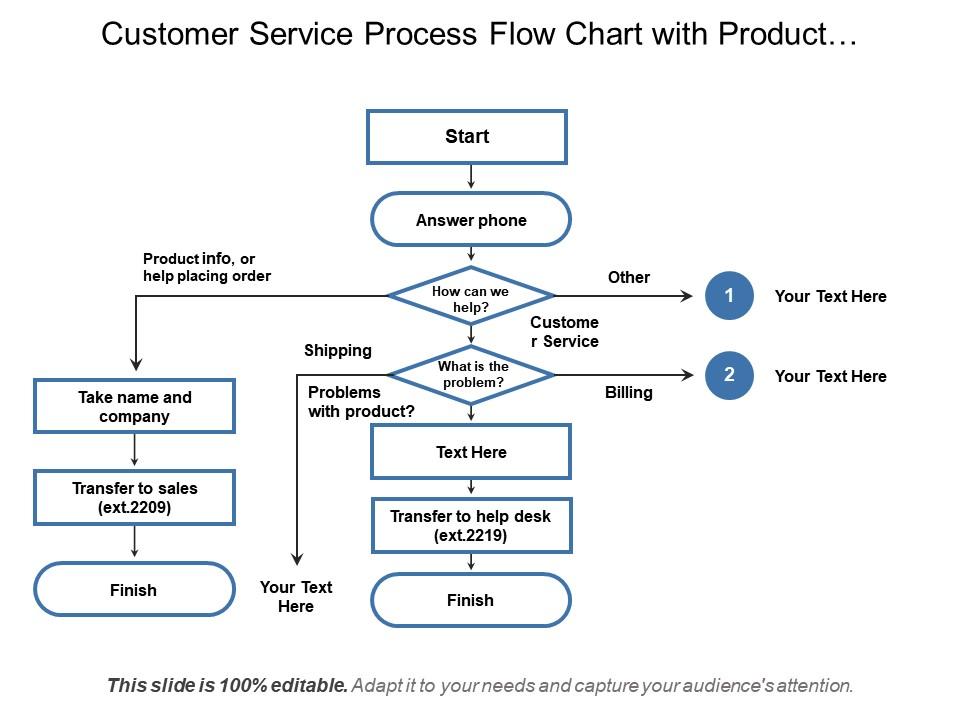
Diagrama de flujo del proceso de servicio al cliente con información del producto y realización de pedidos

Rating:
90%
Slide 1 of 5
Favourites Favourites

Try Before you Buy Download Free Sample Product

Audience Impress Your
Audience
Editable 100%
Editable
Time Save Hours
of Time
The Biggest Sale is ending soon in
0
0
:
0
0
:
0
0
Rating:
90%

Características de estas diapositivas de presentación de PowerPoint:

Presentar este conjunto de diapositivas con el nombre - Diagrama de flujo del proceso de servicio al cliente con información del producto y realización de pedidos. Este es un proceso de dos etapas. Las etapas de este proceso son el flujo del proceso de servicio al cliente, la gestión del servicio al cliente y el diagrama de flujo del servicio al cliente.

FAQs for Customer service process flow chart with product information

Speed and transparency are everything. Get real-time tracking so people aren't constantly wondering where their order is. Most frustration honestly comes from customers feeling ignored, not actual delays. Your support team needs to make quick decisions without running everything up the chain - that's huge. Also, make sure your order systems talk to customer service tools because nobody wants to repeat their order number a million times. Oh, and set realistic expectations from the start, then actually hit them. Clear return/cancellation processes matter too. It's really not that complicated once you nail the basics.

Honestly, automation's a game changer for order stuff. You can set it up to handle all the boring repetitive tasks - confirmations, tracking updates, routing orders to the right warehouses. Frees you up for the actual tricky customer problems that need real people. Manual errors basically disappear too, which is huge when you're doing hundreds of orders daily. I've seen teams slash their processing time by 60% or something crazy like that. Oh, and customers stay in the loop automatically without you constantly checking in. Start with your most basic processes first - that's where you'll feel the difference right away.

Dude, communication is everything in order management. Seriously, customers get SO annoyed when they don't know what's happening with their stuff - like, just send a quick "hey your order's delayed" text and you'll save yourself tons of headaches. I've watched companies create their own drama by staying silent until customers start calling mad. You gotta loop in your warehouse and shipping people too so problems get caught early. Oh and honestly? Being upfront about delays beats pretending everything's fine. Don't wait for people to chase you down for updates - that's when things get messy.

Dude, you gotta start tracking your order data - it'll show you problems way before customers start complaining. Look at delivery delays, why people return stuff, how often orders get messed up. Honestly, the first time I dug into this kind of data it was kinda scary how much we were missing. You can also predict what people actually want to buy (instead of just guessing) and keep the right stuff in stock. Oh, and set up some kind of dashboard your team can actually check throughout the day. Way better than finding out about issues from pissed off customers later.

Peak seasons are brutal - your team gets slammed and customers want answers immediately across every platform imaginable. Order tracking becomes a nightmare when everything's spread across different systems. Plus you're constantly dealing with missing customer details and inventory that's never quite up to date. When someone calls angry, your agents don't have their full order history which makes everything worse. Oh, and don't even get me started on trying to coordinate between departments. You really need everything in one centralized system so people can actually see what's going on with orders as they happen.

Honestly, just keep people in the loop about everything. Send automated confirmations when they order, shipping alerts, tracking numbers - the whole deal. A real-time portal where they can check their order status is a game changer because then they're not constantly calling you (trust me on this one). When customers do call, make sure your team sees the exact same info they do. Oh, and set up alerts for when things might go sideways before they actually do. Being ahead of problems beats scrambling to fix them later. I'd start by looking at what you're already telling customers and see what's missing.

Honestly, the trick is making returns painless for customers without screwing over your business. First, actually listen to why they're returning stuff - half the time you can fix their real problem without doing a return at all. Your return policy needs to be crystal clear upfront, but know when to bend those rules for loyal customers. Track everything in your system too, because return patterns will show you if there's something wrong with specific products or your shipping (learned that one the hard way). Bottom line? Make it so smooth they'll come back and buy again, even though they're literally returning something right now.

Set up those post-delivery surveys to dump ratings straight into customer profiles - that's the easy part. Your CS team should also log stuff manually when customers call (honestly, those random conversations give you the best insights). APIs can pull reviews from your site automatically if you're feeling fancy. The main thing is flagging feedback on specific order records so you can actually spot patterns. I'd probably start with the automated surveys first since that's less work. This whole setup helps you figure out which orders went sideways and which customers might need some extra love next time.

Honestly, your inventory system can totally make or break customer relationships. Good tracking means you actually have what people ordered - crazy concept, right? But mess this up and you'll be drowning in complaints about delayed shipments and oversold items. Nothing's worse than telling someone "oops, we don't actually have that." Accurate forecasting keeps orders flowing smoothly. Less drama for everyone. I'd start by taking a hard look at whatever tracking system you're using now. Trust me, fixing this upfront saves you so many headaches later.

Dude, those handoff delays between departments are the worst - cross-departmental collaboration totally fixes that mess. Your customer service team should work directly with fulfillment and shipping so you can catch problems before customers even notice. Honestly makes everyone's job way less stressful too. No more playing telephone all day, which is honestly kind of soul-crushing after a while. You'll get real-time order visibility and can actually solve issues instead of just passing them around. Start simple - set up a shared Slack channel or do weekly syncs with the departments you work with most.

Honestly, start by tracking your errors for like a week - you'll be shocked what patterns pop up. Double-check systems work wonders at handoff points, plus get your order entry process totally standardized. I'm a huge believer in automated validation catching the obvious stuff before it ships out wrong. Train your team on the common mistakes they should watch for. Real-time inventory helps too so you don't oversell. Checklists sound boring but I swear they're magic - seen teams cut errors by 60% just from better ones. Tackle whatever's causing the most problems first, don't try to fix everything at once.

Honestly, order management software that syncs with your CRM and inventory will save you so much headache. Real-time tracking, automatic customer updates, catches problems early - the works. AI chatbots handle basic questions now and they're actually not terrible anymore. Your customers can check orders themselves through mobile apps instead of calling constantly. Just make sure everything connects properly or you'll still be updating multiple systems manually (been there, it sucks). I'd map out your current process first and tackle whatever's driving you crazy most.

Honestly, I'd start with order accuracy - like how often you nail it on the first try. That's huge. Then track how fast orders actually get delivered and what customers are saying about the whole experience. Those satisfaction scores don't lie. Oh and definitely watch your return rates - nothing worse than stuff coming back constantly because something's broken in your process. Cost per order is pretty telling too since it shows if you're actually making money or just burning through cash. These five will give you a decent handle on things.

Look, smooth order management is what keeps customers coming back. Ship fast, communicate clearly, make tracking easy - they'll trust you. But screw up the basics? Wrong items, delays, radio silence when problems hit? You're basically pushing them toward your competitors. Bad experiences spread like wildfire now too. I always tell people to over-communicate rather than leave customers guessing. Have backup plans ready because something will go wrong eventually. It's not rocket science - just don't give people reasons to hate doing business with you.

Honestly, AI automation is where it's at right now. You can predict order problems before they blow up and route tricky cases to the right people automatically. The inventory visibility thing is massive too - your team won't be scrambling to check warehouses every time someone calls. Chatbots don't suck anymore either, which is wild. Customers can actually handle basic stuff themselves through better self-service portals. Start small though - even just improving order tracking visibility will cut down those annoying "where's my package" calls by tons.

Ratings and Reviews

90% of 100
Review Form
Write a review
Most Relevant Reviews
  1. 100%

    by Rhys Moore

    Professional and unique presentations.
  2. 80%

    by Cristopher Cole

    Great designs, Easily Editable.

2 Item(s)

per page: