Data Requirement Analysis Dashboard Snapshot For Product Initiatives

Rating:
100%
Data Requirement Analysis Dashboard Snapshot For Product Initiatives
Slide 1 of 7
Favourites Favourites

Try Before you Buy Download Free Sample Product

Audience Impress Your
Audience
Editable 100%
Editable
Time Save Hours
of Time
The Biggest Sale is ending soon in
0
0
:
0
0
:
0
0
Rating:
100%
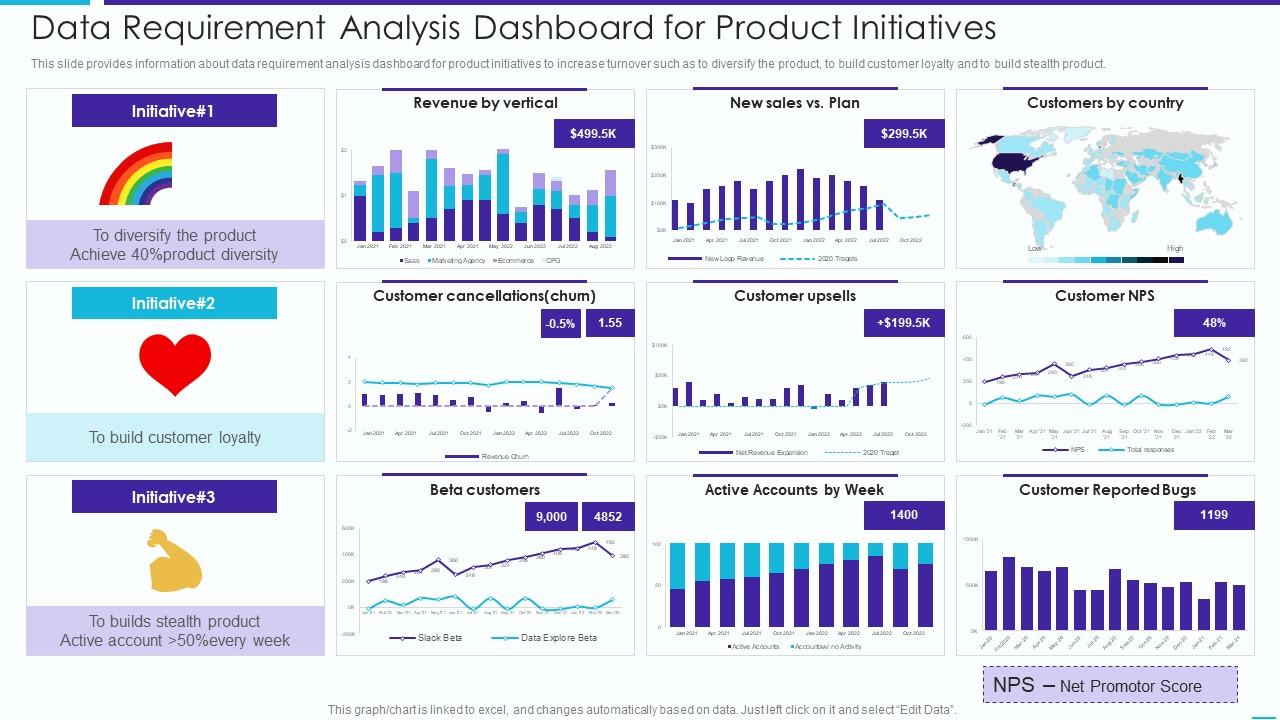
This slide provides information about data requirement analysis dashboard snapshot for product initiatives to increase turnover such as to diversify the product, to build customer loyalty and to build stealth product. Introducing our Data Requirement Analysis Dashboard For Product Initiatives set of slides. The topics discussed in these slides are Requirement, Analysis, Dashboard. This is an immediately available PowerPoint presentation that can be conveniently customized. Download it and convince your audience.

FAQs for Data Requirement Analysis Dashboard Snapshot

The key objectives of conducting data requirement analysis include identifying necessary data sources, defining data quality standards, establishing collection methodologies, determining storage requirements, and ensuring regulatory compliance. These objectives streamline decision-making processes by eliminating data gaps, reducing collection costs, and enhancing analytical accuracy, with many organizations finding that systematic analysis ultimately delivers faster insights and competitive advantage.

Stakeholder interviews significantly influence data requirement analysis by uncovering critical business needs, identifying key performance metrics, and revealing hidden data dependencies that technical teams might overlook. These conversations enable analysts to prioritize data sources, understand workflow constraints, and align technical solutions with actual business objectives, ultimately delivering more targeted analytics and reporting capabilities that drive strategic decision-making.

Methods for identifying data sources include stakeholder interviews, system inventory audits, process mapping, data lineage tracing, and cross-departmental workshops. These approaches streamline discovery by engaging business users, cataloging existing databases, and mapping information flows, with many organizations finding that combining internal assessments with external benchmarking ultimately delivers comprehensive visibility and enhanced data strategy alignment.

Distinguishing between essential and non-essential data requirements involves evaluating business impact, regulatory compliance, operational necessity, and strategic value. Essential data directly supports core business processes, legal obligations, and decision-making, while non-essential data provides supplementary insights. Organizations can streamline their data architecture by prioritizing requirements that drive revenue, ensure compliance, and enable competitive advantage, ultimately reducing storage costs and improving system performance.

Documentation serves as the foundation for data requirement analysis, capturing stakeholder needs, data sources, quality standards, governance policies, and technical specifications in structured formats. These comprehensive records enable cross-functional teams to maintain consistency throughout project lifecycles, facilitate knowledge transfer between team members, and ensure regulatory compliance, while ultimately delivering transparency and accountability that streamlines decision-making processes across organizations.

Ensuring data requirements align with business goals involves conducting stakeholder interviews, mapping data needs to specific objectives, and establishing clear metrics that measure business outcomes. Through collaborative workshops and regular reviews, organizations streamline decision-making, enhance operational efficiency, and deliver measurable results, with many finding that this strategic alignment ultimately drives competitive advantage and sustainable growth.

Common challenges during data requirement analysis include unclear business objectives, inconsistent data definitions across departments, inadequate stakeholder communication, legacy system constraints, and evolving regulatory requirements. These obstacles often result in project delays, budget overruns, and misaligned solutions, with many organizations finding that early stakeholder alignment and comprehensive documentation significantly streamline the analysis process while reducing costly revisions.

Data quality assessments significantly impact requirement analysis by identifying data accuracy, completeness, consistency, and reliability issues that directly influence project scope and technical specifications. Poor data quality often reveals additional cleansing, validation, and governance requirements, while high-quality data enables streamlined implementation timelines, with many organizations finding that thorough assessments prevent costly mid-project adjustments.

Tools that facilitate effective data requirement analysis include SQL databases, data profiling software like Informatica or Talend, business intelligence platforms such as Tableau or Power BI, requirements management tools, and cloud analytics services. These technologies streamline assessment processes by automating data discovery, enabling stakeholder collaboration, and providing comprehensive visualization capabilities, with many organizations finding that integrated toolsets significantly reduce analysis timeframes while enhancing accuracy.

User feedback shapes data requirements by revealing actual usage patterns, highlighting missing information needs, and identifying performance gaps in current systems. Through surveys, interviews, and behavioral analytics, organizations can refine their data collection strategies, prioritize high-impact datasets, and eliminate redundant information gathering, ultimately delivering more targeted insights and enhanced user experiences.

Data requirement analysis varies significantly across industries due to distinct regulatory frameworks, data sensitivity levels, and operational objectives. Healthcare prioritizes patient privacy compliance through HIPAA regulations, clinical outcome tracking, and real-time monitoring systems, while finance emphasizes fraud detection, risk assessment, and regulatory reporting under frameworks like SOX and Basel III, ultimately delivering industry-specific insights that enhance operational efficiency and competitive advantage.

Best practices for mapping data flow in relation to requirements include identifying data sources and destinations, documenting transformation processes, establishing clear data lineage, defining quality checkpoints, and creating visual flow diagrams. These practices enhance project transparency by streamlining requirement validation, minimizing integration risks, and ensuring data accuracy, with many organizations finding that comprehensive flow mapping ultimately delivers faster implementation timelines and improved stakeholder alignment.

Data privacy and compliance considerations can be integrated through conducting privacy impact assessments, mapping data flows across systems, establishing consent management frameworks, and implementing data governance protocols during the requirement gathering phase. Many organizations in healthcare, finance, and retail find that embedding privacy-by-design principles early streamlines regulatory compliance while enhancing customer trust and operational efficiency.

Effective data requirement prioritization techniques include business impact assessment, stakeholder value mapping, cost-benefit analysis, regulatory compliance evaluation, and dependency analysis. These methods enable organizations to focus on critical data needs first, streamline resource allocation, and deliver maximum business value, with many enterprises finding that strategic prioritization accelerates project timelines while reducing implementation costs.

Changes in business processes significantly impact existing data requirements by altering collection methods, introducing new analytical needs, and modifying reporting structures. These shifts often require organizations to reassess storage systems, update integration protocols, and enhance data quality measures, with many companies in sectors like retail and healthcare finding that process evolution ultimately drives more strategic data utilization and competitive insights.

Ratings and Reviews

100% of 100
Review Form
Write a review
Most Relevant Reviews
  1. 100%

    by Douglass Riley

    Best way of representation of the topic.
  2. 100%

    by Donovan Cunningham

    Content of slide is easy to understand and edit.

2 Item(s)

per page: