KPI Metrics Dashboard Highlighting Employee Retention Developing Employee Retention Program

Rating:
90%
KPI Metrics Dashboard Highlighting Employee Retention Developing Employee Retention Program KPI Metrics Dashboard Highlighting Employee Retention Developing Employee Retention Program
Slide 1 of 7
Favourites Favourites

Try Before you Buy Download Free Sample Product

Audience Impress Your
Audience
Editable 100%
Editable
Time Save Hours
of Time
The Biggest Sale is ending soon in
0
0
:
0
0
:
0
0
AI-Ready
Upload this template to AI and ask it to make any changes to content or color
100% editable Powerpoint Template for AI-assisted presentations. Finish your work in less time. ​
Works with
Microsoft PowerPoint
Microsoft 365
Claude for PowerPoint
ChatGPT
Google Slides
Microsoft Copilot
Rating:
90%
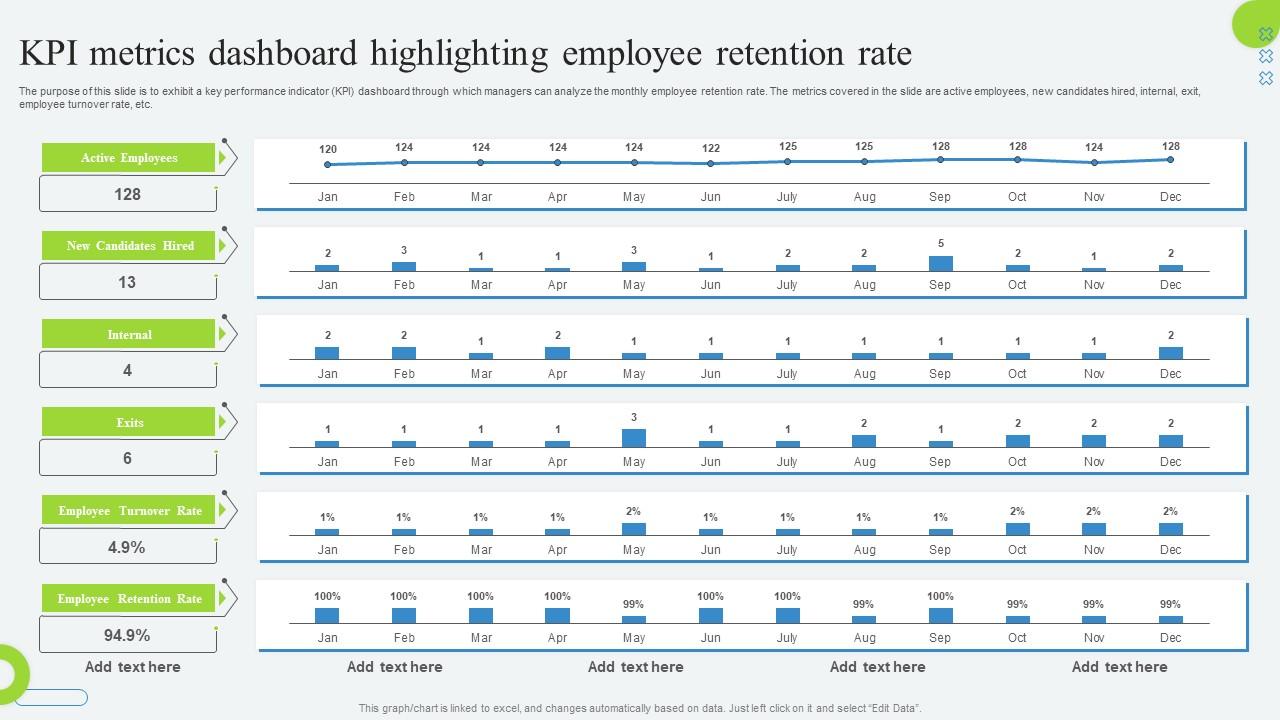
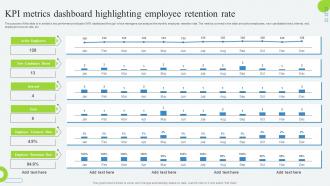
The purpose of this slide is to exhibit a key performance indicator KPI dashboard through which managers can analyze the monthly employee retention rate. The metrics covered in the slide are active employees, new candidates hired, internal, exit, employee turnover rate, etc. Present the topic in a bit more detail with this KPI Metrics Dashboard Highlighting Employee Retention Developing Employee Retention Program. Use it as a tool for discussion and navigation on New Candidates Hired, Active Employees, Internal. This template is free to edit as deemed fit for your organization. Therefore download it now.

FAQs for KPI Metrics Dashboard Highlighting Employee Retention Developing

Key employee retention metrics include turnover rate, retention rate, time-to-fill positions, exit interview insights, and employee satisfaction scores. These metrics enable organizations to identify retention challenges, optimize recruitment strategies, and enhance workplace culture, with many companies finding that tracking these indicators delivers improved talent management, reduced hiring costs, and stronger competitive advantage.

Turnover rates are measured by dividing departures by average headcount over specific periods, analyzing voluntary versus involuntary exits, and segmenting by department, role level, and tenure. This data enables organizations to identify retention patterns, benchmark against industry standards, and implement targeted interventions, with many companies finding that quarterly analysis reveals actionable insights for strategic workforce planning.

Employee engagement significantly influences retention metrics by measuring emotional commitment, job satisfaction, workplace culture alignment, and career development opportunities within organizations. Highly engaged employees demonstrate lower turnover rates, reduced absenteeism, and increased productivity, with companies like Google and Microsoft finding that strategic engagement initiatives streamline retention efforts while delivering enhanced performance and competitive advantage.

Exit interview data provides valuable insights into departure reasons, workplace culture issues, management effectiveness, and compensation concerns that directly inform targeted retention improvements. Organizations analyze this feedback to address systemic problems, enhance manager training, refine benefits packages, and create more engaging work environments, with many companies finding that implementing data-driven changes significantly reduces turnover rates.

Common reasons employees leave include inadequate compensation, limited career advancement opportunities, poor management relationships, work-life balance issues, and lack of recognition or engagement. These factors can be quantified through exit interview data, engagement survey scores, promotion rates, salary benchmarking studies, and turnover analytics by department, with many organizations finding that addressing compensation gaps and management training significantly reduces voluntary departures.

Benchmarking employee retention metrics involves comparing turnover rates, tenure averages, and exit reasons against industry-specific data from HR analytics platforms, professional associations, and competitor research. Organizations typically analyze these benchmarks quarterly, examining factors like role level, department performance, and geographic variations, while many companies find that combining multiple data sources delivers more accurate competitive positioning and strategic workforce planning insights.

Employee tenure significantly impacts retention metrics by reducing turnover costs, enhancing institutional knowledge retention, and improving team stability across departments. Longer-tenured employees typically demonstrate higher productivity, stronger client relationships, and better mentorship capabilities, with many organizations finding that experienced staff deliver improved customer satisfaction, reduced training expenses, and ultimately greater operational efficiency in competitive markets.

Retention metrics identify at-risk employees by analyzing turnover patterns, engagement scores, performance trends, absenteeism rates, and exit interview feedback. These indicators enable organizations to spot warning signs early, allowing HR teams to implement targeted interventions, improve workplace satisfaction, and ultimately reduce costly departures while enhancing overall retention strategies.

Stay interviews are proactive conversations with current employees to understand their motivation, satisfaction levels, and retention factors before they consider leaving. These discussions enable organizations to identify potential issues early, address concerns immediately, and strengthen employee engagement, with many companies finding that regular stay interviews reduce turnover costs while enhancing workplace culture and competitive talent retention.

Managers can leverage retention metrics by analyzing turnover patterns, identifying high-risk employee segments, tracking engagement scores, and measuring exit interview insights to pinpoint strategic intervention points. Through predictive analytics and performance correlation data, organizations streamline talent development programs, enhance compensation strategies, and optimize workplace culture initiatives, ultimately delivering improved employee satisfaction and competitive advantage in talent acquisition.

Technology tools for tracking employee retention metrics include HRIS platforms like Workday and BambooHR, analytics software such as Tableau and Power BI, predictive analytics tools, survey platforms, and specialized retention dashboards. These technologies streamline data collection, automate reporting, and deliver predictive insights, with many organizations finding that integrated analytics platforms enhance decision-making while reducing administrative overhead and improving strategic workforce planning.

Retention metrics inform recruitment strategies by identifying patterns in successful employee profiles, tenure by role and department, and exit reasons across different hire sources. Organizations analyzing these metrics can refine job descriptions, adjust candidate screening criteria, and target recruitment channels that historically yield longer-tenured employees, ultimately improving cultural alignment and reducing costly turnover cycles.

Qualitative metrics include exit interview insights, employee satisfaction surveys, manager relationship assessments, career development feedback, and workplace culture evaluations. These complement quantitative data by revealing underlying retention drivers, with many organizations finding that combining employee sentiment analysis with turnover statistics enables more targeted interventions, ultimately delivering improved engagement and strategic workforce planning.

Demographic factors significantly influence retention metrics through varying career expectations, communication preferences, work-life balance priorities, and professional development needs across age groups, generations, and cultural backgrounds. Organizations with diverse workforces find that tailored retention strategies addressing generational differences, cultural values, and life-stage requirements deliver higher engagement rates, reduced turnover costs, and ultimately stronger competitive advantage in talent acquisition.

Improving employee retention metrics delivers significant long-term financial benefits through reduced recruitment costs, enhanced productivity, and preserved institutional knowledge. Companies with strong retention see increased customer satisfaction, higher profitability, and competitive advantage, with many organizations finding that retained employees drive innovation, maintain client relationships more effectively, and ultimately contribute to sustainable revenue growth and market position.

Ratings and Reviews

90% of 100
Review Form
Write a review
Most Relevant Reviews
  1. 80%

    by Byrne Cruz

    One word for SlideTeam–Versatile!
  2. 100%

    by Miller Rogers

    World-class PowerPoint designs that are fully customizable!

2 Item(s)

per page: