Diapositiva de plantilla de presentación de estrategia de lanzamiento de producto

Rating:
100%
Product launch strategy presentation template slide
Slide 1 of 5
Favourites Favourites

Try Before you Buy Download Free Sample Product

Audience Impress Your
Audience
Editable 100%
Editable
Time Save Hours
of Time
The Biggest Sale is ending soon in
0
0
:
0
0
:
0
0
Rating:
100%

Características de estas diapositivas de presentación de PowerPoint:

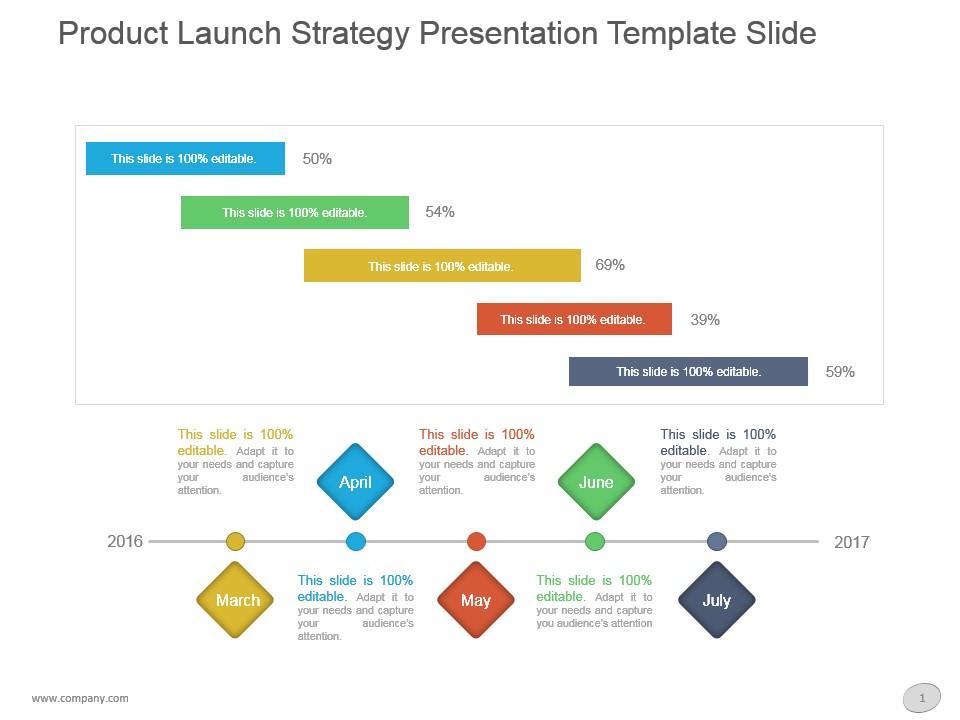
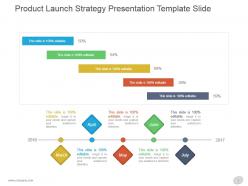
Presentación de diapositivas de plantilla de presentación de estrategia de lanzamiento de producto. Esta es una diapositiva de plantilla de presentación de estrategia de lanzamiento de producto. Este es un proceso de cinco etapas. Las etapas de este proceso son abril, junio, marzo, mayo, julio.

FAQs for Product launch strategy

A product launch strategy presentation should include market analysis, target audience segmentation, competitive positioning, pricing strategy, marketing channels, timeline milestones, and success metrics. These elements work together by aligning cross-functional teams, establishing clear objectives, and creating accountability frameworks, with many organizations finding that comprehensive presentations reduce launch risks while accelerating time-to-market and maximizing initial adoption rates.

Audience segmentation significantly enhances product launch effectiveness by enabling targeted messaging, personalized marketing campaigns, and optimized resource allocation across different customer groups. Through strategic segmentation, companies can tailor their value propositions, select appropriate channels, and customize timing for each segment, ultimately delivering higher conversion rates and stronger market penetration while maximizing ROI.

Best practices for setting measurable goals during product launch include defining specific KPIs, establishing baseline metrics, setting realistic timelines, creating milestone checkpoints, and aligning objectives with business outcomes. These approaches streamline performance tracking by monitoring user adoption rates, revenue targets, and market penetration metrics, while enabling teams to adjust strategies quickly, ultimately delivering clearer accountability and competitive advantage throughout the launch process.

Competitor analysis shapes product launch strategy by identifying market gaps, pricing benchmarks, positioning opportunities, and potential threats or challenges. Through comprehensive competitive research, companies can differentiate their offerings, optimize timing, and develop messaging that highlights unique value propositions, ultimately enabling more strategic market entry and competitive advantage.

Social media serves as a critical distribution channel for modern product launches, enabling targeted audience engagement, real-time feedback collection, influencer partnerships, and viral content amplification. Through strategic social campaigns, companies streamline brand awareness building, enhance customer interaction, and accelerate market penetration, with many organizations finding that integrated social strategies ultimately deliver measurable launch momentum and competitive advantage.

Effective pre-launch customer feedback methods include focus groups, beta testing programs, surveys, prototype demonstrations, and one-on-one interviews with target users. These approaches enable companies to identify potential issues, refine features, and validate market demand across sectors like software, consumer goods, and services, ultimately reducing launch risks while enhancing product-market fit.

Storytelling enhances product launch presentations by creating emotional connections, simplifying complex features through relatable narratives, and making value propositions memorable for stakeholders and customers. Through compelling customer journey stories, problem-solution arcs, and vision narratives, companies can transform technical demonstrations into engaging experiences that resonate with audiences, ultimately driving stronger market adoption and competitive differentiation.

Post-launch metrics include user adoption rates, customer acquisition costs, revenue growth, retention rates, and customer satisfaction scores. These indicators streamline performance assessment by revealing market reception, operational efficiency, and competitive positioning, with many organizations finding that tracking conversion funnels, support ticket volumes, and feature utilization ultimately delivers comprehensive insights for strategic optimization.

Cross-functional teams collaborate effectively during product launches through regular communication touchpoints, shared project management platforms, and clearly defined roles and responsibilities across departments. Marketing, engineering, sales, and operations teams increasingly use collaborative tools like Slack and Asana to streamline coordination, while establishing weekly alignment meetings ensures synchronized execution, ultimately delivering faster time-to-market and more cohesive customer experiences.

Common pitfalls include inadequate market research, unrealistic timelines, insufficient budget allocation, poor cross-team communication, and lack of contingency planning. These missteps often result from rushing to market without proper validation, with many organizations finding that thorough preparation, stakeholder alignment, and phased rollout strategies ultimately deliver stronger market penetration and sustainable competitive advantage.

Influencer marketing amplifies product launches by expanding reach, building credibility, and driving authentic engagement through trusted voices in your target market. Strategic partnerships with micro and macro-influencers enable brands to access niche audiences, generate pre-launch buzz, and deliver social proof, with many companies finding that influencer collaborations significantly boost launch visibility and conversion rates.

Methods to create pre-launch buzz include teaser campaigns, influencer partnerships, exclusive previews, social media countdowns, and strategic PR outreach. These approaches work by building anticipation through targeted content, engaging key audiences with early access, and leveraging industry relationships, with many companies finding that coordinated multi-channel campaigns ultimately deliver higher launch visibility and stronger market penetration.

Timing is critically important for product launches, as it determines market receptiveness, competitive positioning, and resource availability across development, marketing, and distribution channels. Strategic timing considers seasonal demand patterns, competitor activities, and internal readiness, with many successful companies finding that well-timed launches significantly enhance market penetration and ultimately deliver stronger revenue performance.

Soft launches involve limited market testing with smaller audiences, controlled distribution, and gradual rollouts to gather feedback and refine strategies, while full-scale launches encompass comprehensive market penetration, extensive marketing campaigns, and broad distribution networks. Through soft launches, companies minimize risks, validate product-market fit, and optimize operations before committing full resources, ultimately delivering more successful full-scale launches with higher market adoption rates.

Technology can be incorporated through interactive demos, augmented reality product visualizations, real-time data dashboards, social media integration tools, and automated feedback collection systems. These digital elements enhance audience engagement by providing immersive experiences, streamlining presentation flow, and capturing immediate market insights, ultimately delivering more compelling pitches and faster stakeholder buy-in for launch decisions.

Ratings and Reviews

100% of 100
Review Form
Write a review
Most Relevant Reviews
  1. 100%

    by Chris Watson

    Excellent work done on template design and graphics.
  2. 100%

    by Douglass Riley

    Out of the box and creative design.

2 Item(s)

per page: