Stock exchange image with a graph

Stock exchange image with a graph
Slide 1 of 6
Favourites Favourites

Try Before you Buy Download Free Sample Product

Audience Impress Your
Audience
Editable 100%
Editable
Time Save Hours
of Time
The Biggest Sale is ending soon in
0
0
:
0
0
:
0
0
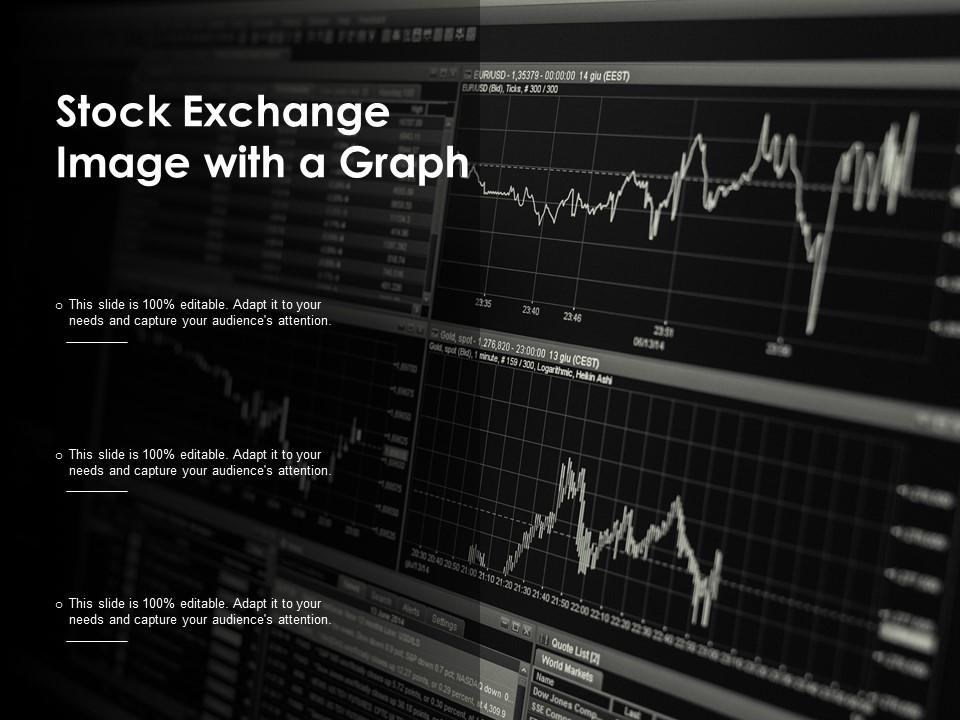
Presenting this set of slides with name Stock Exchange Image With A Graph. The topics discussed in these slides are Marketing, Strategy, Dollar, Finance. This is a completely editable PowerPoint presentation and is available for immediate download. Download now and impress your audience.

People who downloaded this PowerPoint presentation also viewed the following :

FAQs for Stock exchange image

Global stock market trends are currently driven by central bank monetary policies, inflation concerns, geopolitical tensions, corporate earnings performance, and technological advancement adoption rates. These interconnected factors create volatility through interest rate adjustments, supply chain disruptions, and sector rotations, with many institutional investors finding that diversified portfolios across emerging markets and established economies help navigate this increasingly complex financial landscape.

Interest rate changes significantly impact stock market performance by influencing borrowing costs, corporate profits, and investor behavior toward different asset classes. When rates rise, companies face higher financing costs while investors often shift toward bonds, creating downward pressure on stocks, though sectors like banking may benefit from improved lending margins, ultimately affecting market valuations differently across industries.

Investor sentiment significantly influences stock market fluctuations by driving buying and selling decisions based on emotions, market perceptions, and confidence levels rather than fundamental analysis alone. This psychological factor creates volatility through fear-driven sell-offs and optimism-fueled rallies, with many financial institutions finding that sentiment indicators help predict short-term market movements and ultimately enhance investment strategies.

Recent geopolitical events have significantly influenced stock market behavior through increased volatility, sector rotation toward defensive assets, and heightened uncertainty in global trade flows. Markets typically respond with flight-to-safety movements, impacting energy prices, defense stocks, and emerging market investments, while investors increasingly seek stable, dividend-paying companies and government bonds during periods of international tension.

Market indicators like the S&P 500 and Dow Jones serve as essential benchmarks for measuring overall market performance, investor sentiment, economic health, and portfolio comparisons. These indices enable institutional investors, financial advisors, and corporations to assess market trends, make strategic investment decisions, and communicate market conditions to stakeholders, ultimately delivering standardized performance metrics and enhanced investment transparency.

Emerging technologies shape stock market trends by creating new investment sectors, automating trading processes, and enabling data-driven market analysis through AI, blockchain, and quantum computing. These innovations streamline portfolio management, enhance risk assessment, and deliver real-time market insights, with financial institutions finding that algorithmic trading and predictive analytics ultimately provide competitive advantages in increasingly dynamic markets.

Stock market recoveries post-recession typically show V-shaped or U-shaped patterns, with initial volatility followed by sustained growth, sector rotation from defensive to cyclical stocks, and gradual investor confidence restoration. Historical data reveals that technology, consumer discretionary, and financial sectors often lead recoveries, while markets generally regain pre-recession levels within 12-24 months, ultimately delivering significant returns for strategic long-term investors.

ESG factors are fundamentally reshaping investment strategies by integrating sustainability metrics, social responsibility assessments, and governance standards into portfolio decisions alongside traditional financial analysis. These considerations enhance risk management, attract sustainable-focused capital, and improve long-term returns, with many institutional investors finding that ESG-compliant companies often demonstrate greater resilience and operational efficiency in increasingly regulated markets.

High-frequency trading impacts market volatility by creating rapid price movements through algorithmic transactions, increasing short-term fluctuations, and amplifying market reactions during stressed conditions. While these technologies can enhance liquidity and price discovery, they also present challenges for traditional investors, with many financial institutions finding that strategic risk management becomes increasingly critical in this accelerated trading environment.

Seasonal trends significantly influence stock pricing through predictable patterns like the January effect, sell-in-May phenomenon, and holiday rallies, with retail stocks typically surging during holiday seasons while energy stocks fluctuate with weather-driven demand cycles. These patterns enable institutional investors to strategically time market entries and exits, ultimately delivering enhanced portfolio performance and risk management, with many financial advisors increasingly incorporating seasonal analysis into investment strategies.

Past stock market bubbles and crashes teach investors the importance of diversification, disciplined valuation analysis, emotional control, and maintaining long-term perspectives rather than chasing speculative trends. These historical events demonstrate that sustainable wealth building requires strategic asset allocation, regular portfolio rebalancing, and risk management practices, with many successful investors finding that patience and fundamental analysis ultimately deliver superior returns over market cycles.

Sector performance trends strongly correlate with economic cycles, as different industries respond predictably to expansion, peak, contraction, and recovery phases. During expansions, technology and consumer discretionary sectors typically outperform, while utilities and consumer staples show resilience during contractions, with many portfolio managers finding that strategic sector rotation enhances returns and minimizes volatility across complete economic cycles.

Investors can capitalize on current trends through diversified portfolio allocation, sector rotation strategies, momentum investing, dollar-cost averaging, and trend-following technical analysis. These approaches enable strategic positioning across growth sectors like technology and renewable energy, while maintaining balanced exposure to defensive assets, ultimately delivering enhanced returns and risk management in an increasingly dynamic market environment.

The rise of retail investors influences traditional market dynamics by increasing volatility, democratizing market access, and shifting trading volumes from institutional dominance. Through social media platforms and commission-free trading apps, retail investors create new momentum patterns, challenge traditional price discovery mechanisms, and drive significant moves in individual stocks, with many financial institutions finding that retail sentiment now substantially impacts market timing and liquidity flows.

Global supply chain disruptions significantly impact stock valuations through increased operational costs, reduced profit margins, delayed product deliveries, and heightened market volatility. These disruptions create divergent outcomes across sectors, with manufacturing and retail companies facing pressure while logistics and technology firms often benefit, ultimately reshaping investor strategies and portfolio allocations in an increasingly interconnected market environment.

Ratings and Reviews

0% of 100
Review Form
Write a review
Most Relevant Reviews

No Reviews