Résultats de l'enquête montrant l'engagement client
Try Before you Buy Download Free Sample Product
Audience
Editable
of Time
Applaudir la jubilation avec nos résultats d'enquête montrant l'engagement des clients. Mettez en surbrillance l'intelligence qu'ils ont affichée.
Caractéristiques de ces diapositives de présentation PowerPoint :
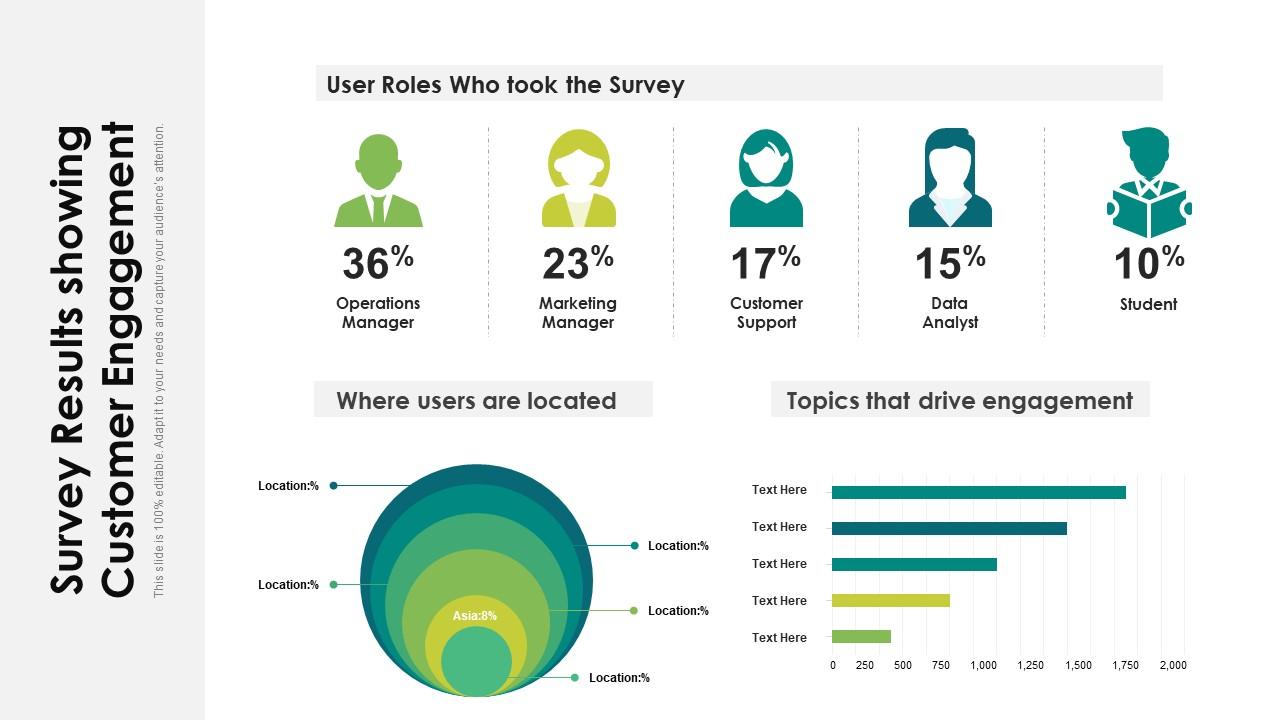
Présentation de cet ensemble de diapositives avec le nom Résultats de l'enquête montrant l'engagement client. Les sujets abordés dans ces diapositives sont Operations Manager, Marketing Manager, Customer Support, Data Analyst. Il s'agit d'une présentation PowerPoint entièrement modifiable et disponible en téléchargement immédiat. Téléchargez maintenant et impressionnez votre public.
People who downloaded this PowerPoint presentation also viewed the following :
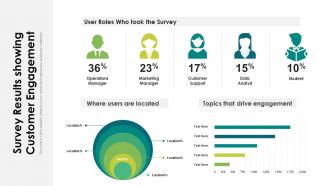
Résultats de l'enquête montrant l'engagement client avec les 2 diapositives :
Mettez en évidence les renseignements que les gens ont affichés avec nos résultats d'enquête montrant l'engagement client. Soyez en mesure d'applaudir la jubilation.
FAQs for Survey results
Honestly, personalization is everything right now. Use your data to customize emails and target social ads better - makes such a difference. Interactive content kills it too - polls, quizzes, live Q&As. People eat that stuff up because they actually get to participate. Quick responses on social media are non-negotiable. Be authentic though, not robotic. Community building through forums or user-generated campaigns works great too (though it takes time to build momentum). The trick is meeting customers where they already hang out and making every interaction feel worth their time, not salesy. I'd start by looking at what you're already doing and see what's missing.
Templates are honestly a game-changer for making your customer data actually readable. Set up 3-4 standard slides for your main stuff - retention rates, NPS, engagement funnels, whatever you track most. Then you just drop in fresh numbers each cycle instead of rebuilding everything from scratch. The best part? Clean charts make it super obvious what's tanking vs. what's crushing it. I learned this the hard way after spending way too many late nights reformatting the same boring spreadsheets. Once you nail the visual framework, stakeholders can actually follow along without their eyes glazing over.
Honestly, most companies suck at this but it's pretty straightforward. Use their name in emails - basic but works. Reference what they bought before or what they were looking at on your site. Email segmentation is huge too, like sending different stuff based on how they actually behave instead of the same boring newsletter to everyone. Your website should change based on where they're from or what they clicked on last time. Oh and timing matters - don't send beach gear emails in December unless they live somewhere warm! The whole point is making them feel like you get them as a person.
Think of feedback like a GPS for your customer stuff - shows you what's broken and what's actually working. People don't always tell you the truth though, so you gotta read between the lines sometimes. But here's the thing: you can't fix what you don't know about. Customer feedback reveals which parts of your process suck, what messages hit right, and where people bail out. I'd start with simple feedback loops - surveys work, but even casual check-ins help. Once you're collecting it regularly, you can make changes based on real data instead of just winging it.
Honestly, just talk to people like they're actual humans. Post regularly and actually reply when they comment - you'd be shocked how many brands completely ignore their followers. Behind-the-scenes content is gold, and throw in some questions or polls to get conversations going. Oh, and definitely repost user content when people tag you - everyone loves being featured. Pick one platform first though, don't try to be everywhere at once. That's how you burn out fast. The whole thing works way better when people can tell there's a real person running the account, not some corporate robot.
Track engagement stuff first - likes, comments, how long people stay on your site. Then look at repeat purchases and customer lifetime value. Net Promoter Score is huge too, it shows if customers actually want to recommend you (which is way better than just having them buy once). Email open rates matter, plus keep an eye on support tickets - fewer complaints usually means happier people. Oh, and don't go crazy with metrics. Pick maybe 4-5 that actually matter for your business and stick with those. I've seen people drown in spreadsheets tracking everything under the sun.
Honestly, it's all about knowing who you're talking to. Gen Z wants memes and sustainability stuff on TikTok - they can smell fake marketing from miles away. Meanwhile, my mom's generation still loves getting detailed emails and actual phone calls (weird, right?). Survey your current customers first - ask how they want to hear from you. Some want formal communication, others respond better to casual, authentic voices. The platforms matter too. Instagram works for millennials, but good luck reaching boomers there. I'd start small and test different approaches. What works for one age group will totally flop with another.
Don't treat engagement as some separate thing you tack on later - that's where most teams mess up. Map out your customer journey first, then figure out where you can actually add value. Social, emails, support calls, even the boring checkout stuff. Everything should feel connected to your bigger marketing goals, and honestly? Your whole team needs to get what their piece of the puzzle is. Look at your data to personalize things (customers notice when you don't), and actually listen when they give feedback. Pick one campaign you're running and ask yourself - how do we make this more interactive and useful for people?
Honestly, stories are just way more memorable than boring data slides. People connect with narratives - they can actually picture themselves in those situations. I always tell clients to open with a customer story instead of the usual "here's our company overview" nonsense. Works every time. Your audience will relate to real scenarios way more than feature lists. Stories hit people emotionally, and let's be real - that's where most buying decisions happen anyway. Structure it like problem → journey → resolution. Mirrors what they're going through. You'll see the engagement difference immediately.
Honestly, chatbots are crushing it right now - they handle customer questions 24/7 so your team doesn't burn out. Personalization stuff is huge too, like tracking what customers do across different platforms to show them exactly what they want. Voice tech is everywhere now. AR demos are pretty wild for showing off products, though I still think it feels a bit gimmicky sometimes. Oh, and don't try implementing everything at once - that's a disaster waiting to happen. Pick maybe two things that actually fix the problems your customers complain about most.
Honestly, it's all over the map depending on your industry. Retail throws everything at personalized recs and social media stuff. B2B tech? They're obsessed with those super long sales cycles and educational content that actually teaches you something useful. Healthcare has to build trust first - makes sense when you think about it. Financial companies are still trying not to put everyone to sleep (good luck with that). Entertainment obviously nails the interactive community thing. Bottom line - figure out where your people actually hang out and how they want brands to talk to them. Don't fight against what works in your space.
Okay so here's the thing - your employees basically ARE your customer experience. Engaged workers naturally give better service and actually care about helping people. The opposite happens too though. When staff are just phoning it in, customers pick up on that vibe immediately and it shows in your ratings. There's actually solid data backing this up - engaged teams hit 12% better customer metrics. Honestly, whenever I see companies stressing about customer satisfaction scores, I tell them to check their employee engagement surveys first. That's usually where you'll find the root problem hiding.
Honestly, it's all about making people feel like they're part of something bigger than just buying your stuff. Facebook groups are clutch for this - or Discord if your crowd's younger. Host little events, ask what they think about new products, celebrate when they hit their goals. Sounds obvious but most brands suck at actually caring about customers as people, not wallets. Behind-the-scenes content works too. Let your team's weird personalities shine through! Oh and reply to literally everything - even the random comments. Pick one platform first though. Don't spread yourself crazy thin trying to be everywhere at once.
Ugh, don't try to be on every single platform - you'll just burn out and suck at all of them. Pick like 2-3 max where your people actually are. Also? Stop pushing sales content 24/7, it's so cringe and everyone just scrolls past. I see businesses treating social media like a billboard instead of actually talking back to people who comment. That drives me crazy. Inconsistent posting is another killer - you'll lose all momentum. Focus on being helpful first, selling second. And seriously, when someone takes time to comment or DM you, respond! It's not that hard.
Dude, the whole game changed after COVID. Your customers got spoiled by all those smooth online experiences during lockdowns - now they expect that everywhere. I'd focus on meeting them where they actually hang out: chatbots, social media, personalized emails, video calls. Honestly? Half my clients prefer Zoom meetings now because they don't waste time commuting. Some still want face-to-face though, so you need options. The trick isn't pushing them toward what you think works best. Figure out which platforms they're already using most and start there.
No Reviews