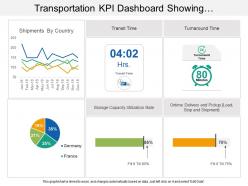
Transportation kpi dashboard showing shipments by country and transit time
Try Before you Buy Download Free Sample Product
Audience
Editable
of Time
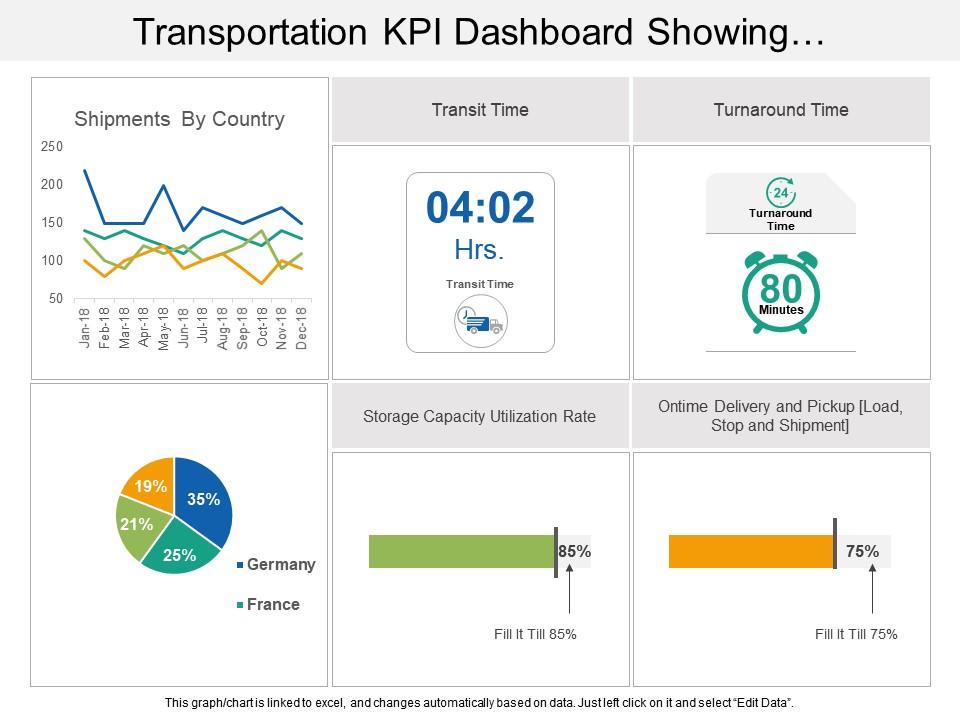
Visualize with our transportation KPI Dashboard showing shipments by country and transit time PPT slide how transport industry process merchandise goods and cargo. Our transportation key performance indicators PowerPoint slide has been designed by our professional team which allows you to create an outline to make informed choices, especially when you are going to choose an International shipping company. Our logistics KPI PowerPoint slide is useful tool and allows you to show the importance of time in transit and reliability of transit time for shippers, receivers, and carrier companies. This supply chain industry KPI is useful to track the reliability of transit time which shows the impact on average inventory costs, ordering costs, expected shortage costs and expected excess costs. With the help of this transportation metrics dashboard PPT slideshow you can visualize choosing an international shipment company on the basis of References from knowledgeable people or groups, getting quotes from international shipping companies, insurance cover and transit time take by the company. Amass huge assets with our Transportation Kpi Dashboard Showing Shipments By Country And Transit Time. Generate an exponential growth of income.
People who downloaded this PowerPoint presentation also viewed the following :
Transportation kpi dashboard showing shipments by country and transit time with all 6 slides:
Influence the deliberations with our Transportation Kpi Dashboard Showing Shipments By Country And Transit Time. Convince folks to consider a fresh angle.
FAQs for Transportation kpi dashboard showing shipments by country
Honestly, I'd focus on the big three first: on-time delivery, cost per mile, and fuel efficiency. Those will give you the clearest picture. If you're running your own trucks, vehicle utilization is massive too - can't have expensive equipment sitting around. Delivery accuracy matters more than people think (wrong stuff = angry customers), and definitely track satisfaction scores since that hits your profits directly. Don't overcomplicate it at first though. Master these basics, then you can get fancy with other metrics later. Oh, and fuel costs are brutal right now so that efficiency number is extra important.
Look, fuel's gonna eat up like 25-40% of your operating costs, so tracking MPG and efficiency by route is huge. You're literally watching cash disappear in real time - kinda depressing honestly. But here's the thing: that data shows you which routes suck, which trucks are dying, and which drivers burn through gas like crazy. Check your numbers weekly, not monthly. You'll spot expensive problems way faster. Use what you find to fix routes, keep up with maintenance, and maybe have some awkward conversations with lead-foot drivers. Trust me, it adds up quick.
On-time delivery is honestly the most important logistics metric you can track. Measures how often you hit your promised delivery windows - usually as a percentage. Executives obsess over this one because it directly hits customer satisfaction, and late deliveries cost you in penalty fees or rush shipping to fix things. I always tell people to set up some kind of dashboard that catches problems early, before customers start calling angry. It's way easier to fix issues when you see them coming. The whole thing basically shows if you're keeping your word to customers, which... pretty crucial for staying in business.
So you know all that manual tracking stuff that's driving you crazy? GPS and telematics handle the real-time location data, fuel consumption, driver behavior - basically everything without the tedious logging. IoT sensors are pretty cool too, they'll automatically track temperature, cargo conditions, even when your vehicles need maintenance. What really saves your sanity though is getting dashboards that combine everything. Instant visibility into delivery times, route efficiency, cost per mile. No more digging through random spreadsheets at 2am. Honestly, I'd just pick whatever KPI is annoying you most right now and solve that first. Way easier than trying to fix everything at once.
Honestly, start with uptime and cost per mile - those two metrics will tell you everything you need to know about whether your maintenance program is actually worth a damn. Track your mean time between failures too, plus that planned vs unplanned maintenance ratio. You want way more preventive work than emergency fixes, obviously. First-time fix rate is huge - nothing pisses off drivers more than sending a truck back to the shop multiple times for the same problem. Oh, and fuel efficiency trends can catch maintenance issues before they blow up into expensive repairs. Trust me on that one.
Look, customer satisfaction scores are like the reality check for all your other transportation metrics. Your on-time delivery might look amazing on paper, but if customers are still pissed off, something's not adding up. Maybe you're delivering fast but the packages arrive looking like they went through a blender - who knows? These scores help you figure out which operational metrics actually matter to customers versus the ones that just make your spreadsheets look pretty. Start tracking satisfaction next to your delivery times and costs. You'll probably discover some stuff you weren't even measuring matters way more than you thought.
Load factor is just how much of your truck/container space you're actually filling - so like actual weight divided by max capacity. Pretty simple math but it tells you everything about whether you're hemorrhaging money on half-empty shipments. I always tell people to track this by route because that's where you'll spot the worst offenders. You want around 80-85% - high enough to be efficient but not so packed that stuff gets damaged (learned that one the hard way). Anything consistently under 70%? Time to consolidate or find a better carrier deal.
Put safety metrics right on your main dashboard with everything else - don't hide them on a separate page somewhere. I'd focus on leading stuff like near-misses and training completion, not just waiting for actual incidents to happen. The tricky part is making sure safety doesn't get ignored when everyone's stressed about delivery deadlines. Set up alerts when thresholds get hit and actually review these numbers in every team meeting. Honestly, just start with 2-3 metrics that match your biggest risks. You can always add more later once it's working.
For transportation KPIs, I'd go with Tableau, Power BI, or Qlik - they're solid choices. Real-time dashboards that connect to your TMS and GPS stuff. Some companies use logistics-focused ones like project44 or FourKites instead. Honestly Power BI's gotten way better lately if you're already in the Microsoft ecosystem. First thing though - figure out which KPIs actually matter to your team. No point building fancy charts nobody looks at. Then pick whatever displays your data cleanest and doesn't fight with your current systems.
Yeah, KPIs totally change depending on what you're moving stuff with. Road transport? You're watching fuel efficiency, delivery times, vehicle utilization - the usual suspects. Rail cares more about cargo capacity and whether trains actually show up on time. Air transport is all about load factors and turnaround times (plus those insane fuel costs). Maritime focuses on container throughput. Here's the thing though - you gotta match your metrics to what's actually costing you money and pissing off customers. Figure out your biggest cost drivers first, then pick KPIs that'll help you tackle those specific problems. Don't just track everything.
Look up what's normal for your type of transport first - trucking vs rail vs shipping all have totally different standards. Baseline where you're at now, then pick realistic targets that'll actually push you forward. Honestly, I've watched too many companies aim way too high and just crush morale when nobody hits the goals. Pick maybe 4 solid metrics like on-time rates, cost per mile, fuel efficiency. Don't try tracking every little thing. Pull your last 12-18 months of data to see the patterns, and remember seasonal stuff matters too. Quarterly check-ins work well for tweaking things as you figure out what's doable.
So data analytics takes all that messy transportation data and turns it into stuff you can actually use. Like, instead of just knowing if deliveries were on time, you'll see patterns - maybe Route 5 always has delays or rain totally screws up your schedule. Real-time dashboards are honestly game-changers because you catch problems as they happen, not three weeks later. You can even predict where bottlenecks will pop up before they do. My advice? Pick your biggest headache first and focus there. Don't go crazy trying to track everything right away - that's just overwhelming.
Yeah, compliance stuff is gonna mess with your transport metrics initially - costs go up, deliveries take longer, drivers get slowed down by mandatory breaks and inspections. Total headache at first. But once you get your systems adjusted and actually plan around these requirements, your numbers usually level out. Sometimes they even get better since everything runs more predictably. Oh and definitely track compliance as its own separate metric - makes it way easier to show your boss why you're spending the money. The adjustment period sucks but it's temporary.
Look, working with good 3PLs can seriously boost your shipping metrics - costs drop, deliveries get more reliable, and you'll actually use your capacity better. They've got carrier connections you don't have access to, plus those bulk pricing deals. Thing is, they live and breathe this stuff daily while your team is probably juggling ten other priorities. Pick one that fixes your biggest pain point though - like don't go for the cheapest option if your delivery times suck. Set up clear metrics from day one and actually check them monthly, not whenever you remember to.
Honestly, sustainability stuff is gonna be huge - you can't ignore carbon tracking and green logistics anymore. Real-time data and IoT will make route optimization way smarter than it is now. AI will finally automate all that tedious reporting we hate doing (seriously, about time). Autonomous vehicles are bringing totally new safety metrics we haven't dealt with before. My advice? Figure out which green metrics your stakeholders actually care about now, because these requirements are hitting fast. The companies that get ahead of this will have a real advantage.
No Reviews